Key Points
- Lambeth Council has been officially awarded the title of ‘Borough of the Year’ at the annual NLA Awards.
- The accolade is strictly supported by London Mayor Sadiq Khan and celebrates urban developments that foster civic equity, structural sustainability, and inclusive prosperity.
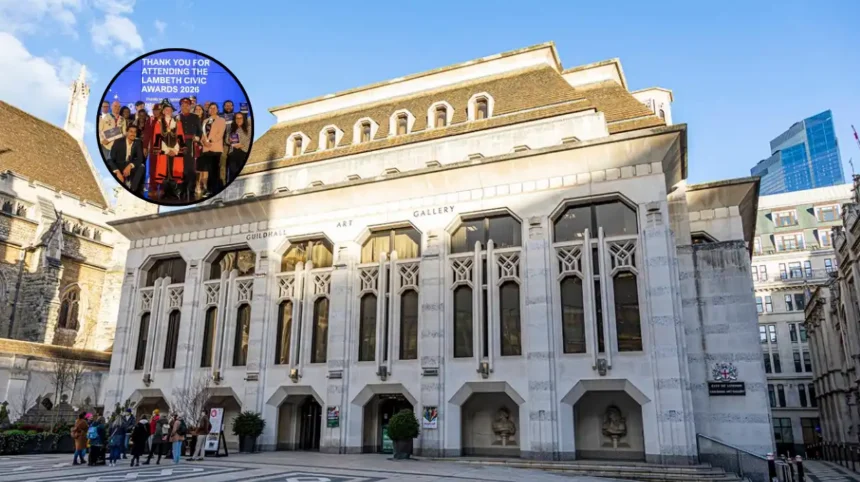
- The prestigious ceremony took place on Thursday, November 20 at the historic Guildhall in the City of London.
- Independent judges highly commended the South London authority for its extensive community engagement, specifically highlighting the proactive inclusion of young people in localized planning initiatives.
- The borough secured a double victory during the event, as the Brixton Recreation Centre and Public Realm project simultaneously claimed the award for the best cultural project of the year.
- Key strategic developments anchoring Lambeth’s successful entry included the pioneering SC1 London health and life sciences centre, a robust £1 billion new homes delivery programme, and collaborative master-planning for the regeneration of Waterloo station.
Lambeth Council (South London News) July 4, 2026 — The local authority, which encompasses thriving urban communities including Brixton, Gipsy Hill, Clapham, Waterloo, and Herne Hill, secured the top civic honour during a ceremony held at the Guildhall. As reported by staff writer Georgia Bell of The Standard, Lambeth Council was presented with the highly coveted title in recognition of its comprehensive municipal initiatives that “deliver equity, sustainability and inclusive prosperity” across the capital. The independent panel of judges assessed a wide range of completed and ongoing infrastructure works, placing specific emphasis on Lambeth’s delivery of affordable housing units, resilient climate architecture, and community-led public growth.
- Key Points
- How did local leaders react to the civic achievement?
- Which specific projects drove Lambeth’s success at the NLA Awards?
- What are the main strategic pillars of Lambeth’s growth plan?
- Background of the particular development
- Prediction: How this development can affect the local community and stakeholders
The official evaluation process highlighted Lambeth’s operational methodology, which aligns structural planning with social equity. According to official documentation published by New London Architecture, the judges noted that the
“Borough of the Year was selected for its strong focus on people and community engagement, underpinned by a clear and well-articulated strategy.”
The panel further observed that the council’s diverse initiatives, ranging from targeted youth programmes to localized, community-led infrastructure schemes, demonstrated a
“meaningful collaboration and a real commitment to local needs.”
How did local leaders react to the civic achievement?
Following the announcement at the Guildhall, senior local representatives expressed their gratification regarding the structural validation. As reported by the municipal news platform Love Lambeth, Councillor Claire Holland, the Leader of Lambeth Council, stated:
“We are delighted to have won this award because it acknowledges our commitment to engaging with our residents and partners on how we can shape change in our borough. We are a dynamic, ambitious borough where change is a constant, and we are determined to fully play our role shaping that future.”
Councillor Holland further contextualised the operational focus of the local authority, detailing how the council intends to leverage infrastructure projects to address deep-seated socio-economic disparities.
As recorded by The Standard, Councillor Holland emphasized that the core of the council’s determination remains centered on supporting inclusive growth so that every resident can actively contribute to and benefit from the local transformations. She stated that
“from building new homes or offices, creating new infrastructure, improving the local environment or tackling the climate crisis, there are jobs, skills, homes and life benefits that must be shared equally across our communities.”
Which specific projects drove Lambeth’s success at the NLA Awards?
The local authority’s recognition was further bolstered by an individual project victory on the same evening. As reported by Secret London, the borough’s well-known Brixton Recreation Centre and Public Realm project won the award for the ‘Culture – built’ category.
The architectural intervention, executed in close partnership with muf architecture/art, transformed the public realm and structural facade of the iconic community hub.
According to the official NLA Awards 2025 Winners index, the project successfully reimagined old, underutilized, and vacant internal spaces to introduce highly functional modern assets. The completed site now provides a significant volume of new affordable workspace—acting as the new physical home for prominent local organizations including Photofusion and The Advocacy Academy—alongside enhanced community facilities.
Furthermore, the public realm improvements introduced street trees, Sustainable Drainage Systems (SuDS), heritage-specific lighting, architectural signage, a community Wall of Fame, and dedicated operational support frameworks for local market traders.
The judges commended the scheme for preserving the historical legacy of the building while cementing its contemporary role as a vital “third space” for local residents.
What are the main strategic pillars of Lambeth’s growth plan?
The overarching submission that secured the primary “Borough of the Year” title rested on several large-scale strategic developments.
As detailed by Lambeth Now, the council’s Climate and Inclusive Growth directorate brought together multi-disciplinary teams across climate action, transportation, planning, economy, culture, skills, and housing growth to implement their long-term Growth Plan.
The successful application put forward by Lambeth Council prominently featured three major strategic pillars:
- The SC1 London Health and Life Sciences District: A pioneering life sciences innovation hub based on the South Bank, delivered in partnership with leading healthcare institutions. The initiative incorporates the ‘My Life Science’ career pathway programme, run alongside the London Institute for Healthcare Engineering, We Rise, and The Brixton Project, to connect local residents with high-value STEM and health-tech employment.
- The £1 Billion New Homes Programme: A sustained capital investment project aimed at directly tackling the local housing crisis by constructing high-quality, energy-efficient, and genuinely affordable social housing units across the borough.
- The Waterloo Station Strategic Regeneration: Extensive collaborative planning operations working alongside network partners and built environment professionals to design the next phase of spatial and economic development for Waterloo train station and its immediate surrounding urban envelope.
Additionally, the council’s Future Workspace Fund was highlighted as a core mechanism for economic resilience.
The fund has successfully delivered 81,981 square feet of new commercial workspace, supported 1,246 local businesses, and sustained 2,241 jobs by backing key facilities such as the Old Vic’s new Backstage building, ASC Studios, Rambert Works, and Sustainable Ventures—which now operates as Europe’s largest cleantech business incubator.
Background of the particular development
The recognition of Lambeth as London’s premier borough arrives after years of intensive structural reconfiguration within local governance, specifically regarding how inner-city authorities balance aggressive commercial regeneration with community displacement concerns.
Historically, parts of Lambeth—most notably Brixton and Waterloo—have been flashpoints for debates surrounding gentrification, rising commercial rents, and the loss of traditional working-class spaces.
To counteract these friction points, Lambeth Council established its Climate and Inclusive Growth directorate, intentionally merging planning and economic portfolios to ensure that urban regeneration acts as a direct catalyst for local social mobility.
This long-standing policy approach, which prioritises bespoke placemaking and targeted growth sectors, heavily mirrored the principles later adopted in the broader London Growth Plan supported by City Hall.
However, this architectural acclaim coincides with significant economic challenges on the ground. As reported by a contributor for the Brixton Blog, recent data published by the employment analytics platform WageSight revealed that the number of people employed on payrolls within the borough of Lambeth dropped by 2% in the year spanning December 2024 to December 2025.
This net loss of 3,409 employees positioned Lambeth as one of the weakest employment performers in the capital, outpaced in job losses only by the City of Westminster.
Paul Hebden, the Director of WageSight, noted that the data “underlines the continued pressure on employment in Lambeth,” illustrating a complex economic reality where award-winning spatial design must constantly contend with broader macroeconomic headwinds and shifting employment markets.
Explore More Lambeth Council News
Lambeth Council Immigration Enforcement Review: London 2026
Lambeth Council Facing High Court Challenge Over Heating Charges, London 2026
Prediction: How this development can affect the local community and stakeholders
The awarding of the ‘Borough of the Year’ title is highly likely to accelerate institutional investment into Lambeth’s major development zones, directly impacting local residents, businesses, and property developers. For the local community, the high visibility of this award reinforces the legitimacy of the council’s community-wealth building model.
It provides leverage for residents to demand that future planning applications maintain the high standards of public consultation, youth engagement, and affordable asset integration praised by the NLA judges.
The focus on retrofitting sites like the Brixton Recreation Centre suggests that future capital allocations will continue to prioritize multi-use community hubs, ensuring that vulnerable populations retain physical access to sports, culture, and localized advocacy spaces.
For local business owners and job seekers, the institutional endorsement of the Future Workspace Fund and the SC1 Life Sciences district will likely attract a higher density of corporate partners, clean-tech startups, and health-tech firms to the South Bank and Brixton corridors.
This influx can expand local supply chains and create specialized vocational pathways, particularly through programs like ‘My Life Science’.
However, because the borough is simultaneously navigating notable payroll contractions, stakeholders must monitor whether these high-profile spatial developments translate effectively into sustainable, long-term employment for existing residents, or if they primarily serve to attract commuter talent from outside the borough.
The accolade will undoubtedly elevate Lambeth’s profile among international built-environment investors, potentially lowering the cost of capital for the council’s ambitious £1 billion housing program, but it will also require the local authority to maintain a strict regulatory balance to ensure that subsequent market growth remains genuinely inclusive.