Key Points
- A “proper local pub” on Wilcox Road in South Lambeth, South London – Nolan’s Public House at 33 Wilcox Road – is to be demolished and re‑built as part of a new six‑storey mixed‑use development.
- The redevelopment will include 14 private flats above a replacement public house at ground floor level, on the same site where the pub has been traced on historical maps back to at least 1867.
- Lambeth Council’s Planning Applications Committee unanimously approved the scheme during a meeting on Tuesday, 14 April 2026.
- The proposal is a “hybrid application” that combines full planning permission for the redevelopment of the existing Nolan’s Public House site with a six‑storey building comprising a ground‑floor pub (use class Sui Generis) and upper‑floor residential units.
- The grant of permission is recorded in Lambeth Council’s planning database under reference 24/01281/FUL, with a separate listed‑building‑consent‑related application reference 24/01282/LB where relevant.
- The pub’s long‑standing presence in the area has raised community interest, as the site sits within a wider zone of change around Wilcox Road and South Lambeth, including ongoing public‑realm improvements and nearby housing schemes.
South Lambeth, (South London News) April 16 , 2026 – South Lambeth residents are facing a significant change to their local high‑street character after Lambeth Council’s Planning Applications Committee unanimously approved plans to demolish and rebuild Nolan’s Public House on Wilcox Road, with 14 private flats above the new pub. The decision, taken on Tuesday evening, April 14, clears the way for a six‑storey mixed‑use development that will see the historic “proper local” removed and re‑provided on the same site, continuing a broader wave of regeneration along this part of South Lambeth.
- Key Points
- What is being proposed for Nolan’s Public House?
- Who approved the plan and when?
- What is known about the history of the pub?
- How does this fit into wider changes on Wilcox Road?
- What do the planning documents say about the scale and use?
- How are these changes affecting the local high street?
- Background to this development
- Prediction: How this development could affect different audiences
What is being proposed for Nolan’s Public House?
The scheme, documented in Lambeth Council’s planning file under reference 24/01281/FUL, is described as a mixed‑use redevelopment of the existing Nolan’s Public House site at 33 Wilcox Road.
The proposal envisages demolition of the current building and the erection of a part‑six‑storey building, with a public house at ground floor level and residential accommodation above.
As set out in the council’s planning documents, the re‑provisioned pub will be designated as a Sui Generis use at ground floor, meaning it is classified as a standalone use category reserved for particular non‑standard premises, such as pubs and nightclubs.
Above this, the development will provide 14 private residential flats, with the bulk of the structure rising to six storeys.
Who approved the plan and when?
The Planning Applications Committee of Lambeth Council considered the hybrid application during a meeting held on Tuesday evening, 14 April 2026.
The committee unanimously agreed to grant permission for the mixed‑use redevelopment, signifying that all members present endorsed both the demolition of the existing building and the construction of the new six‑storey scheme.
The decision is logged in Lambeth’s planning database, which also notes an associated application for listed‑building consent (reference 24/01282/LB) linked to the works, reflecting sensitivities around any heritage‑related aspects of the historic site.
What is known about the history of the pub?
According to local reporting, Nolan’s Public House has been traced on historical maps as far back as 1867, marking it as a long‑standing part of South Lambeth’s local landscape.
The fact that the pub has anchored this corner of Wilcox Road for well over a century has contributed to residents’ attachment to the premises as a “proper local” venue.
The site’s longevity is one of several factors that have drawn attention to this redevelopment, particularly in an area where other former pubs and under‑used sites have been or are being converted into housing.
How does this fit into wider changes on Wilcox Road?
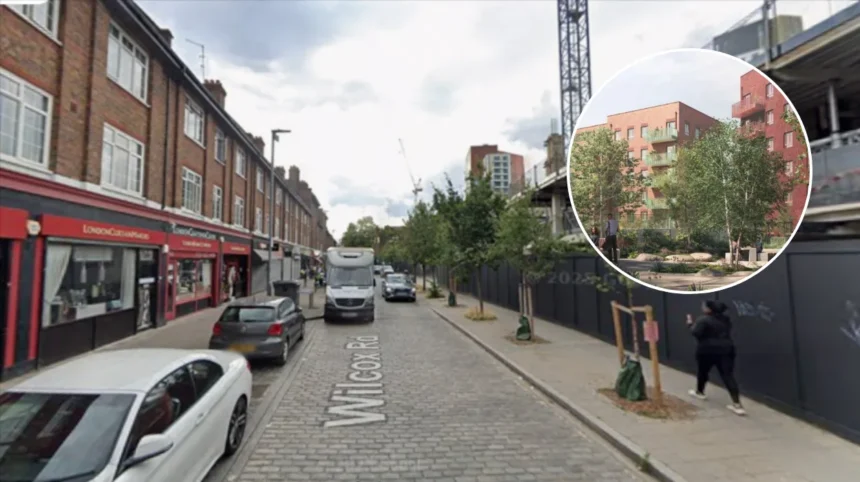
The approval for Nolan’s Public House comes against a backdrop of wider changes to Wilcox Road and the surrounding South Lambeth area. The London Festival of Architecture, in partnership with Lambeth Council, has commissioned interventions such as the
“Shine a Light on Wilcox Road”
gateway installation, designed by NOOMA Studio, to enhance the public realm and boost footfall along the street.
Those projects have sought to strengthen the connection between South Lambeth Road and the new Nine Elms Underground Station, creating a more prominent gateway for the district and underlining Wilcox Road’s evolving role as a mixed‑use corridor combining retail, hospitality and housing.
The approval of 14 flats above a new pub at Nolan’s fits within this broader pattern of intensified development around the new transport hub.
What do the planning documents say about the scale and use?
Lambeth Council’s planning documentation for application 24/01281/FUL describes the proposal as a hybrid application for the redevelopment of the existing Nolan’s Public House site, involving the construction of a part‑six‑storey building.
The ground‑floor use is specified as a public house under the Sui Generis planning category, while the upper floors are allocated to residential accommodation.
The council’s records indicate that the residential element of the scheme will comprise 14 units, all classified as private flats.
There is no mention in the planning summary of mandatory affordable‑housing provision within this specific permission, though other nearby schemes in Lambeth have included different mixes of affordable and private units under separate applications.
How are these changes affecting the local high street?
The replacement of Nolan’s Public House with a six‑storey block containing both a pub and flats sits within a wider shift on Wilcox Road, where public‑realm improvements and transport‑led regeneration are altering the street’s character.
While the retention of a ground‑floor pub is intended to preserve some hospitality function, the addition of 14 flats above replaces what was previously a single‑use pub building with a denser mixed‑use structure.
Community‑led campaigns around other South London pub sites have emphasised concerns about the loss of independent pubs and the displacement of social venues by housing‑led schemes, even where a pub is re‑provided at ground floor.
In the context of Nolan’s, the loss of the existing building and its replacement with a taller residential‑led block may be seen by some residents as a further step in the intensification of the Wilcox Road corridor.
Background to this development
Wilcox Road and the wider South Lambeth area have been subject to a series of regeneration initiatives in recent years, including transport upgrades and public‑realm improvements intended to connect the district more closely to the new Nine Elms Underground Station.
The approval of the six‑storey redevelopment at 33 Wilcox Road follows a pattern already visible on nearby sites, where former commercial or under‑used premises have been converted into housing‑led schemes, sometimes with ground‑floor retail or hospitality uses.
In Lambeth’s broader planning data, the borough has granted permissions for several mixed‑use and residential schemes, some of which include 100% affordable‑housing allocations, while others – like the Nolan’s Public House proposal – focus on private‑sector residential units above a pub or other commercial use.
The Nolan’s application therefore reflects a specific model of intensification: demolishing an older single‑use building, re‑providing the pub at ground floor, and stacking private flats above, within a context of wider change along this corridor.
Prediction: How this development could affect different audiences
For local residents living near Wilcox Road, the construction of a six‑storey block with 14 flats above a pub may alter the feel and density of the street, potentially increasing housing supply but also changing the balance between purely residential and mixed‑use frontages.
The re‑provision of a pub at ground floor could help maintain some local‑drinking and social activity, but the shift from a standalone historic premises to a taller residential‑led building may be seen as a further step towards the commercial‑residential intensification of the area.