Key Points
- Campaign group Save Lewisham Shopping Centre is urging the borough’s new Green-led council to halt a potential compulsory purchase order (CPO) on Lewisham House, the tower block behind the shopping centre on Molesworth Street.
- The CPO would enable developer Landsec to proceed with its full £1.5 billion redevelopment plan for Lewisham Shopping Centre, which includes around 1,700 new homes, student accommodation, co-living spaces and a new mall.
- Landsec owns the freehold of the site but the old Citibank tower (Lewisham House) is held under a 900-year lease by Guernsey-based firm Lewisham House No 1 Ltd (LHN1), which has its own plans for the building and is unwilling to sell voluntarily.
- LHN1 has submitted rival proposals to convert Lewisham House into around 320 co-living studios within three to five years, arguing this would be faster than Landsec’s timescales and would not require a CPO.
- Councillors approved Landsec’s overall scheme in October 2025, and council officers last week rubber-stamped that decision, according to Greenwich Wire reporting.
- Campaigners want more affordable housing included in the redevelopment, as current plans propose only 6% of homes for the borough’s housing waiting list and 14% as discounted “London Living Rent” for key workers.
- The dispute has raised questions about the financial viability and delivery speed of the masterplan, with LHN1 arguing that reliance on a CPO could delay homes for years.
- Save Lewisham Shopping Centre organiser Christine Hannigan says the campaign must be strategic about its leverage following the emergence of the new Green council.
Lewisham (South London News) July 14, 2026 – Shopping Centre are urging the borough’s new Green council to stop a potential compulsory purchase of the old Citibank tower, known as Lewisham House, on Molesworth Street. Save Lewisham Shopping Centre, which is leading the campaign, is calling on councillors to block the intended CPO order that would allow Landsec’s plans to proceed in full.
- Key Points
- Why is a compulsory purchase order needed for Landsec’s redevelopment to go ahead?
- What are LHN1’s rival plans for Lewisham House and why do they object to Landsec’s scheme?
- How Did the Landsec Redevelopment Plan for Lewisham Shopping Centre Evolve?
- What affordable housing provision is included in the scheme and why is this a concern for campaigners?
- What has been the timeline of decisions and approvals for the redevelopment?
- What Have Media Reports and Campaigners Said About the Dispute?
- What have campaigners said about their strategy and objectives?
- Background of the Lewisham House and Shopping Centre Redevelopment Development
- Prediction: How This Development Could Affect Lewisham Residents, Shoppers and Businesses
- How might shoppers, businesses and the town centre economy be affected?
As reported by Greenwich Wire, campaigners say they want more affordable housing added to the £1.5 billion redevelopment, which was originally approved by councillors in October 2025 and then “rubber-stamped” by council officers last week.
The group is using the change in political control at the council as a potential opportunity to challenge the mechanics of the scheme, arguing that the CPO is a key enabling step for Landsec’s masterplan.
Why is a compulsory purchase order needed for Landsec’s redevelopment to go ahead?
To enable Landsec’s plans to go ahead in full, Lewisham Council will need to issue a compulsory purchase order for Lewisham House, the tower block behind the centre on Molesworth Street. While Landsec owns the freehold to the land, the tower itself is leased by a separate developer, LHN1, which is unwilling to sell voluntarily and has its own plans for the site.
As explained by Greenwich Wire in October 2025, LHN1 insists it can deliver 319 co-living homes within three to five years, whereas Landsec’s scheme would require the council to serve a CPO before any work could start on that part of the masterplan. Without the CPO, LHN1 argues there is a
“real risk that the development and delivery of homes in this particular phase of the proposed Landsec masterplan doesn’t come forward for many years”.
What are LHN1’s rival plans for Lewisham House and why do they object to Landsec’s scheme?
Lewisham House No 1 Ltd (LHN1), the Guernsey-based firm holding the 900-year lease on the old Citibank tower, has submitted its own planning application to convert the building into around 320 professionally managed co-living studios, with shared amenities and ground-floor commercial space.
As reported by Salamander News, LHN1 argues that its proposal would sustainably retrofit the 1970s office building and deliver new homes within three to five years, far ahead of the shopping centre timescales.
LHN1 has also submitted a formal objection to Landsec’s plans, arguing that Landsec’s masterplan includes an “out-of-character bolt on tower” and depends on a costly and time-consuming compulsory purchase process.
In its own public statement, LHN1 says its plans would allow the shopping centre to stay open while it is taken down in stages and replaced with a new centre, with all the shops people like retained but with more choice for eating, drinking and entertainment at night.
How Did the Landsec Redevelopment Plan for Lewisham Shopping Centre Evolve?
As reported by Greenwich Wire, councillors approved Landsec’s plans in October 2025 to knock down the 1970s shopping centre and car park and replace them with around 1,744 homes, student accommodation, co-living spaces and a new shopping mall.
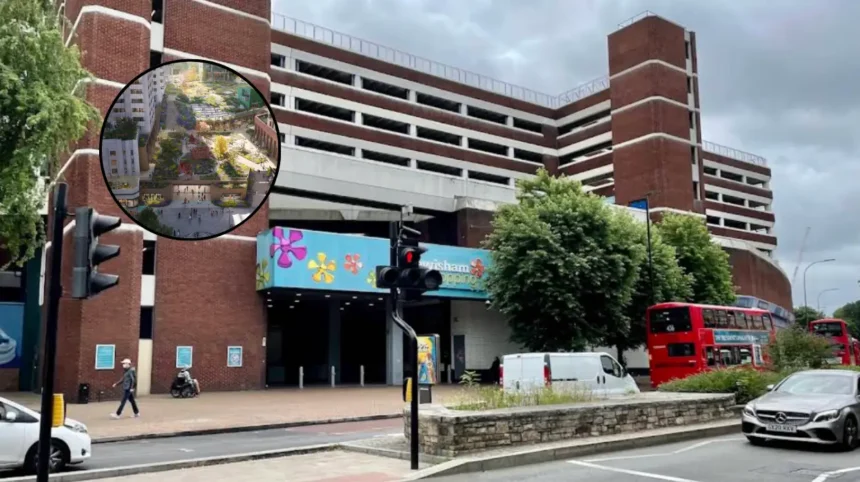
The wider scheme, first submitted to the council in November 2024, includes about 1,700 homes, 661 student rooms and 445 co-living spaces, along with a new shopping centre featuring a rooftop wild meadow and a replacement for the Model Market food court.
Landsec-U+I, which is behind the scheme, says its plans would boost the local economy by £160 million and involve towers of up to 35 storeys along Molesworth Street, with historic frontages along the high street, such as the old Woolworth store, preserved.
The application also includes pedestrianised streets through the new centre, around 300 trees and a public meadow larger than a football pitch, aiming to open up the town centre and recall how the area looked before the current mall and car park opened in 1977.
What affordable housing provision is included in the scheme and why is this a concern for campaigners?
Under the approved scheme, just 6% of the new homes would be for those on Lewisham’s 10,000-strong housing waiting list, with another 14% at discounted rents aimed at key workers through the London Living Rent programme.
The remaining homes would be for private sale or rent, a split that has drawn criticism from groups arguing for a higher share of genuinely affordable housing.
As reported by Greenwich Wire, Save Lewisham Shopping Centre is pushing for more affordable housing to be added to the £1.5 billion redevelopment, using the CPO as a potential point of leverage in negotiations with the council and developer.
Campaigners argue that the current affordable housing offer does not adequately address the borough’s housing pressures, particularly given the scale of demolition and new build proposed.
What has been the timeline of decisions and approvals for the redevelopment?
Long-awaited plans for the Lewisham Shopping Centre redevelopment were submitted to the council in November 2024, with full details including the design and access statement published on Lewisham Council’s planning website.
Councillors are reported to have made a decision on Landsec’s plans at a strategic development committee meeting in October 2025, where the planning committee granted unanimous approval despite strong objections from representatives of Lewisham House No 1 and from Lewisham People’s Assembly.
Following that approval, council officers last week “rubber-stamped” the decision, according to Greenwich Wire, setting the stage for the potential CPO process on Lewisham House to move forward unless blocked. The emergence of a new Green-led council in 2026 has given campaigners a new political context in which to challenge the enabling mechanisms of the scheme, particularly the CPO.
What Have Media Reports and Campaigners Said About the Dispute?
Greenwich Wire has described the situation as a dispute that “has erupted over the old Citibank tower at the back of the centre”, with Landsec wanting to redevelop the long-closed office block into flats while LHN1 has submitted its own plans.
The outlet notes that LHN1 has cast doubt on whether the shopping centre scheme is financially viable, although Landsec has insisted in its planning application that it sees Lewisham as a “long-term investment”.
Salamander News has reported that LHN1 argues its plans should have been included in Landsec’s masterplan, saying its scheme is “practical, viable, and ready to deliver” compared to Landsec’s reliance on a compulsory purchase process.
The news outlet also highlighted that before LHN1’s latest application, there had been six earlier applications to turn the tower into housing, including one approved in February 2025 for 193 flats.
What have campaigners said about their strategy and objectives?
As reported by Salamander News, Save Lewisham Shopping Centre organiser Christine Hannigan said:
“We have to be pretty strategic about what the actual leverage still is,”
referring to the CPO as a key point of negotiation with the council and developer.
The campaign group is using the political change in the borough, with a new Green council, as part of its strategy to push for more affordable housing and to challenge the use of compulsory purchase powers.
Greenwich Wire reports that campaigners are urging the council to stop the potential CPO for Lewisham House, arguing that without this step Landsec’s full masterplan cannot proceed. The group is also calling for more affordable housing to be added to the redevelopment, seeing the CPO process as a potential lever to influence the terms of the scheme.
Explore More Lewisham News
E-Bike Battery Fires Surge in Social Housing: Lewisham 2026
Southeastern Train Diversions Hit Lewisham and Bexley 2026
Background of the Lewisham House and Shopping Centre Redevelopment Development
Lewisham House, at 25 Molesworth Street, is a 1970s office tower that formerly served as the local headquarters for Citibank and has been closed for many years.
The building sits behind the Lewisham Shopping Centre, a 1970s mall and multi-storey car park that has seen declining footfall and retail activity over time.
Landsec owns the freehold of the shopping centre and surrounding land, while LHN1 holds a 900-year lease on Lewisham House itself, giving it independent rights to propose development on that part of the site.
The original Landsec-U+I masterplan, submitted in November 2024, sought to demolish the existing shopping centre and car park and replace them with a new mixed-use development, including residential towers, student accommodation, co-living space, a new mall, public spaces and entertainment venues.
The scheme was approved by Lewisham Council’s strategic planning committee in October 2025, with unanimous support from councillors despite objections from LHN1 and campaign groups.
However, because LHN1 is not part of Landsec’s ownership structure and has refused to sell voluntarily, the council must issue a compulsory purchase order to acquire the tower and incorporate it into the overall masterplan.
Prediction: How This Development Could Affect Lewisham Residents, Shoppers and Businesses
If the council proceeds with the CPO and Landsec’s full masterplan is implemented, Lewisham could see around 1,700 new homes built over a ten-year period, including a mix of private, student and co-living accommodation.
However, with only 6% of homes designated for the borough’s housing waiting list and 14% as discounted London Living Rent, many local residents may find that the majority of new housing is not directly accessible to them, potentially limiting the impact on the existing housing shortage.
If the council blocks the CPO or delays it significantly, LHN1’s alternative plan could deliver around 320 co-living studios within three to five years, offering a faster but different type of housing solution, focused on shared amenities rather than traditional family homes.
This could mean that while some new housing arrives sooner, the overall scale and mix of homes in the wider town centre redevelopment may be reduced or reshaped, affecting long-term housing diversity and capacity in Lewisham.
How might shoppers, businesses and the town centre economy be affected?
Under Landsec’s approved scheme, the shopping centre would remain open during redevelopment, with phased demolition and replacement of the mall, aiming to retain many existing shops while adding new eating, drinking and entertainment options.
If the redevelopment proceeds, local businesses could benefit from increased footfall linked to new homes, student accommodation and a modernised retail and leisure environment, potentially boosting the local economy by an estimated £160 million.
However, if the CPO is blocked or delayed, and LHN1’s alternativeрным plan is pursued instead, the shopping centre may be redeveloped in stages rather than as a single masterplan, with a different mix of retail, co-living and public space.
This could still bring new housing and leisure options but might result in a less coordinated transformation of the town centre, with possible implications for long-term investment, retail diversity and the overall regeneration trajectory of Lewisham.