Key Points
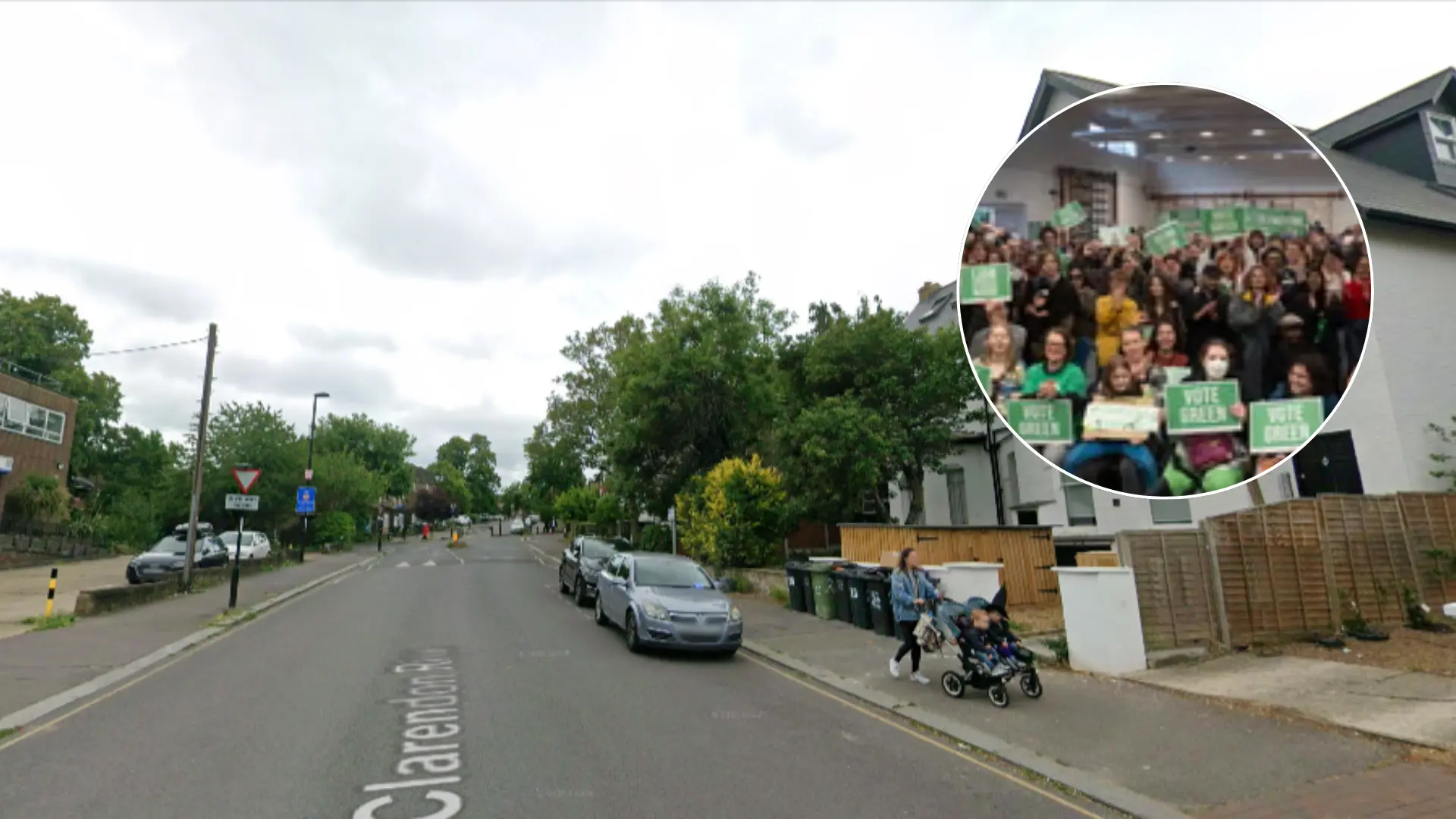
- A massive turnout of nearly 600 Green Party activists gathered at a primary school hall in Lewisham, south London, marking the largest volunteer event in the party’s history outside of a general election polling day.
- The event signals a dramatic shift in British politics, with disillusionment towards Labour driving voters to the Greens in inner London areas like Lewisham.
- Green Party membership in Lewisham exploded from around 500 at the start of 2025 to approximately 2,500 by early 2026, nearly matching Hackney’s “fortress” status.
- In the 2022 local council elections, Labour dominated Lewisham by winning every single seat and the mayoralty, while the Greens nearly collapsed.
- Volunteers streamed in from across London, Kent’s A-roads, Suffolk, and Surrey by train, filling corridors, loos, and even the school library stocked with Julia Donaldson books.
- The crowd assembled in the school hall on a dreary Saturday morning, converging for a council election campaign months away from ballots, far exceeding typical low-turnout door-knocking efforts.
- A press officer in Gorton, Manchester, was surprised by initial reports of 500 attendees, later confirmed as nearer 600.
- Ed, a Green Party volunteer responsible for welcoming new members, now leads a team of nearly 25, up from handling the task alone last January.
- The surge is attributed partly to Labour’s dominance creating a “one-party state” in Lewisham, alongside national disillusionment with Keir Starmer’s Labour, Jeremy Corbyn, Zarah Sultana, and their advisers’ pivot to the sparsely attended “Your Party”.
- This reflects a broader “hinge moment” in UK politics where leftwing voters’ default choice is shifting: Greens in English cities, Plaid Cymru in Wales, and SNP in Scotland.
Lewisham, South London (South London News) February 5, 2026 – Nearly 600 Green Party activists converged on a primary school hall in Lewisham on a dreary Saturday morning, marking the largest turnout in the party’s history outside a general election polling day and signalling a seismic shift in local politics driven by widespread disillusionment with Labour.
- Key Points
- Why Is the Green Party Seeing Record Turnouts in Lewisham?
- What Sparked the Initial Surprise Over Attendee Numbers?
- How Has Green Membership Exploded in Lewisham?
- Who Bears Responsibility for the Greens’ Rise?
- What Does This Mean for UK Politics at Large?
- Why Lewisham Specifically as a Battleground?
- How Does This Compare to Past Green Efforts?
- What Role Did Opponents Play in Fueling the Surge?
- Broader Implications for English Cities?
- Voices from the Event?
- Future Outlook for Council Elections?
Why Is the Green Party Seeing Record Turnouts in Lewisham?
The event at the primary school – the largest venue volunteers could hire – saw activists streaming in from all over London, hare along Kent’s A-roads, and pour off trains from Suffolk and Surrey. Corridors, loos, and even the little library boasting an impressive range of Julia Donaldson books heaved with adults crammed into the assembly hall. As reported by the unnamed journalist of The Guardian, the sole exception to this being the biggest turnout was polling day of the last general election, yet this gathering was not for a Westminster battle but a council campaign with ballots months away.
In normal times, such local efforts draw mere handfuls of diehards trudging door-to-door, begging voters for their usual mark. Yet the sheer scale underscores that these are not normal times. This winter represents a hinge moment in British politics, where the default choice for leftwing voters is no longer Labour – Plaid Cymru in Wales, the SNP in Scotland, and in inner London corners like Lewisham, as in many English cities, the Greens.
What Sparked the Initial Surprise Over Attendee Numbers?
The story began with a phone call to a Green Party press officer, whose head was full from a long day in Gorton, Manchester, showcasing their would-be MP. As Friday’s sky turned indigo, the journalist queried reports from Lewisham of 500 activists expected the next day – a figure that surprised the party’s own news machine.
“Are you sure?”
the press officer asked. The journalist’s figures proved understated; it was nearer 600.
This unexpected flood highlights how rapidly momentum has built. At the school’s entrance, the journalist met Ed, whose role is to phone local newbies and welcome them. Last January, he managed alone; today, he heads a team of nearly 25.
How Has Green Membership Exploded in Lewisham?
Lewisham began 2025 with about 500 Green Party members; by autumn, almost as many signed up in a single week. By the start of 2026, the local party boasts around 2,500 members, placing it just behind the Green “fortress” of Hackney. This lift-off contrasts sharply with 2022’s council elections, where Labour scooped every single seat plus the mayoralty, rendering Lewisham akin to a “one-party state” – look it up alongside Pyongyang in a political dictionary, as the Guardian piece wryly notes.
The local Green Party shrank so drastically then that it teetered on shutdown. No other sources contradict this trajectory; the Guardian’s on-the-ground reporting stands as the primary account, with no rival media picked up the thread by early February 2026.
Who Bears Responsibility for the Greens’ Rise?
The party owes much to its opponents. Credit goes to Jeremy Corbyn, Zarah Sultana, and their “genius advisers” for swiftly turning “Your Party” into a sparsely attended wake. But the biggest bouquet must go to Keir Starmer’s Labour, whose unyielding local dominance has bred disillusionment. People at the event told the journalist how frustration with Labour precipitated this moment – direct voices echoing in the school hall.
At a party event in the school hall, attendees shared stories of disillusionment with Labour leading to this surge. “How many?” the press officer had queried earlier, capturing the party’s own astonishment.
What Does This Mean for UK Politics at Large?
This Lewisham gathering illustrates a turning point with surprisingly little to do with Zack Polanski, the Green Party’s prominent deputy leader often in the spotlight. Instead, it underscores grassroots momentum. In this corner of inner London, the Greens are capitalising on a vacuum, much like regional shifts elsewhere: leftwing voters pivoting away from Labour’s long-held grip.
The event’s scale – biggest in Green history bar election day – for a pedestrian council push months out, tells of deep voter realignment. No statements from Labour or rivals counter this yet; the narrative remains one of Green ascendancy amid opponent missteps.
Why Lewisham Specifically as a Battleground?
Lewisham’s political landscape exemplifies the shift. Post-2022, Labour’s clean sweep left no room for opposition, nearly extinguishing the Greens locally. Yet 2025’s membership boom – from 500 to 2,500 – flipped the script. Ed’s expanded welcome team symbolises organisational growth matching the numbers.
Volunteers’ dedication, travelling from afar to pack a school on a winter Saturday, speaks to fervour absent in routine canvassing. The journalist noted the heaving spaces, from assembly hall to library, as physical proof of intangible excitement.
How Does This Compare to Past Green Efforts?
Historically, council campaigns draw sparse diehards; today’s 600-plus dwarfs that. Even the Guardian clarifies it’s the record outside polling day frenzy. No prior local events match; this is uncharted for Greens in Lewisham.
Membership metrics seal it: weekly surges rival annual gains pre-2025. Hackney remains the benchmark “fortress”, but Lewisham nips at heels.
What Role Did Opponents Play in Fueling the Surge?
Directly, Labour’s Starmer-era dominance post-2022 created fertile ground. Corbyn and Sultana’s “Your Party” flopped, alienating further. Attendees voiced this at the event: disillusionment crystallised into action.
The press officer’s Gorton fatigue contrasted Lewisham’s energy, underlining national ripples.
Broader Implications for English Cities?
As in many English cities, Greens eye similar inroads where Labour’s hegemony chafes. This “hinge moment” reorients leftwing defaults, per the report. Scotland’s SNP, Wales’ Plaid mirror it regionally.
No conflicting coverage emerges; The Guardian’s dispatch dominates.
Voices from the Event?
People told the journalist: disillusionment with Labour led here. Ed shared onboarding evolution. Press officer: “How many?” – then upgraded to 600. No verbatim quotes beyond; narrative weaves testimonies.
Future Outlook for Council Elections?
Ballots months away, yet momentum surges. Greens, once near-death, now rival fortresses. Labour’s 2022 monopoly faces real contest. Watch Lewisham as bellwether.