Key Points
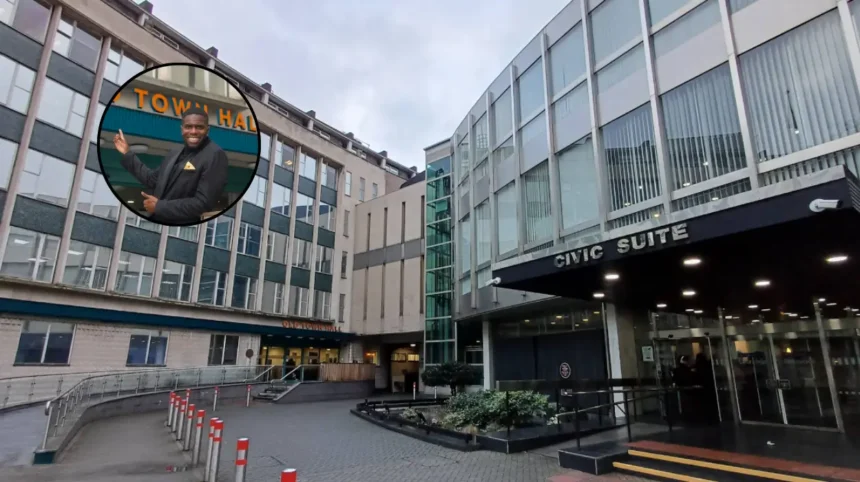
- Kayode Damali, a former The Apprentice candidate and entrepreneur, has launched an independent bid for Mayor of Lewisham ahead of local elections on May 7, 2026.
- Damali’s campaign relies heavily on social media, particularly TikTok, targeting voters disillusioned with traditional politics.
- He draws from personal experiences of violence in Lewisham during the late 2000s, including seeing friends lose their lives and fearing for his niece’s safety in Catford.
- Key campaign issues include affordable housing shortages, safer streets, community pride, transport problems, potholes, unfair fines, and accessible leadership.
- Damali emphasises consistent community engagement over election-time campaigning, building a steady online following focused on local concerns.
- His approach has surprised observers with its reach beyond young people, including older residents recognising him on the street.
- He positions himself as committed solely to Lewisham, with no ambitions for a broader political career.
Lewisham (South London News) May 4, 2026
Why is Kayode Damali Running for Mayor of Lewisham?
Kayode Damali’s decision to enter the Lewisham mayoral race stems from deep personal roots in the borough. As reported by an unnamed correspondent in the South London Press, Damali reflected on his upbringing in Lewisham during the late 2000s:
“I saw friends lose their lives.”
He continued,
“Violence became so common that people almost became desensitised to it. I experienced situations that stay with me to this day, and it had a lasting impact on me.”
This history resurfaced years later when Damali witnessed his young niece walking alone through Catford. “That was a big turning point for me,” he recalled in the same South London Press piece.
“It made me realise she’s growing up in the same environment I experienced – one where serious incidents can still happen.”
These experiences prompted Damali to act on improving youth safety and opportunities in Lewisham, leading to his recent mayoral bid.
Damali’s public profile gained traction through reality television. He first appeared on Come Dine With Me before competing on The Apprentice in 2018, experiences that boosted his visibility without prior political involvement.
How is Damali’s Campaign Different from Traditional Efforts?
Damali is running as an independent, forgoing party backing, which shapes his unconventional strategy.
“Traditionally politics has been driven by offline campaigning and party machinery,”
he told the South London Press.
“I don’t have that advantage because I’m running as an independent, without the backing of a large party so I have to work with what I’ve got and play to my strengths. That’s why I’ve had to focus heavily on social media and I use it to reach as many residents as possible.”
His campaign prioritises a digital-first approach, sparking questions about whether London could see its first TikTok mayor. As the borough approaches elections this week, Damali aims to connect with voters disillusioned by conventional politics through community-focused social media content.
Damali criticises short-term political engagement:
“I’ve always believed that campaigning shouldn’t suddenly begin when an election is called. One of my main criticisms of traditional politics is that people only show up when it’s time to knock on doors. My view is simple: where were you a year ago, or even three years ago? For me, this isn’t about starting something new, it’s about continuing consistent work in the community.”
What Does Damali’s Daily Campaign Routine Look Like?
Damali describes his efforts as an extension of ongoing community work. “What my campaign looks like day to day is really just a continuation of what I’ve been doing for the past 12 months,” he stated in the South London Press interview.
“On a daily basis, a big part of what I do is engage with residents through social media. My following isn’t huge, but it has grown steadily, especially because I focus on local issues that matter to people.”
His routine involves early morning checks on borough happenings.
“Every morning, before I even get into the office, I’m checking what’s happening across the borough and creating content around it,”
Damali explained.
“Whether there’s an election or not, I’ve always used my platform to highlight concerns, share my perspective, and talk about how we can improve Lewisham.”
The campaign’s online reach has exceeded expectations.
“The diversity of people who have seen his campaign on social media has surprised him,”
noted the South London Press.
“People assume it’s just young people, but I’ve had older residents recognise me in the street,”
Damali added.
Background of the Development
Lewisham, a diverse borough in south-east London, has long grappled with issues of youth violence, housing pressures, and community safety, particularly in areas like Catford. Local elections on May 7, 2026, come amid ongoing debates over council leadership and resident services. Damali’s independent entry marks a shift, as past races have been dominated by major parties.
His reality TV background adds a layer of public familiarity, while social media’s role in UK local politics has grown since platforms like TikTok became tools for grassroots mobilisation during recent national campaigns. This development builds on trends where independents leverage digital tools to challenge established structures in urban boroughs facing cost-of-living strains.
Prediction: How This Development Can Affect Lewisham Voters
This development introduces a social media-driven option into the mayoral race, potentially increasing voter turnout among younger demographics and digitally active residents who feel overlooked by party politics. Lewisham voters may gain more direct access to candidate engagement through platforms like TikTok, enabling quicker feedback on local issues such as housing and safety. Independent candidates like Damali could pressure established contenders to enhance their online presence and year-round community involvement.
For disillusioned voters, this offers an alternative focused on borough-specific accountability, though success depends on translating online momentum into ballot support. Older residents noticing Damali’s campaign suggest a broader appeal, which might diversify participation but could fragment votes if multiple independents compete.