Key points
- There were no London Overground trains running to or from Richmond station for a period due to a fault on a train that blocked the line.
- The District line to and from Richmond was also affected while the incident was active.
- The fault was subsequently cleared, and normal train services to and from Richmond have since resumed.
- Passengers were advised to consult real‑time journey‑planning tools and live‑arrival information before travelling during the disruption.
- The disruption was part of a pattern of recurring issues on the Richmond branch, including earlier signalling faults and broken‑down trains affecting both the Overground and Underground routes into the borough.
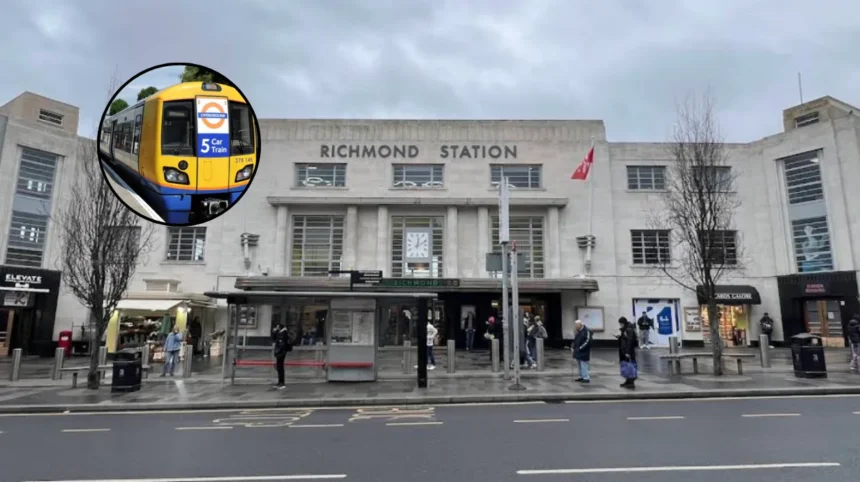
Richmond (South London News) May 4, 2026 Richmond commuters faced a complete halt to London Overground trains into and out of the borough on Thursday, 8 May 2025, after a fault on a train blocked the line, with knock‑on delays affecting the District line as well, according to National Rail and station‑level updates. Services were later restored, and trains are now running as normal, with the disruption formally recorded as “cleared” by the rail operator.
- Key points
- Why did passengers have no Overground trains to or from Richmond?
- How was the District line affected alongside the Overground?
- What did the live‑feed update say once the disruption ended?
- What advice was given to passengers during the disruption?
- Have previous incidents created a pattern of disruption at Richmond?
- Background of the development
- Prediction: How can this development affect commuters and local users
As reported by Cesar Medina of Richmond Nub News, London Overground services between Willesden Junction and Richmond were disrupted this morning due to a broken‑down train, with the fault first reported around 8:00 am. The incident caused delays along the route, and passengers heading towards Richmond and beyond were advised to allow extra time for journeys or to consider alternative routes.
National Rail stated that, following the broken‑down train between Willesden Junction and Richmond, all lines were cleared and trains are now able to run as scheduled. In a related update, the National Rail disruption page for Richmond recorded the incident as a “fault on a train at Richmond” affecting the London Overground route between Richmond and Stratford, with the issue reported at 08:00 and cleared at 09:51 on 8 May 2025.
Why did passengers have no Overground trains to or from Richmond?
Transport planners and rail operators explained that the fault on the train physically blocked the line, preventing other London Overground services from running through the section into Richmond.
As a result, no trains were able to enter or leave Richmond station on the Overground route for a period, leaving travellers reliant on bus services, South Western Railway mainline services, or alternative Underground lines.
According to the National Rail description for the Richmond incident, the disruption affected the London Overground between Richmond and Stratford, with the earlier fault on a train at Richmond now ended and services restored.
Journey‑planner tools and live departure boards were updated to show cancellations and revised turn‑up‑and‑go frequencies while the line was blocked.
How was the District line affected alongside the Overground?
While the primary cause of the disruption was the train fault on the Overground‑linked route into Richmond, the District line also saw an impact, a pattern observers have noted in previous incidents on the Richmond branch. In other disruptions, signal failures and trackside issues at Kew Gardens or nearby locations have led to temporary suspensions between Turnham Green and Richmond on the District line, with operators warning of no service on that section until the fault is fixed.
On this occasion, the disruption to the District line was not as extensive as full‑line closures seen in past incidents, but timing overlaps meant that some passengers relying on the District line to reach Richmond faced delays or had to transfer via alternative stations.
Transport for London’s standard advice in such cases is to check live status on the TfL website or app and to allow extra time for connections.
What did the live‑feed update say once the disruption ended?
The disruption‑tracking live feed for Richmond, which had been logging the incident throughout the morning, was closed after the fault was cleared.
The feed stated that there are now no London Overground trains running to or from Richmond while the line was blocked, and later that the incident had been resolved, with trains running as normal again.
The live‑blog’s closing note reminded passengers to keep an eye on the homepage for the latest transport and breaking news, emphasising that the disruption at Richmond had ended and that services could run to and from the station as normal.
What advice was given to passengers during the disruption?
During the incident, National Rail and station‑level updates advised travellers to check their routes before setting off using the rail network’s real‑time Journey Planner.
This guidance is standard for any disruption where the timetable is altered, and passengers are encouraged to look up live departure times rather than relying on printed timetables.
South Western Railway, which operates mainline services through Richmond, also pre‑emptively warns passengers to allow extra time when other parts of the network are affected by faults, even if the operator’s own trains are not directly in question. On days with multiple incidents, such as strikes or signalling problems further along the line, this kind of advice is often repeated across TfL and rail operator channels.
Have previous incidents created a pattern of disruption at Richmond?
Local reports and political commentary have highlighted that Richmond has seen repeated issues on both the District line and London Overground routes in recent years. In 2024, Richmond Park MP Sarah Olney and Richmond Council leader Gareth Roberts raised concerns over persistent track and signal failures affecting the District line branch into Richmond, describing the situation as a “serious problem” for commuters and visitors.
Network Rail’s own route director, Laurence Bowman, has acknowledged the spike in disruption and outlined long‑term plans to improve how services are controlled and to replace trackside signalling where appropriate. Prior incidents, including a trespasser‑related disruption and signalling faults at Kew Gardens, have previously led to temporary suspensions between Turnham Green and Richmond on the District line, underlining the sensitivity of the branch to single‑point failures.
Background of the development
The May 2025 incident sits within a broader context of capacity and reliability issues on the Richmond rail corridor. The Richmond branch of the District line is the only Tube route into the borough, making it particularly vulnerable to delays when faults occur at Kew Gardens or nearby junctions. London Overground services into Richmond, which share or run adjacent to parts of the same rail infrastructure, are similarly affected by train faults, signalling problems, and track possession work.
Richmond residents and local politicians have previously called for more resilient signalling, better fleet reliability, and clearer communication during disruptions, especially given the borough’s reliance on a single Underground line and limited Overground alternatives. The repeated nature of these incidents has prompted Network Rail and Transport for London to outline longer‑term improvement programmes, although individual faults such as the May 2025 train breakdown still cause short‑term but significant stoppages.
Prediction: How can this development affect commuters and local users
For regular commuters using the Overground and District line to travel through and into Richmond, a single incident like this can ripple through the morning rush, increasing pressure on buses and alternative routes. With the Richmond branch already seen as a pinch‑point in the network, repeated breakdown-type faults may reinforce passenger concerns over reliability, especially among those heading to central London workplaces or transferring to other Tube lines.