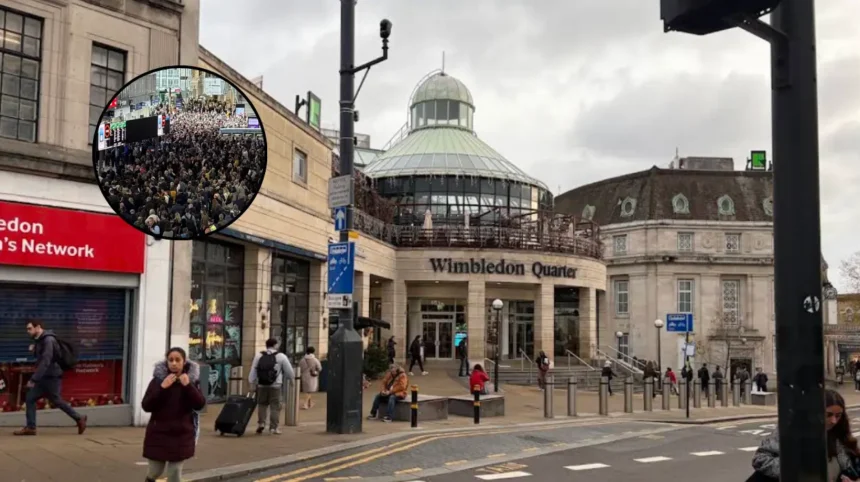
Key Points
- Signalling Fault Causes Network Chaos: A major technical fault in the signalling system at Wimbledon station on Sunday morning forced the closure of key lines, resulting in extensive travel disruption across south London.
- Severe Delays and Cancellations: Trains running through Wimbledon were subjected to widespread cancellations, route alterations, and delays of up to 90 minutes.
- Wide-Ranging Regional Impact: Affected routes included key South Western Railway services operating between London Waterloo and outer destinations such as Portsmouth Harbour, Bournemouth, Exeter St Davids, Basingstoke, and Guildford.
- Reopening and Recovery: Lines were reopened after engineers addressed the signalling failure, with full service restoration achieved shortly before 2:00 PM.
- Passenger Travel Advice: National Rail advised all affected travellers to verify their journeys in advance and utilize alternative bus, Tube, and tram connections during the disruption period.
Wimbledon (South London News) August 4, 2026 — Hundreds of rail passengers across south London and the South East experienced severe travel disruption on Sunday morning after a major signalling fault closed rail lines at Wimbledon station. The infrastructure breakdown caused widespread service cancellations, emergency route diversions, and delays extending up to 90 minutes across key commuter and long-distance corridors connecting London Waterloo with regional hubs. Although engineers restored the signalling system later in the morning, residual delays and schedule alterations continued to impact thousands of passengers before regular operations were fully recovered shortly before 2:00 PM.
- Key Points
- What Caused The Major Train Disruption At Wimbledon On Sunday?
- Which Rail Routes And Stations Were Affected By The Signalling Fault?
- What Advice Was Given To Affected Passengers During The Disruption?
- What Is The Background Of Recent Infrastructure Issues In South London Rail Networks?
- How Will This Disruption Impact Passengers, Commuters, And Regional Rail Operations?
What Caused The Major Train Disruption At Wimbledon On Sunday?
As reported by transport correspondents at The London Standard, the primary trigger for Sunday’s travel breakdown was a localized failure within the trackside signalling infrastructure at Wimbledon station on Sunday morning.
The signalling system, which manages safe spacing and movement of passenger trains across high-density tracks, suffered an operational fault that forced network managers to close affected lines as a precaution.
Engineers from Network Rail were deployed to inspect and rectify the underlying fault. Following emergency repairs, lines through Wimbledon were reopened.
However, owing to train crew and rolling stock positioning issues created by the temporary line closures, rail operators were required to run reduced services while normal timetables were gradually reinstated.
Which Rail Routes And Stations Were Affected By The Signalling Fault?
As detailed in official travel updates issued by National Rail and highlighted by The London Standard, the signalling failure had a domino effect across both suburban commuter corridors and main-line passenger services.
Services affected by the outage included routes between London Waterloo and:
- Shepperton
- Hampton Court
- Chessington South
- Leatherhead
- Guildford
- Portsmouth Harbour
- Basingstoke
- Salisbury
- Bournemouth
- Poole
- Weymouth
- Yeovil Junction
- Exeter St Davids
Furthermore, direct local services operating between Wimbledon and Guildford faced major interruptions throughout the morning hours.
What Advice Was Given To Affected Passengers During The Disruption?
As stated by representatives from National Rail, passengers travelling through the affected south London grid were strongly urged to review real-time journey planners before departing for their stations.
Rail operators noted that trains were subject to short-notice cancellations, altered stops, or terminating early at intermediate stations while normal service patterns were restored.
To minimize travel inconvenience, alternative travel arrangements were put in place, allowing rail tickets to be accepted on local London Bus routes, selected London Underground lines, and London Trams across affected zones.
Passengers experiencing journey delays of 15 minutes or longer were reminded to retain their tickets to claim compensation via the Delay Repay scheme operated by South Western Railway and partner network operators.
Explore More Wimbledon News
Faith in Action eviction at Wimbledon Salvation Army site
Wimbledon roofer fall fine: HSE fines company, 2026
What Is The Background Of Recent Infrastructure Issues In South London Rail Networks?
Wimbledon station serves as one of the busiest rail interchanges in south London, accommodating thousands of inner-suburban and long-distance train movements daily alongside London Underground District line services.
Because of the high density of train movements passing through the Wimbledon bottleneck, any single technical malfunction—such as a signalling glitch, points failure, or track supply issue—rapidly cascades across interconnected suburban lines.
Over recent years, south London train operators and Network Rail have faced ongoing maintenance challenges across aging track equipment and complex relay systems.
Similar technical failures across neighbouring hubs like Clapham Junction, Tulse Hill, and Peckham Rye have periodically triggered widespread disruptions across South Western Railway, Southern, and Thameslink routes.
These operational bottlenecks underscore the delicate equilibrium required to maintain uninterrupted Sunday and weekday schedules across the South East rail infrastructure.
How Will This Disruption Impact Passengers, Commuters, And Regional Rail Operations?
This latest signalling failure at Wimbledon highlights several direct implications for passengers and network stakeholders:
- Impact on Passengers and Weekend Commuters: Weekend travellers face increased journey times, unexpected route diversions, and missed connections for long-distance journeys toward the South Coast and West of England. The recurring nature of technical failures during weekend maintenance windows risks diminishing public confidence in weekend rail reliability.
- Operational Strain on Rail Operators: Short-notice route adjustments require train operating companies to rebalance driver rosters and relocate misplaced rolling stock. This places temporary operational stress on station staff and customer support teams managing passenger flow during peak disruption hours.
- Pressure for Infrastructure Modernization: Incidents of this nature escalate pressure on Network Rail and the Department for Transport to accelerate capital investment in digital signalling upgrades and predictive maintenance systems along key London commuter trunk routes, reducing single-point failures at essential rail junctions like Wimbledon.