Key Points
- Call for Exemptions: Clapham & Brixton Hill MP Bell Ribeiro-Addy has formally requested Lambeth Council to consider introducing Resident Exemption Permits for those living inside Low Traffic Neighbourhood (LTN) boundaries.
- Support with Caveats: The MP reaffirmed her support for traffic-calming measures to fight pollution but stressed that current implementations penalise residents by forcing them into circuitous driving routes.
- Boundary Road Impact: The correspondence highlights an increase in traffic and longer journey times on boundary roads, which often run through areas with higher levels of social deprivation.
- Council Response: Lambeth Council, under its new leader Martin Abrams, has indicated that the option to implement resident exemptions will remain under consideration.
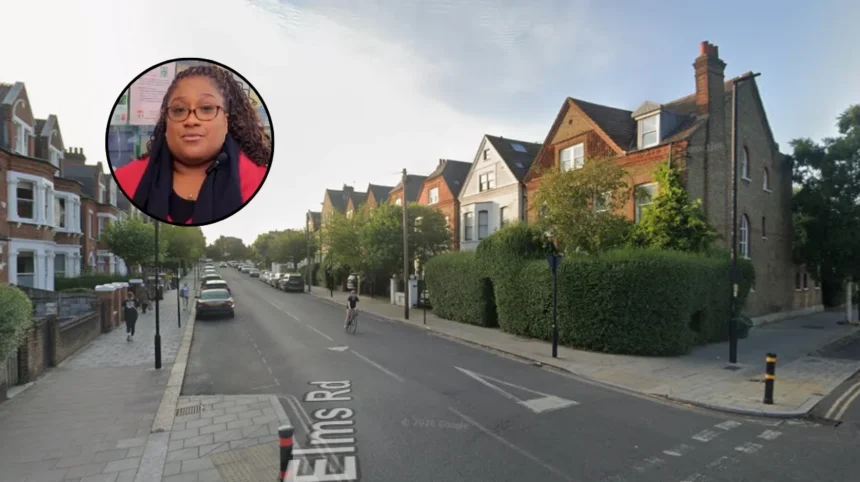
Clapham & Brixton Hill (South London News) July 2, 2026 -Clapham & Brixton Hill Member of Parliament Bell Ribeiro-Addy has formally intervened in the ongoing local debate surrounding urban traffic schemes, writing an official letter to the newly appointed Lambeth Council Leader, Martin Abrams. The correspondence explicitly urges the local authority to introduce Resident Exemption Permits for individuals residing within the boundaries of Low Traffic Neighbourhood. MP Demands Resident LTN Exemptions in Clapham 2026
s (LTNs). While Ribeiro-Addy maintained her long-standing position that traffic-calming initiatives are necessary to combat air pollution and reduce overall car usage across the borough, she argued that the current framework inadvertently penalises local homeowners. By restricting direct access to residential zones, the current LTN rules force drivers to take lengthy, circuitous routes to reach their properties, which subsequently displaces vehicular congestion onto major boundary roads that border more deprived communities.
- Key Points
- What are the Core Concerns Raised by MP Bell Ribeiro-Addy Regarding Lambeth’s LTNs?
- How has Lambeth Council Responded to the Request for Resident Exemption Permits?
- Background of the Low Traffic Neighbourhood Development in Lambeth
- Prediction: How Will This Development Affect Local Residents and Commuters?
What are the Core Concerns Raised by MP Bell Ribeiro-Addy Regarding Lambeth’s LTNs?
In her formal letter to Council Leader Martin Abrams, Ribeiro-Addy balanced praise for environmental initiatives with a sharp critique of their localized social impacts.
According to reporting by local government correspondents covering the Lambeth borough, the MP emphasised that while the climate benefits of traffic reduction remain clear, the practical execution requires adjustments to maintain community equity.
As reported by local political reporters tracking the correspondence, Bell Ribeiro-Addy, MP for Clapham & Brixton Hill, stated:
“Our borough has long been home to some of the worst traffic pollution hotspots in the country. Whilst traffic calming measures like the LTNs are vital to tackling this and driving traffic reductions, they must be implemented in the most effective way. I am glad to hear that the council will keep this option under consideration.”
The MP’s intervention comes at a critical juncture for Lambeth Council, which has faced sustained pressure from various resident coalitions regarding the layout of its active travel zones. Ribeiro-Addy pointed out that the current setup creates an unfair logistical and financial burden on those who rely on vehicles for daily essential travel.
Ribeiro-Addy further stated within the correspondence:
“It is wrong to penalise people for travelling to and from their properties. Indeed, we may even see modest improvements if residents no longer have to take circuitous routes to get to and from home.”
How do LTNs Affect Bordering Roads and Social Equity?
A central element of the MP’s argument focuses on the geographical displacement of vehicular emissions. When internal residential streets are closed off via modal filters—such as bollards, planters, or camera-enforced gates—traffic is naturally diverted to the perimeter roads that frame the LTN zones.
Ribeiro-Addy explicitly connected this displacement to wider socioeconomic disparities within the borough, noting that these perimeter corridors frequently overlap with lower-income neighborhoods.
In her concluding remarks to the council leadership, Ribeiro-Addy noted:
“We also need to acknowledge the impact of LTNs on residents living on boundary roads, which are frequently situated in areas of higher deprivation.”
How has Lambeth Council Responded to the Request for Resident Exemption Permits?
Following the reception of the letter, municipal sources indicate that Lambeth Council leadership is reviewing the viability of a permit system.
The transition in council leadership to Martin Abrams has opened a window for policy reassessments, though the administration remains protective of its baseline environmental targets.
According to statements gathered by municipal reporters from Lambeth Council representatives, the local authority has confirmed receipt of the MP’s proposals.
The leadership team stated that they intend to keep the mechanism of resident exemptions under formal consideration as part of their routine monitoring and evaluation of active travel schemes across the borough. However, the council has not yet committed to a definitive timeline or a specific pilot framework for implementing these permits.
Background of the Low Traffic Neighbourhood Development in Lambeth
Low Traffic Neighbourhoods were widely deployed across several London boroughs, including Lambeth, starting heavily in 2020 under emergency active travel funds aimed at promoting walking and cycling while discouraging short car journeys.
The schemes operate by using camera-controlled enforcement zones or physical barriers to stop non-residential drivers from using side streets as through-routes, commonly referred to as “rat-running.”
While these measures successfully lowered traffic volumes inside the immediate interior zones, they quickly became a polarizing topic in local politics. Critics, including local transport groups and boundary-road resident associations, have consistently argued that the schemes do not entirely eliminate traffic but instead concentrate congestion, delays, and poor air quality onto major arterial roads.
Lambeth Council has previously adjusted certain schemes following public consultations, but the implementation of blanket resident exemptions has historically been resisted by urban planners who argue that exemptions can dilute the overall efficacy of traffic reduction goals by keeping high numbers of private vehicles on residential streets.
Prediction: How Will This Development Affect Local Residents and Commuters?
Should Lambeth Council act upon MP Ribeiro-Addy’s recommendations and introduce Resident Exemption Permits, the decision will significantly alter the daily commutes and environmental conditions for two distinct local audiences: interior LTN residents and boundary road communities.
Residents living directly inside the LTN zones would experience an immediate reduction in journey times and a decrease in daily frustration. Under the current system, these drivers must navigate lengthy detours to enter or exit their own streets due to camera-enforced blocks.
A permit system would grant them direct access through local filters, lowering fuel consumption and making essential car travel far more efficient for families, elderly residents, and individuals with mobility dependencies.
For Boundary Road Communities and General Commuters
Conversely, the impact on boundary road residents and external commuters could be mixed. If resident exemptions lead to a net increase in local car usage within the interior streets, it might slightly ease the bottleneck pressures currently felt on peripheral roads during peak hours.
However, transport analysts suggest that if the permit system is implemented too broadly, it could encourage more driving overall, potentially stalling the borough’s progress toward improved air quality targets and leaving boundary roads—which run through areas of higher deprivation—susceptible to ongoing, concentrated traffic congestion.