Key Points
- Southwark Council has launched a public consultation on plans to introduce camera-operated bus-only sections along Walworth Road in south London.
- General motor traffic would be restricted from the bus gates, though exemptions would apply to buses, other approved vehicles, Blue Badge holders, and vehicles making deliveries to local businesses.
- Three additional traffic barriers are proposed at the junctions of Rodney Road and Flint Street, East Street and Old Kent Road, and Albany Road at Camberwell Road to reduce congestion, accelerate bus journeys, and improve air quality.
- The proposal follows the October 2026 pedestrianisation of a one-kilometre stretch of Oxford Street and ongoing pedestrianisation plans for Camden High Street and Westminster’s Parliament Square.
- Separately, Richmond Council has announced new biodiversity events to connect residents, schools, and local groups with nature, highlighting the ecological role of cemeteries and statutory Biodiversity Net Gain (BNG) rules requiring a minimum 10 per cent habitat improvement on eligible developments.
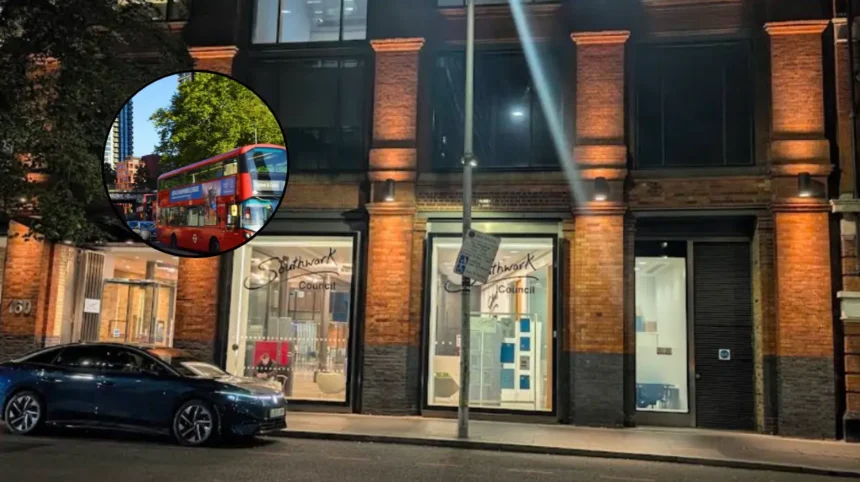
Southwark (South London News) November 25, 2026 – Southwark Council has officially launched a public consultation regarding proposals to introduce camera-operated bus gates along Walworth Road, a move that would restrict general motor traffic and create bus-only sections on the busy south-east London high street.
- Key Points
- What Changes Are Proposed for Walworth Road?
- Where Else Is Southwark Council Proposing Traffic Barriers?
- How Does Richmond Council’s Biodiversity Initiative Connect to Local Green Spaces?
- What Are the Statutory Requirements for Biodiversity and Development?
- Background of the Development
- Prediction: How These Developments Could Affect London Residents, Commuters, and Businesses
What Changes Are Proposed for Walworth Road?
Under the plans put forward by Southwark Council, camera-operated bus gates would be installed along Walworth Road to reduce traffic congestion. If implemented, these gates would permit passage exclusively for buses and other authorised vehicles while barring general motor traffic from using the restricted sections of the thoroughfare.
To maintain accessibility for essential services and vulnerable road users, the council has outlined specific exemptions within the proposal. Blue Badge holders and vehicles conducting deliveries to local businesses along the strip would remain permitted to pass through the restricted zones.
Where Else Is Southwark Council Proposing Traffic Barriers?
Alongside the main restrictions on Walworth Road, Southwark Council has proposed the installation of three additional traffic barriers at surrounding road junctions. According to the council’s plans, these barriers would be positioned at:
- The junction of Rodney Road and Flint Street.
- The junction of East Street and Old Kent Road.
- Albany Road at the junction of Camberwell Road.
The local authority stated that the combined measures are intended to speed up bus journey times, lower overall traffic congestion, and improve local air quality across the area.
How Does Richmond Council’s Biodiversity Initiative Connect to Local Green Spaces?
In a separate municipal update concerning urban environments, Richmond Council announced the launch of additional biodiversity events aimed at providing residents, schools, and local community groups with opportunities to engage with local wildlife and nature. Interested parties looking to participate in community growing, volunteering, or biodiversity activities have been directed to register via email at parks@richmond.gov.uk.
A Richmond Council spokesperson stated:
“Green spaces across Richmond play an important role in supporting biodiversity.”
The spokesperson further explained the specific ecological value of burial grounds:
“Cemeteries can make a particular contribution because their combination of mature trees, hedgerows, grassland, planted areas and quieter spaces can provide food, shelter and habitats for a range of species.”
Addressing maintenance practices, the Richmond Council spokesperson added:
“Thoughtful management can increase these benefits. Protecting established trees and habitats, introducing appropriate native and pollinator-friendly planting, allowing flowers to bloom before mowing, and creating new habitat features can all help wildlife while maintaining cemeteries as welcoming and respectful places for remembrance.”
What Are the Statutory Requirements for Biodiversity and Development?
Richmond Council noted that protecting and enhancing biodiversity—defined as the variety of life including trees, plants, wildflowers, insects, birds, and bats—forms a central component of the local planning process.
Under national planning frameworks in England, Biodiversity Net Gain (BNG) requires development projects to leave natural habitats in a measurably better state than prior to construction. Introduced through Schedule 7A of the Town and Country Planning Act 1990, as inserted by the Environment Act 2021, statutory BNG mandates that most applicable developments must deliver at least a 10 per cent increase in biodiversity value compared to the pre-development habitat.
Background of the Development
The consultation on Walworth Road forms part of a broader shift toward pedestrianisation and traffic reduction across London throughout 2026. Prior to Southwark Council’s announcement, a one-kilometre section of Oxford Street officially became car-free in October 2026. Similar traffic-reduction and pedestrianisation schemes are also currently in development for Camden High Street and Westminster’s Parliament Square. Meanwhile, local authorities such as Richmond Council continue to integrate statutory environmental frameworks—specifically the Environment Act 2021’s Biodiversity Net Gain mandate—into urban management and community outreach programmes.
Prediction: How These Developments Could Affect London Residents, Commuters, and Businesses
For daily commuters and public transport users in south-east London, the proposed bus gates on Walworth Road and the three surrounding junction barriers could result in faster, more reliable bus journeys and cleaner air along the high street. Conversely, private motorists travelling through the SE postcode area will need to adapt to altered routes and restricted through-access, while local businesses and Blue Badge holders will rely on the proposed exemption framework to maintain deliveries and essential access without incurring camera-enforced penalties. In Richmond, residents, schools, and property developers can expect increased community conservation activities alongside strict adherence to the 10 per cent biodiversity improvement threshold during local planning applications.