Key Points
- Southwark Council unanimously voted to reject a revised planning application for 1,060 homes at the Bermondsey Place development on Old Kent Road.
- Designed by architecture firm PRP and developed by Berkeley Homes, the updated scheme reduced the proportion of affordable housing from 40% down to 12%.
- The developer cited significant viability challenges as the primary reason for slashing the social and intermediate rent allocations.
- The revised design also altered the physical scale of the project, lowering the height of the tallest block from 44 storeys to 36 storeys within an eight-block masterplan.
- The refusal coincided with public statements from Berkeley Homes Chair Rob Perrins highlighting widespread planning rejections across local councils due to unyielding viability compromises.
- Phase one of Bermondsey Place, comprising 285 homes with a 40% affordable housing provision, remains underway after earlier delays caused by rising construction costs.
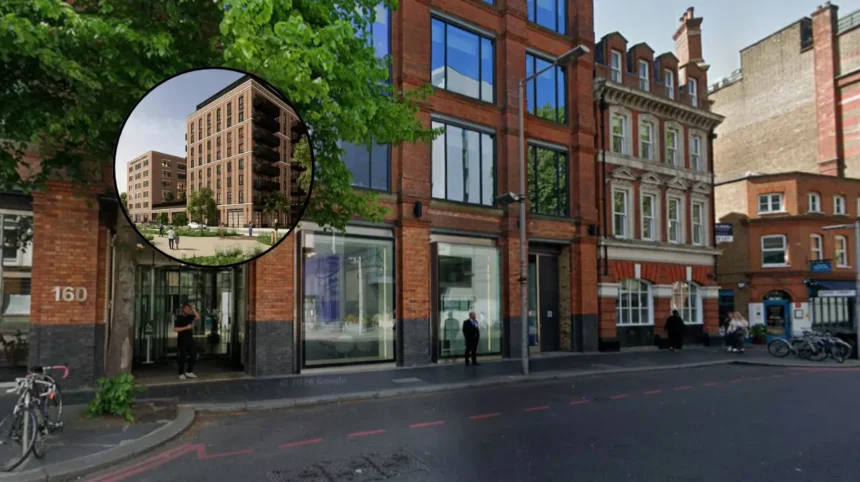
Southwark (South London News) October 9, 2026 – Southwark Council has formally refused planning permission for a revised 1,060-home residential proposal designed by PRP Architects for the Bermondsey Place development site on Old Kent Road, following a decision by developer Berkeley Homes to significantly reduce the proportion of affordable housing offered within the scheme. The updated planning application sought to alter the second and third phases of the masterplan by reducing the provision of social and intermediate rented homes from the originally agreed 40% down to 12%. Members of Southwark Council’s planning committee voted unanimously against the revised application, concluding that the substantial reduction failed to meet the acute public housing needs of the local borough.
- Key Points
- Why Did Southwark Council Reject the Revised Bermondsey Place Scheme?
- How Did Berkeley Homes Justify the Reduction in Affordable Housing?
- What Is the Current Status of the Overall Bermondsey Place Masterplan?
- Background of the Bermondsey Place Development
- Prediction: How Will This Development Affect Local Residents and the Housing Market?
Why Did Southwark Council Reject the Revised Bermondsey Place Scheme?
The unanimous rejection by Southwark Council focused on the drop in affordable housing provision included within the revised submission for phases two and three of the project. Under the previous planning framework, the development was expected to deliver 40% affordable housing across its future phases. However, in its updated submission, Berkeley Homes sought to modify these terms, proposing that only 12% of the overall 1,060 units be designated as social or intermediate rent housing.
During the committee proceedings, local councillors maintained that such a sharp decrease did not align with the borough’s statutory housing policies or address local demands for affordable accommodation. Alongside the financial and tenure adjustments, the revised scheme introduced architectural modifications to the overall footprint. The masterplan, which features eight distinct buildings, was altered to reduce the height of its primary focal structure, bringing the tallest residential tower down from 44 storeys to 36 storeys. Despite the reduction in total height and bulk, councillors resolved that the physical design alterations could not offset the loss of affordable housing.
How Did Berkeley Homes Justify the Reduction in Affordable Housing?
The decision to cut the affordable housing allocation was attributed directly to economic viability challenges surrounding the development site. According to statements submitted alongside the planning application, maintaining the original target of 40% affordable housing made the completion of the project financially unviable under current macroeconomic conditions and rising construction expenses.
The planning refusal coincided directly with public commentary delivered by Rob Perrins, the Chair of Berkeley Homes, during the Building the Future conference. Addressing industry leaders, Perrins highlighted the growing friction between housebuilders and local planning authorities across the country, noting that at a local level, the company was seeing approximately 75% of its planning applications refused by local authorities.
Perrins explained the structural pressures facing developers during his address, stating that when facing a viability challenge, compromises must be made, but at present, no party appears willing to relinquish their specific priority terms. The comments underscored the wider tension across the residential sector between enforcing municipal planning policies and adjusting to changing development costs.
What Is the Current Status of the Overall Bermondsey Place Masterplan?
The Bermondsey Place development is located on land situated behind the Asda superstore on Old Kent Road, forming part of a broader regeneration corridor within the London Borough of Southwark. A hybrid planning application covering the entire site was initially granted approval in 2020, establishing an overall outline for up to 1,300 homes across multiple operational phases.
Construction on phase one of the project is currently underway. This initial phase involves the construction of 285 homes, built in accordance with the original 40% affordable housing requirement. The history of phase one reflects broader market instability across the construction sector; ground was first broken on the site in 2021, but development stalled in 2022 due to sharp increases in material and labor costs. Construction work subsequently recommenced on site in 2025 to complete the initial batch of homes before the commencement of phases two and three.
Background of the Bermondsey Place Development
The planning trajectory of Bermondsey Place reflects the broader evolution of redevelopment policy along London’s Old Kent Road Opportunity Area. Designated as a major focus for residential and commercial expansion by the London Plan, the Old Kent Road corridor has seen numerous high-density applications submitted over the past decade to address the capital’s structural housing shortages.
In 2020, Southwark Council granted hybrid planning consent for the masterplan, setting the benchmark for site density, tower heights, and public contributions. Central to this initial agreement was the local policy requirement targeting a minimum of 35% to 40% affordable housing on major private developments, divided between social rented units and intermediate tenure models such as shared ownership.
However, the economic conditions surrounding large-scale urban regeneration have shifted markedly since the original approvals were secured. Following the global supply chain disruptions of 2021 and subsequent inflationary pressures in 2022, baseline costs for raw materials, energy, and skilled labor rose sharply across the UK construction sector. Concurrently, increases in interest rates altered financing costs for major residential builds.
For projects with multi-year delivery schedules like Bermondsey Place, these financial headwinds created significant gaps between projected construction budgets and anticipated market values. Developers across London have increasingly utilized financial viability assessments—a formal statutory mechanism allowing applicants to request reductions in affordable housing quotas or community infrastructure levies if unexpected cost inflation threatens to make a scheme unviable to build. Southwark Council’s refusal of the PRP-designed scheme signifies a strict enforcement of local tenure targets, prioritizing affordable unit delivery over market viability compromises.
Prediction: How Will This Development Affect Local Residents and the Housing Market?
The refusal of the revised proposal for Bermondsey Place is likely to produce distinct consequences for local residents, the municipal authority, and the broader London housing market.
- Impact on Local Residents and Housing Applicants: For residents on Southwark’s housing waiting lists, the council’s decision prevents the lock-in of a low 12% affordable tenure rate on a major masterplan site. However, because the developer cannot proceed with the rejected scheme, the short-to-medium term outcome is a complete pause on the delivery of the remaining 1,060 planned homes. Until a revised application or appeal is settled, no additional units—market-rate or affordable—will enter the local housing supply on phases two and three.
- Impact on the Regional Development Pipeline: For housebuilders and architectural practice PRP, the decision reinforces the firm boundary local councils are drawing regarding section 106 obligations and affordable housing thresholds. Developers operating across inner London may re-evaluate the risk profiles of high-density, multi-phase schemes, leading to further delays or requests to renegotiate terms before breaking ground.
- Future Planning Dynamics: The conflict points toward a potential increase in planning appeals submitted to the Planning Inspectorate, or direct intervention from central government bodies seeking to accelerate housing delivery across major urban opportunity zones. If developers choose not to build under 40% affordability mandates while councils refuse to approve lowered thresholds, land within key regeneration areas risks sitting underutilized for extended periods, deepening the friction between policy enforcement and actual housing delivery.