Key Points
- A Grade II listed gasholder, known as Gasholder No. 13, in south London could be transformed into a wild swimming pond as part of regeneration works along the Old Kent Road.
- Southwark Council has revealed plans for a new park named after gasworks founder George Livesey in the surrounding area.
- The proposed facility would feature a swimming pond forming half of the installation, with the other half comprising a pond with reed beds for natural water filtration.
- Council documents describe the facility as “a unique health offer, with nothing similar in London, the UK or Europe”.
- The plans form part of wider regeneration efforts outlined in Southwark Council’s planning policy for the Old Kent Road area.
- The gasholder’s historical significance as a landmark structure underscores the sensitivity of any proposed changes.
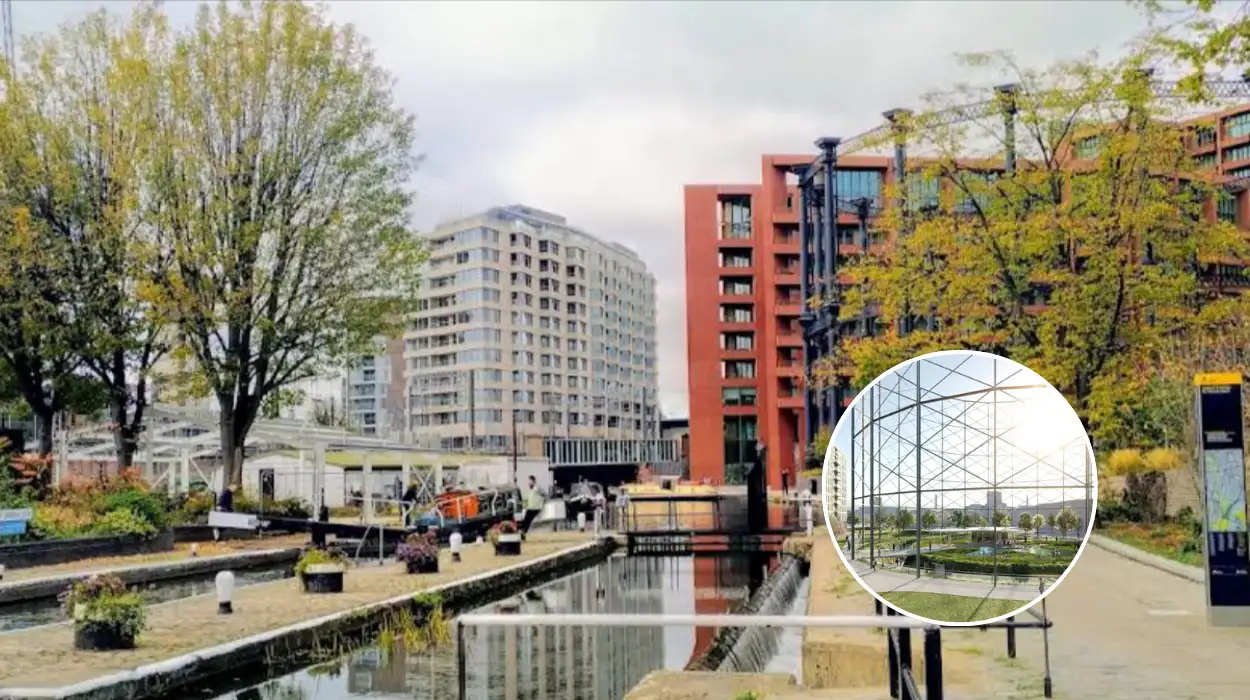
Southwark (Southwark News) January 20, 2026 – A Grade II listed gasholder in south London could soon host a wild swimming pond, Southwark Council has revealed in new planning documents. The ambitious project, centred around Gasholder No. 13, forms part of broader regeneration works along the Old Kent Road and would create a new park named after gasworks founder George Livesey. If approved, the site would offer a dual-pond system, with one half dedicated to swimming and the other featuring reed beds for natural filtration, touted as a pioneering health facility unmatched anywhere in London, the UK, or Europe.
- Key Points
- What Is the Proposed Wild Swimming Pond at Gasholder No. 13?
- Why Is This Project Part of Old Kent Road Regeneration?
- How Would the Dual-Pond System Work?
- What Makes This a ‘Unique Health Offer’?
- Who Is George Livesey, and Why Name the Park After Him?
- What Challenges Lie Ahead for Approval?
- How Does This Fit into London’s Broader Swimming Trends?
- What Have Stakeholders Said So Far?
What Is the Proposed Wild Swimming Pond at Gasholder No. 13?
The centrepiece of the proposal is a innovative water-based facility within the iconic Gasholder No. 13, a Grade II listed structure that stands as a testament to London’s industrial heritage. According to council documents released as part of the Old Kent Road regeneration framework, the gasholder would house a wild swimming pond occupying half of the installation. The remaining space would be dedicated to a complementary pond lined with reed beds, designed to provide natural filtration for the water.
As detailed in Southwark Council’s planning environment section, this setup would leverage natural processes to maintain water quality, eschewing chemical treatments common in conventional pools. “A unique health offer, with nothing similar in London, the UK or Europe,” the council documents state explicitly, highlighting the project’s novelty. The park surrounding the gasholder would bear the name of George Livesey, the founder of the South London gasworks, honouring his legacy in the area’s industrial history.
Why Is This Project Part of Old Kent Road Regeneration?
The wild swimming pond initiative emerges from Southwark Council’s comprehensive regeneration strategy for the Old Kent Road corridor. This wider programme aims to revitalise a key arterial route in south London, blending housing, green spaces, and community amenities amid rapid urban development. The gasholder project slots into these efforts by repurposing a disused industrial relic into a vibrant public asset.
Council planning policy and guidance documents, accessible via Southwark’s official website, outline how the Livesey Park vision aligns with sustainable urban renewal goals. By integrating the gasholder into the parklands, the council seeks to preserve heritage while addressing modern demands for outdoor recreation and wellness spaces. The Old Kent Road area, long associated with heavy traffic and post-industrial decline, stands to benefit from enhanced biodiversity and public access to nature.
How Would the Dual-Pond System Work?
Engineering the wild swimming pond relies on an ecologically sound design where reed beds act as a living filter. Water would circulate between the swimming pond and the reed bed pond, with plants and microorganisms naturally purifying it through phytoremediation. This method mimics natural wetlands, ensuring clean, chemical-free swimming conditions.
Southwark Council’s technical specifications emphasise the system’s efficiency and low maintenance needs, positioning it as a model for future urban green projects. The Grade II listing imposes strict preservation requirements, meaning any modifications must respect the gasholder’s cylindrical iron framework and historical integrity. Construction, if greenlit, would involve careful retrofitting to house the ponds without compromising the structure’s architectural features.
What Makes This a ‘Unique Health Offer’?
Proponents describe the facility as revolutionary due to its scarcity across major cities. Unlike chlorinated lidoes or indoor pools, this wild swimming venue would promote immersion in biologically balanced water, akin to natural lakes but within an urban setting. Council documents assert confidently: “a unique health offer, with nothing similar in London, the UK or Europe,” pointing to benefits like improved mental wellbeing, physical fitness, and connection to nature.
Comparisons to existing sites, such as the Hampstead Heath bathing ponds, fall short as those lack the industrial-chic enclosure of a gasholder. For Londoners seeking alternatives to gym-based exercise, this could draw crowds year-round, weather permitting, fostering community health in a densely populated borough. Accessibility features, though not yet detailed, would likely include changing facilities and pathways integrated into the Livesey Park layout.
Who Is George Livesey, and Why Name the Park After Him?
George Livesey (1834–1915) was a pivotal figure in London’s gas industry, founding the South Metropolitan Gas Company that powered much of south London. His innovations in gas production and distribution left a lasting imprint on areas like the Old Kent Road, where gasholders like No. 13 once stored the fuel. Naming the new park after him acknowledges this heritage, bridging industrial past with eco-friendly future.
Historical records note Livesey’s philanthropy, including workers’ welfare schemes, which resonate with the project’s public health focus. By honouring him, Southwark Council signals respect for local history amid modernisation. The gasholder itself, one of the last of its kind, embodies Livesey’s era, making the tribute fitting.
What Challenges Lie Ahead for Approval?
Securing planning permission remains the critical hurdle, given the site’s Grade II status overseen by Historic England. Any alterations must balance conservation with innovation, potentially sparking debate among heritage groups. Southwark Council’s regeneration framework invites public consultation, where residents could voice support or concerns over traffic, maintenance costs, or ecological impacts.
Environmental assessments will scrutinise water quality, biodiversity gains from reed beds, and flood risks in this Thames-adjacent zone. Funding, likely a mix of council budgets and developer contributions under the Old Kent Road plan, adds another layer. Despite enthusiasm, timelines stretch into late 2026 or beyond, pending green light.
How Does This Fit into London’s Broader Swimming Trends?
London has seen a surge in wild swimming interest post-pandemic, with sites like Parliament Hill and Serpentine drawing record visitors. This gasholder project would elevate that trend by offering an enclosed, all-weather option in south London, underserved compared to the north. It aligns with Sadiq Khan’s green belt expansions and net-zero goals, promoting low-carbon recreation.
Similar European projects, like Vienna’s Alte Donau, provide blueprints, though none match the gasholder’s landmark status. For Southwark, it could boost tourism, positioning the borough as a wellness destination alongside its cultural hubs like the Tate Modern.
What Have Stakeholders Said So Far?
Southwark Council has led the disclosure, with planning officers embedding the proposal in public documents without named quotes yet. Heritage advocates may welcome the adaptive reuse, preventing decay, while environmentalists praise the natural filtration. Local residents, per council engagement norms, will have input during consultations.
No opposition statements have surfaced, but watchdog groups like the Twentieth Century Society often scrutinise listed structure changes. As reported in initial coverage, the council’s phrasing underscores ambition: “a unique health offer,” inviting broad dialogue.