Key Points
- A raised pedestrian crossing on London Road in Hackbridge is causing strong vibrations when heavy vehicles cross it.
- Tolga Sen, owner of Equinox Fish Bar at 150 London Road, reports shaking, rattling windows and alleged cracks in the building.
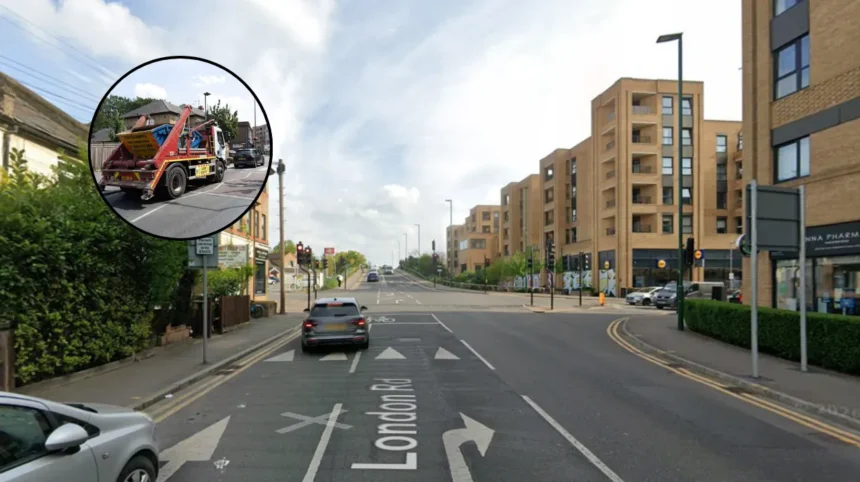
- London Road (A237) is a busy arterial route serving an industrial estate, train station, schools and housing; HGVs, buses and vans frequently use it.
- Local business owners say the crossing has not reduced vehicle speed and may have unintended impacts on buildings and business operations.
- The story was reported by the Local Democracy Reporting Service (LDRS).
Hackbridge (South London News) July 23, 2026 — Business owners on London Road have told reporters that a newly installed raised pedestrian crossing is causing significant vibration and disturbance, with one proprietor saying the effect is strong enough to rattle windows and may have caused cracks in the building.
- Key Points
- What evidence have residents and business owners presented about damage or disturbance?
- What was the council’s aim when implementing the raised crossing and has it been evaluated?
- Have other local roads seen similar concerns after traffic-calming measures?
- What do traffic engineers and vibration experts usually consider in these situations?
- What responses or actions have been reported or requested by local stakeholders?
- How have local road users and pedestrians been affected by the raised crossing?
- Background
- Prediction: How could this development affect local businesses and road users?
As reported by Tolga Sen to the Local Democracy Reporting Service (LDRS), the crossing produces a pronounced shaking when heavy vehicles — particularly HGVs, buses and large vans — traverse it. “It shakes badly,” Tolga told the LDRS.
“You can especially hear it when you are upstairs.”
He added:
“I could understand if it made the cars go slower, but it doesn’t. It just shakes the road and affects us.”
Tolga also said he believes the vibrations have contributed to cracks in the upstairs rooms of his premises at 150 London Road.
London Road forms part of the A237 and carries steady flows of traffic throughout the day, linking Beddington Industrial Estate, Hackbridge train station, local schools and the New Mill Quarter housing development.
Business owners say that despite the raised crossing’s intent to calm traffic and improve pedestrian safety, it has not noticeably slowed larger vehicles, and instead has created a nuisance for those with premises adjacent to the carriageway.
What evidence have residents and business owners presented about damage or disturbance?
Local business proprietors pointed to repeated occurrences of heavy vehicles traversing the raised crossing at speed as the key cause of vibration.
Tolga Sen described daily episodes in which the passage of buses, lorries and vans caused his building to tremble. He reported audible rattling upstairs and visible cracks that he attributes to the repeated shock and vibration.
At present, the claims rest on first‑hand observation and anecdotal testimony from affected traders. The LDRS report conveys Sen’s account; no detailed structural survey or independent engineering assessment was reported alongside his statements in that coverage.
There is no publicly cited evidence in the available reporting that conclusively links the crossing to structural damage following inspection by a qualified engineer, nor any published measurements of vibration levels at the premises.
What was the council’s aim when implementing the raised crossing and has it been evaluated?
Sutton Council’s public-facing statements on pedestrian crossings and road design typically stress pedestrian safety and traffic-calming as core objectives. Raised crossings are commonly used to bring drivers’ attention to pedestrian priority and to reduce vehicle speeds at crossing points.
In the coverage by the LDRS, the focus is on business complaints; the reporting did not include a full response from Sutton Council or a detailed account of pre-installation impact assessments.
The news so far does not report an official evaluation after the crossing’s installation that measures its effect on vehicle speeds, vibration, or structural integrity of adjacent buildings.
It also does not say whether the council consulted local businesses before designing and installing the feature.
Have other local roads seen similar concerns after traffic-calming measures?
The LDRS piece concentrates on London Road and the accounts of Tolga Sen. It does not catalogue similar cases across Sutton or other boroughs.
Raised crossings and speed tables have prompted complaints in other locations historically, typically around noise, increased braking and acceleration patterns, and perceived ineffectiveness where heavy vehicles remain unaffected.
However, those wider comparisons were not included in the LDRS reporting and would require additional sourcing to attribute specific parallels to Sutton.
What do traffic engineers and vibration experts usually consider in these situations?
While the LDRS report relays business concerns, it does not include expert analysis. Generally, engineers and vibration specialists would consider:
- The design profile of the raised crossing (height, ramp length, surface material).
- The frequency and weight of vehicles using the route, particularly HGV axle loads.
- Pavement construction and subsurface conditions near buildings.
- Distance between the carriageway and building foundations.
- Recorded vibration levels using accelerometers, and comparison with thresholds for human annoyance and for structural damage.
- Whether mitigation (adjusting geometry, resurfacing, signage, or speed enforcement) could reduce vibrations.
Without a formal assessment, the business claims remain credible anecdote but unverified in technical terms.
What responses or actions have been reported or requested by local stakeholders?
The primary reported action so far is that local business owners have voiced frustration and sought attention from local media and the council via the LDRS report. Tolga expressed bewilderment that the crossing appears not to slow larger vehicles while still causing disruption.
The report does not document a formal petition, campaign group, written complaint lodged with the council, or any scheduled inspection.
No reply from Sutton Council or an engineer’s inspection was included in the articles available at the time of reporting.
The next expected steps—based on typical local-government procedure—would be for affected businesses to make formal complaints and for the council to consider either commissioning a technical assessment or having highways officers inspect the site.
How have local road users and pedestrians been affected by the raised crossing?
The LDRS coverage centres on business disturbance rather than pedestrian experiences. The raised crossing’s stated intention — to improve pedestrian safety — suggests there may be pedestrian benefit, but the report does not relay direct testimony from pedestrians, parents at nearby schools, or commuters using Hackbridge station. Likewise, there are no reported collision figures, usage counts, or observed pedestrian behaviour changes in the available reporting.
Background
This section outlines context and prior developments relevant to the raised crossing on London Road.
- London Road (A237) is an arterial route in Hackbridge that links residential and commercial areas, including the Beddington Industrial Estate and the New Mill Quarter housing development. It also provides access to Hackbridge train station and local schools, making it a mixed-use corridor with high pedestrian and vehicle activity.
- Raised pedestrian crossings are common engineering measures used across the UK to slow traffic, improve pedestrian visibility and prioritisation, and reduce crossing distance for pedestrians. They are often accompanied by signage, road markings and sometimes additional enforcement.
- Local Democracy Reporting Service (LDRS) is a news service that covers council and community matters; the report of Tolga Sen’s complaints was published via that service and is the primary source for the business testimony cited here.
- Claims of vibration-related building damage have arisen in other settings where high loads pass over abrupt vertical deflections; proof of causation typically requires structural inspection and vibration measurement.
Prediction: How could this development affect local businesses and road users?
- If the council responds by commissioning a technical inspection, businesses may either feel reassured if findings show no structural risk, or push for remedial work (resurfacing, alteration of crossing geometry, additional signage, or enforcement) if measurements confirm problematic vibration levels. Formal inspection could also trigger targeted mitigation funding and a clear communication channel between traders and highways officers.
- If no formal assessment is made, local frustration may grow, potentially leading to formal complaints, media follow-ups, or local political pressure on councillors. Continued disturbance could affect trading conditions for businesses immediately adjacent to the crossing, possibly increasing repair costs for landlords and tenants if structural problems are substantiated.
- For pedestrians and road safety outcomes: if the raised crossing is effective for most motorists, pedestrian safety may improve. But if HGVs remain unaffected and large vehicles continue to use the route at speed, the perceived safety benefit may be limited and community confidence in the measure could decline.
- For traffic flow: alterations or remedial measures (for example, lowering the profile or adding speed cameras) could change traffic dynamics on a busy arterial route, with knock-on effects for the industrial estate, commuters and local deliveries.