Key Points
- A person sustained life-threatening injuries after being struck by a train near Belmont railway station in Sutton, South London.
- The incident occurred during the evening rush hour on Monday, 29 June 2026, at approximately 5:20 pm.
- Emergency services, including the British Transport Police, the London Ambulance Service, and London’s Air Ambulance, attended the scene.
- The casualty was treated at the trackside before being transported to a major trauma centre, where they remain in critical condition.
- Significant travel disruptions affected Southern Rail services between Epsom, Sutton, and London Victoria throughout Monday evening.
- British Transport Police have confirmed the incident is not being treated as suspicious.
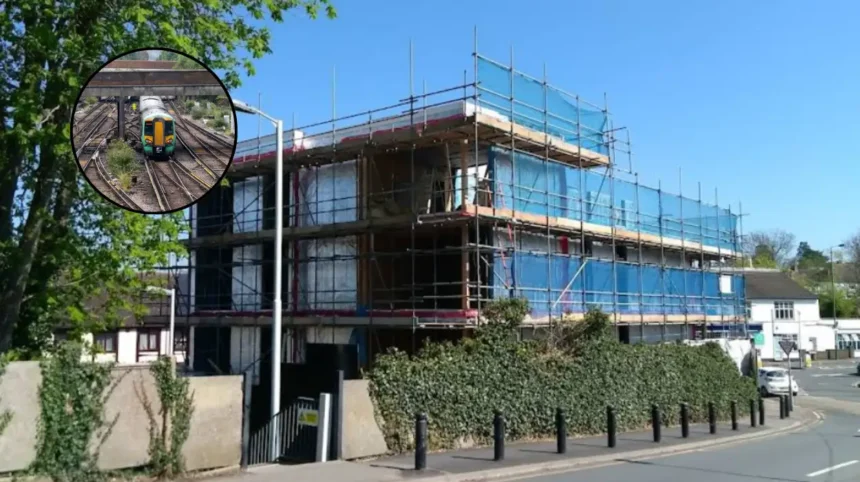
Sutton (South London News) June 30, 2026 – A person is fighting for their life in hospital after being struck by a rush-hour train in South London yesterday afternoon. Emergency services were called to the railway tracks near Belmont station in the borough of Sutton following reports of a casualty on the line. The incident caused widespread disruption across the suburban rail network during the Monday evening commute as power to the tracks was isolated to allow medical teams to access the casualty. British Transport Police have since confirmed that the individual survived the initial impact but remains in a critical condition with life-threatening injuries.
- Key Points
- What Happened on the Tracks Near Belmont Station?
- How Did the Emergency Services Respond to the Incident?
- What is the Status of the Investigation and the Casualty?
- How Did the Emergency Affect South London Rail Services?
- Background of the Rail Network Vulnerabilities in Sutton
- Predictions: How This Development Can Affect Commuters and Residents
What Happened on the Tracks Near Belmont Station?
The incident unfolded during the peak evening commute on Monday, 29 June. According to an official statement released by the British Transport Police (BTP) on the morning of 30 June, officers were alerted to a serious incident on the line at 5:20 pm. Representatives from the BTP stated that
“officers were called to the line near Belmont station following reports of a casualty on the tracks.”
Upon arrival, British Transport Police officers alongside local emergency medical teams located the individual on the tracks.
Because of the location of the casualty between Belmont and Sutton stations, railway power lines had to be urgently deactivated by network technicians to ensure the safety of the first responders.
As reported by local emergency logs, the response was highly coordinated, involving multiple units of the Metropolitan Police Service to manage the perimeter and assist crowds building outside the station premises.
How Did the Emergency Services Respond to the Incident?
A massive emergency response was mobilized immediately following the initial 999 calls. The London Ambulance Service (LAS) dispatched numerous resources to the scene, including paramedic crews, incident response officers, and members of their Hazardous Area Response Team (HART), who are specially trained to operate in dangerous environments like active railway lines.
A spokesperson for the London Ambulance Service detailed the deployment, noting that the call was treated as a Category 1 life-threatening event.
To ensure the rapid delivery of advanced trauma care, London’s Air Ambulance was also dispatched, landing a helicopter in a nearby open space shortly after the incident was reported.
Medical teams worked at the trackside for a prolonged period to stabilize the casualty before attempting relocation. The British Transport Police confirmed this morning that
“one person was taken to hospital with life-threatening injuries.”
The patient was transferred by road ambulance to a major trauma centre in London, accompanied by an air ambulance emergency medical team to monitor their condition en route.
What is the Status of the Investigation and the Casualty?
At this stage, very little personal data has been verified regarding the identity of the individual involved. As explicitly noted in the initial briefings by the British Transport Police, the victim’s age, gender, and geographic origin have not been made public, pending the formal notification of next of kin.
The BTP has launched a standard investigation into the parameters surrounding the event to determine how the individual managed to gain access to the secure track area.
However, authorities have moved quickly to reassure the public that there is no ongoing threat to community safety. In the statement released by the British Transport Police communications desk, officials confirmed that
“the incident is not being treated as suspicious,”
pointing toward a tragic accident or personal crisis rather than criminal involvement.
How Did the Emergency Affect South London Rail Services?
The location of the incident caused severe operational paralysis for Southern Rail, which operates the commuter lines through Sutton and Belmont. The lines connecting Epsom Downs and Epsom toward Sutton and London Victoria were completely blocked while emergency services carried out their rescue operation.
National Rail Enquiries issued a series of urgent travel alerts shortly before 6:00 pm on Monday evening, warning passengers to expect delays of up to 60 minutes, short-notice cancellations, and route diversions. Southern Rail managers advised commuters to avoid the route entirely, arranging ticket acceptance on local London Bus routes, including the 80, 280, and S1 services, as well as alternative London Underground links via Morden.
The tracks were eventually cleared and handed back to Network Rail engineers later in the evening, though residual delays lingered until the end of service.
Background of the Rail Network Vulnerabilities in Sutton
The railway infrastructure around Sutton and Belmont has long been a focal point for localized safety discussions. Belmont station sits on the Epsom Downs branch line, a predominantly suburban route characterized by numerous pedestrian footcrossings, overbridges, and sections of track running parallel to public footpaths and residential boundaries.
Over the past decade, Network Rail and the British Transport Police have initiated multiple public safety campaigns across South London aimed at reducing trespass incidents on the railway network.
The automated rail lines in these areas utilize a third-rail system, which carries 750 volts of electricity to power the trains.
This specific infrastructure means that any unauthorized access to the track area carries an exceptionally high risk of severe electrical injury or death, entirely separate from the danger posed by moving trains.
Local community groups in Sutton have previously raised queries regarding the adequacy of boundary fencing along the cutting between Sutton and Belmont stations, particularly in areas where dense foliage can sometimes mask structural weaknesses in the physical barriers.
Predictions: How This Development Can Affect Commuters and Residents
This serious incident is highly likely to accelerate regional and systemic shifts that will directly affect commuter populations and local residents across the London Borough of Sutton.
Following a life-threatening casualty of this nature, Network Rail traditionally initiates an internal physical asset review at the specific location of track entry. Commuters and residents living alongside the Sutton-to-Belmont line can expect to see engineering teams conducting close-up inspections of perimeter fencing.
This will likely result in the installation of high-security palisade fencing and enhanced anti-trespass grid systems at platform ends to restrict unauthorized access to the live rails.
For the thousands of daily commuters who utilize the Epsom Downs branch line to access central London, this event underscores the fragile nature of suburban rail connectivity. In the immediate future, travelers may experience minor operational adjustments or heightened security announcements at stations.
Furthermore, this incident will likely amplify calls from rail user groups demanding that Southern Rail and Network Rail optimize their contingency bus-replacement protocols, as South London infrastructure remains highly vulnerable to total route stoppages during live emergency service deployments.