Key Points
- Verdict Rendered: Andre Wright-Walters, 38, has been found guilty of the manslaughter of 67-year-old pensioner James Gbadamosi following a trial at the Inner London Crown Court.
- Incident Trigger: The fatal confrontation occurred after Mr Gbadamosi politely reprimanded a youth for riding an electric bike at high speed around pedestrians on a busy high street.
- Fatal Injuries: Emergency services were called to the scene at approximately 3:40 pm on Sunday, 24 August 2025, where Mr Gbadamosi sustained life-threatening head injuries after being struck and hitting the pavement.
- Loss of Life: Despite extensive medical efforts at a south London hospital, Mr Gbadamosi succumbed to his injuries nearly two weeks later, on 5 September 2025.
- Co-Defendant Acquitted: Co-defendant Carla Brenton, 31, of Pier Road, Bexley, who was also charged in connection with the incident, was cleared of manslaughter by the jury.
- Sentencing Scheduled: Wright-Walters remains in custody and is scheduled to be sentenced at the Inner London Crown Court on Tuesday, 3 November 2026.
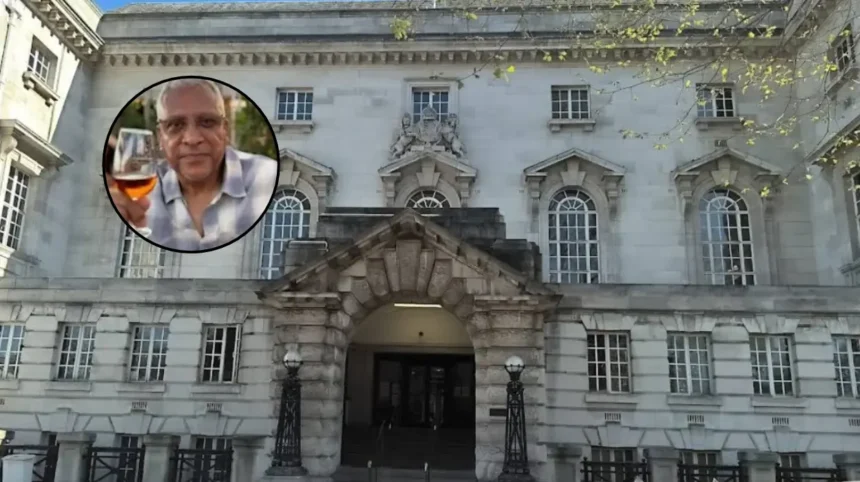
Balham (South London News) October 30, 2026 — A thirty-eight-year-old man has been convicted of manslaughter after delivering a single fatal punch to a sixty-seven-year-old pensioner who had asked a young cyclist to slow down on a crowded pedestrian pavement.
- Key Points
- What led to the fatal altercation on Balham High Road?
- How did the Metropolitan Police investigation and court proceedings unfold?
- What tribute did the family pay to James Gbadamosi?
- Background of anti-social e-bike riding and street safety
- Prediction: How this development affects pedestrians and high street safety policies
As reported by Frankie Lister-Fell of The London Standard, thirty-eight-year-old Andre Wright-Walters was found guilty by a jury following the death of James Gbadamosi, who suffered catastrophic head injuries in Balham High Road, south-west London. Metropolitan Police officers and London Ambulance Service paramedics were summoned to the scene near Balham Station at around 3:40 pm on Sunday, 24 August 2025, finding Mr Gbadamosi severely injured on the pavement. Despite receiving critical care in hospital, the pensioner died nearly a fortnight later on 5 September 2025.
What led to the fatal altercation on Balham High Road?
The confrontation began on a Sunday afternoon when James Gbadamosi was walking along Balham High Road. Eyewitness accounts and police reports indicate that Mr Gbadamosi observed a youngster operating an electric bicycle at excessive speeds through pedestrian traffic, causing concern for public safety.
As reported by Peter Norman of UKNIP, Mr Gbadamosi intervened verbally by asking the child to exercise care while riding on the pavement. Shortly thereafter, an altercation ensued involving Andre Wright-Walters, which culminated in Wright-Walters striking the sixty-seven-year-old man. The impact of the punch caused Mr Gbadamosi to fall backward and strike his head violently against the ground, leading to severe brain trauma.
Emergency responders provided immediate care at the location before transferring Mr Gbadamosi to a major trauma center in south London. Officers established a crime scene along the high street to collect forensic evidence, examine local CCTV footage, and interview witnesses who witnessed the assault.
How did the Metropolitan Police investigation and court proceedings unfold?
Following the assault, Metropolitan Police detectives launched a comprehensive inquiry to identify the assailant. Andre Wright-Walters was initially arrested in connection with the physical assault and was subsequently detained on suspicion of murder on Saturday, 6 September 2025, following the victim’s death in hospital.
As detailed in the official Metropolitan Police report, the Crown Prosecution Service formally amended the indictment to manslaughter prior to trial. During the trial at the Inner London Crown Court, prosecutors presented CCTV evidence and witness testimony demonstrating that Wright-Walters committed an unlawful physical act that directly resulted in Mr Gbadamosi’s fatal injury.
After considering all evidence presented throughout the trial, the jury returned a guilty verdict for manslaughter against Wright-Walters. His co-defendant, thirty-one-year-old Carla Brenton of Pier Road, Bexley, who had also been charged in relation to the incident, was acquitted of manslaughter by the jury.
What tribute did the family pay to James Gbadamosi?
Following the conviction, the family of James Gbadamosi issued an emotional statement honoring his memory and expressing gratitude to law enforcement personnel involved in the investigation.
As released through the Metropolitan Police, the family stated:
“The family welcome the verdict and thank the police for their hard work in bringing those responsible to justice. James was a huge part of our family and his loss has left a void that can never truly be filled. He was loved by so many, especially his husband, who has lost his beloved partner and the future they had hoped to share together.”
The family further characterized Mr Gbadamosi as an “affable, funny, intelligent and caring man” who brought people together and maintained a genuine interest in those around him. They added:
“His death has changed our lives forever, and we will feel his absence in countless ways for the rest of our lives. We are deeply grateful to everyone who has offered support and sympathy during this difficult time. James was loved beyond measure and will never be forgotten.”
Background of anti-social e-bike riding and street safety
The tragic death of James Gbadamosi highlights ongoing public concern across London and major urban centers regarding the anti-social use of electric bicycles and e-scooters on pedestrian pavements.
Over recent years, pedestrian advocacy groups and municipal councils have increasingly flagged safety risks associated with high-speed micro-mobility vehicles operating alongside pedestrians. While commercial hire schemes and private e-bikes have expanded rapidly across the capital, municipal regulations mandate that these vehicles must remain on designated roadways or cycle lanes rather than footpaths.
This incident underscores the heightened risks faced by members of the public who attempt to challenge anti-social behavior in public spaces without formal authority or enforcement training. Local police forces and urban safety charities continue to advise members of the public to report pavement riding and reckless cycling directly to local authorities or law enforcement rather than confronting individuals directly, given the unpredictable risk of escalation into physical violence.
Prediction: How this development affects pedestrians and high street safety policies
The conviction of Andre Wright-Walters is anticipated to have noticeable implications for local councils, law enforcement agencies, and the general public across urban communities:
- Increased Demand for Pavement Enforcement: The high-profile outcome of this case will likely amplify calls from local residents and pedestrian safety campaigns—such as Living Streets—demanding stricter police enforcement and higher fines for individuals riding e-bikes and e-scooters illegally on footpaths.
- Public Caution in Confronting Anti-Social Behavior: The fatal consequences of a routine civic intervention may deter members of the public, particularly elderly residents, from verbally addressing dangerous behavior in public spaces, shifting greater reliance onto community policing teams and wardens.
- Legislative and Infrastructure Reforms: Municipalities and urban planners across the UK may accelerate measures to physically segregate pedestrian walkways from cycling lanes and introduce tighter technological speed-capping constraints on commercial rental e-bikes operating in high-density shopping districts.