Key Points
- A fire broke out on the seventh floor of a ten‑storey block of flats on Charlotte Despard Avenue, Battersea, at about 6.45 pm on Sunday, 11 May 2025.
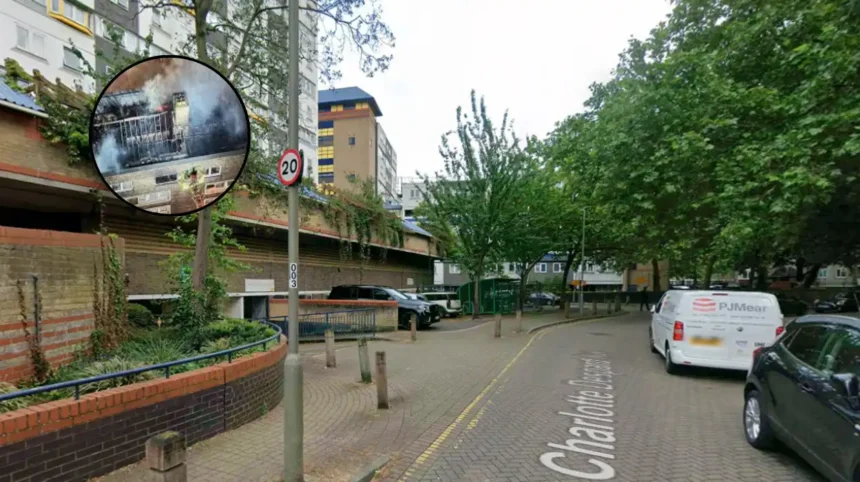
- Around 50 residents escaped to safety as the blaze tore through a four‑roomed flat that has since been “completely destroyed,” with windows smashed and blackened by flames.
- Six people were treated at the scene by paramedics; three were taken to the hospital with injuries whose extent has not yet been confirmed.
- The London Fire Brigade said crews from Battersea, Clapham, Lambeth and surrounding areas brought the fire under control just before 8.30 pm.
- Police and the London Fire Brigade have launched an investigation into the cause of the fire.
Battersea (South London News) May 12, 2026
- Key Points
- How did the fire start and what exactly happened?
- What were the injuries and how were people rescued?
- How did firefighters contain a blaze on a high‑rise block?
- What steps have been taken to investigate the cause?
- What has been the impact on residents and the community?
- Background of the particular development
- Prediction: How could this development affect residents and the wider audience?
Battersea, London – A fire at a Battersea block of flats has left three people in hospital and forced about 50 residents to evacuate, after flames erupted on the seventh floor of a ten‑storey building on Charlotte Despard Avenue on Sunday evening (11 May 2025). The London Fire Brigade said the blaze began in a four‑roomed flat on the seventh floor, which has since been completely destroyed, with windows smashed and charred by the heat.
How did the fire start and what exactly happened?
What caused the fire on the seventh floor of the block, and how quickly did emergency services respond?
As reported by the London Fire Brigade, the alarm was raised at about 6.45pm on Sunday, 11 May 2025, when residents began calling 999 after seeing flames and smoke from the flat. The Brigade said almost 30 separate calls were made to emergency operators within the first minutes of the blaze, illustrating the panic that spread through the building.
Firefighters from Battersea, Clapham, Lambeth and surrounding stations arrived within minutes, deploying multiple engines and specialist crews to tackle the blaze. The London Fire Brigade later stated that the fire was brought under control shortly before 8.30pm, after about 90 minutes of continuous effort.
What were the injuries and how were people rescued?
How badly were people injured, and what did the emergency response look like on the ground?
As reported by local network MyLondon, paramedics treated six people at the scene for smoke inhalation and minor burns, while three were taken to hospital for further treatment. The London Ambulance Service has not disclosed the exact nature or severity of their injuries but confirmed that all three were stable when they arrived at hospital.
Residents described the moment smoke began to fill corridors on the upper floors, with some shouting for neighbours and others phoning 999 while trying to leave their flats. Several eyewitnesses told reporters that they saw thick black smoke pouring from the seventh‑floor windows and heard repeated bangs from within the flat, which they believed were the sound of glass or objects breaking under the heat.
How did firefighters contain a blaze on a high‑rise block?
What challenges did crews face in tackling a high‑rise blaze, and how was the situation stabilised?
London Fire Brigade incident commanders said crews focused on containing the fire to the source flat and preventing it from spreading vertically or horizontally through the building. High‑rise operations required the use of aerial ladders and hose lines deployed from the ground and from adjacent floors, as well as ventilation teams who ventilated the stairwells to reduce smoke.
Spokespeople for the Brigade told MyLondon that the structure of the block “held up” under the pressure of the fire, and that no collapse or major structural failure was reported. They added that the building’s compartmentalisation and fire‑stopping measures likely helped limit the spread, although the source flat itself was described as “gutted.”
What steps have been taken to investigate the cause?
What is being done to find out how the fire began, and which agencies are involved?
London Fire Brigade said a joint investigation into the cause of the fire has been launched with the Metropolitan Police. Fire investigators have examined the remains of the flat, including the position of electrical fittings, gas appliances, and any suspected ignition sources, though no official cause has yet been released.
Senior officers told reporters that all options are being considered, including accidental ignition, electrical fault and possible human activity, but they stressed that it is “too early” to draw conclusions. Police have not named any suspects or persons of interest and have asked residents and local businesses to contact them if they have any relevant CCTV footage or other information.
What has been the impact on residents and the community?
How have residents been affected, and what support has been arranged in the aftermath?
As relayed by MyLondon, many residents were kept outside the building for several hours after the fire was brought under control, while crews undertook safety checks and ventilation. Local authorities then arranged temporary accommodation and on‑site support for some of those who were unable to return to their flats that night.
The London Fire Brigade warned that conditions inside the upper‑floor flats could remain unsafe for some time, and residents were advised to speak with building managers and local council housing officers before re‑entering. Community leaders in Battersea have said they will be liaising with the council and the Brigade to monitor the welfare of affected households and to push for any necessary safety reviews of similar blocks.
Background of the particular development
Why has this blaze in Battersea attracted such close scrutiny, and how does it fit into broader concerns about high‑rise safety in London?
Battersea has seen a wave of residential redevelopment in recent years, with many older or mid‑rise blocks upgraded or reconfigurated to accommodate new housing. The Charlotte Despard Avenue block, like many similar structures, is part of this wider pattern of dense inner‑London housing where fire safety in multi‑storey flats has become a recurring policy concern.
The London Fire Brigade has previously highlighted the importance of working smoke alarms, clear escape routes and regular fire‑safety checks in such blocks, especially where residents include older people or those with mobility issues. This incident adds to a longer‑running discussion about retrofitting older buildings with modern fire‑prevention measures and ensuring that emergency plans are well‑rehearsed and clearly communicated to residents.
Prediction: How could this development affect residents and the wider audience?
What might this fire mean for residents of similar blocks, and how could it influence future housing‑safety policy in London?
For residents of other high‑rise blocks in south London, this incident is likely to renew concerns about the adequacy of fire‑safety signage, alarm systems and evacuation drills in their own buildings. Tenants’ associations and local councils may face increased pressure to commission independent fire‑risk assessments and to publish the findings openly, so that residents can judge the level of risk they are living under.