Key Points
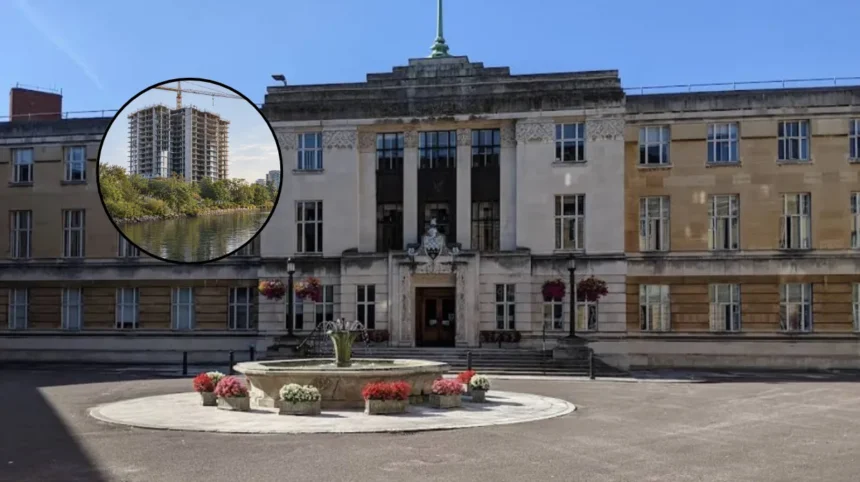
- Construction milestone reached: The main structure of The Artisan, a major residential tower at the Wandsworth Mills development, has officially reached its full structural height on the historic former Ram Brewery site in Wandsworth Town.
- Housing delivery targets: Wandsworth Council announced that the tower is set to provide 172 new homes, with the first residents scheduled to move in during 2027.
- Discrepancy in storey count: Official sources state varying figures regarding the height of the tower; Wandsworth Council describes The Artisan as a 36-storey building, whereas contractor Statom Group describes the concrete structure as 35 storeys.
- Wider development scope: The broader Wandsworth Mills scheme spans approximately 3.4 acres along the River Wandle. The council’s latest figures indicate 389 homes across the entire site, contrasting with Berkeley’s earlier figure of 383 homes published in May.
- Affordable housing provision: Under a prior agreement between developer Berkeley and Wandle Housing Association, 74 shared ownership homes are planned for Rubia House, another building within the scheme, with handovers expected to begin from spring 2027.
- Public realm and river frontage: The project promises 210 metres of restored river frontage, 2,000 square metres of new public space, enhanced ecological habitats, alongside commercial, leisure, and dining space.
- Financial and community contributions: Developer contributions exceed £17.5 million through Section 106 agreements and the Community Infrastructure Levy (CIL) to support local infrastructure and employment initiatives via the council’s Work Match team.
Wandsworth (South London News) November 11, 2026 – The main structure of The Artisan, a flagship residential building forming part of the Wandsworth Mills scheme, has officially reached its full structural height at the former Ram Brewery site in Wandsworth Town. Wandsworth Council confirmed the construction milestone on 9 November, detailing that the tower is planned to accommodate 172 new homes. According to official municipal statements, the first residents are anticipated to take occupancy during 2027. Reaching full structural height represents a core structural benchmark; however, it does not signify that the building is complete or immediately ready for occupation. Extensive operational phases, including exterior cladding, interior fit-outs, mechanical and electrical engineering, and core building services, remain required prior to formal completion.
- Key Points
- How does The Artisan fit into the broader Wandsworth Mills scheme?
- How will the development transform public access and historic heritage along the River Wandle?
- What are the financial and construction details behind the Ram Brewery transformation?
- Background of the Ram Brewery Redevelopment
- Predictions: How This Development Can Affect Local Residents, Buyers, and the Wandsworth Community
Contractor Statom Group had previously announced the structural topping-out on 6 November. The exact calendar date on which the formal topping-out ceremony occurred was not specified within the council’s public announcement. The council noted that council leader Robert Morritt and planning committee chair Ravi Govindia attended a ceremony conducted on the top level of the tower. They were joined by representatives from the lead developer Berkeley, Wandle Housing Association, Statom Group, and various other project implementation partners.
A minor variation exists in the published technical descriptions of the building’s physical parameters. Wandsworth Council consistently describes The Artisan as a 36-storey tower, whereas Statom Group describes its delivered concrete structure as comprising 35 storeys. The precise reason for these differing figures has not been formally established in public documentation.
How does The Artisan fit into the broader Wandsworth Mills scheme?
The Artisan forms a central architectural element of the broader Wandsworth Mills development, which occupies approximately 3.4 acres of prime real estate adjacent to the River Wandle. According to the figures released in the council’s November update, the total allocation of residential units across the entire Wandsworth Mills masterplan now stands at 389 homes.
This updated figure presents a minor numerical departure from figures released earlier by the developer. In May, Berkeley publicly described the wider development as comprising 383 homes whilst announcing a formal housing agreement with Wandle Housing Association. The published difference between 383 and 389 homes does not, in isolation, confirm whether formal amendments to the underlying planning permissions have taken place.
Under the terms of that May agreement, 74 shared ownership homes are earmarked within Rubia House, a separate building located within the Wandsworth Mills footprint. Berkeley confirmed that the phased delivery of these affordable units is set to commence from spring 2027. These 74 shared ownership units form an integral component of the total calculated housing count, rather than representing additional properties atop the masterplan. The shared ownership model allows eligible purchasers to acquire a initial percentage share of a property whilst paying subsidised rent on the retained balance, alongside applicable service charges. This agreement establishes terms for future housing handovers rather than units already occupied by local residents.
How will the development transform public access and historic heritage along the River Wandle?
The overall redevelopment strategy seeks to blend newly constructed high-density residential towers with the careful restoration of historic listed townhouses on a site long defined by its industrial heritage. Wandsworth Council stated that the completed Wandsworth Mills project will deliver 210 metres of upgraded public river frontage alongside 2,000 square metres of newly designed public space.
The municipal announcement highlights the incorporation of dedicated riverside pedestrian routes and targeted ecological habitat enhancements. These public enhancements are engineered to establish movement corridors through a historical industrial enclave that was previously closed to public access. Because these public realm elements constitute aspects of the wider site masterplan, the structural topping-out of The Artisan tower does not imply that every public pathway, parkland, or riverside interface has reached completion.
Furthermore, the overall urban regeneration plan for the former Ram Brewery site incorporates spaces designated for retail, restaurants, cafés, and community leisure spaces. These commercial components are paired with upgraded infrastructure for walking and cycling connections throughout Wandsworth Town.
The integration of a tall modern structure adjacent to low-rise heritage assets underwent significant regulatory evaluation during the original planning approval stages. In a formal planning report produced in 2013 regarding the initial former brewery redevelopment application, City Hall planning officers acknowledged that the proposed high-rise tower would introduce a degree of localized harm to the setting of the Grade II* listed All Saints Church and Church Row. However, strategic planners concluded that the heritage impact was acceptable when balanced against the substantial overall public, housing, and economic benefits of the comprehensive regeneration scheme.
What are the financial and construction details behind the Ram Brewery transformation?
Statom Group confirmed that groundworks on the specific site initially commenced in May 2025. Since that time, the contracting group has executed the subterranean work, deep basement construction, structural concrete frame delivery, and essential stabilization works along the river walls lining the River Wandle.
Financially, the council confirmed that the overall Wandsworth Mills project is delivering a substantial local investment package exceeding £17.5 million to the borough. This funding is being transferred via Section 106 developer contributions and the Community Infrastructure Levy (CIL). The CIL represents a standard legal charge levied by local planning authorities to fund supporting regional infrastructure required to sustain new development density. The specific breakdown detailing how this £17.5 million allocation will be distributed across local services or civil works was not detailed in the council’s press release.
Additionally, Berkeley is working in partnership with Wandsworth Council’s dedicated Work Match employment service. This joint initiative aims to secure direct employment pathways, local construction apprenticeships, specialized skill training, and formal work experience opportunities for borough residents throughout the remaining construction phases.
Background of the Ram Brewery Redevelopment
The site of Wandsworth Mills holds a significant place in British industrial history, having served as a centre of continuous brewing for over four centuries. Brewery operations at the Ram Brewery site date back to at least 1533 during the reign of King Henry VIII, making it one of the oldest recorded continuous brewing locations in Great Britain. For centuries, the site operated under independent owners before becoming the flagship headquarters of Young & Co.’s Brewery in the nineteenth century.
Commercial brewing on a massive scale continued on the banks of the River Wandle until September 2006, when Young’s ceased large-scale production at the site and merged its brewing operations with Charles Wells in Bedford. Following the departure of commercial operations, the heavily industrialised, walled 3.4-acre complex remained largely inaccessible to the general public, creating a physical barrier between Wandsworth Town Centre and the river bank.
To preserve the heritage of the site while enabling urban renewal, planning authorities sought masterplans that retained key historic structures—including listed brewery buildings, vintage beam engines, and historic townhouses—while opening up the land for modern mixed-use infrastructure. The strategic planning approvals granted over the subsequent decade paved the way for major land acquisition and multi-stage construction, culminating in the current Wandsworth Mills project led by Berkeley. The retention of small-scale micro-brewing on site ensures that the historic cultural lineage of the Ram Brewery continues alongside high-density urban housing.
Predictions: How This Development Can Affect Local Residents, Buyers, and the Wandsworth Community
The progression of The Artisan and the wider Wandsworth Mills scheme carries distinct implications for several core demographics within the local area:
- Prospective Homebuyers and Shared Ownership Claimants: The arrival of 172 homes in The Artisan and 74 shared ownership properties in Rubia House will expand available housing supply within inner London by 2027. For first-time buyers seeking affordable routes onto the property ladder, the shared ownership allocation provides a crucial entry point into a high-demand borough. However, prospective buyers will need to evaluate ongoing service charges alongside combined mortgage and rent commitments.
- Wandsworth Town Residents and Businesses: Local residents will gain unprecedented public access to a previously gated industrial site. The opening of 210 metres of improved river frontage and 2,000 square metres of public realm, alongside new pedestrian and cycle paths, will enhance mobility and connectivity between the town centre and the River Wandle. Existing local businesses stand to benefit from increased footfall generated by the incoming residential population and new retail, dining, and leisure venues.
- Local Jobseekers and the Regional Economy: Through the collaboration between Berkeley and Wandsworth Council’s Work Match team, local jobseekers and young professionals will gain direct access to apprenticeships, construction contracts, and operational roles within the commercial phases of the project. Furthermore, the £17.5 million injected through Section 106 and Community Infrastructure Levy funding will provide the local council with capital resources to mitigate pressures on public services, schools, transit networks, and civil infrastructure as the population density of Wandsworth Town increases.