Key Points
- Wandsworth Council has allocated £30,000 in funding to revive plans for a statue commemorating John Archer, who became London’s first Black mayor upon his election in Battersea in 1913.
- The campaign to erect a monument in honour of the pioneering political figure was originally launched six years ago, with the council unanimously approving the project in 2022 before progress stalled.
- Born to a Barbadian father, Archer moved to Battersea in the 1890s, winning election as a Liberal councillor for Latchmere and successfully securing a minimum wage of 32 shillings a week for local council workers.
- Following his mayoral tenure, Archer served as the founding president of the African Progress Union in 1918, chaired the Pan-African Congress in London in 1921, and was later elected as a Labour councillor for Nine Elms.
- The municipal decision to release funding for the monument has drawn sharp criticism due to concurrent council proposals to implement sweeping budget cuts and raise local council tax by 94 per cent.
- Opposition voices, including Labour councillor Sara Apps, argued that Archer’s own historical focus on social justice would have led him to prioritise vital community services over a physical memorial.
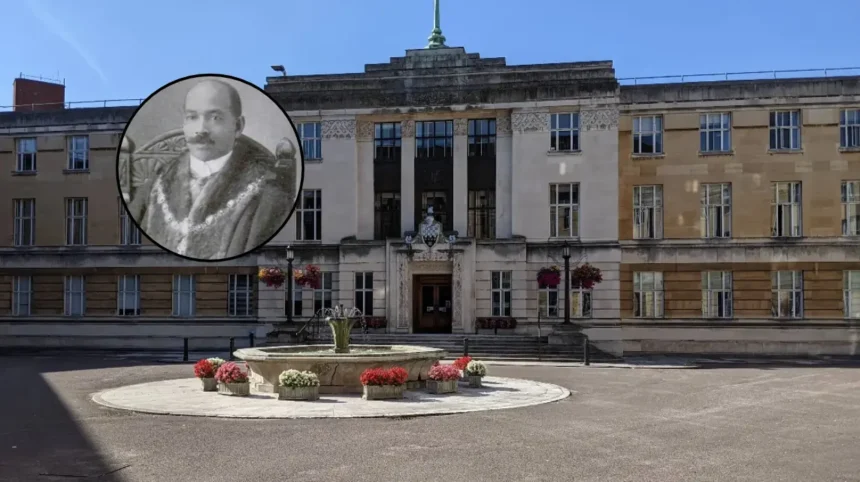
Wandsworth (South London News) October 31, 2026 – Wandsworth Council has formally committed £30,000 towards the erection of a statue celebrating John Archer, the historic figure who achieved national prominence when he became the first Black mayor in London more than a century ago. The municipal decision breathes fresh momentum into a public commemoration project initially launched six years ago, which had reached a standstill despite securing unanimous approval from local representatives in 2022. Archer, who assumed the mayoralty of Battersea in 1913, remains a foundational figure in British political history, noted both for his local governance achievements and his broader work within the international Pan-African movement. However, the allocation of public funds has reignited debate within the borough, coming at a time when the local authority is evaluating extensive service reductions alongside a proposed council tax increase of 94 per cent.
- Key Points
- Why has Wandsworth Council revived the John Archer statue project?
- Who was John Archer and what was his political legacy in Battersea?
- Why has the council’s £30,000 funding allocation faced public criticism?
- Background of the particular development
- Prediction: How this development can affect local residents, civic groups, and local governance
Why has Wandsworth Council revived the John Archer statue project?
The decision by Wandsworth Council to allocate £30,000 towards the memorial ends years of procedural delay surrounding the proposed monument. The campaign to build a permanent likeness of the historic figure was first introduced to the public six years ago, aiming to ensure that Archer’s contribution to municipal governance and racial equality received proper civic recognition.
Although the local authority gave its unanimous consent to the initiative during a full council meeting in 2022, subsequent progress proved slow, with no concrete timelines or dedicated municipal financial backing established to move the build into its operational phase. The recent financial commitment ensures that the project can transition from initial design concepts to formal development, securing the necessary resources to progress structural planning and site selection within the borough.
Who was John Archer and what was his political legacy in Battersea?
John Archer moved to Battersea alongside his wife, Bertha, during the 1890s, establishing a home in South-West London during a period of rapid urban expansion and political transformation. The son of a Barbadian father and an Irish mother, Archer quickly immersed himself in local civic life, developing a reputation as an effective campaigner for working-class rights and social welfare reforms.
His formal political career began with his election as a Liberal councillor for the Latchmere ward. During his tenure representing the area, Archer spearheaded a successful municipal campaign to establish a guaranteed minimum wage for council employees, setting the rate at 32 shillings a week. This policy intervention established an early precedent for municipal labor standards across London local authorities.
In 1913, Archer reached a historical milestone when he was elected Mayor of Battersea, becoming the first person of Black heritage to hold mayoral office in the capital. His elevation to the civic role attracted national and international commentary, marking a pivotal moment in British municipal history.
Archer’s public service extended far beyond his initial mayoral term. In 1918, he helped found the African Progress Union, serving as its first president to advocate for the rights and welfare of Black individuals across the British Empire and internationally. His political work expanded further in 1921 when he chaired the Pan-African Congress held in London, bringing together delegates from across the globe to discuss colonial reform, self-determination, and racial justice.
Returning to local elected politics, Archer was re-elected as a Labour councillor representing the Nine Elms ward in 1931. He continued his public service until his death in 1932 at the age of 69, at which point he was serving as the deputy leader of Battersea Council.
Why has the council’s £30,000 funding allocation faced public criticism?
The decision to release municipal funds for the memorial has generated controversy amongst local representatives and residents due to the broader economic context facing the local authority. Wandsworth Council is currently navigating severe fiscal constraints, which have led to proposals for widespread service reductions across multiple civic departments.
Compounding public concern is a proposal under consideration by the local authority to raise council tax by up to 94 per cent. Critics of the expenditure argue that allocating capital to public artwork during a period of acute municipal financial pressure represents a misdirection of public resources.
Labour councillor Sara Apps publicly questioned the timing and prioritization of the expenditure, referencing Archer’s own historical legacy as a champion of social equity to highlight the tension between funding memorials and protecting essential public services. Apps noted that if Archer were faced with the choice between “cutting swimming for children living in poverty or erecting a statue”, he would have consistently chosen to prioritise the welfare of young residents within the borough.
Background of the particular development
The effort to commemorate John Archer forms part of a broader, long-term reassessment of public monuments and civic representation across Greater London. For decades, historians and community advocates have pointed out the relative scarcity of public statues honoring historical figures from ethnic minority backgrounds, despite their contributions to the capital’s political, cultural, and social development.
Battersea, which merged into the modern Borough of Wandsworth in 1965, has long maintained a distinct political identity rooted in radical civic reform and labor organization. Archer operated alongside other prominent contemporaries, including Charlotte Despard, contributing to Battersea’s reputation in the early 20th century as a hub for progressive governance and social policy experimentation.
The original campaign for the Archer statue began six years ago amid heightened public debate surrounding civic heritage and public space representation. While Wandsworth Council’s 2022 unanimous vote signaled broad cross-party support for recognizing Archer’s historical role, administrative delays and shifting council priorities left the project unfunded. The recent revival of the £30,000 allocation represents the first direct financial obligation made by the local authority to fulfill the 2022 pledge, bringing the long-debated memorial back into active municipal planning.
Prediction: How this development can affect local residents, civic groups, and local governance
The revival of the John Archer statue project is likely to have distinct political, cultural, and financial impacts on various sections of the Wandsworth community.
For community advocates, local historians, and cultural organizations, the formal funding commitment ensures that a key figure in British civic history receives prominent physical representation. The eventual installation of the statue will provide an educational focal point for local schools and heritage groups, reinforcing the history of diversity in London’s municipal leadership and validating years of grassroots campaigning.
Conversely, for local taxpayers and vulnerable families affected by prospective budget adjustments, the allocation may deepen skepticism regarding council expenditure priorities. With the local authority proposing a potential 94 per cent increase in council tax alongside reductions to community programs—such as subsidized youth swimming and recreation services—the funding allocation risks intensifying political debates in council chambers. Opposition members and community groups are likely to use the expenditure as a focal point to challenge future budget allocations, demanding greater transparency over how capital project funds are balanced against operational funding for essential social services.