Key Points
- Record-Breaking Numbers: More than 320 Crystal Palace supporters have signed up for the 10th edition of the Palace for Life Foundation’s Marathon March, marking a record turnout for the event.
- Seven-Figure Target: The foundation is aiming to cross the cumulative £1 million milestone in total funds raised since the march was first established in 2017, having already collected over £850,000 across its previous nine editions.
- Current Fundraising Drive: Money raised for this year’s march is already approaching £100,000 prior to the start of the event, with every penny directed toward youth initiatives in South London.
- Focus on Youth Employment: A significant portion of the proceeds will address London’s 6.5% unemployment rate by creating pathways into education, training, and work for young people—particularly those facing learning disabilities.
- Crime Reduction Strategy: Organisers aim to tackle systemic local issues in Croydon, including knife crime and gang involvement, by instilling purpose, structured activity, and steady income opportunities for vulnerable youths.
- Flexible Funding: Unlike restricted grants provided by official bodies like the Premier League, direct event revenue gives the foundation critical flexibility to address immediate, hyper-local community needs.
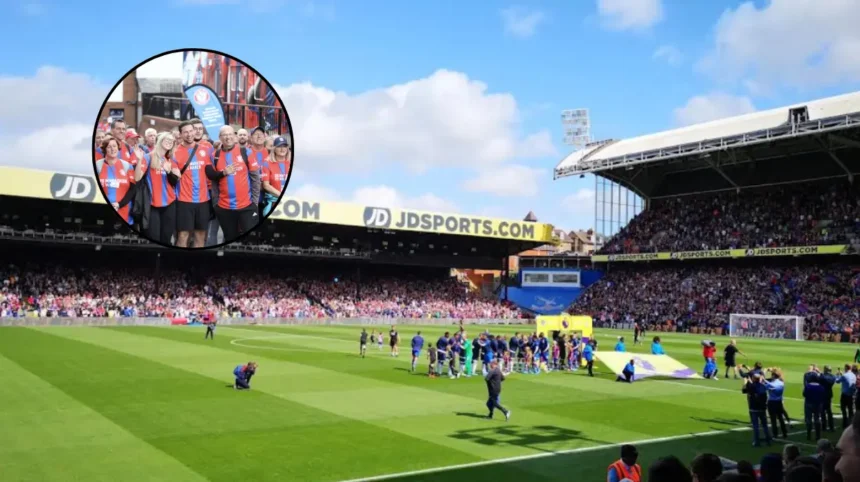
Crystal Palace (South London News) September 30, 2026 – Hundreds of Crystal Palace supporters are preparing to take to the streets of the capital this weekend as the Palace for Life Foundation attempts to reach a historic £1 million fundraising threshold during its 10th anniversary Marathon March.
- Key Points
- How does the Palace for Life Foundation plan to reach its landmark milestone?
- Why is youth employment a primary focus for South London communities?
- How does event fundraising differ from institutional sports funding?
- Background of the particular development
- Prediction: How this development can affect young people and residents in South London
More than 320 participants have registered for the 26.2-mile walk through London, marking the highest attendance figure in the event’s decade-long history. With pre-event donations already nearing £100,000, charity leaders are confident that this year’s proceeds will push cumulative earnings past seven figures since the inaugural event in 2017. All monies raised are ring-fenced to support community programs targeting vulnerable young people across South London.
How does the Palace for Life Foundation plan to reach its landmark milestone?
As reported by Callum Humphrey of South West Londoner, the Palace for Life Foundation—the official charitable arm of Premier League outfit Crystal Palace Football Club—has generated in excess of £850,000 over its previous nine annual marches. The upcoming route will see marchers cover a full marathon distance before crossing the finish line at Selhurst Park on Saturday.
Speaking on the significance of the 10th anniversary, Bobby Webbe, fundraising manager at the Palace for Life Foundation, stated:
“It gives us something to really hang our hat on, like, ‘right, we raised £1,000,000 in 10 years, what can we do in the next 10 years?'”
Webbe expressed strong optimism regarding the current trajectory of the campaign, adding:
“It’s very exciting and we’re well on the way to doing that at the moment, which is really cool.”
According to figures published by the organisation, the charity engages with over 20,000 young South Londoners annually. Its operational scope includes facilitating free community football schemes, funding educational initiatives in local schools, and running dedicated employment transition clinics.
Why is youth employment a primary focus for South London communities?
Data released by the Office for National Statistics reveals that London’s regional unemployment rate reached 6.5% between March and May—the highest percentage recorded across any region in the United Kingdom. Community workers note that individuals with learning disabilities encounter disproportionately severe obstacles when attempting to enter the modern labor market.
Addressing these economic hurdles in local boroughs has become a central objective for the charity. Discussing the hyper-local demographic challenges facing the area, Webbe stated:
“Croydon is a very young borough, and it’s also, in a negative way, outsized, with the amount of young people that are not in education and not in full-time employment.”
The charity’s leadership maintains that establishing financial security for young individuals serves as a preventative measure against wider social issues affecting South London.
Outlining the broader societal strategy, Webbe explained:
“One of our key targets is to get young people into work, which we hope then will start to solve other issues in Croydon around knife crime, gang culture.”
He emphasized the psychological impact of secure employment on young citizens, stating:
“When young people have an income, they have a purpose and can work towards those goals.”
How does event fundraising differ from institutional sports funding?
While the Palace for Life Foundation receives baseline institutional grant support from governing bodies such as the Premier League, charity directors point out that statutory funds are frequently ring-fenced for narrowly defined criteria and specific programmatic areas.
Consequently, unrestricted income generated independently through events like the annual Marathon March provides the foundation with vital financial flexibility. These funds allow project leaders to adapt rapidly to emerging, hyper-local issues across Croydon and neighboring boroughs without waiting for designated grant approval.
Reflecting on his personal tie to the region and the tangible effects of these programs, Webbe remarked:
“I’m very lucky I’m a Palace fan, I live in Croydon, it’s where I’ve grown up, so I get to see our work going back in.”
He highlighted the importance of staff leaving administrative roles to observe community initiatives firsthand on the ground. Describing a recent visit to a local night session, Webbe shared:
“I try to get out to sessions as much as possible because sometimes you can get stuck behind a desk and you’re just focused on your work. I went to one a couple of weeks ago, I haven’t kicked a ball in two or three years, and I got involved, just having a proper kick around, and seeing them there on a Monday night rather than being anywhere else around South London was really rewarding.”
He concluded:
“It gives you a spring in your step the next day you’re at work knowing that was great, and the work we’re doing is to try and bolster that.”
Background of the particular development
The Palace for Life Foundation has operated as the charitable entity of Crystal Palace FC for over three decades, evolving from a traditional club-community scheme into a comprehensive socio-economic youth organization. The Marathon March was launched in 2017 as a flagship annual fundraising event designed to unite fans, club legends, and community leaders over a single 26.2-mile walking route taking in key landmarks across London before finishing at Selhurst Park.
Over the past decade, South London—and the Borough of Croydon in particular—has contended with acute socio-economic pressures. High youth unemployment rates have coincided with persistent concerns regarding youth violence, serious knife crime, and gang recruitment. Institutional funding cuts to regional youth services over the same ten-year period pushed charities like Palace for Life to step into the breach, expanding their scope beyond sports coaching to offer 1-on-1 mentoring, mental health interventions, and tailored employment pathways for disadvantaged youths and individuals with learning disabilities. The steady scale-up of the event from modest origins to over 320 walkers in 2026 mirrors the expanding financial burden placed on grassroots organizations to plug social safety net gaps in urban areas.
Prediction: How this development can affect young people and residents in South London
Crossing the £1 million cumulative fundraising threshold will likely deliver a substantial boost to the availability of unrestricted, community-level resources across South London over the next three to five years. For the target audience—specifically young residents aged 16–24 in boroughs like Croydon who are currently not in education, employment, or training (NEET)—this milestone will translate directly into expanded capacity across the foundation’s vocational programs. Increased independent funding allows the organization to scale up its job placement schemes and targeted mentoring initiatives without depending on restrictive external grants.
Furthermore, residents in local neighborhoods can anticipate a positive ripple effect regarding public safety and youth engagement. By channelling funds directly into free evening sports sessions, personal development courses, and direct employment pathways, the foundation offers structured alternatives to youth gang involvement and street crime. Over time, providing steady income opportunities and personal direction to vulnerable individuals is expected to lower local crime indices, improve youth retention in post-secondary training, and create a sustainable model for football club charities tackling urban socio-economic inequality.