Key Points
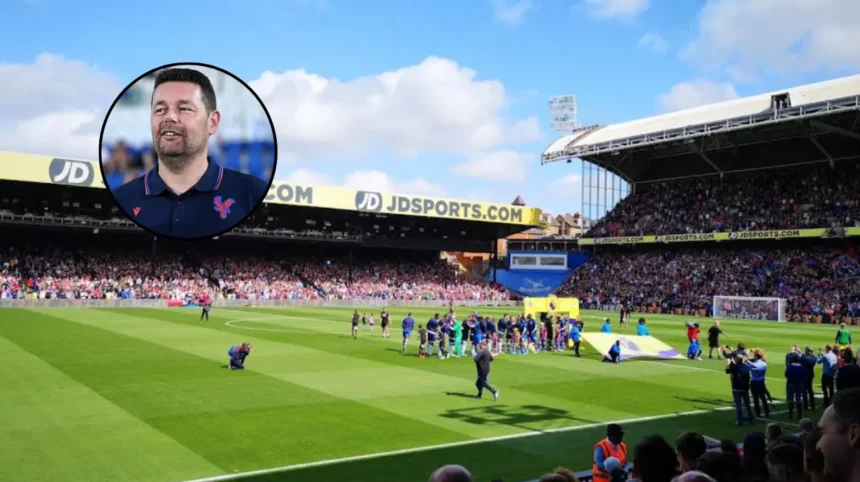
- Crystal Palace manager Pierre Sage has confirmed the club will not engage in “panic buying” before the fast-approaching transfer window deadline.
- The Eagles boss insists any potential late additions must fit the club’s long-term strategic vision rather than serving as short-term reactive fixes.
- Sage expressed full confidence in the current squad’s capability to remain competitive across all upcoming domestic fixtures.
- The manager emphasised that financial prudence and tactical coherence remain the primary drivers of Crystal Palace’s recruitment strategy.
- Internal evaluations continue, with the coaching staff focusing on squad depth while remaining open to genuine market opportunities.
Crystal Palace FC (South London News) August 17, 2026 – Crystal Palace manager Pierre Sage has firmly ruled out late “panic buying” as the transfer window approaches its final hours, insisting that the South London club will remain strictly disciplined in its recruitment approach despite mounting external pressure from supporters and commentators.
Speaking during his pre-match press conference ahead of the upcoming Premier League fixture, Sage outlined the board’s clear stance on late market activity. Sage stated that
“we will not buy just to satisfy immediate outside noise or engage in panic buying,”
adding that
“every player who joins this project must bring proven quality and fit our long-term footballing philosophy.”
Addressing the media regarding current squad depth and potential injuries, Sage reiterated that internal solutions remain the priority. Sage stated that “we have absolute belief in the group of players currently in the dressing room,” noting that “succumbing to deadline-day inflation rarely yields positive long-term results for football clubs.”
The manager acknowledged that while the recruitment team remains active behind the scenes, any deal completed before the deadline must align with the financial parameters set by the club’s hierarchy. Sage noted that “if an opportunity arises that makes operational and financial sense, the club is prepared to act,” but emphasized that “we will not be forced into reactive decisions that compromise our future financial health.”
What Did Pierre Sage Say About Crystal Palace’s Transfer Strategy?
During the press conference, Pierre Sage detailed the underlying philosophy guiding Crystal Palace through the final stages of the transfer window. The manager highlighted the importance of stability over short-term gratification, pointing out that hasty signings late in the market often lead to long-term structural issues within a squad.
Sage explained that squad building requires meticulous planning rather than sudden shifts driven by media speculation or short-term results. The manager stressed that the club’s scouting network has evaluated numerous profiles over recent months, ensuring that any incoming player has undergone thorough tactical and behavioral assessment.
Furthermore, Sage addressed questions regarding specific positional needs, refusing to single out individual target areas publicly. The manager explained that revealing precise operational targets serves no strategic advantage and can inflate asking prices in an already volatile market environment.
How Is Crystal Palace Preparing for the Final Hours of the Window?
The operational team at Selhurst Park continues to monitor player availability across domestic and international markets, maintaining contact with agents and prospective clubs. However, the internal direction remains aligned with Sage’s public declarations regarding discipline and composure.
The coaching staff has maintained focus on tactical preparation for upcoming fixtures, treating transfer window speculation as a secondary background matter. Sage pointed out that training intensity has remained exceptionally high, with several academy players integrating into first-team sessions to provide immediate coverage if required.
The club hierarchy has consistently backed this measured approach, prioritizing sustainable growth and wage structure integrity. By avoiding inflated transfer fees and excessive salary demands on deadline day, Crystal Palace aims to protect its operational flexibility for future transfer windows.
What Is the Background to Crystal Palace’s Recruitment Approach?
The policy articulated by Pierre Sage reflects a broader structural evolution at Crystal Palace over recent seasons. Historical transfer windows across the Premier League have frequently demonstrated the risks associated with late reactive spending, where clubs pay premium prices for squad players who fail to adapt to tactical demands.
In recent years, Crystal Palace has shifted toward a model centered on recruiting younger talent with high technical potential, combined with targeted veteran experience. This approach has allowed the club to establish a sustainable Premier League presence while maintaining financial stability under strict profit and sustainability regulations.
Previous deadline days have occasionally seen late departures or unexpected squad gaps due to injuries, creating external calls for immediate spending. However, the management structure at Selhurst Park has increasingly resisted emotional spending, choosing instead to rely on internal development pathways and structured scouting pipelines built over multiple analysis cycles.
What Is the Prediction for Crystal Palace and Their Supporters?
This development indicates that Crystal Palace supporters should expect a calm and measured conclusion to the transfer deadline, with minimal late activity unless a high-value, long-planned target suddenly becomes available under favorable terms.
For the immediate future, this approach places increased reliance on Pierre Sage’s ability to maximize the performance of the existing core squad. Should key players remain fit, the current group possesses sufficient structure and quality to compete effectively throughout the first half of the campaign.
However, should the squad experience a series of mid-season injuries in thin positions, the decision to forego late market additions may test the team’s depth during congested fixture periods. In the long term, avoiding high-cost panic buys preserves crucial budget reserves, positioning Crystal Palace to negotiate from a place of financial strength in subsequent transfer windows.