
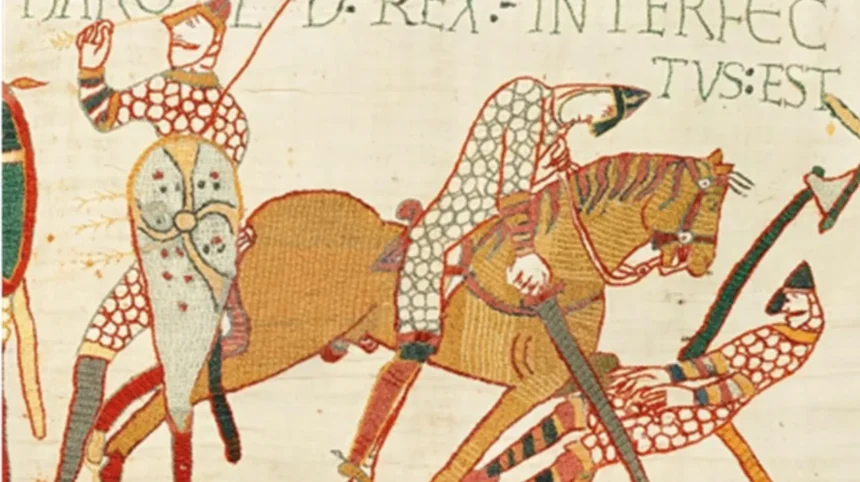
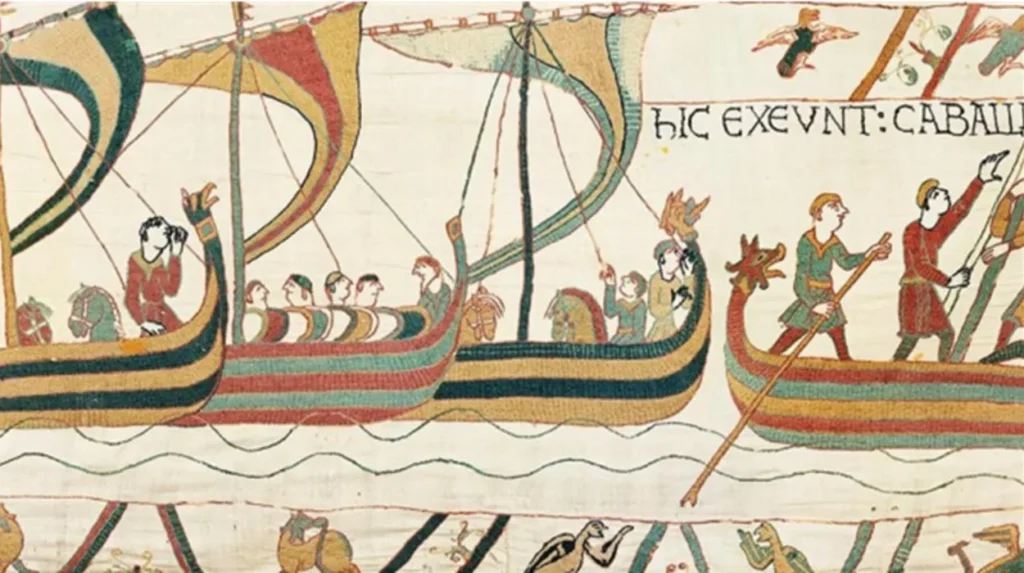
Nearly seventy metres of linen, embroidered by hand almost a millennium ago, the Bayeux Tapestry endures as one of the most extraordinary historical documents in existence. A woven chronicle stitched by anonymous hands in the eleventh century to depict the Norman Conquest of England. Commissioned in the immediate aftermath of the Battle of Hastings, it captures not merely the mechanics of war but the texture of an era; the ordinary faces caught in extraordinary circumstances. To stand before it is to encounter history not as an abstraction of dates and treaties, but as something tactile and profoundly human.
A testament to the enduring instinct of remembrance, and to make meaning of upheaval through craft. It is this instinct, arguably, that finds itself under quiet threat today. As museums across Britain welcome renewed public fascination with the tapestry, that enthusiasm arrives against a far less celebratory backdrop, a sustained erosion of humanities education in schools; a generation of children increasingly encountering history not through primary sources, but through, generated summaries by artificial intelligence. This juxtaposition is difficult to ignore. Here is an object that survived war, weather, and nine centuries of upheaval precisely because human beings deemed it worth preserving and returning to. Yet, the very subjects that once taught successive generations why such preservation matters are being systematically deprioritised, their funding stripped in favour of disciplines deemed more immediately “useful.” For children growing up in underprivileged areas, where a museum trip is neither guaranteed nor assumed, the stakes of this shift are especially acute. This piece sets out to examine what stands to be lost, and what institutions like the British Museum are doing.
Speaking with Michael Lewis, curator of the exhibition, it becomes clear that the tapestry’s staying power lies partly in how deceptively modern it feels.
“So good is the Bayeux Tapestry’s state of preservation and the relative vibrancy of its colours, many people can’t or won’t quite believe it is 950 years old,”
he explains. There is something almost cinematic about its construction, he suggests, noting that
“its cartoon or graphic-novel-like nature resonates with a modern audience.”
But beneath that visual accessibility lies genuine interpretive complexity. Lewis points to the scene of Harold’s sacred oath to William as one he returns to repeatedly, precisely because of what it withholds:
“Other sources provide detail on what is happening, but the Tapestry is somewhat silent. For me, this suggests the Tapestry is talking to various audiences, who will have differing memories of 1066.”
It is a reminder that historical objects rarely offer settled answers, they offer invitations to keep looking. That invitation is being extended deliberately to the young; with free entry for everyone under sixteen, with two weekly slots reserved specifically for school groups. Given that 1066 sits within the national curriculum, turning a classroom construct into a lived, physical encounter. It is precisely this kind of infrastructure, quietly built and easily dismantled, that arts funding cuts put at risk.
On the question of artificial intelligence, we can see that
“AI obviously has a role in modern society, but I think how that is used should be carefully thought out,” he says.
Accepting that AI might serve as a first base for the curious, with people using it to understand and explore different historical periods. Affirming that genuine historical thinking cannot be substituted by AI. It is important that visitors use their own curiosity to evaluate and understand information, this tapestry is “a complicated written and visual source” demanding careful human examination.
“The human mind is key to doing [this].”
Ultimately, the hopes for the exhibition are simple. Wishing for young visitors to be both amazed and inspired by both the storytelling and its accumulation of detail, and, ideally, curious enough to go further. The Museum, he notes, is developing a digital interactive design to help younger audiences do exactly that, with accessible education at the forefront, guiding this new wave of young historians. In an age of scrolling summaries and synthetic content, there remains something quietly radical about standing still in front of a thousand-year-old piece of cloth and simply looking. Whether the next generation gets that chance may depend on choices being made in budget rooms, not museum halls.