Key Points
- Government confirms commitment to preserve the National Covid Memorial Wall.
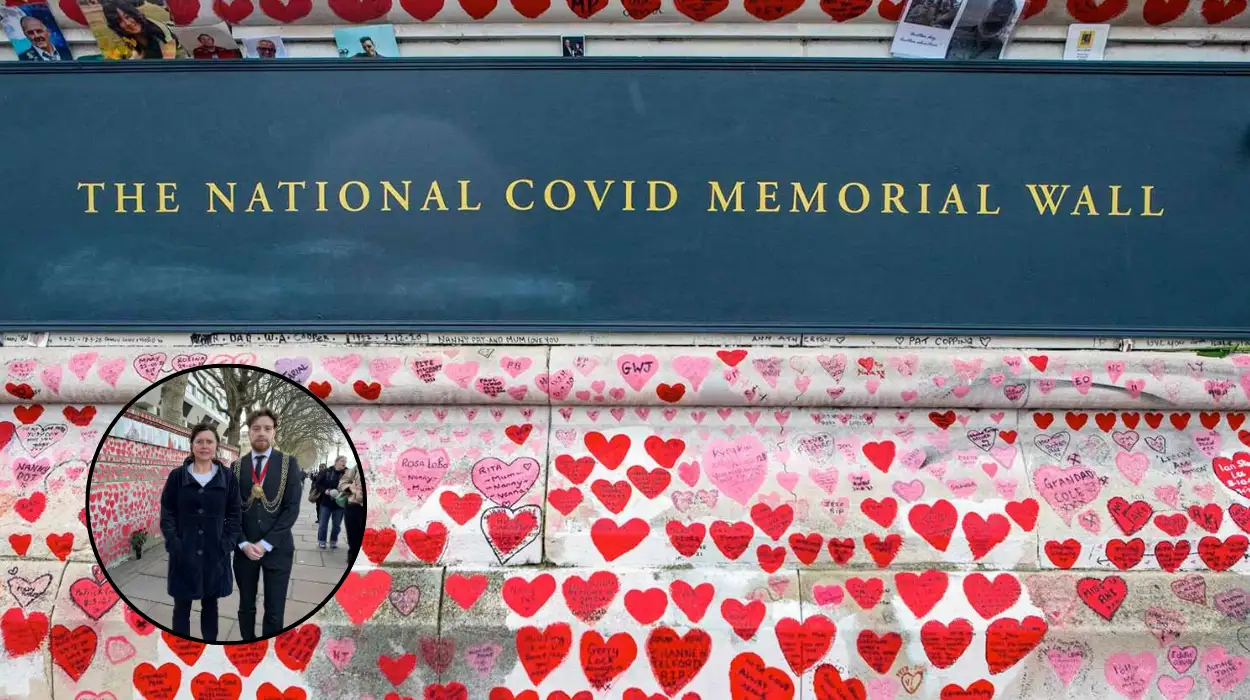
- The wall stretches 500 metres along the South Bank, displaying 250,000 hand-painted red hearts representing Covid-19 victims.
- The wall was created by the bereaved for the bereaved, serving as a site of reflection and remembrance nationwide.
- Lambeth Council has actively supported the memorial and lobbied for its formal recognition.
- Cllr Clair Holland, Leader of Lambeth Council, highlights the memorial’s emotional significance and the council’s role in supporting the Friends of the Wall.
- The council has supported repainting efforts and held remembrance events.
- Funding for heritage feasibility studies has been confirmed under the COVID-19 commemoration programme.
- Lambeth Council will continue work with NHS partners, Transport for London, and King’s College London to preserve the memorial.
What is the National Covid Memorial Wall and why is it important?
As reported by Lambeth Council, the National Covid Memorial Wall is a poignant and powerful tribute stretching 500 metres along the South Bank, directly opposite the Houses of Parliament. It features 250,000 hand-painted red hearts, each symbolising a life lost to Covid-19. The memorial was created by those bereaved during the pandemic, for others who suffered loss, establishing itself as a unique place of reflection and remembrance for families and communities across the UK.
- Key Points
- What is the National Covid Memorial Wall and why is it important?
- How has Lambeth Council contributed to the preservation of the wall?
- What has the Government announced regarding the memorial’s future?
- Who are the partners involved in preserving the memorial?
- Why does the memorial hold particular significance within Lambeth?
Lambeth Council has described the wall as an important expression of collective grief and solidarity. Cllr Clair Holland, Leader of Lambeth Council, told this correspondent,
“The memorial wall expresses our sadness and grief at those we lost to the pandemic so poignantly.”
She emphasised how the memorial has helped form bonds of friendship and unity within the council and local community.
How has Lambeth Council contributed to the preservation of the wall?
The council has been closely involved with the Friends of the Wall volunteers since their formation, providing support and advocating for the memorial’s permanent recognition. Their efforts included working with NHS partners, Transport for London (TfL), and Government departments to push for formal preservation.
Cllr Holland recounted to Lambeth News,
“I have been to the wall to hear people’s heartbreaking stories, spoken to the Friends group who have been through so much to hear how much it means to them, and also represented their views with partners.”
The council has been active in practical ways as well, organising volunteer pupil groups to help repaint faded hearts and tributes. In March 2025, Cllr Holland spoke at a remembrance event at the wall, honouring those lost, including 712 members of the Lambeth community.
What has the Government announced regarding the memorial’s future?
As covered by BBC News, the Government today officially announced its commitment to preserve the National Covid Memorial Wall for the long term, recognising its significance as a national site of remembrance. This confirmation came after years of lobbying and public consultation championed by Lambeth Council and the Friends of the Wall.
The Department for Digital, Culture, Media and Sport has confirmed funding for detailed feasibility studies by heritage experts as part of the ongoing COVID-19 commemoration programme. The aim is to ensure that the wall’s preservation is informed by expert advice and aligns with best practices for conserving contemporary memorials.
Who are the partners involved in preserving the memorial?
Lambeth Council will continue collaboration with key partners including Guy’s and St Thomas’ NHS Foundation Trust, Transport for London, and King’s College London to ensure the National Covid Memorial Wall remains protected and maintained for future generations.
The involvement of these organisations ensures a multidisciplinary approach, combining health, transport, academic, and community perspectives on how best to steward this unique memorial in an urban public space.
Why does the memorial hold particular significance within Lambeth?
Lambeth Council highlights that the National Covid Memorial Wall represents not only national loss but also the local impact of the pandemic. The borough lost 712 members of its community to Covid-19, making the memorial a deeply personal site of remembrance for many residents.
Cllr Holland described to The Guardian the emotional importance the wall holds locally:
“Today feels like a really important moment for those families, and for our borough.”
The wall continues to be a focal point for collective mourning, public education, and community healing.