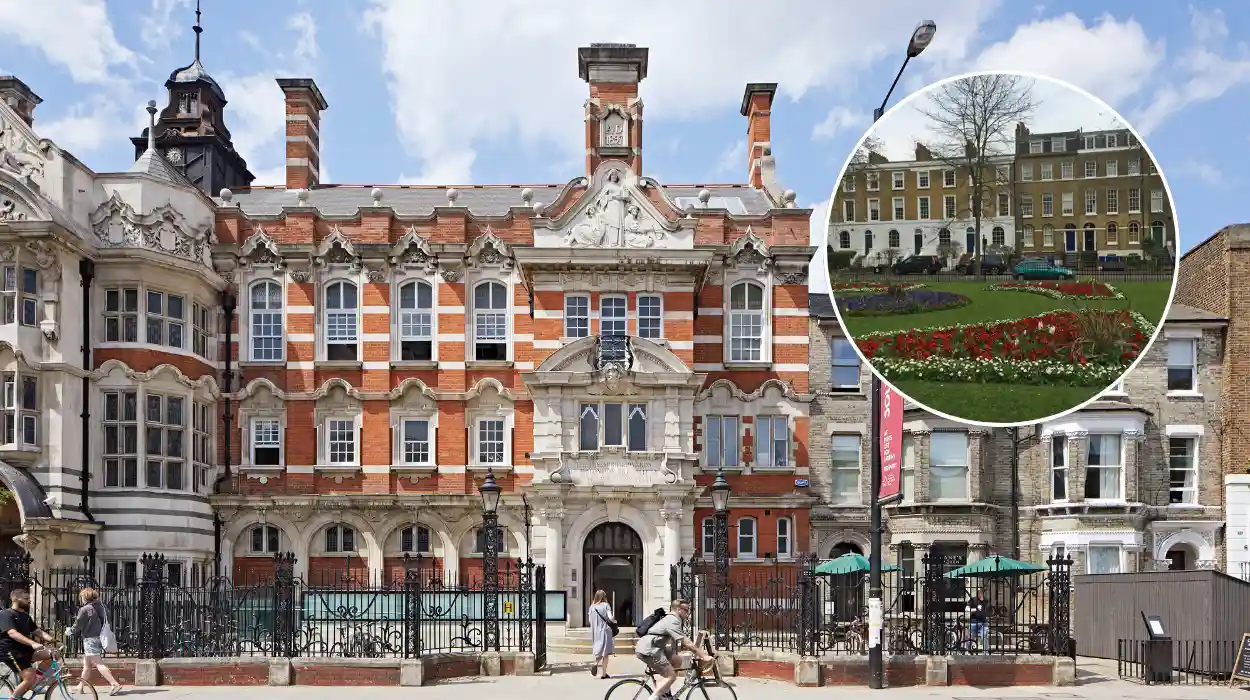
Addington Square stands as a pristine Georgian and Regency garden square in Camberwell, South London, offering a serene escape amid urban bustle. Named after early 19th-century Prime Minister Henry Addington, this conservation area captivates with its preserved architecture and rich history.
Historical Origins
Addington Square developed between 1810 and 1850 on former fields and market gardens, attracting affluent residents fleeing central London’s crowds. The first house, number 48, was built by 1810 for Nathaniel Simmons, engineer of the nearby Grand Surrey Canal that terminated at Camberwell Wharf. By 1827, most properties stood complete, with the square finalized by 1844, featuring irregular early 19th-century terraces as noted by Nikolaus Pevsner for their charming lack of uniformity.
The 1851 census recorded 32 houses housing 179 residents and 33 servants, averaging 6.2 people per home, underscoring its status as a prosperous enclave. Completed as a private square in 1855, it fell into dereliction by 1897 before renovation for public access, aided by the Metropolitan Public Gardens Association’s six donated seats in 1898. Public baths and a swimming pool once occupied the north side until early 1900s demolition for a refuse depot, inspiring a satirical poem about a parson’s scandalous bathhouse antics preserved at Cornell University.
Architectural Highlights
Houses on the east, south, and west sides hold Grade II listing, preserving their Georgian and Regency facades amid gaps that enhance the area’s character. The London Borough of Southwark’s conservation area, designated July 9, 1971, centers on the square east of Camberwell Road, bounded by Burgess Park to north and east. Structures vary in height and treatment, built from late 18th to early 19th centuries, creating a non-uniform terrace appeal ideal for South London heritage lovers.
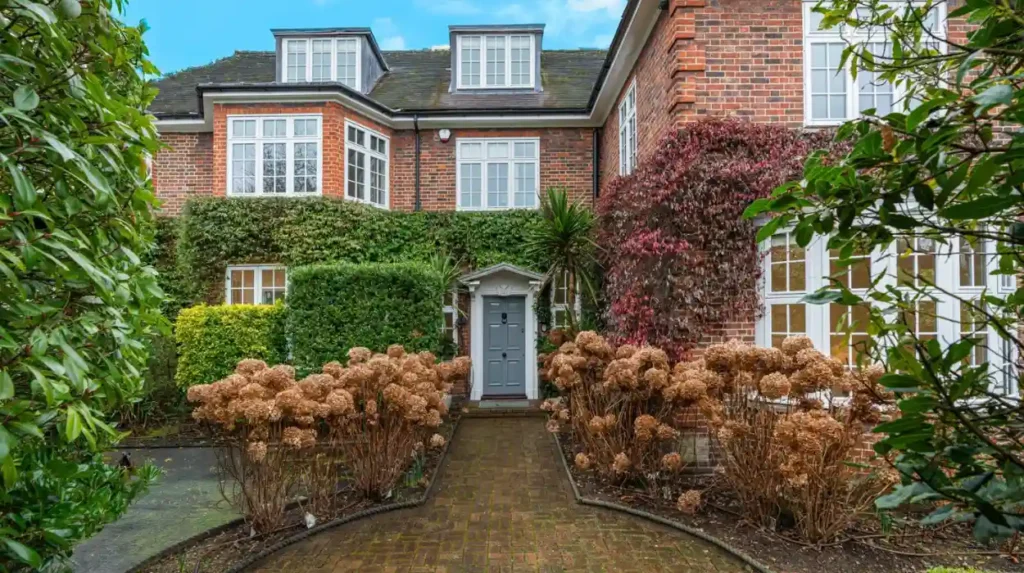
Adjoining Burgess Park’s Southwark City Tennis Club occupies the north side, complementing the square’s tranquil vibe with no through traffic. Proximity to central London draws film crews, while south-east facing gardens in properties like a noted four-bed terraced house boost appeal for modern buyers. These features position Addington Square as a prime example of South London’s elegant garden squares.
Colorful Past Residents
Robert Hunter, National Trust co-founder, was born here in 1844, linking the square to Britain’s conservation legacy. Liberal politician Charles Masterman later resided, adding political prestige. In stark contrast, the 1960s saw the Richardson Gang—south London rivals to the Kray twins—base operations here, running a private club with “Mad” Frankie Fraser and escaped dancing bears that roamed Camberwell Road.
Charlie and Eddie Richardson, Camberwell natives, turned to crime post-family abandonment, using the club for alleged kangaroo courts and torture per their 1967 Old Bailey trial. This gritty era underscores the square’s shift from genteel to notorious before revitalization.
The Garden Oasis
Addington Square Garden, managed under London Gardens Trust inventory, forms the heart of this peaceful haven backed by Burgess Park. In the 1930s, King George’s Fields Foundation granted £1,000 toward converting the old swimming pool site into public green space at £5,363 total cost. Today, it draws lunchtime crowds from nearby offices, fostering community amid lush greenery.
The garden’s keyhole access and period surroundings enhance biodiversity, echoing John Alston’s 1720s designs elsewhere in London. Events like London Square Gardens weekends open gates, as in past June outings, celebrating such spaces. For South Londoners, it rivals prettier squares while hosting modern nods like Goldfrapp’s 2008 “Happiness” video filming.
Modern Life and Amenities
Nestled midway between Camberwell Village and Walworth, Addington Square offers easy access to Burgess Park’s trails and sports. Grade II homes command premium prices, like unique terraced properties blending historic charm with private gardens. Its film-friendly quiet—thanks to park backing—supports creative industries, while tennis facilities provide recreation.
Local amenities include Camberwell’s markets and eateries nearby, with the square’s conservation status ensuring thoughtful development. Renovated post-dereliction, it thrives as a residential haven amid Southwark’s mix of Georgian elegance and tower blocks.
Why Visit Addington Square
- Heritage Walks: Stroll Grade II terraces and garden, tracing canal-era roots near Burgess Park heritage trail.
- Film Spotting: Spot crews drawn to its period authenticity, as in Goldfrapp’s joyful video.
- Green Escape: Relax in the peaceful garden, popular for picnics and quiet reflection.
- Tennis and Parks: Play at adjacent courts or explore expansive Burgess Park.
- Cultural Ties: Ponder National Trust birth and gang lore for layered South London stories.
Visitor Tips
Reach Addington Square via Camberwell Road buses or nearby Denmark Hill station. Best times: Weekday lunch for calm or Open Garden Squares Weekend in June. Respect private gardens; photography thrives its photogenic homes. Pair with Camberwell Grove’s Georgian houses for a full heritage loop.
Property and Community Appeal
For South London buyers, Addington Square blends prestige with practicality—bright townhouses near transport and parks fetch high demand. Conservation rules preserve value, attracting downsizers and families. Community events foster neighborly bonds in this low-traffic idyll.
This evergreen gem endures as South London’s understated treasure, where history whispers from every facade. Explore soon to claim your slice of Camberwell charm.