Key Points
- Kermarley Danclair, a Lambeth youth, expressed strong concerns about air pollution and coal emission rates during a hustings-style debate at the Advocacy Academy in Brixton, highlighting fears for his future ability to live, study, and grow in a polluted world.
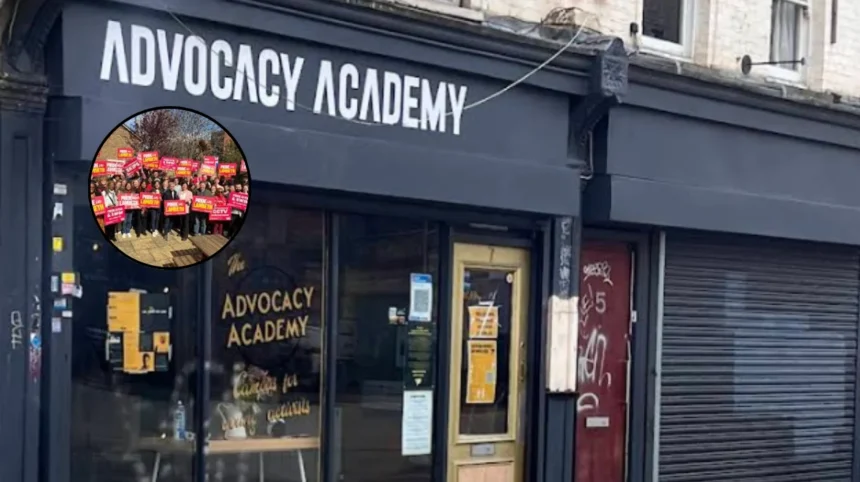
- The event at the Advocacy Academy, a youth and community space in Brixton, featured politicians outlining their positions ahead of the London council elections on 7 May.
- Research indicates young people in London vote less frequently than older residents, and direct engagement reveals their distinct priorities, including housing waiting lists, youth services, and climate issues.
- Xander Haile noted a perceived real choice between Labour and the Greens, empowering him as a voter, and criticised council housing shortages and quality in Lambeth, drawing from his experience growing up on a council estate.
- Lambeth is one of London’s most densely populated boroughs, with a young demographic and one of the capital’s highest social housing waiting lists.
- Zharink Lopez raised concerns that young people’s opinions are often overlooked due to their age and lack of experience, emphasising the importance of youth spaces for current lives and future leadership.
Brixton, Lambeth (South London News) May 4, 2026. Brixton, Lambeth, saw young residents voice pressing concerns on climate change, housing shortages, and youth services during a hustings-style debate at the Advocacy Academy, a key youth and community space, on a date leading into the 7 May council elections.
The event brought politicians face-to-face with local youth, who articulated priorities distinct from those of older voters. As reported by BBC London, Kermarley Danclair spoke directly about his climate worries. “I’m really worried about stuff like air pollution and coal emission rates and how that’s going to impact us – how am I going to live in the world and study and grow in a world where I can’t even breathe?” Danclair said.
Research underscores the context: young people in London are less likely to vote than older residents. When politicians engage them, as at this Brixton event, youth priorities emerge clearly, with housing waiting lists, youth services, and the climate ranking high on the agenda.
Why Are Lambeth Youth Prioritising Climate Change in Council Elections?
Xander Haile, another participant, highlighted a sense of voter empowerment. “It’s the first time that it sort of feels like there’s a real choice between Labour and the Greens. It makes me feel more powerful as a voter,” Haile told BBC London.
Lambeth’s profile amplifies these voices. The borough ranks among London’s most densely populated, with a relatively young demographic. It also maintains one of the capital’s highest social housing waiting lists.
Haile, who grew up on a council estate, provided specific insight into housing challenges.
“As someone who’s grown up on a council estate, I feel like I have a real perspective on what council housing is doing for people. It isn’t enough in terms of the number of council houses there are, and in terms of the quality of the housing already there. A lot of it isn’t fit for purpose and there’s just not enough of it in Lambeth especially,”
He stated.
How Do Youth Services Feature in Lambeth’s Election Debate?
Zharink Lopez addressed the marginalisation of young voices. “I think often the opinion of young people is overlooked by the idea or the notion that because they are young, they don’t have the experience,” Lopez said to BBC London.
Lopez focused on youth services provision.
“Just the youth having those spaces is an important issue because it touches not only their lives but it affects the leaders and the future that we want to build,”
He added.
The Advocacy Academy itself serves as such a space, hosting this debate where politicians set out their positions ahead of the 7 May elections.
What Makes Lambeth’s Demographic Unique for Voters?
Lambeth’s young population and high density place unique pressures on local services. The borough’s social housing waiting lists stand out across the capital, as noted in the context of Haile’s comments.
Danclair’s climate concerns reflect broader youth anxieties, tied to air pollution and emissions, which intersect with daily life in a dense urban area like Brixton.
Haile’s remarks on Labour and Greens suggest shifting dynamics in voter choice, potentially influencing turnout among youth.
Lopez’s points on youth spaces link directly to facilities like the Advocacy Academy, underscoring their role in fostering engagement.
This event demonstrates politicians’ efforts to bridge the voting gap identified in research on London youth participation.
Background of the Development
The hustings-style debate at the Advocacy Academy in Brixton forms part of wider efforts to boost youth involvement in the 7 May 2026 London council elections. Lambeth Council has long grappled with its high social housing waiting lists and dense population, issues compounded by a youthful demographic.
The Advocacy Academy operates as a dedicated youth and community hub, regularly hosting events to amplify local voices. Research from sources like the BBC consistently shows lower voter turnout among young Londoners compared to older groups, prompting such targeted engagements. Politicians’ participation here aligns with pre-election strategies to address youth-specific issues like climate impacts, housing quality, and service provision.
Prediction: Impact on Lambeth Youth Voters
This development can affect Lambeth youth voters by heightening awareness of election choices, as Haile’s comments on Labour and Greens suggest a sense of empowerment that may encourage higher turnout. Direct exposure to politicians at venues like the Advocacy Academy could address perceptions of overlooked opinions, as Lopez noted, potentially leading to more youth spaces and services if voter priorities influence outcomes.
Housing concerns, central to Haile’s estate background, might prompt candidates to prioritise list reductions and quality improvements, directly benefiting young residents facing shortages. Climate worries from Danclair could push for local emission policies, improving air quality for studying and daily life in dense Brixton. Overall, such events foster informed voting, bridging the turnout gap for this demographic ahead of 7 May.