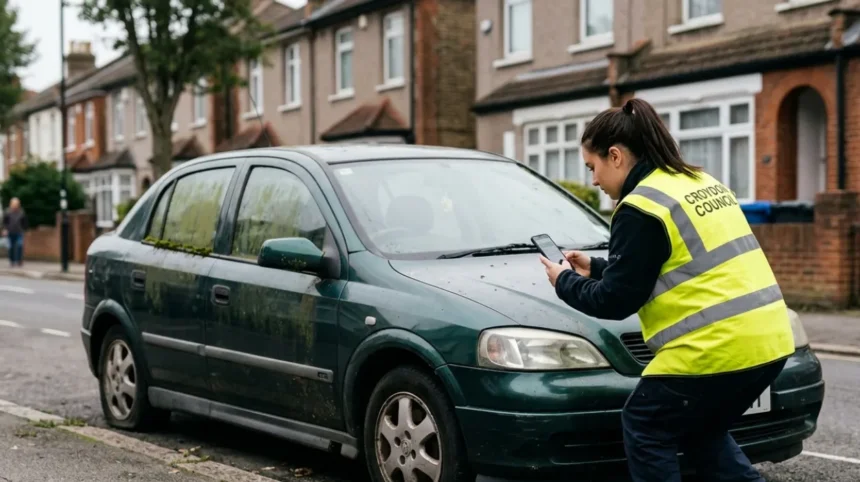
The Love Clean Streets app is a mobile reporting tool that sends street-issue reports to Croydon Council and logs location, photos, and details for abandoned-vehicle investigations.
- What information do I need before I file an abandoned-vehicle report in Croydon?
- How do I submit an abandoned-vehicle report in Croydon using the Love Clean Streets app?
- What criteria does Croydon use to decide if a vehicle is abandoned?
- What happens after Croydon receives an abandoned-vehicle report?
- How long does it take for Croydon to act on an abandoned-vehicle report?
- What evidence makes a report stronger and speeds resolution?
- Can I remain anonymous when reporting via the Love Clean Streets app?
- What are examples of abandoned-vehicle cases and council actions in London?
- What are the legal and financial implications for vehicle owners if a car is removed?
- How does Croydon coordinate with DVLA and other agencies during abandonment investigations?
- How should residents escalate if the app report receives no action?
- What future changes or implications affect app-based abandoned-vehicle reporting?
- Practical checklist: what to do now when you see a suspected abandoned vehicle in South London
Love Clean Streets is a smartphone app and web service used by Croydon Council to receive resident reports about street problems, including abandoned vehicles. The app captures the report location with GPS or a map pin, allows upload of one or more photographs, and sends required details—vehicle make, colour, registration (if visible), and how long it has been stationary—to the council’s case-management system.
What information do I need before I file an abandoned-vehicle report in Croydon?
You need the exact location, clear photos, vehicle registration or description, how long it has been stationary, and any visible damage or signs of abandonment.
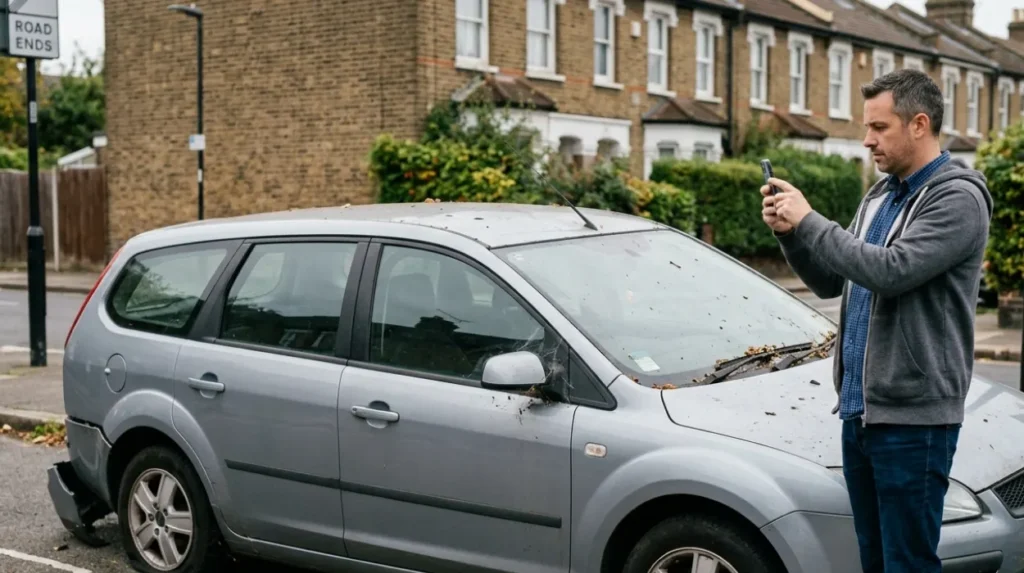
Collect the precise street name or postcode, a nearby house number or junction, and two or more photos showing the vehicle and surrounding context. Include the vehicle registration number, make, model, colour, and visible condition (flat tyres, smashed windows, visible waste, no tax disc), and record the date and time you first noticed the vehicle. These data points allow Croydon officers to assess whether the vehicle meets statutory abandonment criteria.
How do I submit an abandoned-vehicle report in Croydon using the Love Clean Streets app?
Open the Love Clean Streets app, choose ‘Report’, select ‘Abandoned vehicle’ or equivalent category, drop a map pin, attach photos, enter vehicle details, then submit—your report is forwarded to Croydon Council.
Steps in detail: open the app or website and sign in or use the ‘Report Now’ option; choose the category for vehicles or streets; set the map pin to the exact location or enter the postcode; attach at least one clear photo showing the vehicle and its surroundings; fill fields for registration, make, colour, condition, and how long it has been stationary; add notes such as obstruction to traffic or proximity to private property; submit the report. The app transmits the report to the council and returns a reference number or status update in the app or by email if you provided contact details.
Explore More Croydon News
Live facial recognition pilot yields 173 arrests — Croydon 2026
Croydon Grants Cinema Return After Vue Closure 2026
What criteria does Croydon use to decide if a vehicle is abandoned?
Croydon applies statutory and local criteria: illegal parking or obstruction, untaxed status, evidence of long-term dereliction, or visible signs of abandonment determine whether a vehicle is declared abandoned.
Local authorities use criteria based on the Removal and Disposal of Vehicles legislation and local policy; officers check tax status, condition, length of time stationary, and whether the vehicle poses a hazard or obstruction. If the vehicle is untaxed or clearly derelict (broken windows, flat tyres, excessive rubbish), or parked illegally and left for an extended period, the council will classify it as abandoned and apply notice and removal procedures.
What happens after Croydon receives an abandoned-vehicle report?
An officer inspects the vehicle, records tax and VIN checks, issues a notice if abandoned, and removes the vehicle if there is no owner response within the statutory notice periods.
After receipt, Croydon Council places the report into their investigative queue and schedules a site visit from an enforcement officer. Officers use the vehicle registration and VIN checks (DVLA) to contact the registered keeper; if contact is unsuccessful and the vehicle meets abandonment criteria, the council attaches a 7‑day or 24‑hour notice to the vehicle, depending on urgency. If notices expire with no response or collection, the vehicle is removed and stored or disposed of following legal procedures; owners may incur removal and storage charges.
How long does it take for Croydon to act on an abandoned-vehicle report?
Croydon aims to inspect within five working days, issue notices (usually 7 or 24 days), and then remove the vehicle if unclaimed after the notice period.
Typical service standards used by London boroughs, including Croydon, record an initial officer inspection target of about five working days from report receipt. If the vehicle is deemed abandoned, the council posts either a 7‑day or 24‑hour notice, depending on risk or obstruction; removal occurs after the notice period lapses without owner contact. Timescales vary by workload, evidence supplied, and whether the vehicle is on private land (owner/landlord responsibility) or public highway.
What evidence makes a report stronger and speeds resolution?
High-quality geotagged photos, the vehicle registration, date/time notes, and clear descriptions of obstruction or damage strengthen reports and reduce investigation time.
Photographs that show the registration plate, full vehicle profile, and surroundings (kerb, street signs, house numbers) give officers immediate context. Note how long the vehicle has been present with dates; include nearby landmarks or exact postcodes to remove ambiguity. Reports with multiple corroborating photos and precise location pins receive faster triage and reduce the need for follow-up clarification.
Can I remain anonymous when reporting via the Love Clean Streets app?
You can submit a report without creating an account using ‘Report Now’, but providing contact details allows Croydon to request follow-up information and informs you of the outcome.
The Croydon Love Clean Streets portal includes a ‘Report Now’ option for one-off reports without registration; this sends the issue to the council with the supplied details. Supplying an email or phone number is optional but recommended because the council may need clarifications (for example, clearer photos or exact vehicle movement dates). Anonymous reports still enter the enforcement process but may limit communication about case outcomes.
What are examples of abandoned-vehicle cases and council actions in London?
Common examples: untaxed cars left on kerbs, wrecked vehicles with flat tyres, and cars blocking access; councils inspect, issue notices, then remove and charge owners for storage and disposal.
Example 1: An untaxed car left on a residential street for several weeks triggers a DVLA tax check and a 7‑day notice; if unclaimed, the vehicle is removed and stored, and the registered keeper is liable for removal and storage fees. Example 2: A wrecked vehicle with broken windows and tyres left in a public car park is classified as derelict; officers affix a notice and remove it if no owner comes forward, then arrange disposal under local policy. Example 3: A vehicle obstructing a driveway or bus route receives a 24‑hour urgent notice and faster removal action due to immediate public-safety implications.
What are the legal and financial implications for vehicle owners if a car is removed?
Owners face removal and storage charges, potential fines, and disposal of the vehicle if not reclaimed; legal liability follows notification and statutory notice expiry.
When a council removes and stores a vehicle, it records removal costs, daily storage charges, and administrative fees; owners must pay these fees and any disposal costs to reclaim the vehicle. If the owner does not reclaim the vehicle within statutory timescales after notice and storage, the council may sell or scrap the vehicle to recover costs, with any shortfall treated under local disposal rules. Registered keepers who illegally abandon vehicles risk enforcement action and civil recovery of charges.
How does Croydon coordinate with DVLA and other agencies during abandonment investigations?
Croydon uses DVLA checks to identify registered keepers, shares evidence with the DVLA when required, and coordinates with police when vehicles present crime or safety risks.
Enforcement officers run DVLA records queries to confirm tax, MOT, and registered keeper details; the DVLA record supports legal notice and removal procedures. If the vehicle is suspected of involvement in a crime, has been stolen, or presents a danger, Croydon calls the Metropolitan Police and pauses removal until police clear the scene. Coordination ensures legally compliant removal and prevents wrongful disposal of stolen or evidence-bearing vehicles.
Explore More Croydon News
Trinity School £40m Expansion Approved in Croydon 2026
NEU Grills Davis and Perry on School Pressures in Croydon 2026
How should residents escalate if the app report receives no action?
If no action occurs, follow up with Croydon Council using the report reference, contact the Love Clean Streets support, or use the gov.uk abandoned-vehicle reporting tool to re-route the case.
First, check the report status in the Love Clean Streets app and note the case reference. If the council does not respond within the published timescale (for example, five working days for inspection), call Croydon’s environmental enforcement or parking services with the reference number. Alternatively, use the gov.uk ‘report an abandoned vehicle’ service, which redirects reports to the correct local authority if the app or local portal fails.
What future changes or implications affect app-based abandoned-vehicle reporting?
Digital reporting centralises evidence, reduces inspection time, and allows data-driven prioritisation; future updates will expand automated triage, map accuracy, and cross-agency data-sharing.
App-based reporting platforms collect geotagged photos and timestamps, enabling councils to prioritise urgent obstructions and identify repeat problem locations through analytics. Ongoing improvements include automated image analysis to flag likely abandoned vehicles, integration with DVLA APIs for faster verification, and improved map-pin accuracy to reduce officer travel time. These changes reduce resolution times and increase transparency for residents who use digital reporting channels.
Practical checklist: what to do now when you see a suspected abandoned vehicle in South London
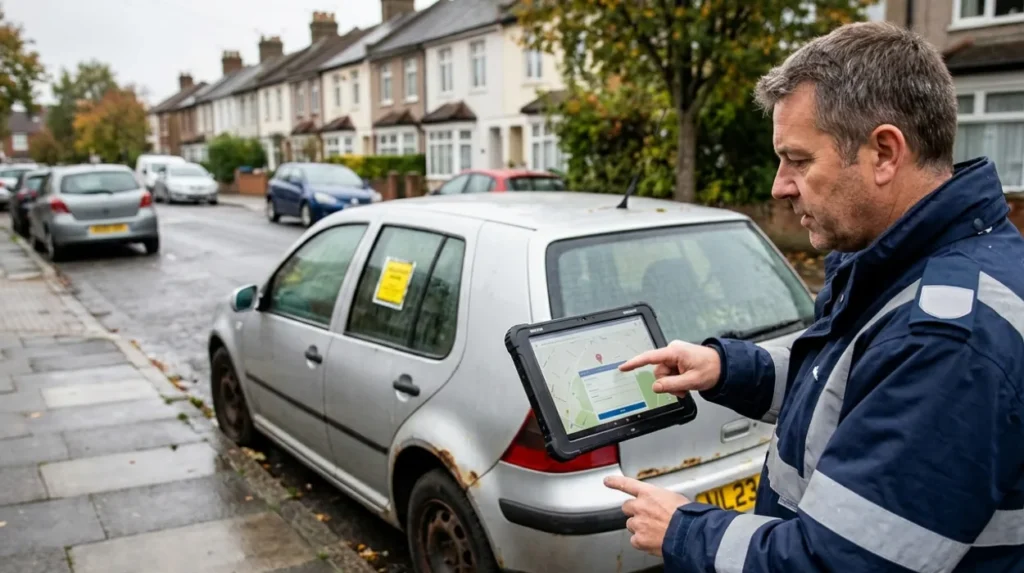
Gather precise location, take clear photos of the vehicle and registration, note how long it’s been there, open Love Clean Streets, submit details under the vehicle/streets category, and keep the report reference.
Checklist details: record the street name, house number, or nearest junction; photograph plate, vehicle condition, and surroundings; record the date you first noticed the vehicle; use the Love Clean Streets app or website ‘Report Now’; attach photos and precise map pin; keep the confirmation or case number; follow up with Croydon Council if no action within five working days.
What counts as an abandoned vehicle in Croydon?
A vehicle usually counts as abandoned if it has stayed in the same place for a long time and shows signs of neglect such as flat tyres, broken windows, missing number plates, rubbish inside, or severe damage. Croydon Council also checks tax status, obstruction, and whether the owner can be identified.