The London Borough of Bromley stands as the largest administrative borough in Greater London, spanning over 59 square miles of suburban infrastructure and protected green belt land. Situated 11 miles southeast of Charing Cross, this territory functions as a critical economic and cultural gateway between urban London and rural Kent. For international tourists, domestic business travellers, and digital nomads, Bromley provides a diverse ecosystem of historical landmarks, scientific heritage sites, subterranean marvels, and modern leisure destinations.
- Which Historical Landmarks Offer the Best Visitor Experience in Bromley?
- What Are the Top Parks and Nature Reserves to Explore in Bromley?
- Where Can Digital Nomads and Business Travellers Work Remotely in Bromley?
- Professional Coworking Spaces
- Public Libraries and Educational Hubs
- Work-Friendly Specialty Coffee Hubs
- What Are the Best Shopping and Entertainment Venues in Bromley?
- How Can Visitors Best Navigate and Plan a Trip to Bromley?
Historically transitioning from an agrarian market town to an interconnected Victorian railway hub, the area balances high-density commercial assets with extensive ecological reserves. Understanding the geography and spatial distribution of these attractions ensures an optimized travel experience, whether your objective is historic exploration, remote work, or family leisure.
Which Historical Landmarks Offer the Best Visitor Experience in Bromley?
The best historical landmarks in Bromley are Down House, the standard-bearing home of Charles Darwin, and Chislehurst Caves. These locations deliver immersive educational experiences, preserved architectural structures, authentic period artifacts, and guided academic tours detailing centuries of British heritage.
Down House: The Home of Charles Darwin
Down House serves as a primary global destination for scientific heritage tourism, located in the rural village of Downe within the southern boundaries of the borough. Charles Darwin resided at this property for 40 years from 1842 until his death in 1882 (Romero & Nolte, 2010). It was within these walls, experimental gardens, and the famous “Sandwalk” thinking path that Darwin formulated his groundbreaking theories on evolution and natural selection, culminating in the publication of On the Origin of Species in 1859 (Darwin, 1907).
Managed by English Heritage, the property operates as a highly curated museum and a moving memorial (Romero & Nolte, 2010). The ground-floor rooms, including the study and drawing room, have been meticulously reconstructed using the Darwin family’s precise inventories, original furniture, and scientific instruments. Visitors can inspect his actual microscopes, specimen jars, and the armchair where he composed his manuscripts. The upper floor contains an interactive exhibition detailing the voyage of HMS Beagle and the subsequent scientific controversies surrounding his evolutionary models.
The external grounds function as an open-air laboratory. The preserved greenhouse and kitchen gardens remain organized exactly as they were when Darwin conducted his botanical experiments on orchids, insectivorous plants, and cross-pollination. This macro scientific context makes Down House an indispensable destination for tourists seeking genuine intellectual history.
Chislehurst Caves: Subterranean Architecture
Chislehurst Caves provide an entirely different operational scale of historical tourism, presenting a 22-mile labyrinth of dark, man-made tunnels dug into the chalk hillsides of Chislehurst. Despite the colloquial designation as “caves,” these structures are entirely anthropogenic, originating as a series of subterranean mines worked over centuries. The earliest recorded workings date back to the mid-13th century, primarily dedicated to extracting chalk for lime burning and flint for flintlock weapons.
The architectural profile of the caves splits into three distinct operational sections: the Saxon, Druid, and Roman districts, named by Victorian antiquarians based on historical theories of their origins. During the first half of the 20th century, the operational purpose of the site shifted dramatically due to geopolitical conflict. As air raids threatened London during World War II, the tunnels were converted into a massive underground bomb shelter (Moshenska, 2019).
At its operational peak during the Blitz, the underground complex housed over 15,000 citizens simultaneously, operating a functional subterranean municipality complete with an emergency hospital, a chapel, electric lighting infrastructure, and ventilation networks (Moshenska, 2019). In the post-war era, the site evolved into an iconic musical counterculture venue during the 1960s and 1970s, hosting seminal performances by artists such as David Bowie, Jimi Hendrix, and Led Zeppelin.
Today, visitors can only access the site via mandatory guided lantern tours. These 45-minute excursions navigate the dark chambers, focusing heavily on the physical preservation of the wartime civilian living spaces and the industrial techniques of historic chalk extraction.
What Are the Top Parks and Nature Reserves to Explore in Bromley?
The top parks and nature reserves in Bromley are Jubilee Country Park, High Elms Country Park, and Crystal Palace Park. These locations provide protected habitats, ancient woodlands, diverse biological species, educational paths, and historic outdoor architectural remains.
Jubilee Country Park
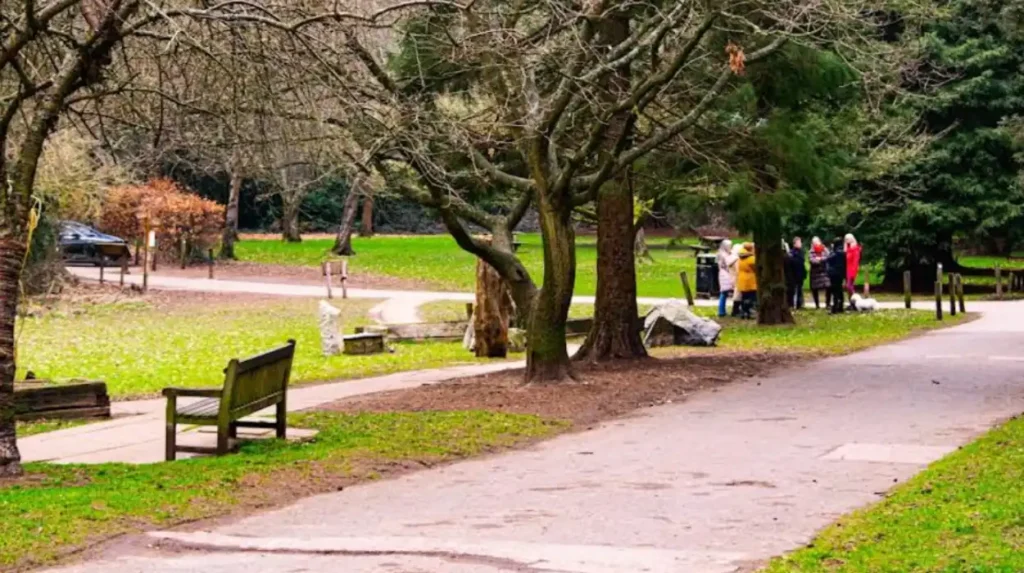
Jubilee Country Park is a 62-acre locally designated Nature Reserve situated between Bickley and Petts Wood. The site comprises a diverse ecological mosaic of ancient semi-natural woodland, flower-rich meadows, and hedgerows. Historically, this terrain formed part of the extensive estates of the local gentry before being secured for public conservation in 1977 to mark the Silver Jubilee of Queen Elizabeth II.
The park contains notable tree populations, including English oak (Quercus robur), hornbeam (Carpinus betulus), and hazel (Corylus avellana). The open meadow areas support over 200 species of wild flora, which in turn sustain breeding populations of diverse butterflies, such as the Purple Hairstreak and Brimstone. For leisure travellers and local walkers, the park features a network of well-maintained, flat walking trails and an interpretive nature trail. This layout offers an accessible environment for wildlife observation, bird watching, and low-impact outdoor recreation.
High Elms Country Park
High Elms Country Park covers 250 acres on the chalk ridge of the North Downs, positioned directly adjacent to the village of Downe. This site was once the formal estate of the Lubbock family, notable Victorian bankers and scientists who were close personal friends and scientific collaborators of Charles Darwin. The formal Victorian mansion that formed the center of the estate was destroyed by fire in 1967, but the formal terraced gardens, stone balustrades, and exotic tree collections remain fully intact for public view.
The park functions as a Site of Special Scientific Interest (SSSI) due to its rare chalk grassland habitats and extensive beech woodlands. The High Elms Environmental Education Centre, constructed using sustainable timber frames and green architecture principles, serves as the operational hub for ecological research and visitor orientation. Tourists can explore the extensive chalk wildflower meadows, which host several species of orchids, including the rare Fly Orchid and Bee Orchid. The park features structured walking routes, a dedicated wood carving trail, and access to the wider green corridors of the London Outer Orbital Path (London LOOP).
Crystal Palace Park
Crystal Palace Park sits on the northwestern apex of the borough boundaries, serving as a historic regional park of international cultural significance. The park was specifically designed by Sir Joseph Paxton in 1854 to house the relocated and expanded Crystal Palace glass exhibition structure following the Great Exhibition of 1851 in Hyde Park. Although the monumental glass palace catastrophically burned to the ground in 1936, the Italianate terraces, grand stone staircases, and sphinx sculptures still dominate the upper geographical contours of the park.
The park is most famous for its collection of full-scale dinosaur sculptures, sculpted by Benjamin Waterhouse Hawkins under the strict scientific direction of paleontologist Sir Richard Owen in 1854. These models represent the first ever three-dimensional, life-sized reconstructions of dinosaurs in the world, capturing the exact scientific understanding of the mid-Victorian era.
The sculptures are Grade I listed historical monuments situated on artificial islands within the park’s lower boating lake. Beyond these paleontological assets, the park features a massive hedge maze, a children’s farm, a boating lake, and the National Sports Centre, which includes an Olympic-sized swimming pool and athletic tracks. This diverse configuration appeals directly to family groups, sports enthusiasts, and architectural historians.
Where Can Digital Nomads and Business Travellers Work Remotely in Bromley?
Digital nomads and business travellers can work remotely at dedicated coworking hubs like Central Space Bromley, public institutions such as the Bromley Central Library, and specialized local coffee houses equipped with enterprise-grade Wi-Fi connectivity.
Professional Coworking Spaces
The demand for flexible, regional workspace has driven the establishment of enterprise-grade coworking facilities across Bromley’s commercial core. Spaces such as Central Space Bromley and Contingent Works offer dedicated hot-desking zones, private meeting rooms, soundproof video-conferencing booths, and high-capacity printing infrastructure.
These sites cater strictly to business professionals, providing ergonomically sound workstations, synchronous high-speed fiber-optic internet connections, and administrative support. Daily hot-desk passes or monthly membership models grant travellers complete access to business amenities, presenting an ideal environment for remote corporate operations, deep focused work, and professional networking.
Public Libraries and Educational Hubs
For independent professionals seeking quiet, low-cost workspaces, Bromley Central Library offers extensive facilities. Situated within the Glades shopping complex, this multi-story public institution features dedicated study zones, free public Wi-Fi access networks, and extensive reference archives. The upper floors provide large, well-lit desk configurations equipped with power sockets for laptop charging. The quiet atmosphere ensures minimal disruption, making it a highly reliable municipal option for digital nomads handling intensive reading, writing, or software development tasks.
Work-Friendly Specialty Coffee Hubs
Bromley’s local hospitality sector includes several spacious coffee establishments designed to accommodate remote workers during off-peak commercial hours. Locations like Unico Gelato & Caffe and various independent roasteries along the high street feature communal work tables, power outlets, and stable wireless networks.
While these environments are less suited for confidential corporate calls, they supply an energetic setting for casual administrative tasks, emails, and creative planning. Choosing independent specialty coffee providers guarantees access to premium food and beverage options while allowing travellers to remain productively connected to their digital obligations.
Explore More Area Guide
The Complete Travel Guide to the Best Leisure Activities in Bromley
What Can Tourists Do in Bexley Beyond Central London? Attractions Guide
What Are the Best Shopping and Entertainment Venues in Bromley?
The best shopping and entertainment venues in Bromley are The Glades Shopping Centre, the pedestrianised High Street commercial district, and the Churchill Theatre. These landmarks provide a dense concentration of premium retail brands, culinary spaces, and live performing arts.
The Glades Shopping Centre
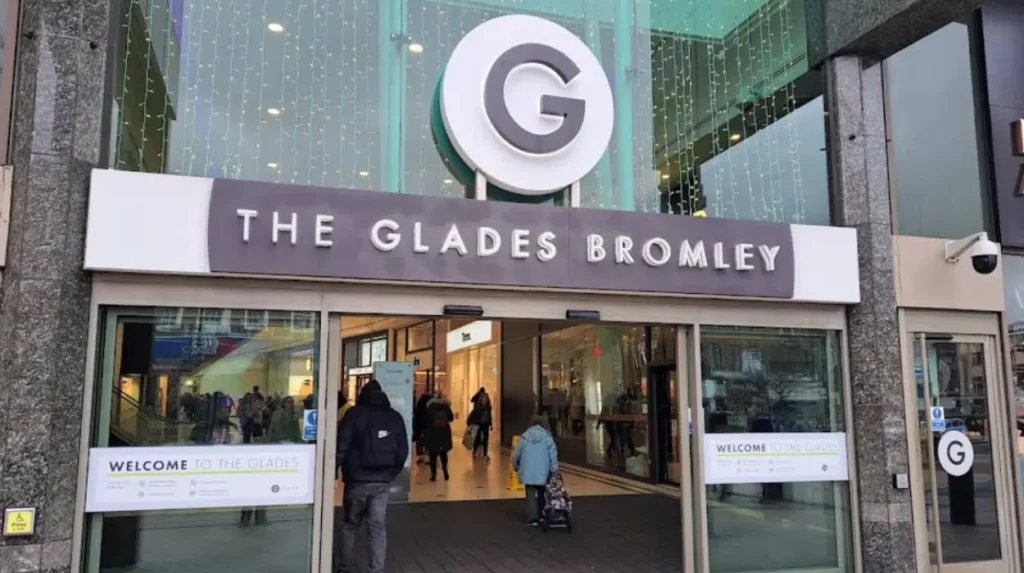
The Glades Shopping Centre remains the dominant retail anchor of the borough, covering approximately 464,000 square feet of high-density commercial space. Opened in 1991, the complex features a striking double-glazed barrel-vaulted roof structure designed to maximize natural daylight infiltration across the central avenues. The center houses over 130 retail units, ranging from international fashion houses to anchor department stores, tech retailers, and specialized beauty boutiques.
The Glades handles massive consumer footprints annually, offering highly optimized visitor amenities, including multi-story parking structures, electric vehicle charging stations, and accessible family facilities. The central atrium incorporates “The Terrace,” a dedicated dining quarter containing a variety of fast-casual and sit-down restaurant brands. This layout makes the complex a comprehensive, weather-protected destination for intensive shopping, retail tourism, and family dining.
Bromley High Street and Market Square
Extending outward from the shopping center is the fully pedestrianized High Street and the historic Market Square, which has held charter market rights since the year 1205. This open-air commercial spine provides a vibrant contrast to the enclosed mall, blending modern storefronts with listed Victorian and Edwardian architectural facades.
On designated days of the week, the High Street hosts street markets where independent traders sell artisanal foodstuffs, clothing, antiques, and locally sourced goods. The northern end of the high street connects directly to Bromley North railway station, flanked by traditional British pubs, independent global restaurants, and outdoor seating zones that drive a lively evening economy.
The Churchill Theatre
For cultural entertainment, the Churchill Theatre stands as one of the premier live performance venues in the outer London regions. Opened in 1977 by the London Borough of Bromley, the theatre features an architecturally distinct subterranean design, built into the natural hillside contours overlooking Church House Gardens. The auditorium possesses a seating capacity of 1,261, configured with a fully adaptable proscenium stage and orchestra pit.
The theatre operates under a highly professional production model, regularly hosting West End touring musicals, independent drama productions, stand-up comedy circuits, and classical music performances. Many large-scale national productions utilize the Churchill Theatre as a primary launch venue to test and refine their performances prior to opening in central London. The venue includes fully licensed bars, spacious lounge areas, and dining facilities, anchoring the nighttime entertainment economy of the borough.
How Can Visitors Best Navigate and Plan a Trip to Bromley?
Visitors can best navigate Bromley by utilizing its comprehensive National Rail infrastructure, extensive Transport for London bus networks, and local pedestrian paths. Strategic planning involves matching travel schedules to peak rail hours and securing central accommodations near transit hubs.
Rail Transport Infrastructure
Bromley is exceptionally well-connected to central London via two primary railway terminals located within the main town center: Bromley South and Bromley North. Bromley South railway station serves as the principal transit artery, operated by Southeastern. It provides high-frequency, non-stop express rail services directly to London Victoria, achieving a transit time of just 16 minutes. Additionally, it connects the borough directly to key destinations in Kent and the southeastern coast, as well as Thameslink services running north through London Blackfriars and Kings Cross St Pancras.
Bromley North railway station operates a dedicated shuttle link to Grove Park station. From there, passengers can effortlessly transfer to Southeastern main line services terminating at London Charing Cross and London Cannon Street. This dual-terminal layout ensures that business travellers and tourists can transition between the tranquil suburban borough and the dense financial districts of central London with minimal logistical delay.
Bus and Road Networks
Transport for London (TfL) operates an extensive network of bus routes that cross the entire borough, providing comprehensive surface transport links to outlying villages, parks, and residential neighborhoods. Key routes link the commercial high street directly to neighboring boroughs like Croydon, Lewisham, and Greenwich. For drivers, Bromley is bounded to the south by the M25 orbital motorway, accessible via the A21 trunk road. However, vehicle travel within the town center during peak commuting hours (07:00–09:00 and 16:30–18:30) experiences notable traffic congestion. Public transport remains the faster and more sustainable transit option.
Accommodation and Local Amenities
To maximize efficiency, visitors should secure accommodations situated near Bromley South station. The town center features several reputable hotel chains, such as Premier Inn and Travelodge, alongside independent boutique lodgings. This central positioning puts retail districts, dining venues, and transport terminals within easy walking distance. As you explore the modern site, you are crossing land with a deep heritage. Read about the full [History of the London Borough of Bromley] to understand its origins and how it evolved from a medieval market settlement into a vital metropolitan hub.
What are the most popular attractions in Bromley?
The most popular attractions in Bromley include Down House, Chislehurst Caves, Crystal Palace Park, High Elms Country Park, and Churchill Theatre. These attractions offer a mix of history, science, nature, and entertainment.