The London Borough of Bromley is the largest administrative district in Greater London, occupying 59 square miles (153 square kilometres) in the southeastern portion of the capital. Unlike core urban zones, 51% of this territory belongs to the Metropolitan Green Belt, making it the most rural borough in London. Historically a part of the county of Kent until the London Government Act 1963 enacted boundaries in 1965, the region transitions from dense suburban town centres to open expanses of the North Downs. The geographic positioning yields a unique ecosystem where commercial hubs sit directly adjacent to agricultural fields and protected woodlands.
- Why Is Bromley Considered a Major Alternative Travel Destination?
- What Historical and Scientific Landmarks Exist in the Borough?
- How Can Visitors Explore the Subterranean Attractions of Chislehurst?
- What Green Spaces and Ecological Parks Highlight the Region?
- Where Can Digital Nomads and Business Travellers Work Effectively?
- What Shopping and Entertainment Venues Define the Town Centre?
- What Are the Future Development and Conservation Implications for Bromley?
According to the Office for National Statistics 2021 census data, the population of the borough stands at 329,991 residents, representing a 6.7% increase from the 309,392 residents recorded in 2011. The population density is 2,233 people per square kilometre, which is the lowest density of any of the 32 London boroughs. Economic data indicates that the area features high disposable income levels, with a gross disposable household income of £27,169 recorded per capita in 2018. This financial profile supports a well-maintained retail infrastructure, extensive parklands, and preserved historical sites that attract tourists, domestic business travellers, digital nomads, and leisure seekers wishing to bypass the crowded areas of central London.
Why Is Bromley Considered a Major Alternative Travel Destination?
The London Borough of Bromley serves as a primary alternative travel destination because it combines metropolitan transport links with expansive Green Belt spaces, diverse ecological reserves, historical science monuments, retail complexes, and subterranean networks without the crowding of central London zones.
The strategic value of the borough as a visitor destination stems from its infrastructure and geography. The territory functions as a buffer between urban London and rural Kent, allowing travellers to access distinct experiences within a single day. Visitors can investigate ancient man-made excavations, tour the country estates of prominent global scientists, work in quiet environments equipped with high-speed internet connectivity, and hike through semi-natural ancient woodlands.
The low population density ensures that outdoor sites, municipal gardens, and commercial spaces remain uncrowded compared to inner London counterparts like Westminster or Camden. This spatial availability makes it highly attractive to leisure travellers seeking wellness, open-air recreation, and cultural depth. Transport accessibility reinforces its viability; the district is served by multiple National Rail lines, connecting stations like Bromley South directly to London Victoria in 16 minutes, and London Blackfriars in 25 minutes.
What Historical and Scientific Landmarks Exist in the Borough?
The borough contains globally significant historical and scientific landmarks, including Down House, which is the home of naturalist Charles Darwin, and the Biggin Hill Memorial Museum, which preserves the military heritage of a critical Second World War sector airfield.
The most influential heritage site within the district is Down House, located in the village of Downe. This property served as the residence and working laboratory of Charles Darwin for 40 years, from 1842 until his death in 1882. It was at this location that Darwin conducted empirical research and drafted his seminal scientific text, On the Origin of Species by Means of Natural Selection, published on 24 November 1859. The property is managed by English Heritage, an registered charity that maintains the house, the personal belongings of the Darwin family, and the surrounding grounds.
Visitors can observe the preserved Old Study, where Darwin utilised a simple microscope and custom-built furniture to analyse biological samples. The adjacent gardens, including the Sandwalk, which functioned as Darwin’s daily thinking path, serve as living apparatus where he performed experiments on seed dispersal, insect pollination, and plant cross-fertilisation. The site displays original manuscripts, experimental notebooks, and specimens collected during the voyage of the HMS Beagle between 1831 and 1836.
Military history is preserved at the Biggin Hill Memorial Museum, situated on the perimeter of the former Royal Air Force Station Biggin Hill. During the Battle of Britain in 1940, RAF Biggin Hill operated as one of the principal fighter bases protecting London from aerial attacks by the German Luftwaffe. The museum incorporates St George’s RAF Chapel of Remembrance, which was built in 1951 to replace an earlier chapel destroyed by fire.
The walls of the chapel display 12 large stained-glass windows designed by artist Hugh Easton, alongside oak panels inscribed with the names of 454 aircrew killed while flying from the Biggin Hill Sector. The museum exhibitions store personal artefacts, letters, uniforms, and structural remnants from the conflict, offering an objective analysis of the geopolitical and technical mechanisms of the air war. As you explore the modern site, you are crossing land with a deep heritage. Read about the full [history of Bromley and Kent boundaries] to understand its origins.
How Can Visitors Explore the Subterranean Attractions of Chislehurst?
Visitors explore the subterranean attractions of Chislehurst by participating in regular, lantern-lit guided tours through the Chislehurst Caves, a man-made labyrinth of chalk and flint mines extending over 22 miles beneath suburban woodlands.
Chislehurst Caves constitute an expansive underground network excavated by human labour over several centuries. The tunnels are divided into three distinct chronological sections: the Saxon, Druid, and Roman workings. These historical designations reflect the periods of intense extraction rather than verified archaeological origins. The primary function of these excavations was the mining of high-purity chalk for lime burning, agriculture, and brick-making, alongside the collection of flint nodules used to supply flintlock firearms during the 17th and 18th centuries.
The structural grid covers more than six hectares and sits up to 30 metres beneath the surface. The atmosphere maintains a constant natural temperature of 10 degrees Celsius throughout the year, requiring visitors to bring protective clothing. Access is strictly controlled through guided tours, during which guides carry wax lanterns to illuminate the dark, unlit chambers. The routes pass historical features, including an underground water well dug to supply occupants during emergencies, and carved chalk sculptures left by generations of miners.
The system has served multiple critical functions during modern history:
- First World War Munitions Depot: The tunnels acted as an overflow storage facility for ammunition originating from the Royal Arsenal at Woolwich.
- Second World War Deep Air Raid Shelter: Following the commencement of the Blitz in September 1940, the caves were converted into an underground civilian city. The space was partitioned into distinct zones equipped with electric lighting, a ventilation system, a medical hospital, chapel facilities, and a public address system to support up to 15,000 citizens fleeing aerial bombardment.
- Mid-20th Century Concert Venue: During the 1960s and 1970s, the natural acoustics of the main cavern amphitheatre were utilised for musical performances, hosting prominent musicians including Jimi Hendrix, David Bowie, Pink Floyd, and The Rolling Stones.
What Green Spaces and Ecological Parks Highlight the Region?
The region features green spaces and ecological parks, including Crystal Palace Park, known for its Victorian dinosaur sculptures, alongside Kelsey Park and High Elms Country Park, which provide bird habitats and ancient woodland trails.
The northern boundary of the borough contains Crystal Palace Park, a Grade II listed historic park established in 1854. The park was designed by landscape architect Sir Joseph Paxton to frame the relocated Crystal Palace exhibition building after the Great Exhibition of 1851 in Hyde Park. A central feature of this site is the collection of Crystal Palace Dinosaurs, which are a series of full-scale concrete sculptures created by sculptor Benjamin Waterhouse Hawkins under the direct scientific guidance of paleontologist Sir Richard Owen.
Launched to the public in 1854, these sculptures represent the first global attempt to reconstruct extinct reptiles, including Megalosaurus, Iguanodon, and Hylaeosaurus, at their natural scale. Although modern paleontology has disproven the anatomical accuracy of these four-legged, heavy representations, the figures are protected as Grade I listed structures due to their historical importance to the history of science education. The park also includes a 160-foot wide cedar maze, a boating lake, and the National Sports Centre, which features an athletics stadium and Olympic-sized swimming pools.
Further south, Kelsey Park in Beckenham occupies land that originally formed the estate of Kelsey Manor. Opened as a public municipal park in 1913, it contains a chain of ornamental lakes formed by damming the River Beck. The park is highly regarded for its ornithological diversity, acting as a sanctuary for over 60 bird species. Visitors can observe a breeding colony of grey herons, alongside populations of tufted ducks, mandarins, kingfishers, and feral rose-ringed parakeets. The park features structured walking paths, ancient oak trees, and a dedicated conservation area closed to the public to allow natural nesting behaviors to proceed undisturbed.
For an expansive wilderness experience, High Elms Country Park covers 250 acres on the limestone ridge of the North Downs near Farnborough. The site is a designated Local Nature Reserve and a Site of Special Scientific Interest, comprising chalk grasslands and semi-natural ancient woodland dominated by beech, oak, and hornbeam trees. The park includes the High Elms Environmental Education Centre, which delivers educational programs regarding biodiversity. Visitors can navigate the multi-mile nature trails to identify rare British orchids, including the fly orchid and man orchid, alongside diverse butterfly species such as the chalkhill blue and marbled white.
Where Can Digital Nomads and Business Travellers Work Effectively?
Digital nomads and business travellers work effectively at modern flexible workspace facilities, including Spaces at Bromley South Quarter and Regus on Elmfield Road, as well as the quiet study rooms inside the Bromley Central Library.
The shift toward decentralised work has resulted in the growth of professional workspace infrastructure inside the town centre. Freelancers and remote workers can access dedicated environments featuring business-grade high-speed fibre optic broadband connectivity, ergonomic furniture, private video-conferencing booths, and communal kitchens. These hubs offer an alternative to residential spaces or noisy city cafes, allowing visitors to retain productivity while remaining outside central London traffic grids.
The key facilities operate under distinct commercial models:
- Spaces – Bromley South Quarter: Located adjacent to Bromley South railway station on Elmfield Road, this multi-floor corporate complex caters to digital nomads needing flexible hot-desking, dedicated desks, and bookable boardrooms for client presentations.
- Regus – Central Bromley: Positioned on London Road, this site offers fully serviced corporate offices and business lounges accessible via global membership passes, making it ideal for domestic business travellers maximizing short-term downtime.
- Bromley Central Library: Situated on the High Street within the large standard town centre complex, this public facility provides free access to quiet study desks, charging points, and local historical archives without membership fees.
What Shopping and Entertainment Venues Define the Town Centre?
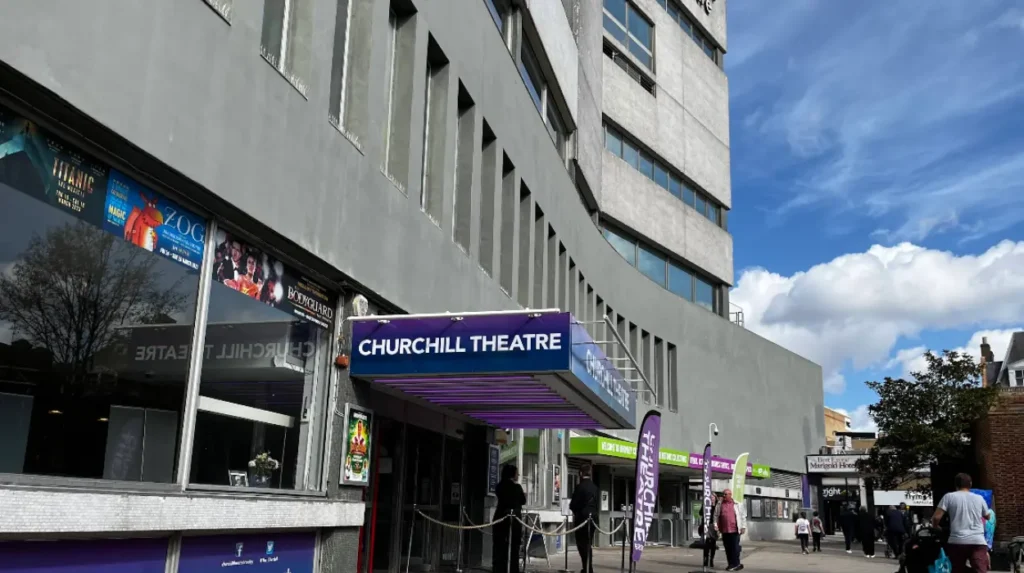
The town centre is defined by the Glades Shopping Centre, which contains over 130 retail brands, and the Churchill Theatre, which acts as a major regional venue for touring West End theatre productions.
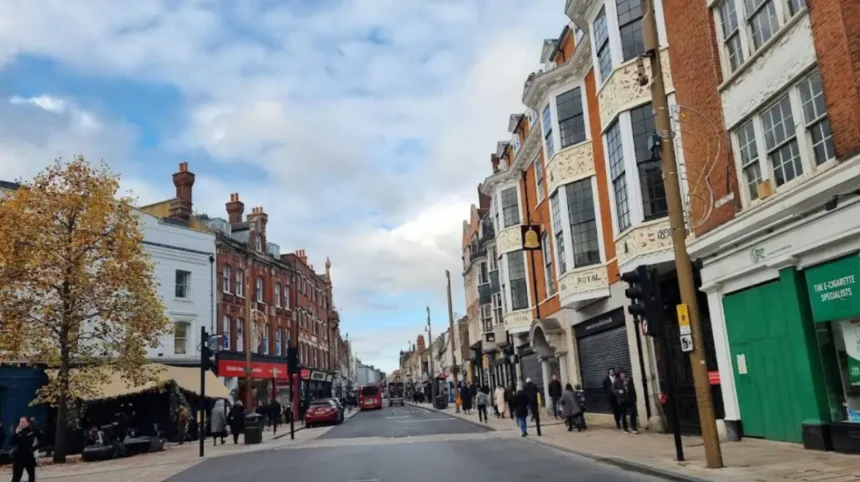
The commercial core of the borough is designated as one of the major metropolitan centres within the Mayor of London’s spatial development strategy, known as the London Plan. The primary retail anchor is The Glades Shopping Centre, a 464,000-square-foot indoor shopping complex opened in 1991. The centre accommodates more than 130 individual retail outlets, including major international fashion brands, technology stores, cosmetics retailers, and homeware brands. The architecture incorporates a large double-glazed roof structure designed to maximize natural daylighting, alongside a dedicated restaurant terrace, known as Regent Arcade, which hosts diverse dining establishments serving global cuisines.
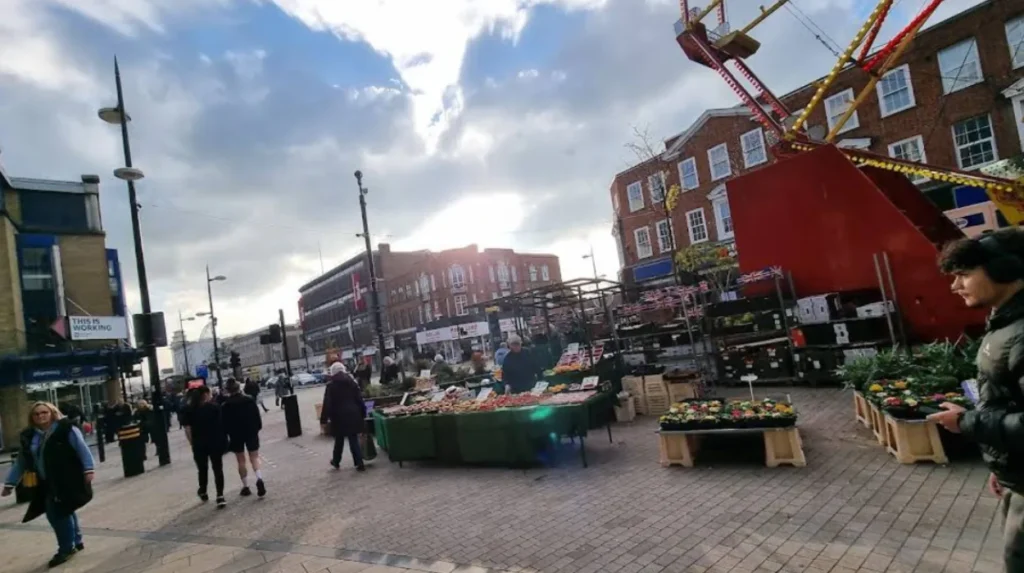
Cultural entertainment is anchored by the Churchill Theatre, located on the High Street overlooking the Church House Gardens. Opened in 1977 by the London Borough of Bromley according to designs by the borough architect, the theatre features a large auditorium with a seating capacity of 781 spectators. The venue operates on a commercial touring model, hosting high-profile West End musicals, stand-up comedy performances, classical orchestral concerts, touring drama productions, and children’s pantomimes. The stage infrastructure matches major inner London theatres, enabling complex technical productions to preview or launch national tours at this location.Adjacent to the high street, the pedestrianised zone hosts the historic Bromley Charter Market on Tuesdays, Thursdays, and Saturdays. First granted by King John via a royal charter in 1205 and later revised by King Henry VI in 1447, this open-air market features traditional traders selling fresh local produce, artisanal cheeses, street foods, clothing, leather goods, and hand-crafted jewellery, maintaining an ancient mercantile tradition within a modern urban shopping quarter.
What Are the Future Development and Conservation Implications for Bromley?
The future development and conservation implications for Bromley involve balancing urban housing expansions within town center regeneration zones while enforcing strict statutory protections to preserve the surrounding Metropolitan Green Belt ecosystems.
The long-term development strategy for the borough is governed by the Bromley Local Plan, which establishes spatial planning rules for housing, economic growth, and environmental protection. The council faces the complex challenge of meeting housing targets mandated by the Greater London Authority while maintaining the rural character of its southern sectors. To achieve this balance, development is concentrated within brownfield urban areas, specifically around the Bromley Town Centre Opportunity Area and industrial estates in Orpington and Cramptons Road.
The future trajectory of the borough relies on the application of two contradictory planning models:
- High-Density Town Centre Regeneration: Projects such as the development of St Mark’s Square near Bromley South station introduce high-rise residential towers, multiplex cinemas, and hotels into existing urban footprints to prevent outward suburban sprawl.
- Enforcement of Green Belt Protections: The National Planning Policy Framework protects the 51% of the borough designated as Green Belt from inappropriate development. This ensures that the open landscapes of the North Downs, the historical farmlands of Downe, and the ecological reservoirs of High Elms remain fully protected from commercial industrialisation or residential encroachment, guaranteeing that future generations can continue to enjoy natural open spaces within the boundaries of Greater London.
Where is Bromley located in London?
Bromley is located in south-east Greater London and is the largest London borough by area, covering approximately 59 square miles (153 square kilometres). It borders Kent and contains a mix of suburban communities, countryside, and protected Green Belt land.