Key Points
- Funding Shortfall Approved: Sutton Council’s Strategy and Resources Committee approved an urgent allocation of £3.98 million to cover an unexpected funding deficit for the Belmont Station regeneration project.
- Original Grant Diluted by Inflation: The project was initially backed by a £14.12 million central government Levelling Up Fund allocation awarded in 2024, but rapid construction and raw material inflation subsequently eroded the real-world purchasing power of the grant.
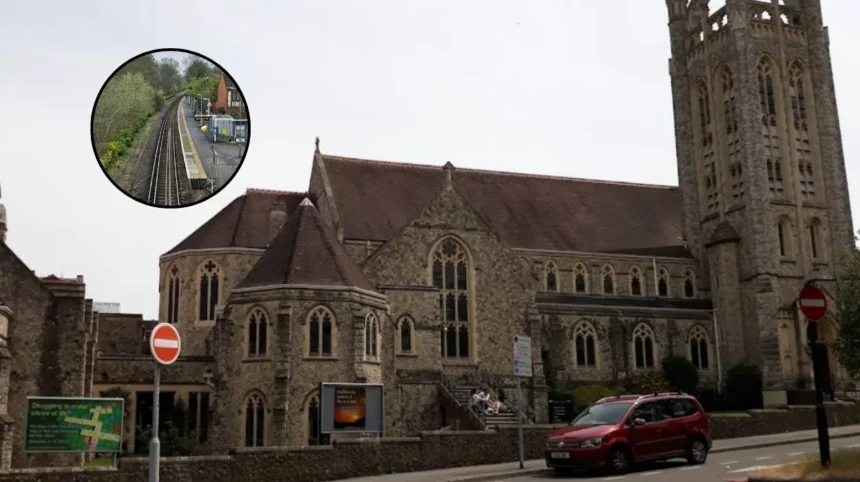
- Rail Infrastructure Improvements: The overall upgrade scheme is designed to expand Belmont Station to accommodate four trains per hour, doubling the existing local service of two trains per hour by building a “turnback” rail siding.
- Critical Hub Dependency: The transport expansion is vital to unlocking the full potential of the adjacent London Cancer Hub (LCH), an multi-billion pound life sciences campus projected to bring approximately 13,000 health, research, and construction jobs to the district.
- Taxpayer and Infrastructure Risks: Local taxpayers may permanently absorb the multi-million pound gap unless external matching funds can be re-secured. The local authority is evaluating the diversion of future Community Infrastructure Levy (CIL) funds, drawing warnings from political opposition regarding long-term local capital project funding.
- Strict Construction Deadlines: Network Rail stipulated a hard deadline of July 22, 2026, for the funding approval. This was required to prevent immediate contractual delays that would increase expenses by an extra £500,000 and introduce further commercial risks.
Belmont (South London News) June 23, 2026 — Sutton Council has formally agreed to inject £3.98 million of its own financial resources to plug a massive funding hole in the planned infrastructure overhaul of Belmont National Rail station after spiralling construction costs threatened to derail the critical transport scheme entirely.
- Key Points
- How Did a Significant Funding Shortfall Emerge After the Receipt of a £14.1 Million National Levelling Up Grant?
- What Happens to the Development of the London Cancer Hub if the Belmont Station Rail Upgrade Is Cancelled?
- Who Will Fulfill the Long-Term Financial Obligations for This Emergency Rail Infrastructure Outlay?
- What Engineering Works Are Scheduled to Take Place at Belmont Station to Accommodate Extra Trains?
- Background of the Belmont Rail Infrastructure Development
- Prediction: How This Development Will Affect Local Taxpayers and Commuters in Outer London
- Impact on Commuters and the Local Community
The decision, ratified during an emergency extraordinary meeting of the local authority’s Strategy and Resources Committee on Monday, June 22, 2026, guarantees that the project can keep moving forward despite a multimillion-pound budget deficit driven by macroeconomic inflation. The local expansion, which will double passenger rail service capacity from two to four trains per hour, remains structurally tethered to the multi-phased master plan of the nearby London Cancer Hub. This major life sciences campus requires upgraded transit connections to fulfill its long-term commercial goals. By authorizing the stopgap funding, the Liberal Democrat-led executive has protected the transport program from immediate collapse, though local taxpayers could ultimately be left to foot the substantial bill if external alternative financing cannot be reclaimed.
How Did a Significant Funding Shortfall Emerge After the Receipt of a £14.1 Million National Levelling Up Grant?
As reported by Harrison Galliven, the Local Democracy Reporter for My London, Sutton Council originally secured a formal £14.12 million allocation from the central government’s Levelling Up Fund under the previous Conservative administration to fund the infrastructure improvements.
However, subsequent severe cost inflation within the railway engineering and logistics sectors eroded the original budgetary calculations, leaving an unexpected gap of nearly £4 million.
During the committee proceedings on Monday night, Council Leader Barry Lewis and senior administrative officers informed elected members that the cash injection was vital to ensure Network Rail could execute necessary agreements.
Network Rail, the statutory body tasked with managing the UK’s rail infrastructure, is responsible for completing the platform extensions and complex signalling upgrades required to handle increased train movements at the outer London station.
Administrative reports revealed that Network Rail had issued a definitive deadline of July 22, 2026, for the council to formally approve the additional capital. This approval was necessary to maintain the project’s current engineering window.
According to formal municipal assessments, allowing the project to slide past an absolute programmatic boundary of October 2026 would immediately add an extra £500,000 in structural overheads. Furthermore, it would expose the local government to “unquantifiable risks” regarding supply chain availability and escalating labor prices.
What Happens to the Development of the London Cancer Hub if the Belmont Station Rail Upgrade Is Cancelled?
According to municipal planning files and statements delivered by executive officers during the Strategy and Resources Committee session, aborting or postponing the transport scheme would severely damage the commercial viability of the London Cancer Hub’s upcoming expansion phases.
The master plan for the life sciences campus is built around a major shift away from personal automobile transit toward walking, cycling, and public rail transport.
The campus is positioned as a globally significant research zone. It is backed by a collaborative coalition including:
- The Institute of Cancer Research (ICR), London
- The Royal Marsden NHS Foundation Trust
- The Epsom and St Helier University Hospitals NHS Trust
- Harris Academy Sutton
- Private sector development partners Socius and Aviva
When fully realized, the innovation district is projected to generate roughly 13,000 new employment opportunities across the medical, scientific, academic, and construction sectors, while injecting an estimated £1.2 billion annually into the UK economy. However, council officials and biomedical enterprise directors have repeatedly emphasized that achieving these targets depends on expanding transit access for thousands of inbound staff, patients, and students.
Who Will Fulfill the Long-Term Financial Obligations for This Emergency Rail Infrastructure Outlay?
The decision to cover the shortfall using local municipal resources has sparked a sharp debate over exactly who will bear the long-term costs of the infrastructure project.
As noted in the investigative reporting by Harrison Galliven of My London, the national Levelling Up Fund has been officially wound down and dissolved following the recent change in central government, eliminating any possibility of requesting additional money from the original grant pool.
To address the immediate deficit, Sutton Council’s administration confirmed it is actively exploring the reallocation of funding from the Community Infrastructure Levy (CIL).
The CIL is a legal planning charge levied by local planning authorities on new real estate developments to fund essential local community assets.
During the committee questioning, Labour Councillor Dave Tchil—the lone opposition member present at the emergency meeting—challenged the leadership regarding the strategic wisdom of the move.
Councillor Tchil warned that utilizing a substantial portion of the area’s accumulated CIL funds would leave the council with fewer resources for other capital infrastructure works across the wider borough in future financial years.
In response to sharp questioning from Councillor Ed Parsley concerning the danger of further cost overruns if inflation continues to rise, Spencer Palmer, a senior director representing Sutton Council, stated that the executive team held a 90 percent level of confidence that the current budget adjustment would prove sufficient to see the project through to completion. However, Palmer added a caveated warning to the committee:
“We cannot guarantee the cost won’t go up any further.”
What Engineering Works Are Scheduled to Take Place at Belmont Station to Accommodate Extra Trains?
According to technical specifications published by Network Rail, the core engineering work focuses on constructing a specialized “turnback” rail siding south of Sutton.
This technical installation will allow trains arriving from central London to terminate at Belmont, safely clear the active main line, reverse direction, and head back toward London Victoria without blocking other services.
The comprehensive physical adjustments planned for Belmont Station include:
- Platform Extensions: Extending the existing passenger platform by 45 meters to safely accommodate longer, modern 10-car train formations.
- Signalling System Upgrades: Reconfiguring the local electronic and mechanical signaling infrastructure to safely manage a higher density of train movements.
- Station Enhancements: Installing upgraded, high-definition closed-circuit television (CCTV) cameras, energy-efficient platform lighting, and improved directional wayfinding signs.
- Public Realm Improvements: Widening footpaths on Station Approach, installing new pedestrian seating, implementing environmental landscaping, and adding a new zebra crossing.
Paul Richmond, the Head of Business Development at Network Rail, expressed satisfaction with the inter-agency collaboration, stating:
“We are pleased to be working with Sutton Council and Govia Thameslink Railway to deliver improved train services to Belmont Station, which will make a meaningful difference to customer journeys.”
Background of the Belmont Rail Infrastructure Development
The push to upgrade Belmont Station dates back several years, driven by a persistent lack of high-capacity public transport options in this part of outer London.
Historically, the London Borough of Sutton has recorded some of the lowest levels of per-capita public transport investment across the Greater London area. This underfunding has left Belmont dependent on a restricted timetable of just two trains per hour operated by Southern along the Epsom Downs branch line.
The strategic importance of the station shifted dramatically with the launch of the London Cancer Hub initiative.
Recognizing that the existing transit network could not support an influx of thousands of scientists, clinicians, and support staff, Sutton Council prepared a comprehensive funding bid for the central government’s Levelling Up Fund round.
In early 2024, the previous administration formally approved a £14,121,979 grant allocation for the Belmont Railway Improvement project, which was supplemented by an initial £1.5 million co-funding pledge from Sutton Council’s local capital budget.
Following the initial feasibility assessments (classified under Network Rail’s Project Acceleration in a Controlled Environment framework as PACE 1), the council entered into a formal detailed design service agreement (PACE 2) in late 2024.
This stage cost up to £4.42 million to finalize engineering blueprints, timetable models, and signaling adjustments. The successful conclusion of the PACE 2 phase in June 2026 set the stage for the upcoming PACE 3 construction contract. The actual track and station construction is scheduled to begin in September 2026.
Explore More Sutton Council News
Liberal Democrats Win Landslide Victory in Sutton Council Elections 2026
Pest Control Call-Outs Surge at Sutton Council Housing Blocks: 2026
Prediction: How This Development Will Affect Local Taxpayers and Commuters in Outer London
The decision by Sutton Council to absorb the £3.98 million shortfall will have direct, tangible impacts on local residents, taxpayers, and regional commuters over both the short and long term.
For local taxpayers inside the London Borough of Sutton, this funding decision creates an immediate financial burden.
Because the national Levelling Up Fund has been dissolved, the local authority must absorb these unexpected costs internally. If the council relies heavily on the Community Infrastructure Levy (CIL) to cover the gap, residents across the broader borough will likely face a reduction in funding for other localized infrastructure improvements.
This means planned upgrades to public parks, community centers, and local road networks outside of Belmont may face long delays or outright cancellation as capital funds are consolidated to cover the railway deficit.
Furthermore, with the council already making £13 million in structural savings for the current financial year and implementing notable council tax increases, any future budget overruns on this project could place additional pressure on local public service budgets.
Impact on Commuters and the Local Community
Conversely, for daily commuters, local rail passengers, and future employees at the London Cancer Hub, the approval of this emergency funding prevents a major setback.
By meeting Network Rail’s strict July 22 deadline, the council has successfully kept the construction timeline on track. Local commuters can expect physical platform extension work to begin in September 2026, with the structural signaling overhauls continuing through to October 2027.
If engineering milestones are met without further inflationary disruptions, passengers will see service frequency double to four trains per hour starting in December 2027. This change will cut average station wait times from 30 minutes down to roughly 15 minutes.
It will also provide direct, reliable access to London Victoria, making sustainable, non-car travel a viable option for the thousands of patients, researchers, and students traveling to the expanding medical campus daily.