Key Points
- Ambitious 20-Year Proposal: Southwark Council’s Old Kent Road Area Action Plan outlines a major redevelopment blueprint aiming to construct 20,000 new homes, create a revitalised high street, and double existing local employment over two decades.
- Allegations of Social Cleansing: A coalition of housing activists, community groups, and local critics has launched a fierce opposition campaign, warning that the regeneration amounts to “social cleansing” that will displace the area’s established working-class population.
- Planning Inspector Intervention: The ultimate future of the iconic South London thoroughfare now rests in the hands of an independent Planning Inspector, who must determine whether the council’s framework is socially sustainable and legally sound.
- Economic and Identity Clash: While local authorities argue the master plan brings necessary modernization, infrastructure, and job creation, community advocates argue the scheme explicitly threatens the unique cultural and economic fabric that defines the neighbourhood.
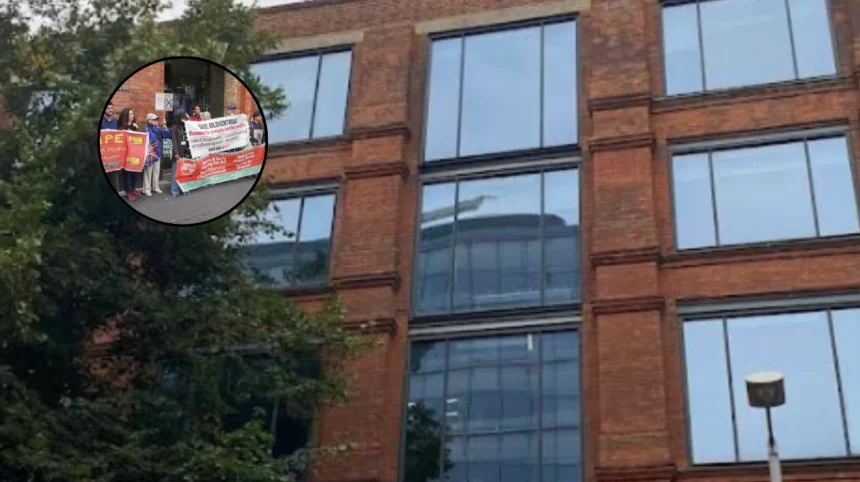
Southwark (South London News) July 3, 2026 – The future of one of London’s most iconic and historically vibrant thoroughfares remains deeply uncertain today as Southwark Council’s sweeping regeneration strategy faces intense community pushback. The controversial Old Kent Road Area Action Plan, a massive 20-year municipal framework designed to fundamentally transform the borough, has officially moved before a government Planning Inspector following a wave of formal objections from residents, business owners, and housing advocates. While local authority officials defend the project as a vital economic engine capable of delivering tens of thousands of homes, opponents argue the sheer scale of the redevelopment risks permanently uprooting the multi-ethnic, working-class community that has long called the area home.
- Key Points
- Why Is the Old Kent Road Area Action Plan Generating Such Intense Local Controversy?
- What Are the Explicit Commitments and Economic Targets Set by Southwark Council?
- Why Do Local Critics Label the Council’s Redevelopment Proposals as ‘Social Cleansing’?
- How Will the Independent Planning Inspector Determine the Legal Soundness of the Scheme?
- Background of the Old Kent Road Development
- Prediction: How This Development Can Affect Working-Class Residents and Small Businesses
The escalating dispute highlights a critical fracture between municipal development targets and localized grassroots preservation.
As the independent planning inquiry gets underway to assess the soundness of the council’s vision, critics warn that the current language and economic targets within the proposal lack the necessary safeguards to protect vulnerable tenants, light industrial workers, and small independent retailers.
With thousands of existing properties and livelihoods directly in the path of the proposed development zones, the outcome of this planning inspection is poised to set a major precedent for urban renewal projects across Greater London.
Why Is the Old Kent Road Area Action Plan Generating Such Intense Local Controversy?
The fundamental source of friction surrounding the Old Kent Road development lies in the stark contrast between Southwark Council’s macro-economic projections and the immediate lived reality of the neighbourhood’s current residents.
Under the current wording of the Area Action Plan, Southwark Council has committed to a complete overhaul of the district’s spatial layout, aiming to introduce high-density residential towers, modernised commercial spaces, and pedestrianized public squares.
Local authorities have repeatedly emphasized that the expansion is essential to meet London’s structural housing shortage and to modernise aging infrastructure.
However, a broad coalition of housing and community groups has mobilised to challenge these assertions at the public inquiry level.
Advocates argue that the council’s definitions of “affordable housing” do not align with the actual median incomes of the local working-class population.
Critics maintain that by introducing thousands of premium-rate market apartments into a traditionally lower-income corridor, the council will trigger rapid hyper-gentrification, driving up surrounding rents, council taxes, and daily living costs, thereby forcing long-term residents out of Southwark entirely.
What Are the Explicit Commitments and Economic Targets Set by Southwark Council?
In documenting the specifics of the municipal strategy, Southwark Council has put forward a series of highly ambitious targets intended to frame the regeneration as a net positive for the borough’s economy.
The bedrock of the Area Action Plan is the projected delivery of 20,000 new residential units over the next twenty years, which the council states will significantly contribute to its broader borough-wide housing delivery mandates.
In addition to housing, the council’s public literature promises a completely “revitalised high street” that seeks to transition the Old Kent Road from a highway heavily dominated by retail warehouses and light industrial yards into a mixed-use urban boulevard.
To counter claims of economic displacement, the local authority has included a formal pledge within the document to double the number of existing jobs in the area. This job creation strategy relies on replacing older single-story industrial warehouses with multi-level commercial hubs designed for modern tech, creative, and clean-energy enterprises.
Why Do Local Critics Label the Council’s Redevelopment Proposals as ‘Social Cleansing’?
The term “social cleansing” has become a central rallying cry for the community groups and activist networks presenting evidence to the Planning Inspector. Opponents argue that the physical demolition of older commercial estates and lower-cost housing units directly translates to the eradication of the working-class community.
Community organisers point out that the Old Kent Road serves as an essential hub for working-class employment, housing a high concentration of auto-repair shops, logistics firms, wholesale food distributors, and independent cultural institutions that cannot afford the premium rents associated with newly built commercial developments.
Furthermore, campaigners emphasize that the cultural identity of the Old Kent Road is deeply tied to its diverse, working-class demographic, which includes long-standing Anglo-London communities alongside large West African, Latin American, and Middle Eastern diaspora populations.
Activists assert that by systematically replacing affordable retail spaces and industrial yards with high-end commercial retail and luxury apartment complexes, the council is effectively engineering a demographic shift that will price out the existing population, leaving no space for the traditional communities that defined the area’s history.
How Will the Independent Planning Inspector Determine the Legal Soundness of the Scheme?
The deployment of a Planning Inspector marks the transition of this dispute from a local political argument to a formal quasi-judicial evaluation.
The inspector’s primary mandate is to evaluate whether Southwark Council’s Area Action Plan meets the statutory definition of “soundness” as laid out in national planning policy frameworks.
This requires the inspector to verify if the plan is positively prepared, justified by robust empirical evidence, effective in its delivery mechanisms, and entirely consistent with wider national and regional strategies, including the overarching London Plan.
During the public examination phase, the inspector will review written submissions and hear oral arguments from both Southwark Council’s legal representatives and the designated spokespeople for the community coalition.
If the inspector determines that the plan lacks sufficient protections for existing communities, or that the infrastructure plans are unrealistic, they hold the legal authority to reject the blueprint outright or order Southwark Council to make binding modifications before any further development phases can legally proceed.
Background of the Old Kent Road Development
The Old Kent Road possesses a unique position in the geography and cultural history of London. Historically originating as an ancient Roman thoroughfare (part of Watling Street), it holds fame in popular British culture as the cheapest property on the traditional UK Monopoly board.
For the past two centuries, the road and its immediate environs have functioned as a vital industrial and logistical artery for South London, characteristically filled with gasworks, brickfields, tanneries, and eventually, large-scale retail warehouses and transport depots.
This specific economic evolution naturally fostered a dense, resilient working-class residential population in the surrounding estates of Southwark.
The origins of the current regeneration conflict date back over a decade, when Southwark Council first identified the industrial corridor as an “Opportunity Area” capable of supporting major structural density. Central to the initial viability of the 20,000-home Area Action Plan was the proposed Bakerloo Line Extension, a major Transport for London (TfL) infrastructure project that would see the underground line extended southeast from Elephant & Castle, creating two new subway stations directly along the Old Kent Road.
However, funding shortfalls and macroeconomic shifts over recent consecutive years have repeatedly delayed the Bakerloo Line Extension, leaving the transport project without secured capital delivery dates. Despite the lack of confirmed underground infrastructure, Southwark Council chose to proceed with the advancement of its Area Action Plan, relying instead on upgraded bus networks and surface transport strategies.
This decision significantly altered the nature of the development debate, as community groups argued that introducing 20,000 households without high-capacity underground rail links would overwhelm local services and isolate the existing population, while simultaneously driving up land values purely for speculative private residential development.
Explore More Southwark Council News
Southwark Residents Call for Safer Streets as Council Expands Road Safety Measures
High Court Sues Southwark Council Over Housing Queue Demotion South London 2026
Prediction: How This Development Can Affect Working-Class Residents and Small Businesses
If the Planning Inspector approves Southwark Council’s Area Action Plan without implementing stringent, legally binding modifications, the development is highly likely to accelerate a profound demographic and economic transformation along the Old Kent Road corridor, directly impacting the local working-class audience and independent business community.
- Widespread Residential Displacement: The introduction of 20,000 predominantly market-rate homes will alter local property valuations. Existing private tenants in the surrounding areas will likely face steep rent increases from landlords capitalizing on the area’s altered status, forcing lower-income families to relocate to outer London boroughs or out of the capital entirely.
- Erosion of Local Support Networks: As long-term residents are incrementally displaced, established community networks, neighborhood associations, and localized mutual-aid groups are highly likely to fracture, increasing social isolation among vulnerable and elderly working-class residents who depend on these historic ties.
- Loss of Culturally Specific Spaces: Traditional community meeting points, including long-standing street markets, independent faith centers, and affordable local cafes, will face severe commercial pressure, likely leading to closures and a subsequent loss of cultural cohesion for the area’s diverse diaspora groups.
Projected Impacts on Local Small Businesses:
- Industrial and Light Commercial Evictions: The structural transition from single-story industrial yards to high-density, multi-level commercial spaces will directly threaten the survival of traditional light industries. Auto-repair shops, builders’ merchants, and small-scale manufacturing units will find the new spaces structurally unsuited or financially unviable for their operational margins.
- Retail Homogenisation: Rising commercial square-footage rents along the newly designed “revitalised high street” will systematically favor national corporate chains and high-turnover businesses. Independent, family-run retail shops that have served the local working-class demographic for decades will likely be priced out, permanently altering the economic diversity of the street.