Argentina and Cape Verde maintain cordial diplomatic relations established in 1975, with cooperation spanning cultural, scientific, trade, and migration ties. A significant historical connection exists through the migration of Cape Verdeans to Argentina’s port cities in the late 19th and early 20th centuries, many contributing to Argentina’s maritime and port industries. In June 2026, the two nations were linked globally through football as Argentina and Cape Verde faced each other in the Round of 32 at the FIFA World Cup 2026 in the USA.
- How did Argentina and Cape Verde establish diplomatic relations?
- What bilateral agreements exist between Argentina and Cape Verde?
- What is the history of Cape Verdean migration to Argentina?
- How are Argentina and Cape Verde connected through football?
- What cultural and religious links exist between Argentina and Cape Verde?
- How do Argentina and Cape Verde cooperate in international forums?
- What is the current state of trade and economic relations?
- What does the Argentina–Cape Verde relationship mean for South London?
Both countries are members of international forums and share multilateral engagements, though their bilateral agenda remains modest compared to Argentina’s ties with larger powers or Cape Verde’s with Portugal and African neighbors. The relationship is reinforced by a growing Cape Verdean diaspora in Argentina—estimated at around 25,000 people of Cape Verdean origin—alongside cultural and religious initiatives, including joint efforts by the Catholic Churches of both nations.
How did Argentina and Cape Verde establish diplomatic relations?
Argentina and Cape Verde formally established diplomatic relations on 26 September 1975, shortly after Cape Verde gained independence from Portugal. This was marked by a joint declaration titled “Declaración relativa al Establecimiento de Relaciones Diplomáticas entre la Argentina y Cabo Verde.” From that date, both states agreed to maintain friendly and cooperative ties, opening the path for embassies, official visits, and bilateral agreements.
Cape Verde, an archipelago off the west coast of Africa, became independent on 5 July 1975, ending more than five centuries of Portuguese colonial rule. Argentina, a South American republic, recognized the new state and moved quickly to formalize relations as part of its broader engagement with newly independent African and Latin American nations during the 1970s. Diplomatic recognition in 1975 reflected a shared post-colonial and non-aligned posture common among many Global South countries at that time.
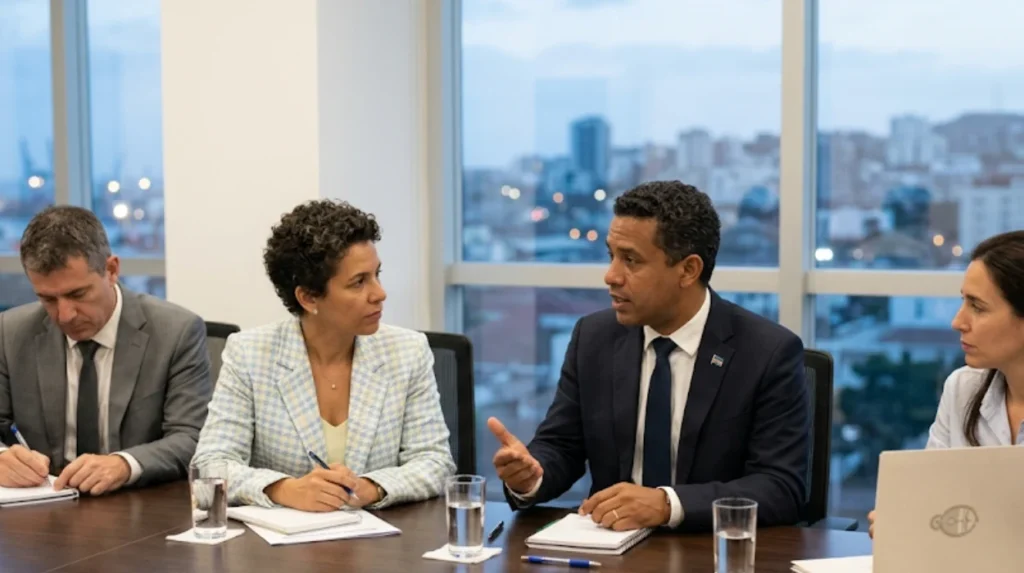
Following the 1975 declaration, Argentina and Cape Verde developed low-intensity but steady diplomatic contact. High-level visits occurred occasionally, such as the August 2018 visit to Argentina by Cape Verde’s Minister of Foreign Affairs and Communities and Minister of Defence, Luis Filipe Lopes Tavares. This visit focused on strengthening commercial relations in food and agribusiness, technical and cultural cooperation, and deepening links within the Community of Portuguese Language Countries (CPLP), where Argentina participates as an Associated Observer.

What bilateral agreements exist between Argentina and Cape Verde?
Argentina and Cape Verde have signed three main bilateral agreements: a 1975 diplomatic relations declaration, a 1987 scientific and technical cooperation agreement, and a 2018 visa waiver for holders of diplomatic, official, or service passports. These agreements form the legal backbone of their bilateral relationship, covering diplomacy, cooperation in research and technology, and facilitation of official travel.
The scientific and technical cooperation agreement was signed on 29 April 1987, titled “Acuerdo de Cooperación Científica y Técnica entre el Gobierno de la República Argentina y el Gobierno de la República de Cabo Verde.” It created a framework for joint research projects, exchanges of experts, and sharing of knowledge in areas such as agriculture, health, and technology. While the agreement has not generated large-scale joint programmes, it remains a standing instrument for potential cooperation in science and innovation.
The visa waiver agreement was signed on 10 August 2018, during Luis Filipe Lopes Tavares’s visit to Buenos Aires. The agreement, “Acuerdo entre el Gobierno de la República Argentina y el Gobierno de la República de Cabo Verde sobre Supresión de Visas para Titulares de Pasaportes Diplomáticos, Oficiales y de Servicio,” removes visa requirements for diplomatic, official, and service passport holders. This facilitates official visits, diplomatic missions, and intergovernmental meetings without the need for additional travel authorizations.
Argentina maintains a strategic diplomatic presence in Cape Verde primarily through its embassy in Praia, the capital. The embassy handles consular services, supports Argentine citizens, and promotes cooperation in trade, culture, and international forums. Argentina also uses its embassy in Lisbon, Portugal, as a supplementary point of contact for matters related to Cape Verde, given historical and linguistic links.
What is the history of Cape Verdean migration to Argentina?
Hundreds of Cape Verdean migrants arrived in Argentina from the late 19th century through the early 20th century, especially between the 1920s and 1940s and after World War II. They settled primarily in port cities such as Dock Sud, Ensenada, Rosario, San Nicolás, Mar del Plata, and Bahía Blanca, where they worked in the merchant navy, fisheries, shipping, shipbuilding, and port operations.
Cape Verde’s location off West Africa and its long maritime tradition made many of its inhabitants experienced in navigation, fishing, and related trades. When Argentina’s port system expanded during the late 19th and early 20th centuries, Cape Verdeans found employment opportunities in its growing maritime economy. Many initially traveled with Portuguese documentation, as Cape Verde remained a Portuguese colony until 1975. This historical context shaped migration patterns and legal status for many Cape Verdean families in Argentina.
The Cape Verdean community in Argentina developed strong institutional and cultural structures over time. The Asociación Cultural y Deportiva Caboverdeana de Ensenada, founded in 1927, is one of the oldest Cape Verdean diaspora organizations. The Sociedad de Socorros Mutuos Unión Caboverdeana de Dock Sud, established in 1932, served as a key mutual aid and social hub for immigrant families. These institutions helped preserve Cape Verdean language, music, food, and religious practices while supporting integration into Argentine society.
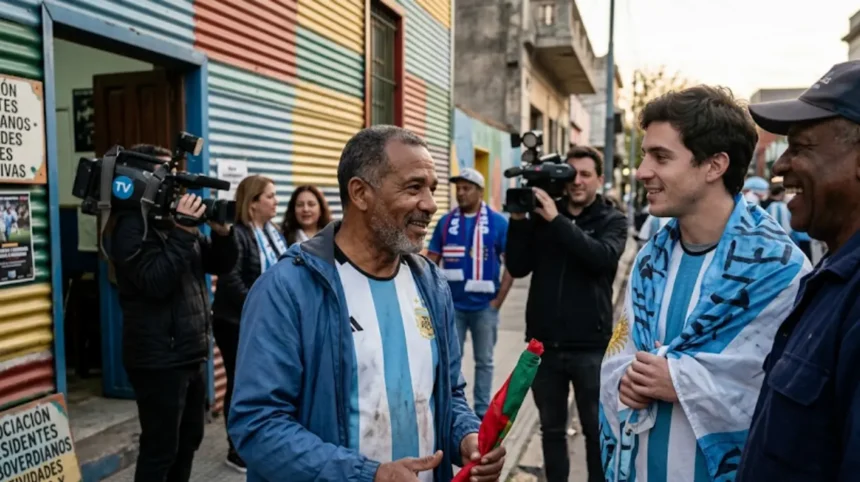
Today, around 25,000 people of Cape Verdean origin are estimated to live in Argentina, according to Argentine government sources. Many descendants maintain cultural links with Cape Verde through family ties, community events, and religious connections. The Cape Verdean football team’s qualification for the 2026 FIFA World Cup reignited pride among this diaspora, with many Argentines of Cape Verdean heritage following the team’s “Tiburones Azules” (Blue Sharks) campaign.
How are Argentina and Cape Verde connected through football?
Argentina and Cape Verde met in the Round of 32 of the FIFA World Cup 2026 in the USA, marking a high-profile sporting encounter between the two nations. This match brought global attention to the historical and cultural links between Argentina and Cape Verde, especially among Argentina’s Cape Verdean diaspora.
Cape Verde, often called the “Tiburones Azules,” qualified for the 2026 World Cup as a debutant, impressing in the group stage by drawing with Spain and Uruguay. Argentina, the defending champions, entered the knockout phase as a dominant team but acknowledged Cape Verde as a “tough opponent” despite their lower ranking. The match highlighted Cape Verde’s growing presence in international football and gave Argentina’s Cape Verdean community a symbolic moment of connection with their ancestral country.
The Argentina–Cape Verde football encounter also revived narratives about the historical port and maritime links between the two countries. Media coverage in Argentina noted that before sharing a football pitch, the two nations had already been connected through ships, ports, and generations of Cape Verdean workers in Argentina’s maritime sector. The match thus served as both a sporting event and a cultural reminder of long-standing transatlantic ties.
What cultural and religious links exist between Argentina and Cape Verde?
Argentina and Cape Verde share cultural and religious links rooted in Cape Verdean migration to Argentina and joint Catholic initiatives. One notable example is the collaboration between the Catholic Church in Cape Verde and Argentina to advance the canonization cause of Manuel Costa de los Ríos, known as “Negro Manuel” or “Slave Manuel,” a devout servant of Our Lady of Luján, the patroness of Argentina.
Manuel Costa de los Ríos, originally from Cape Verde, migrated to Argentina and became closely associated with the shrine of Our Lady of Luján in the province of Buenos Aires. His life of service and devotion has been promoted by local religious authorities as a potential example for sainthood. The joint effort by the churches of both countries reflects the deep emotional and spiritual connection between Cape Verdean migrants and Argentine religious culture, particularly around Luján, a major pilgrimage site.
Cape Verdean communities in Argentina also maintain cultural traditions such as music (including morna and coladeira), dance, and cuisine, which blend African, Portuguese, and local influences. Community associations in Ensenada and Dock Sud organize festivals, cultural evenings, and sports events that celebrate Cape Verdean identity while fostering integration with Argentine society. These activities contribute to a multicultural urban fabric in South American port cities.
How do Argentina and Cape Verde cooperate in international forums?
Argentina and Cape Verde cooperate within multilateral frameworks such as the Community of Portuguese Language Countries (CPLP), where Argentina participates as an Associated Observer. Both countries also engage with broader forums like the United Nations, where they align on issues related to development, non-alignment, and Global South solidarity.
Cape Verde follows a policy of nonalignment and seeks cooperative relations with all friendly states, maintaining ties with countries across Africa, Europe, Latin America, and Asia. Argentina, while historically aligned with Latin American and Western blocs, has increasingly emphasized cooperation with African and Asian nations in recent decades. This shared emphasis on multilateralism and development cooperation creates a natural basis for dialogue between the two countries.
In the CPLP, Cape Verde plays an active role as a small but influential Lusophone state, while Argentina uses its Associated Observer status to strengthen linguistic and cultural ties with Portuguese-speaking countries. Bilateral discussions in 2018 explicitly mentioned strengthening ties within the CPLP as a priority area, alongside trade in agribusiness and technical cooperation. This multilateral context provides a platform for future projects in education, culture, and language policy.
What is the current state of trade and economic relations?
Trade and economic relations between Argentina and Cape Verde remain limited but have potential for growth, particularly in food and agribusiness. High-level discussions in 2018 highlighted interest in strengthening commercial links in these sectors, though concrete large-scale trade flows have not yet been documented.
Cape Verde’s economy relies heavily on tourism, public services, and imports, with limited industrial capacity. Argentina, with a large agricultural base and diversified industry, could theoretically supply food products and agro-technical services to Cape Verde. However, geographical distance, logistics costs, and competing suppliers from Europe and Africa currently limit the scale of trade. Bilateral agreements on scientific and technical cooperation could support future joint projects in agriculture, fisheries, and renewable energy.
Both countries have expressed interest in exploring new areas of cooperation, including technical training, cultural exchanges, and possible investment in small-scale projects. The 2018 visit by Cape Verde’s foreign and defence minister emphasized food security and agribusiness as priority areas, suggesting a strategic interest in diversifying economic ties beyond traditional partners like Portugal, Brazil, and the EU.
What does the Argentina–Cape Verde relationship mean for South London?
For South London, the Argentina–Cape Verde relationship is primarily relevant through global news, sports, and cultural interest rather than direct local impact. South London residents may follow this connection through football coverage (especially if linked to Crystal Palace or other local clubs), interest in international migrations, or engagement with broader Lusophone and Latin American communities in the UK.
South London has diverse communities with Latin American and African backgrounds, including individuals with links to Argentina, Portugal, and other Lusophone countries. While there is no large Cape Verdean community in South London compared to areas like London’s east or north, global stories about Cape Verdean migration to Argentina can resonate with local audiences interested in diaspora histories, transatlantic connections, and football. The 2026 World Cup match between Argentina and Cape Verde offers a concrete moment for media coverage, discussion, and community engagement.
When did Argentina and Cape Verde establish diplomatic relations?
Argentina and Cape Verde established diplomatic relations on 26 September 1975, shortly after Cape Verde gained independence from Portugal. Since then, the two countries have maintained friendly diplomatic ties and cooperation.