Key Points
- The Green Party retained the Clapham Park ward seat with Michael Ball winning 842 votes (44%) against Labour’s Louie Somerville-Sutherland with 799 votes (42%).
- In Streatham St Leonard’s, Liberal Democrat Alex Davies overturned a Green majority to win the seat for the Lib Dems.
- Following the July 9 by-elections, Lambeth Council now has 28 Green councillors, 26 Labour councillors and nine Lib Dem councillors.
- The result leaves the Greens as the largest party but without a majority (32 votes needed for full control), sustaining a delicate cross-party equilibrium on the council.
- The by-elections were the second major round of polling in Lambeth in 2026, following the 7 May borough-wide election that first gave the Greens a lead over Labour.
Clapham (South London News) 10 July 2026 – The Green Party have retained a seat in Clapham Park but lost another in Streatham St Leonard’s to the Liberal Democrats in by-elections held on 9 July, altering the party composition of Lambeth Council and reinforcing a fragile tripartite configuration of Greens, Labour and Lib Dems across the borough.
- Key Points
- How did the voting unfold in Clapham Park?
- What changed in Streatham St Leonard’s?
- How do these results affect Lambeth Council’s overall balance of power?
- What do these by-elections reveal about local political trends in South London?
- Background to the July 2026 Lambeth by-elections
- Predictions: How could this development affect Lambeth residents and local stakeholders?
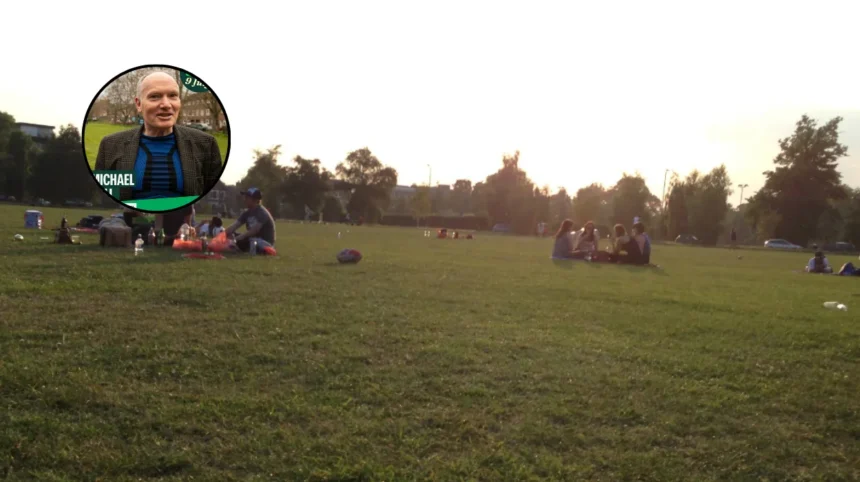
As reported by the Brixton Buzz, Michael Ball is the newly elected Green councillor for Clapham Park after winning 842 votes (44 per cent), with Labour’s Louie Somerville-Sutherland following closely with 799 votes (42 per cent).
In Streatham St Leonard’s, Liberal Democrat Alex Davies overturned a Green majority to take the seat for the Lib Dems, marking a significant shift in a ward that had previously been represented by the Greens.
The updated council composition now stands at 28 Green councillors, 26 Labour councillors and nine Lib Dem councillors, according to posts and commentary tracking the post-by-election arithmetic on Lambeth.
This means the Greens remain the largest party but still fall short of the 32 seats required for full control, sustaining a situation where any sustained policy agenda will require negotiation and compromise with at least one of the other parties.
How did the voting unfold in Clapham Park?
The Clapham Park contest was narrowly decided, with Ball winning by just 43 votes over Somerville-Sutherland.
As noted in pre-election analysis from News from Crystal Palace, the ward had been a close contest already at the main 7 May election, where Labour and Green candidates had both secured strong shares of the vote.
Ball, described as a veteran community campaigner, drew support from voters prioritising local environmental and social justice issues, while Somerville-Sutherland’s Labour campaign focused on services, housing and affordability concerns, according to local reporting on the by-election campaign.
The narrow margin indicates that the ward remains politically competitive, with small shifts in turnout or messaging potentially altering outcomes in future elections.
What changed in Streatham St Leonard’s?
In Streatham St Leonard’s, Alex Davies of the Liberal Democrats secured the seat by overturning what had been a Green majority in the previous representation. As reported by the Brixton Buzz, this result is seen as a notable gain for the Lib Dems in a ward where the Greens had previously held influence.
The by-election in Streatham St Leonard’s was triggered following the resignation of Saiqa Ali, who had been the Green councillor for the ward.
The presence of multiple candidates, including Conservatives, Reform UK and independent voices, suggests a fragmented local political landscape, but Davies’ victory indicates that Lib Dem messaging on local services, accountability and pragmatic governance resonated with enough voters to tip the result.
How do these results affect Lambeth Council’s overall balance of power?
With 28 Green councillors, 26 Labour councillors and nine Lib Dem councillors, the council remains in a hung configuration where no single party can pass measures alone without support from others.
The Greens, despite being the largest party, still need at least four additional votes to reach the 32-seat threshold for full control.
This situation builds on the post-May 2026 arrangement, where the Greens and Lib Dems had agreed to form an administration supported by Lib Dem backing, while Labour accused them of creating “absolute chaos” and threatening frontline services.
The Streatham St Leonard’s result adds a Lib Dem seat, potentially strengthening their leverage in any future negotiations, while the Clapham Park retention ensures the Greens maintain their position as the leading party.
Labour, with 26 seats, remains the second-largest party and is likely to continue pressing for greater influence over council priorities, particularly on housing, schools and social care, areas where the party traditionally emphasises its record.
Explore More Lambeth News
Garden Museum Neighbours Day 2026 – Lambeth 2026
Lambeth Libraries Launch Time Travel Reading Adventure 2026; Lambeth, 2026
What do these by-elections reveal about local political trends in South London?
The July 2026 by-elections reinforce a pattern of closely fought contests in Lambeth, where small changes in turnout or candidate performance can alter representation.
The Clapham Park result, with a 43-vote margin, and the Streatham St Leonard’s shift from Green to Lib Dem, suggest that voter allegiances are still fluid and responsive to local campaign dynamics rather than fixed party loyalty.
Pre-election analysis from Andrew’s Previews described the 9 July polls as another “Super Thursday” with 14 council by-elections across England, Wales and Scotland, indicating that Lambeth’s results are part of a wider national trend of local political recalibration.
In Lambeth specifically, the move from a Labour-dominated council to a Green-led but minority administration, and now to a more balanced tripartite arrangement, signals a significant shift in South London’s political landscape since 2022.
Background to the July 2026 Lambeth by-elections
The two by-elections on 9 July 2026 were held to fill casual vacancies in Clapham Park and Streatham St Leonard’s wards.
Official Lambeth documentation set out the polling schedule, candidate nominations and voting procedures, with the poll taking place between 7am and 10pm on Thursday 9 July.
In Streatham St Leonard’s, the vacancy arose following the resignation of Saiqa Ali, the Green councillor, as confirmed by Wikipedia’s summary of the ward’s electoral history. Clapham Park’s vacancy similarly resulted from a prior councillor leaving the seat, prompting the need for a fresh contest.
These vacancies occurred after the 7 May 2026 Lambeth London Borough Council election, in which all 63 seats across 25 wards were contested, resulting in the Green Party becoming the largest party for the first time in the borough’s history, ending Labour’s long period of dominance.
The May election saw the Greens win 29 seats, Labour 26 and Lib Dems 8, with two seats remaining vacant and filled by these July by-elections.
The new administration, agreed between Greens and Lib Dems, was described as Lambeth’s first ever Green Party-led administration, supported by Lib Dem votes, while Labour accused the coalition of creating chaos and risking frontline services.
Predictions: How could this development affect Lambeth residents and local stakeholders?
The updated council composition—28 Greens, 26 Labour and nine Lib Dems—means that policy decisions will likely require cross-party negotiation, which could slow the passage of ambitious reforms but also encourage more moderate, consensus-based approaches.
For residents, this may result in a council that is less prone to rapid, unilateral changes but potentially more responsive to diverse community concerns, particularly in areas such as housing, environmental projects and local transport.
For local stakeholders, including community groups, housing associations and small businesses, the tripartite balance may create opportunities to engage with multiple parties rather than relying on a single dominant administration.
However, it also raises the risk of political fragmentation, where competing priorities among Greens, Labour and Lib Dems could lead to inconsistent implementation of policies or delays in service delivery. Residents may experience a council that is more cautious in its actions but also more attentive to scrutiny and local feedback, as each party seeks to maintain its influence and electoral support in future contests.