Lambeth, a vibrant borough on the south bank of the River Thames, holds some of London’s most significant historic landmarks, from medieval palaces and churches to world-famous cultural institutions. Visitors can explore centuries of British heritage through its architecturally rich buildings, royal connections, and deeply layered local history. This guide highlights the essential historic sites in Lambeth, offering factual insight for tourists, leisure travellers, and history enthusiasts.
- What are the most important historic landmarks in Lambeth?
- Where is Lambeth Palace and why is it historically significant?
- What can visitors see inside the Garden Museum at St Mary-at-Lambeth?
- How does the Imperial War Museum reflect Lambeth’s military heritage?
- Which historic churches and religious buildings can be found in Lambeth?
- What historic bridges and riverfront structures are located in Lambeth?
- How does Lambeth’s architectural heritage compare to other London boroughs?
- What role do Lambeth’s historic sites play in modern tourism and education?
- How can visitors plan a heritage-focused walking route through Lambeth?
What are the most important historic landmarks in Lambeth?
Lambeth’s most important historic landmarks include Lambeth Palace, the Garden Museum, St Mary-at-Lambeth Church, and the Imperial War Museum, each reflecting distinct eras of London’s architectural and cultural evolution. These sites span from medieval ecclesiastical power centres to 20th-century memorials, offering layered narratives of faith, conflict, and civic life.
Lambeth Palace, begun in the 13th century, stands as the official London residence of the Archbishop of Canterbury and is the oldest working palace in the UK still in continuous ecclesiastical use. The Garden Museum, housed within the deconsecrated St Mary-at-Lambeth Church, preserves historic garden tools and design archives, incorporating the tomb of Admiral William Bligh of Bounty fame. Further south, the Imperial War Museum, opened in 1936, presents military history through architecture and artefacts in a building originally designed as Bethlem Royal Hospital.
These landmarks are not only visually striking but also serve as active repositories of national memory, ecclesiastical authority, and horticultural heritage. Their preservation underscores Lambeth’s central role in England’s religious, cultural, and military chronicles.
Where is Lambeth Palace and why is it historically significant?
Lambeth Palace is located on Lambeth Palace Road beside the River Thames and has served as the London home of the Archbishop of Canterbury since the 13th century. It is the oldest continuously occupied ecclesiastical palace in England and played a central role in church-state relations through the centuries.
Built primarily in the 1200s under Archbishop Stephen Langton, Lambeth Palace includes the 15th-century Great Hall and the 16th-century Lollards’ Tower, used historically to imprison religious dissenters. The palace complex also contains the 17th-century Library, which holds over 120,000 printed books and 60,000 manuscripts, including early English Bibles and Reformation documents.
The palace’s Great Hall, restored in the 1830s, remains a ceremonial space used for official church functions and state occasions, including the receipt of royal visitors. Its riverside position placed it at the heart of medieval London’s political geography, opposite the Palace of Westminster.
As you explore the modern site, you are crossing land with a deep heritage. Read about the full [history of Lambeth Palace and its ecclesiastical role] to understand its origins.
What can visitors see inside the Garden Museum at St Mary-at-Lambeth?
The Garden Museum, located inside the former St Mary-at-Lambeth Church, displays historic garden tools, design archives, and the tomb of Admiral William Bligh. It stands as the only museum in the UK dedicated to the history of gardens and gardening.
The museum’s permanent collection includes over 7,000 objects, ranging from 17th-century spades and pruning shears to Victorian glass cucumbers and seed catalogues. Temporary exhibitions explore themes such as wartime gardening, landscape design movements, and the cultural role of plants in British society.
The church building itself dates to 1807, though its site has been used for worship since the 11th century. The churchyard contains the Bligh family tomb, marking the final resting place of Admiral William Bligh, commander of HMS Bounty during the 1789 mutiny.
A restored 17th-century knot garden lies behind the museum, offering a living example of formal garden design from the Stuart period. The museum also includes a café and event space, making it both an educational and leisure destination.
How does the Imperial War Museum reflect Lambeth’s military heritage?
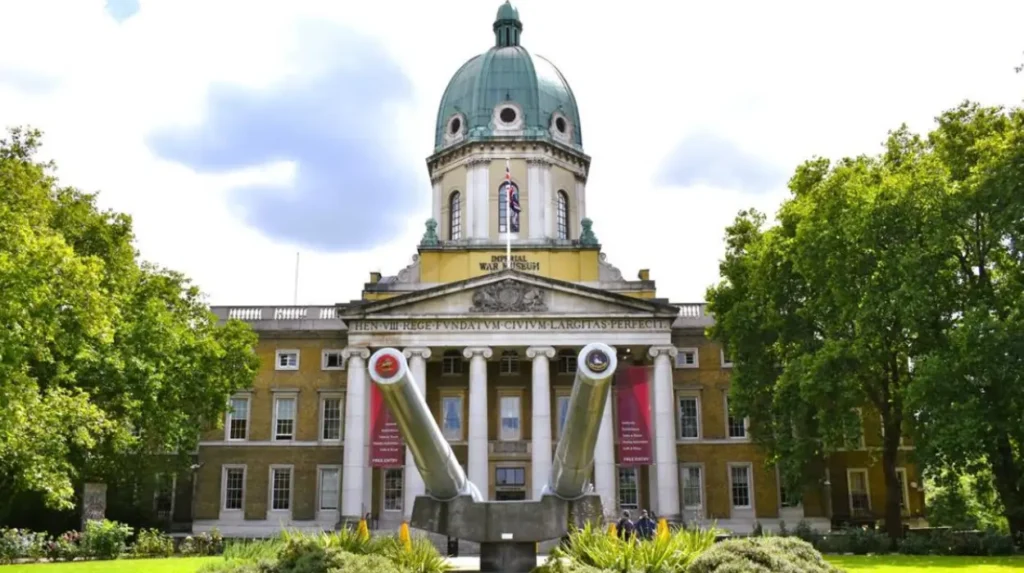
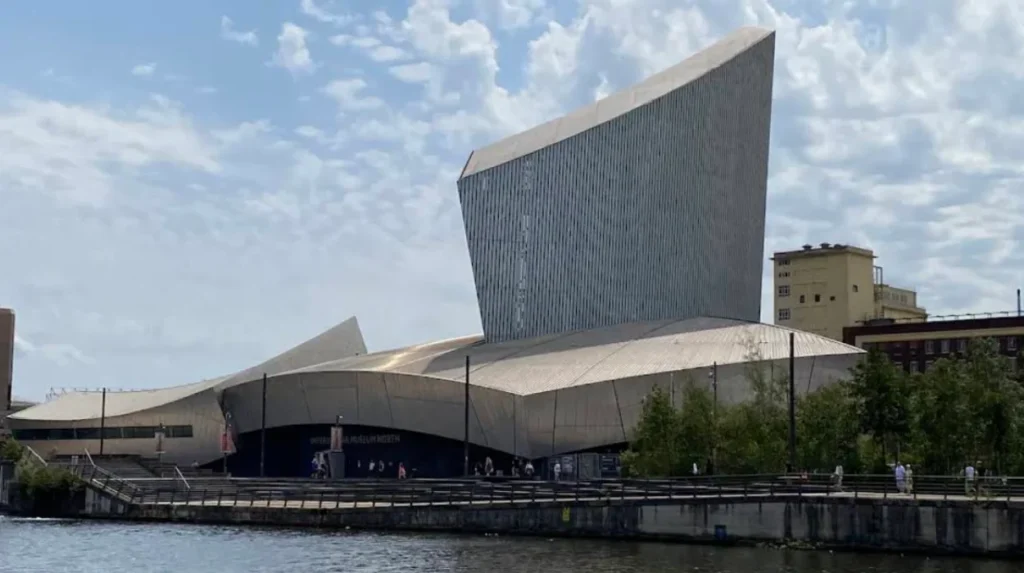
The Imperial War Museum, located on Lambeth Road, opened in 1936 and occupies the central building of the former Bethlem Royal Hospital, reflecting Lambeth’s longstanding connection to national military history. Its collections span global conflicts from the First World War to present-day operations.
The museum’s architecture, with its distinctive central dome and Portland stone façade, was designed by Sir James Mountford and completed in 1815. It was repurposed in the 1920s to house the Imperial War Museum’s growing collections, which had outgrown their original location at the Crystal Palace.
Inside, the museum houses over 1.5 million items, including uniforms, weapons, vehicles, aircraft, and personal testimonies. The Holocaust Exhibition and Lord Ashcroft Gallery are among its most visited sections, presenting detailed narratives of conflict and civilian experience.
The museum’s grounds include outdoor exhibits such as a V-2 rocket and a naval gun, reinforcing its role as both a research institution and public memorial. Its location in Lambeth places it within walking distance of other historic sites, including Lambeth Palace and the Old Vic Theatre.
Which historic churches and religious buildings can be found in Lambeth?
Lambeth contains several historic churches, including St Mary-at-Lambeth, St Andrew’s Holborn (with Lambeth connections), and the Chapel of St Thomas within Lambeth Palace. These buildings reflect centuries of Anglican worship and architectural change.
St Mary-at-Lambeth, now the Garden Museum, was rebuilt in 1807 after earlier medieval structures were demolished. Its tower and west front retain Georgian-era features, while the interior has been adapted for museum use.
The Chapel of St Thomas, within Lambeth Palace, dates to the early 13th century and contains medieval wall paintings and a fan-vaulted ceiling. It remains in use for private worship and occasional public services.
Other notable churches include St John’s Waterloo, designed by Francis Penrose in 1824, and St Anne’s Church in Vauxhall, rebuilt after bomb damage in the Second World War. These buildings contribute to Lambeth’s dense ecclesiastical landscape and architectural diversity.
What historic bridges and riverfront structures are located in Lambeth?
Lambeth is home to several historic bridges and riverfront structures, including Lambeth Bridge, Westminster Bridge, and the South Bank Lion, all of which date from the 19th and early 20th centuries. These structures facilitated cross-river movement and symbolised imperial confidence.
Lambeth Bridge, opened in 1863 and rebuilt in 1932, connects Lambeth to Pimlico and features distinctive red paint and art deco lamp posts. Its design by George Topham Forrest replaced an earlier suspension bridge that proved structurally inadequate.
Westminster Bridge, though technically straddling Westminster and Lambeth, was rebuilt in 1862 with ornate cast-iron arches and pedestrian walkways. The South Bank Lion, sculpted by William Frederick Woodington in 1837, originally stood on Westminster Bridge before being moved to its current plinth near County Hall.
These structures form part of a continuous riverside heritage trail that includes the London Eye, County Hall, and the former Festival of Britain site. Their preservation demonstrates Lambeth’s role in London’s transport and ceremonial geography.
How does Lambeth’s architectural heritage compare to other London boroughs?
Lambeth’s architectural heritage is distinguished by its concentration of ecclesiastical buildings, 19th-century institutional structures, and adaptive reuse of historic sites, setting it apart from more residential or commercial London boroughs. Its built environment reflects centuries of religious, military, and civic investment.
Unlike boroughs such as Kensington and Chelsea, which emphasise grand terraces and museums, Lambeth’s landmarks often serve dual roles as active institutions and heritage sites. Lambeth Palace remains a working archiepiscopal residence, while the Imperial War Museum continues as a national collection holder.
The borough also contains significant 19th-century philanthropic architecture, including the former Ragged School buildings and Bethlem Royal Hospital structures. These buildings illustrate Victorian social reform efforts and urban planning.
Lambeth’s layered architecture—from medieval chapels to brutalist council housing—offers a microcosm of London’s evolutionary urban fabric. This diversity supports both heritage tourism and academic study.
Explore More Area Guide
What Makes Lewisham a Great Destination for Weekend Escapes in South London
Where Can Visitors Experience Lewisham After Dark? Complete Nightlife Guide
What role do Lambeth’s historic sites play in modern tourism and education?
Lambeth’s historic sites function as active tourist attractions, educational resources, and community landmarks, drawing visitors from across the UK and overseas while supporting local learning initiatives. They are integrated into school curricula, university research, and public history programmes.
The Garden Museum runs workshops for schools on horticultural history and design, aligning with Key Stage 2 and 3 history and art syllabi. The Imperial War Museum offers guided tours, digital archives, and teacher resources focused on 20th-century conflict.
Lambeth Palace, though not fully open to the public, hosts occasional open days and scholarly events, supporting research into ecclesiastical history and manuscript studies. These activities reinforce Lambeth’s identity as a centre for living heritage rather than static monumentality.
Tourism data indicates that Lambeth receives over 10 million visitors annually, with significant footfall at the South Bank and adjacent historic sites. This supports local businesses, cultural programming, and conservation funding.
How can visitors plan a heritage-focused walking route through Lambeth?
Visitors can plan a heritage-focused walking route through Lambeth by starting at Lambeth Palace, proceeding to the Garden Museum, then walking to the Imperial War Museum and finishing at the South Bank Lion. This route covers approximately 2.5 kilometres and can be completed in half a day.
Begin at Lambeth Palace on Lambeth Palace Road, where external views of the Great Hall and Lollards’ Tower are accessible. Cross the road to St Mary-at-Lambeth Church and the Garden Museum, allowing one hour for interior exploration.
Walk north along Lambeth Road to the Imperial War Museum, allocating two hours for galleries and outdoor exhibits. Continue to Westminster Bridge and the South Bank Lion, then loop back via the Thames Path for riverside views.
This route connects ecclesiastical, horticultural, military, and civic heritage in a coherent narrative arc. It is suitable for independent travellers, guided groups, and educational visits.
Lambeth’s historic landmarks offer a dense, accessible, and educationally rich itinerary for all visitors seeking to understand London’s layered past.
What are the most famous historic landmarks in Lambeth?
The most famous historic landmarks in Lambeth include Lambeth Palace, the Garden Museum, St Mary-at-Lambeth Church, the Imperial War Museum, Lambeth Bridge, Westminster Bridge, and the South Bank Lion.