The London Borough of Lambeth spans 26.82 square kilometres along the south bank of the River Thames, extending from the South Bank cultural precinct down through Waterloo, Vauxhall, Stockwell, Brixton, Kennington, Clapham, Streatham, and Norwood. Home to a population of approximately 318,000 residents according to the 2021 Census, Lambeth functions as one of London’s primary epicentres for culinary exploration. The borough contains a vast food ecosystem that incorporates historical covered markets, street food collectives, Michelin-starred fine dining establishments, specialty coffee roasters, and family-owned heritage eateries.
- What Are the Most Famous Food Markets in Lambeth?
- Brixton Market and Covered Arcades
- Southbank Centre Food Market
- Lower Marsh Market and Herne Hill Market
- Where Can Diners Find Independent Restaurants and Fine Dining in Lambeth?
- Which Cafés in Lambeth Offer Work-Friendly Spaces and Specialty Coffee?
- How Does Lambeth’s Multicultural Heritage Shape Its Culinary Scene?
- What Unique Food Experiences and Dining Tours Exist in Lambeth?
- Planning a Culinary Tour in Lambeth
Food lovers visiting Lambeth encounter an urban food landscape shaped by two centuries of commercial trade and post-war international migration. The area’s gastronomic identity integrates traditional British pub heritage with global culinary traditions from the Caribbean, West Africa, Latin America, Portugal, and East Asia. This article outlines the primary food destinations, dining establishments, coffee venues, and food traditions available across the borough of Lambeth.
What Are the Most Famous Food Markets in Lambeth?
Food lovers in Lambeth discover historic food markets offering global street food, fresh produce, and artisanal goods. Key sites include Brixton Market, Southbank Centre Food Market, Lower Marsh Market, and Herne Hill Market, serving diverse international cuisines daily.
Brixton Market and Covered Arcades
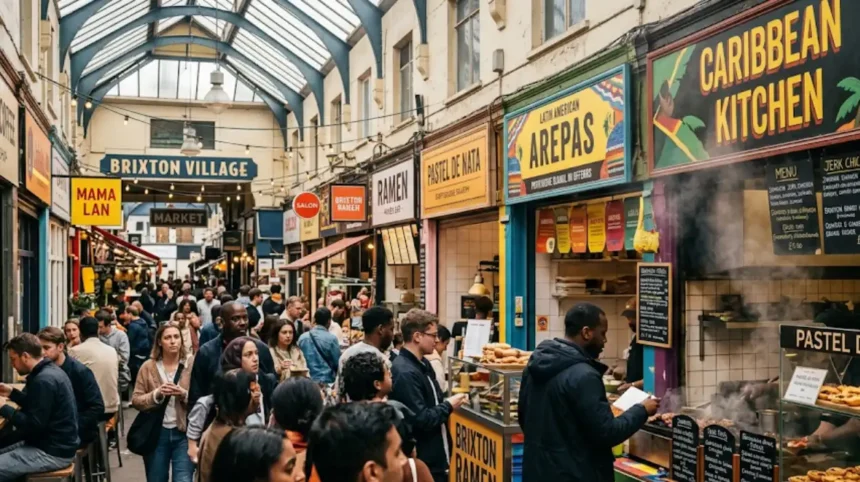
Brixton Market serves as the commercial heart of central Lambeth. The venue comprises three covered arcades, namely Granville Arcade (built in 1937 and known as Brixton Village), Market Row (constructed in 1928), and Reliance Arcade (built in 1924), alongside open-air street trading pitches on Electric Avenue, Pope’s Road, and Brixton Station Road. Electric Avenue was constructed in the 1880s and was the first street market in London lit by electricity.
As you explore the modern site, you are crossing land with a deep heritage. Read about the full [Insert Anchor Text for History Article Here] to understand its origins.
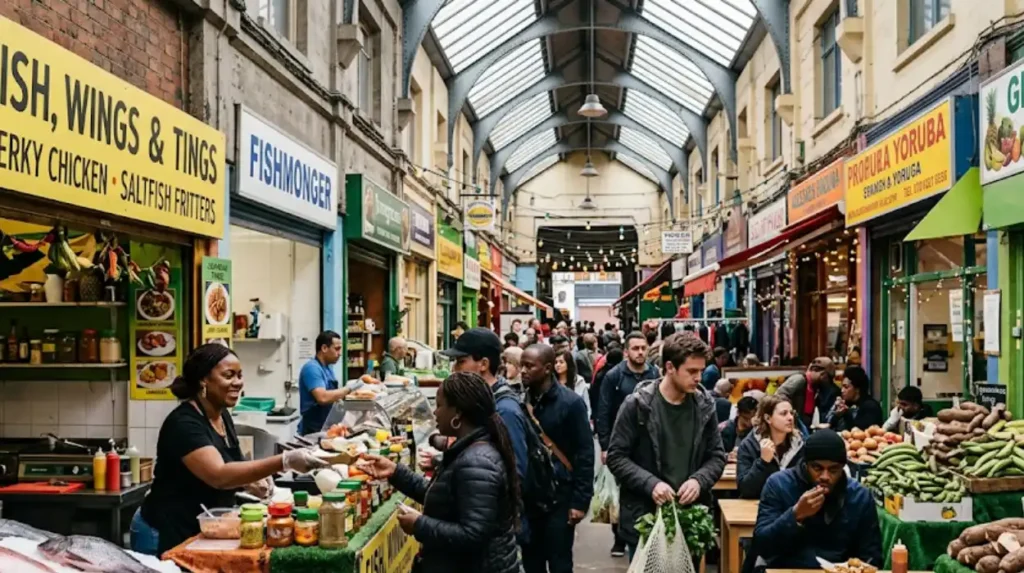
Brixton Village contains over 100 independent food vendors and retail shops. The market arcades house diverse food stalls and sit-down restaurants, including fishmongers selling red snapper and tilapia, butchers stocking goat meat, and greengrocers supplying callaloo, yams, and plantains. Food lovers visit venues such as Fish, Wings & Tings for Caribbean street food, Honest Burgers for British beef burgers, and Okan for Osaka-style okonomiyaki pancakes.
Southbank Centre Food Market
Southbank Centre Food Market operates along Belvedere Road behind the Royal Festival Hall in London SE1 8XX. Established in 2010, the market runs every week from Friday to Sunday, hosting up to 40 independent street food vendors and artisan producers. The stalls serve hot meals cooked on site alongside packaged food products.
The market provides four primary food categories, including street food stalls, artisan bakeries, specialty coffee shops, and craft alcohol producers. Visitors select meals such as French duck confit sandwiches from Duck’n Roll, authentic Polish sausages from Korv, Indian street food from Horn OK Please, and artisan sourdough baked goods from local bakeries.
Lower Marsh Market and Herne Hill Market
Lower Marsh Market occupies Lower Marsh Street adjacent to Waterloo Station in SE1 8SJ. Operating from Monday to Saturday between 11:00 and 15:00, this historic 19th-century street market features 30 street food traders. Food choices include Tibetan dumplings from Where The Pancakes Are, Thai curries, Falafel wraps, and slow-roasted pork belly rolls.
Herne Hill Market operates every Sunday from 10:00 to 16:00 in Station Square, SE24 9YW. The market contains over 50 traders offering locally sourced organic vegetables, raw milk cheeses, sourdough loaves, pasture-raised meats, and hot street food.
Where Can Diners Find Independent Restaurants and Fine Dining in Lambeth?
Diners find independent restaurants and fine dining across Lambeth in neighbourhoods like Clapham, Waterloo, Kennington, and Brixton. These venues range from Michelin-starred European establishments to family-owned bistros, showcasing sustainable seasonal ingredients and regional culinary traditions.
Clapham and Kennington Dining Destinations
Clapham Common South Side in SW4 houses Trinity, a Michelin-starred restaurant founded in 2006 by Chef Adam Byatt. Trinity delivers modern French and British fine dining utilizing hyper-seasonal ingredients sourced from British farms. The restaurant provides a formal dining room alongside Upstairs at Trinity, an informal small-plates venue overlooking Clapham Common.
Kennington offers long-standing neighborhood bistros and historic gastro-pubs. The Canton Arms, located at 177 South Lambeth Road, SW8 1XP, operates as a high-end gastropub famous for seasonal game dishes, slow-cooked meats, and rarebit toasties. In Kennington Square, independent Italian and Mediterranean establishments serve hand-rolled pasta, braised meats, and biodynamic wines.
Waterloo, South Bank, and Vauxhall Establishments
The Cut in Waterloo connects SE1 to the borough’s northern culinary zone. Anchor & Hope, established in 2003 at 36 The Cut, SE1 8LP, pioneered London’s gastropub movement. The restaurant serves nose-to-tail British dining without advance reservations, changing its menu twice daily based on market supply.
Vauxhall contains Brunswick House at 30 Wandsworth Road, SW8 2LG. Situated inside a Grade II* listed Georgian mansion constructed in 1758, the restaurant operates under Chef Jackson Boxer. The menu features modern British cuisine cooked with wood-fired techniques, served inside rooms decorated with architectural antiques.
Which Cafés in Lambeth Offer Work-Friendly Spaces and Specialty Coffee?
Specialty coffee shops and work-friendly cafés operate throughout Lambeth, concentrating in Vauxhall, Waterloo, Brixton, and Streatham. These establishments provide high-speed internet, power access, single-origin espresso drinks, and fresh bakery products for remote workers and leisure visitors.
Specialty Coffee Roasters and Espresso Bars
Lambeth hosts independent specialty coffee roasters focused on direct-trade beans and precise brewing standards. Assembly Coffee, headquartered in Brixton, supplies single-origin espresso to specialty cafés across the borough. Coffee tasting rooms in Lambeth measure extraction metrics, water filtration levels, and roast profiles to ensure high coffee quality.
Volcano Coffee Works, established in West Norwood in 2010, roasts ethically traded coffees in small batches. Their cafés across South London serve batch brew, cold brew, and flat whites brewed with organic dairy milk or oat milk options.
Work-Friendly Hubs for Digital Nomads
Remote workers and digital nomads access spacious cafés designed for extended working sessions. Three notable work-friendly establishments include:
- Impact Brixton Café: Located at 17-21 Electric Lane, SW9 8LA, this community co-working hub combines an espresso bar with desk spaces, power sockets, and high-speed Wi-Fi.
- Scootering & Coffee at ScooterCaffe: Situated on Lower Marsh in Waterloo, this café features retro interior design, vintage seating, quiet background music, and espresso-based beverages.
- F.A. Shedd & Co. / Specialty Spots in Vauxhall: Located near Vauxhall Station, offering large communal tables, abundant natural light, and specialty filter coffee options.
Explore More Area Guide
Best Romantic Places to Visit in Lambeth for Couples and Tourists
Where Can Visitors Shop Local in Lambeth: Independent Shops and Markets
How Does Lambeth’s Multicultural Heritage Shape Its Culinary Scene?
Lambeth’s culinary scene derives its identity from postwar immigration, particularly the Windrush generation arriving from the Caribbean in 1948. Multicultural communities from West Africa, Latin America, Portugal, and East Asia established authentic food hubs across the borough.
Caribbean and West African Culinary Foundations
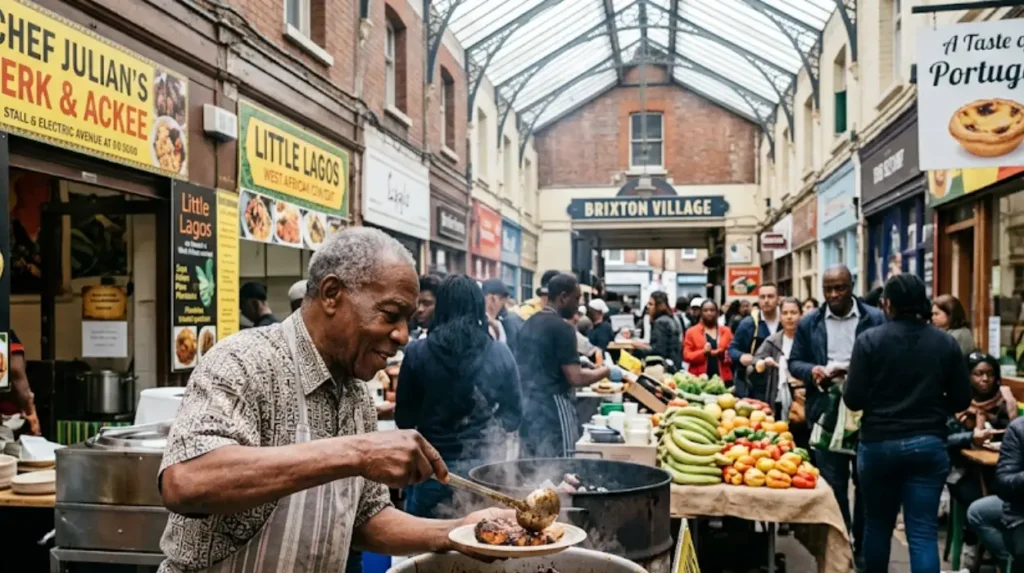
In June 1948, the HMT Empire Windrush arrived in Britain, carrying passengers who settled in Brixton and surrounding Lambeth areas. These residents introduced essential Caribbean ingredients, including scotch bonnet peppers, ackee, salted cod, callaloo, and pimento spice.
Traditional eateries across Brixton and Streatham prepare jerk chicken cooked over oak and charcoal drums, curry goat cooked with coconut milk, and fried plantain. West African restaurants in Lambeth serve Nigerian and Ghanaian classics, such as jollof rice, pounded yam, egusi soup, and suya spiced grilled beef skewers.
Little Portugal and Latin American Gastronomy
South Lambeth Road in Vauxhall and Stockwell is designated as London’s “Little Portugal.” Established during the 1960s and 1970s, this neighborhood houses Portuguese bakeries, tapas bars, and seafood restaurants. Establishments such as Madeira London serve pastéis de nata (custard tarts), bacalhau à Brás (shredded salt cod with potatoes and eggs), and charcoal-grilled peri-peri chicken.
Elephant and Castle border zones and Brixton Market feature Latin American venues. Colombian, Ecuadorian, and Peruvian kitchens serve corn flour arepas, empanadas filled with spiced beef, ceviche marinated in tiger’s milk, and roasted pork tamales.
What Unique Food Experiences and Dining Tours Exist in Lambeth?
Lambeth offers unique food experiences, including guided walking tasting tours, street food container hubs, brewery taprooms, and riverside dining venues. Visitors participate in structured tasting itineraries across Brixton, Waterloo, and Vauxhall to explore global gastronomy.
Pop-Up Hubs and Food Collectives
Pop Brixton, located at 49 Brixton Station Road, SW9 8PQ, opened in 2015 as a temporary community project built from 50 recycled shipping containers. The complex functions as an incubator for independent food vendors, beverage startups, and social enterprises.
Diners at Pop Brixton sample dishes from three distinct food concepts, including Ghanaian street food from Zoe’s Ghana Kitchen, artisanal sourdough pizza, and halloumi fries. The venue incorporates communal outdoor seating, heating for winter months, and rotating pop-up kitchens.
Craft Breweries and Distilleries
Lambeth forms part of South London’s craft beer network. Local independent breweries operate taprooms where visitors sample fresh craft beer directly from fermentation tanks.
- Brixton Brewery: Founded in 2013 on Station Road, SW9, this craft brewery produces beers named after local landmarks, including Reliance Pale Ale and Coldharbour Lager.
- Clarkshaws Brewery: Located in Loughborough Junction, operating as a 100% microbrewery producing vegetarian and vegan certified beers using British ingredients.
- Beefeater Gin Distillery: Situated at 20 Montford Place, Kennington, SE11 5DE, this functional distillery offers guided tours covering gin distillation processes, botanical selection, and historic London gin production.
Planning a Culinary Tour in Lambeth
Food lovers visiting Lambeth benefit from structured transit connections. Three key transit hubs, including Waterloo Station, Brixton Underground Station, and Vauxhall Station, deliver fast rail and tube links across the borough. Exploring the borough on foot via designated walking routes between South Bank, Waterloo, Vauxhall, Stockwell, and Brixton allows visitors to transition smoothly between historic markets, riverside establishments, and neighbourhood dining hotspots.