The best indoor attractions in Lambeth include world-class museums such as the Imperial War Museum and Florence Nightingale Museum, major entertainment venues like the Sea Life London Aquarium and London Dungeon, cultural institutions including the National Theatre and Hayward Gallery, and work-friendly spaces such as Morley College and Brixton libraries. These venues operate year-round, providing weather-proof options for tourists, residents, digital nomads, and business travellers seeking meaningful indoor experiences in South London.
- What indoor attractions define Lambeth as a tourist destination?
- Which museums and galleries provide free or low-cost cultural experiences?
- What entertainment venues and activities suit families and leisure travellers?
- Where can digital nomads and remote workers find productive indoor spaces?
- Which cultural institutions support creative industries and professional development?
- How should visitors plan and navigate indoor attractions across Lambeth?
What indoor attractions define Lambeth as a tourist destination?
Lambeth anchors South London’s cultural tourism with 10 museums, 8 cinemas, 20+ art galleries, 22 theatres, 30+ music venues, and 9 major visitor attractions including the London Eye, Sea Life Aquarium, and Shrek’s Adventure London. The borough spans from the Thames at Waterloo and South Bank through Vauxhall, Brixton, Clapham, and Streatham, creating a dense concentration of indoor cultural infrastructure unmatched in outer London boroughs.
The Imperial War Museum stands as Lambeth’s most prominent cultural institution, housed in the former Bethlem Royal Hospital building on Lambeth Road since 1936. This free-entry museum features permanent galleries covering the First World War, Second World War, Holocaust Exhibition, and conflicts from 1945 to the present day. The central atrium displays suspended aircraft including a Spitfire and Harrier jet, while the 60,000 square feet of exhibition space contains military vehicles, rockets, uniforms, and personal testimonies from over 100 conflicts.
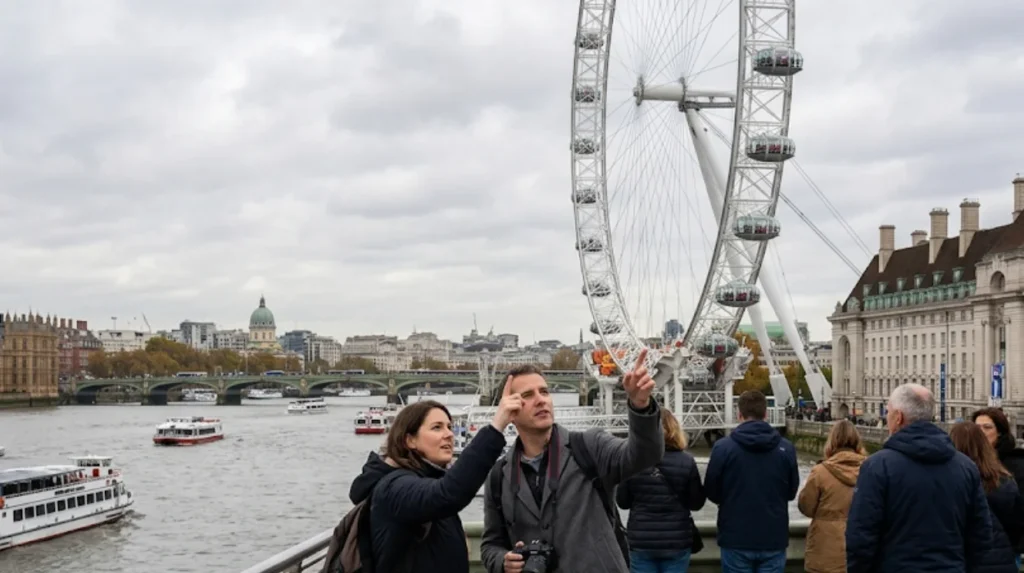
The London Eye operates as the borough’s most visited paid attraction, drawing approximately 3.75 million visitors annually since opening in March 2000. This 135-metre observation wheel completes one rotation in 30 minutes, with 32 sealed passenger capsules each holding up to 25 people. The structure sits on the South Bank between Westminster Bridge and Hungerford Bridge, providing panoramic views extending 40 kilometres in clear conditions.
The Sea Life London Aquarium occupies Riverside Building on Westminster Bridge Road, presenting Europe’s largest collection of global marine life across three floors. The facility houses over 500 species including sharks, rays, penguins, and a 10-metre ocean tank featuring green sea turtles. Interactive exhibits, feeding demonstrations, and the Penguin Point experience provide educational programming aligned with the national curriculum for school groups.
Lambeth Palace functions as the official London residence of the Archbishop of Canterbury since the 13th century. The medieval complex includes the Great Hall (built 1245-1260), the 14th-century crypt, and the Chapel of St Mary. Guided tours operate on specific days, while the adjacent Lambeth Palace Library serves as the Church of England’s national archive, founded in 1610 and holding over 120,000 printed books and 27,000 manuscripts.
The Garden Museum occupies the deconsecrated St Mary-at-Lambeth church next to Lambeth Palace, exploring British gardening history from 1600 to present. The museum building dates to medieval times with a tower constructed in 1377, while the site itself originated in 1062 when Edward the Confessor’s sister Goda built the first church. Permanent collections include tools, artwork, and design objects, complemented by a courtyard garden designed by Dan Pearson OBE.
The Florence Nightingale Museum operates within St Thomas’ Hospital on Lambeth Palace Road, dedicated to the life and legacy of the founder of modern nursing. The museum covers Nightingale’s work during the Crimean War (1853-1856), her statistical innovations, and the establishment of the Nightingale Training School at St Thomas’ in 1860. Exhibits include her lamp, medals, letters, and the 90-centimetre-high statue by Arthur Walker unveiled in Waterloo Place in 1915.
As you explore the modern site, you are crossing land with a deep heritage. Read about the full [history of Lambeth’s cultural institutions] to understand its origins.
Which museums and galleries provide free or low-cost cultural experiences?
Lambeth offers exceptional value with 7 free-entry museums including the Imperial War Museum, Hayward Gallery, and National Theatre exhibitions, plus low-cost options such as the Garden Museum (£16) and Cinema Museum (£10 guided tour). This pricing structure enables extended cultural engagement without the financial barriers common in central London’s West End and museum district.
The Hayward Gallery operates as one of London’s leading contemporary art spaces within the Southbank Centre complex. The gallery programmes rotating exhibitions featuring modern and contemporary art from the 1960s to present, with past shows including works by Picasso, Matisse, and contemporary artists such as Tacita Dean and Anish Kapoor. The building’s brutalist concrete structure, designed by Robert Hubert, Bennett, and Gillespie, opened in 1968 as part of the Southbank Centre’s Festival of Britain legacy.
The National Theatre provides free access to its Sherling Backstage Walkway, a gallery-level viewing platform overlooking the production workshops. This 100-metre walkway allows visitors to observe set construction, costume making, and prop creation without purchasing theatre tickets. The theatre complex includes three auditoriums: the Olivier Theatre (1,160 seats), Lyttelton Theatre (890 seats), and Dorfman Theatre (400 seats), plus the Cottesloe studio space.
The Cinema Museum occupies the former Lambeth Workhouse building on Dugard Way, where Charlie Chaplin resided with his family during the 1890s. Founded in 1984 by Martin Humphries and Ronald Grant, the museum houses over 17 million feet of celluloid film, art deco cinema seats, projectors, posters, and ushers’ uniforms from 1900-1960. Access requires advance booking for guided tours (£10 adults, £7 concessions) running at 11am or 2pm Monday to Saturday, with tours typically lasting 2-4 hours.
The Black Cultural Archives operates from Windrush Square in Brixton as the UK’s only national repository dedicated to Black British history. The archive holds personal papers, photographs, sound recordings, and publications documenting African and Caribbean communities in Britain from the 18th century to present. The Reading Room provides research access by appointment, while temporary exhibitions and events programme runs throughout the year.
575 Wandsworth Road functions as a National Trust property showcasing the hand-carved interior decoration created by Kenyan civil servant Khadambi Asalache between 1981 and 2006. The Georgian terrace house exterior appears ordinary, but the interior features intricate fretwork covering walls, ceilings, door frames, and furniture throughout all rooms. Visits require advance booking for guided tours, with visitors removing shoes before entry.
The South London Botanical Institute operates from 323 Norwood Road in a Victorian building established in 1912 by botanist Arthur Keith. The institute maintains a herbarium containing 15,000 plant specimens, a library of 3,000 botanical books, and a 0.4-hectare garden featuring medicinal plants, roses, and a woodland area. Open days occur monthly during spring and summer, with free entry and donations welcomed.
What entertainment venues and activities suit families and leisure travellers?
Lambeth hosts 9 major family attractions including Shrek’s Adventure London, The London Dungeon, Namco Funscape, and the London Aquarium, plus 8 cinemas ranging from BFI IMAX to independent venues like Clapham Picturehouse and Ritzy Brixton. These venues provide all-weather entertainment options with combined annual visitor numbers exceeding 10 million across the borough’s indoor leisure infrastructure.
Shrek’s Adventure London occupies Riverside Building on Westminster Bridge Road as a DreamWorks-themed immersive walkthrough experience. The attraction features 10 interactive sets including Duloc, the Dragon’s Keep, and Far Far Away, with live actors, special effects, and 4D elements. Character meet-and-greets with Shrek, Fiona, Donkey, and Puss in Boots occur throughout the 75-minute experience, which includes the 4D DreamWorks Tour cinema showing clips from Shrek, Kung Fu Panda, and Madagascar franchises.
The London Dungeon presents 19 live actor shows and 2 rides across 90 minutes of theatrical horror experiences. The attraction recreates historical events including the Great Plague (1665), Great Fire of London (1666), Jack the Ripper murders (1888), and the Sweeney Todd legend. The drop ride descends 30 metres at 60 mph in total darkness, while the boat ride navigates the Thames through scenes of execution and torture. Age restrictions recommend 12+ due to dark themes and jump scares.
Namco Funscape operates within County Hall on Westminster Bridge Road as a multi-level entertainment complex featuring bowling, arcade games, laser tag, and soft play areas. The venue includes 24 bowling lanes, 100+ arcade machines, and the Kidzania soft play zone for children under 12. Party packages and group bookings accommodate corporate events, birthday celebrations, and school trips with dedicated event coordinators.
BFI IMAX stands on Charlie Chaplin Walk near Waterloo Station with the UK’s largest cinema screen measuring 20 metres by 26 metres. The venue’s 12,000-watt digital surround system supports 3D screenings with active shutter glasses, while the 500-seat auditorium features stadium seating for optimal viewing angles. The licensed bar and café provide pre-show refreshments with views over Waterloo Bridge towards the City.
Clapham Picturehouse operates from 76 Venn Street as an independent cinema with 4 screens showing new releases, classic films, and art-house productions. The venue programmes baby-friendly screenings, dog-friendly matinées, and director Q&A sessions. The café/bar features outdoor seating overlooking Venn Street Market, which operates Saturdays 10am-4pm with independent food traders including Perry Court Farm and Une Normande à Londres.
Ritzy Picturehouse occupies Brixton Oval in a Grade II listed building opened in 1911. The 5-screen cinema programmes blockbusters, foreign language films, and festival seasons including the BFI London Film Festival and LGBTQ+ cinema events. Upstairs at the Ritzy functions as a music venue operating 7 nights weekly with live bands, DJ sets, and comedy nights in the 200-capacity second-floor space.
Whirled Cinema operates from 259-260 Hardess Street in Herne Hill as a volunteer-run independent cinema screening art-house, documentary, and world cinema. The 60-seat venue programmes monthly themed seasons, director retrospectives, and community film clubs.
Streatham Ice and Leisure Centre houses London’s only Olympic-sized ice skating rink on Streatham High Road, operating since 1931. The 60-metre by 30-metre ice surface accommodates public skating sessions, ice hockey matches (seating capacity 1,000), and figure skating competitions. The complex includes two swimming pools, a gymnasium, and fitness studios running over 100 weekly classes.
Where can digital nomads and remote workers find productive indoor spaces?
Lambeth provides 25+ libraries and archives including Waterloo Library, Brixton Tate Library, and the National Poetry Library, plus co-working hubs such as Morley College, Pop Brixton, and 198 Contemporary Arts and Learning with bookable meeting rooms and high-speed internet. These spaces offer quiet work environments, networking opportunities, and professional development resources without the expense of private office leases.
Morley College operates from 61 Westminster Bridge Road as an adult education institution offering accredited courses in arts, languages, business, and professional skills. The college provides 100+ study spaces, computer suites with 50 workstations, and bookable meeting rooms equipped with projectors and video conferencing facilities. The Centre for Young Musicians occupies the building on Saturdays, offering instrument tuition and ensemble practice rooms.
The National Poetry Library sits on Level 5 of the Royal Festival Hall within the Southbank Centre, holding 50,000 poetry volumes plus manuscripts, recordings, and digital archives. The library provides 40 study carrels, free Wi-Fi, and research assistance from specialist librarians. Opening hours extend to 8pm on weekdays, accommodating post-work study sessions and evening writing groups.
Pop Brixton occupies a former construction site on Brixton Station Road, repurposing 60 shipping containers into workspaces for independent businesses including designers, makers, and food entrepreneurs. The site includes 12 co-working desks, 3 meeting rooms (capacity 6-12 people), and high-speed fibre internet. Event programming includes networking evenings, skills workshops, and pop-up markets on Thursday and Friday evenings.
198 Contemporary Arts and Learning operates from 198 Railton Road in Herne Hill as a visual arts organisation with gallery spaces, media studio, and education facilities. The centre provides 20 workstations in the digital media lab, bookable editing suites with Adobe Creative Cloud, and 3 seminar rooms for workshops and presentations. Temporary relocation to 3Space International House applies during redevelopment, with planning permission approved to triple the premises.
Brixton Tate Library stands on Brixton Oval in a Grade II listed building opened in 1893, housing 25,000 books plus local history archives and digital resources. The library offers 30 computer workstations, free Wi-Fi, and 4 bookable study rooms for groups up to 6 people. Opening hours extend to 7pm on weekdays and 5pm on Saturdays.
Waterloo Library operates from 1 Kennington Road with 15,000 books, 20 computers, and a dedicated business information section. The library provides free Wi-Fi, printing services, and access to online databases including Ancestry Library Edition and Business Source Premier.
The BFI Reuben Library occupies Belvedere Road within BFI Southbank, specialising in film and television studies with 100,000 books, 500,000 stills, and 20,000 hours of video content. The library provides 50 study carrels, 10 editing suites with Avid Media Composer, and 4 screening rooms for research viewings. Access requires free membership with proof of research need.
Explore More Area Guide
Where Can Visitors Explore Lambeth’s Creative Scene? A Complete Travel Guide
What Can Food Lovers Discover in Lambeth? A Complete Borough Culinary Guide
Which cultural institutions support creative industries and professional development?
Lambeth hosts 22 theatres including the National Theatre, Old Vic, and Young Vic, plus 30+ music venues ranging from the O2 Academy Brixton to grassroots spaces like Electric Brixton and The Windmill, alongside 13 art centres including Gasworks, Studio Voltaire, and House of Vans. This infrastructure supports 15,000+ creative professionals working in film, music, theatre, and visual arts across the borough.
The Old Vic operates from The Cut as an independent not-for-profit theatre with 1,067 seats in the main auditorium. The venue programmes classical drama, contemporary plays, and musicals, plus the Old Vic Young Company for performers aged 16-25. The building received Grade II listing in 1951 following wartime damage and restoration, with the adjacent Old Vic Theatre School training actors since 1947.
The Young Vic occupies 66 The Cut as a producing theatre with three performance spaces: the main theatre (400 seats), the New Vic (200 seats), and the Cut Bar (100 capacity). The theatre runs the Young Vic Collective for early-career artists, plus the Tassos Stevens Leadership Programme for theatre makers from underrepresented backgrounds.
The O2 Academy Brixton stands on Stockwell Road as a 4,921-capacity music venue in a former cinema and theatre building dating to 1929. The main floor accommodates 3,500 standing, with 1,421 seated in the balcony circle. The venue hosts 150+ concerts annually across rock, pop, electronic, and hip-hop genres, with past performers including Madonna (2000), The Smiths (final gig 1986), and Adele (2011).
Electric Brixton operates from Town Hall Parade in a 1912 theatre building with 1,550 capacity across ground floor and balcony. The venue programmes live bands, DJ sets, and club nights featuring house, techno, drum and bass, and grime. The ornate plasterwork and original balcony remain intact, creating a distinctive visual identity within London’s nightlife circuit.
House of Vans occupies Arches 228-232 on Station Approach Road as a multi-use creative space including a 300-capacity music venue, gallery, cinema screening room, restaurant, and concrete skate bowl. The venue hosts 100+ events annually across skateboarding competitions, art exhibitions, film premieres, and live music.
Gasworks Gallery operates from 155 Vauxhall Street as a non-profit contemporary visual arts organisation with 3 exhibition spaces, 20 artist studios, and public programming. The gallery runs the Triangle Network connecting 30+ arts organisations across Africa, Asia, and South America, plus the International Residency Programme hosting 12 non-UK artists annually.
Studio Voltaire occupies 1a Nelsons Row in a former church building in Clapham, providing 15 artist studios, gallery space, participation and events area, music venue, and public courtyard garden. The studio supports 30+ artists annually through subsidised workspace, exhibition opportunities, and professional development mentoring.
The Vaults sits beneath Waterloo Station in Arch 236 Leake Street as an immersive theatre and alternative arts venue. The 1,200-square-metre complex includes 4 performance spaces, 2 bars, and artist studios, programming immersive productions, site-specific theatre, and experimental performance art. The venue runs the Underbelly Festival during Edinburgh Fringe, transforming the space into 10+ performance areas.

How should visitors plan and navigate indoor attractions across Lambeth?
Effective planning requires clustering attractions by neighbourhood (South Bank, Waterloo, Brixton, Clapham), checking seasonal opening hours, booking timed tickets in advance for popular venues, and using public transport links including 10 Underground stations and 40+ bus routes. This approach minimises travel time, maximises venue access, and ensures optimal use of limited visiting days.