

Lambeth has a wide network of public spaces ranging from the Thames riverside and landscaped gardens to historic commons, neighbourhood squares and large urban parks. These spaces give visitors places to walk, rest, enjoy views, explore local history, access nature and connect different parts of South London.
- Which public spaces are best for a first visit to Lambeth?
- Where can visitors find the best riverside public spaces in Lambeth?
- What makes Queen’s Walk useful for visitors?
- Which Lambeth public spaces are best for gardens and quiet sitting?
- How does Lambeth’s history shape its public spaces?
- Which Lambeth public spaces are best for large green landscapes?
- Which public spaces are best for families?
- Where can visitors find public squares and smaller urban spaces?
- Are Lambeth’s public spaces accessible for visitors without a car?
- What should visitors know about opening times and public-space rules?
- Which Lambeth public spaces work well for digital nomads and short breaks?
- How are Lambeth’s public spaces changing?
- What is the best way to explore Lambeth’s public spaces in one day?
- Why are Lambeth’s public spaces important for visitors?
The borough contains over 78 parks, commons and other public open spaces, according to Lambeth Council. Its public realm also includes streets, squares, promenades and riverside areas that connect major cultural and transport destinations.
For visitors, the most useful public spaces are concentrated around several distinct areas. The South Bank and Waterloo provide riverside promenades and compact gardens close to major attractions. Vauxhall and Albert Embankment offer Thames-side walking routes and smaller landscaped spaces. Further south, Clapham Common and Brockwell Park provide much larger green landscapes for recreation, walking and relaxation.
Which public spaces are best for a first visit to Lambeth?
For a first Lambeth visit, the South Bank riverside, Queen’s Walk, Jubilee Gardens, Archbishop’s Park, Clapham Common and Brockwell Park provide varied public experiences. They combine river views, gardens, historic landscapes, recreation, cultural attractions and convenient transport connections.
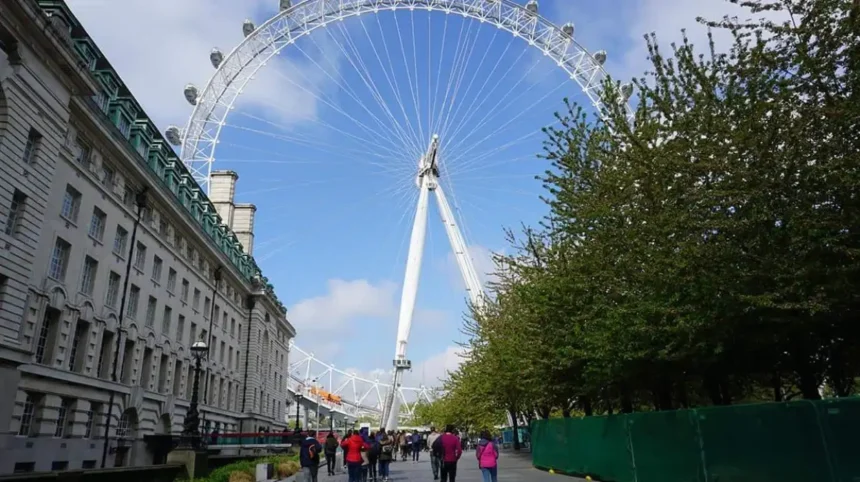
The South Bank is particularly useful for first-time visitors because several public spaces sit within a compact walking area. The Queen’s Walk connects riverside attractions while Jubilee Gardens provides landscaped green space beside the London Eye. Archbishop’s Park is further east near Lambeth Palace.
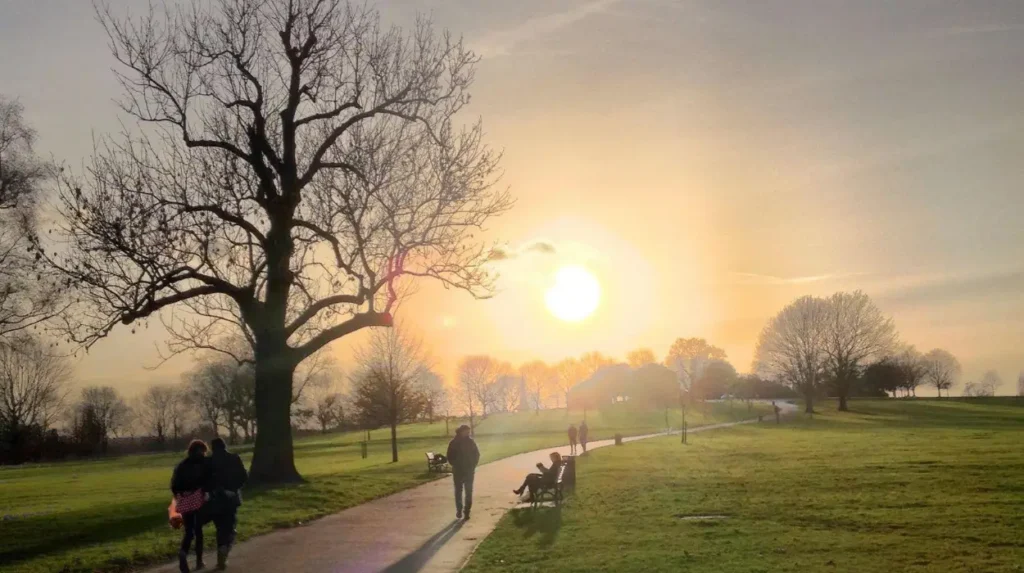
Clapham Common offers a completely different environment. At more than 85 hectares, it is one of London’s largest and oldest public open spaces. It contains ponds, mature trees, meadows, paths, sports facilities, playgrounds and a Victorian bandstand.
Brockwell Park provides another large green destination in southern Lambeth. The park contains historic buildings, ponds, open meadows, formal gardens, sports facilities and long walking routes. It formally opened to the public in 1892.
These spaces serve different visitor purposes. The South Bank works well for sightseeing and riverside walking. Clapham Common suits longer outdoor visits. Brockwell Park combines landscape, heritage and recreation.
Where can visitors find the best riverside public spaces in Lambeth?
Lambeth’s strongest riverside public spaces follow the River Thames through South Bank, Waterloo and Albert Embankment. Queen’s Walk provides a pedestrian promenade, while Jubilee Gardens, Bernie Spain Gardens and Albert Embankment Gardens add landscaped areas beside the river.
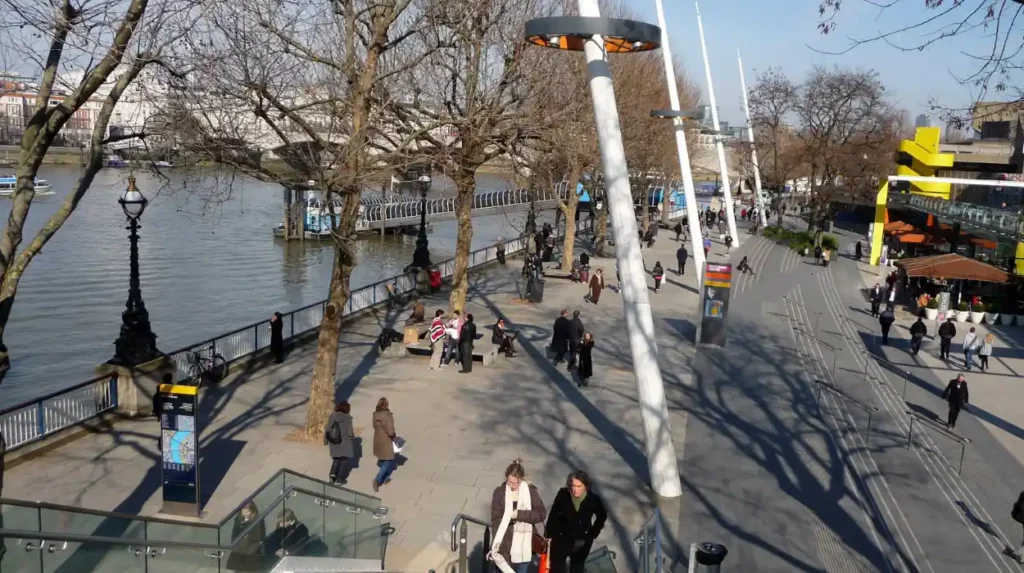
The Queen’s Walk is one of the defining public spaces in Lambeth. The pedestrianised promenade follows the Thames through the South Bank and connects major cultural attractions, restaurants, terraces, public art and landmarks. The South Bank organisation describes the route between Lambeth Bridge and Blackfriars Bridge as a walk of around 30 minutes without extended stops.
The route also provides changing views across the Thames towards central London. Visitors can use it as a continuous walking route rather than treating individual gardens as isolated destinations.
Jubilee Gardens sits directly beside the London Eye. The landscaped garden opened in its original form in 1977, following the site’s earlier use during the Festival of Britain. A major redesign was completed in 2012. The garden contains lawns, trees, planting, seating and an adventure playground.
Jubilee Gardens is also an important visitor space because it combines open green space with direct access to major South Bank attractions. The Jubilee Gardens Trust states that the site receives more than 5.5 million visitors annually and contains more than 90 mature trees.
Further east, Bernie Spain Gardens occupies a riverside site between the Oxo Tower and Gabriel’s Wharf. The gardens cover about 13 acres and were established in 1984 following a community campaign to protect public access to the riverfront.
Albert Embankment provides another riverside sequence. Lambeth Council describes Albert Embankment Gardens as a chain of smaller open spaces running between Vauxhall and Waterloo along the Thames.
Together, these spaces form one of Lambeth’s most accessible public-realm corridors.
What makes Queen’s Walk useful for visitors?
Queen’s Walk is useful because it provides a continuous pedestrian route beside the Thames and links major attractions, public art, gardens, cultural venues and riverside viewpoints. It allows visitors to experience several parts of Lambeth without relying on a vehicle.
The promenade forms part of the wider South Bank public realm. It passes the London Eye, Southbank Centre, National Theatre and other major destinations before continuing towards Bankside.
Its pedestrian character makes it particularly suitable for visitors combining sightseeing with outdoor movement. The route contains places to stop, sit, observe the river and continue towards another attraction.
The public realm around South Bank is also subject to strategic planning. Lambeth Council’s Waterloo and South Bank Public Realm Framework identifies improvements to streets, squares, piazzas, riverfront spaces and pedestrian connections as part of the area’s long-term development.
This matters because public space in Lambeth is not limited to traditional parks. The visitor experience also depends on pedestrian routes, plazas, undercrofts, squares and streets that connect attractions.
Which Lambeth public spaces are best for gardens and quiet sitting?
St Mary’s Gardens, St John’s Church Gardens, Emma Cons Gardens and Ufford Street Gardens provide smaller public spaces for sitting, greenery and short breaks. They are particularly useful around Waterloo, where larger attractions create a busy urban environment.
St Mary’s Gardens is beside Lambeth Palace, the Garden Museum and Archbishop’s Park. Lambeth Council states that the garden was created in 1932–33 after changes to the road network near the former Lambeth Bridge site. It contains planted areas, seating and a central water fountain.
St John’s Church Gardens occupies the former churchyard of St John’s Church, Waterloo. The garden contains mature trees, species-rich hedges, wildlife areas, a dry garden and a memorial garden. Its history also connects with Octavia Hill, one of the founders of the National Trust.
Emma Cons Gardens stands opposite the Old Vic Theatre and close to Waterloo Station, The Cut and Lower Marsh. It was opened in 1958 on a site affected by Second World War bombing. The garden was named after Emma Cons, a social reformer and theatrical figure associated with the Old Vic.
Ufford Street Gardens provides another small green space near Waterloo. The site was opened as a public space in 1907 and later restored using lottery funding in 2008. It contains seating, paths, a children’s playground, native hedges and pollinator-friendly planting.
These smaller gardens are important because visitors do not always need a large park. A compact green space near a station, theatre or museum provides a practical stopping point during a walking itinerary.
How does Lambeth’s history shape its public spaces?
Lambeth’s public spaces reflect centuries of changing land use, from medieval common land and ecclesiastical estates to Victorian parks, post-war gardens and modern riverside regeneration. Historic ownership, transport development, housing growth and community campaigns all shaped today’s spaces.
The history of Lambeth is particularly visible in its commons and former churchyards. Clapham Common, for example, appears in the Domesday Book of 1086 and was historically common land associated with the Manors of Battersea and Clapham. It gained Metropolitan Common protection in 1877.
Archbishop’s Park has a different origin. It occupies land formerly associated with Lambeth Palace, the London residence of the Archbishop of Canterbury. Part of the palace grounds was opened as a public park in 1901.
Brockwell Park developed from private landscaped grounds into a public park during the late nineteenth century. The Metropolitan Board of Works acquired the land before opening the park to the public in 1892.
The South Bank demonstrates another form of transformation. Much of the Jubilee Gardens site previously contained wharves and warehouses. It later hosted the Festival of Britain’s Dome of Discovery before becoming a car park and then a public garden.
As you explore these modern public spaces, you are crossing land with a deep heritage. Read about the full to understand its origins.
Which Lambeth public spaces are best for large green landscapes?
Clapham Common and Brockwell Park are among the most substantial green public spaces for visitors who want open landscapes, longer walks, sports facilities, mature trees and recreation. Both combine natural features with formal visitor infrastructure.
Clapham Common covers more than 85 hectares and includes three ponds, two woodlands, species-rich meadows, grasslands and an extensive path network. It also has a Victorian bandstand, cafés, toilets, playgrounds, a paddling pool, skatepark and community garden.
The Common has formal environmental designations. It is a Site of Importance for Nature Conservation and a Local Nature Reserve. Lambeth Council also records more than four hectares of species-rich wildflower meadow created through partnership work.
Brockwell Park has a different landscape character. Its features include ancient trees, ponds, wide meadows, a walled garden and historic buildings. Brockwell Hall and Brockwell Lido are among its notable features.
The park is also recognised as a conservation landscape. Lambeth Council records Brockwell Park as a Grade II registered park and garden on the national register of historic parks and gardens.
Both destinations provide considerably more space for outdoor recreation than the compact gardens around Waterloo.
Which public spaces are best for families?
Families have several suitable public spaces in Lambeth, with Jubilee Gardens, Archbishop’s Park, Clapham Common and Brockwell Park providing combinations of playgrounds, open lawns, walking routes and recreation facilities. Facilities vary by site and should be checked before travelling.
Jubilee Gardens has an enclosed adventure playground designed for children up to 11 years old. The garden also has accessible pathways and open landscaped areas.
Archbishop’s Park contains a large children’s playground alongside sports facilities, toilets and changing rooms. Its location near Lambeth Palace and the Thames makes it practical for a central London day out.
Clapham Common provides two popular playgrounds, a paddling pool, sports facilities and open grassland. It also has three cafés and toilets, although individual facilities operate according to their own opening schedules.
Brockwell Park contains a large children’s playground, wet play facilities, tennis and basketball courts and football pitches. Its wet-play facility normally operates from late May to late September, subject to maintenance and operational conditions.
These spaces provide different scales of family recreation, from compact central gardens to extensive southern parks.
Where can visitors find public squares and smaller urban spaces?
Lambeth’s smaller public squares include Cleaver Square, Grafton Square, Windrush Square and Emma Cons Gardens. These spaces provide neighbourhood gathering points, greenery, seating and pedestrian areas within built-up districts such as Kennington, Clapham, Brixton and Waterloo.
Cleaver Square is a historic communal open space surrounded by residential buildings. Grafton Square is a smaller green space close to Clapham Town Centre. Lambeth Council lists both within its network of public parks and open spaces.
Windrush Square provides an important public space in Brixton. It forms part of the civic and cultural landscape around Brixton Road and Brixton’s central area.
These spaces differ from large parks because their principal function is closely connected to the surrounding town centre. They provide places to pause while visiting shops, markets, cultural attractions and local streets.
Emma Cons Gardens performs a similar role in Waterloo. Its location opposite Waterloo Station and the Old Vic gives it a direct relationship with transport, theatre and local commerce.
For visitors exploring Lambeth on foot, these smaller spaces create natural pauses between larger destinations.
Are Lambeth’s public spaces accessible for visitors without a car?
Yes. Lambeth’s central public spaces are particularly well connected by walking and public transport. Waterloo, South Bank, Vauxhall, Brixton, Clapham and Herne Hill provide access points to different parks, squares, gardens and riverside routes.
Waterloo is a major gateway for South Bank. From the station, visitors can reach Emma Cons Gardens, St John’s Church Gardens, Lower Marsh and the South Bank riverside on foot.
The riverside route then connects a series of attractions and public spaces. Queen’s Walk provides a pedestrianised connection through the South Bank.
Further south, Clapham Common provides a large open destination between Clapham, Battersea and Balham. Brockwell Park is positioned between Herne Hill, Brixton and surrounding neighbourhoods.
Lambeth Council also manages a broad network of smaller spaces. Its parks database includes facilities ranging from quiet sitting areas and nature conservation areas to playgrounds, cafés, sports pitches and community gardens.
Visitors should check individual opening times because not every public space operates 24 hours.
What should visitors know about opening times and public-space rules?
Opening arrangements vary across Lambeth. Some spaces are open 24 hours, while many parks normally close around dusk. Visitors should check the individual site before travelling and follow Lambeth’s parks byelaws covering behaviour, recreation and protection of public spaces.
Lambeth Council states that parks and open spaces are generally closed at night, with official closing times normally 15 minutes before dusk. Opening times therefore change during the year.
There are exceptions. St Mary’s Gardens and Emma Cons Gardens are listed as open to the public 24 hours a day, while Albert Embankment Gardens is also open 24 hours.
Other locations have defined daytime schedules. St John’s Church Gardens normally opens from 7:30am until 15 minutes before sunset, while Archbishop’s Park follows the same general pattern.
Lambeth also operates parks and open-spaces byelaws. These rules support activities such as walking, sports, play, picnics and relaxation while regulating behaviour that damages property or affects other visitors.
Checking the current site information is therefore part of planning a reliable visit.
Which Lambeth public spaces work well for digital nomads and short breaks?
Smaller gardens and riverside spaces provide useful outdoor pauses for digital nomads and business travellers, particularly around Waterloo and South Bank. They offer seating, pedestrian access and proximity to cafés, cultural venues and transport, although public Wi-Fi and power are not universal.
Waterloo is particularly practical for short downtime because public spaces sit close to restaurants, cafés, offices, theatres and the railway station.
Emma Cons Gardens is directly opposite Waterloo Station and The Cut. St John’s Church Gardens and Ufford Street Gardens provide additional green spaces within the same wider district.
The South Bank riverside adds a different setting. Queen’s Walk provides a continuous pedestrian route with cafés, terraces, cultural venues and places to stop along the river.
Visitors working remotely should treat these locations primarily as public outdoor spaces rather than dedicated coworking facilities. Weather, seating availability, connectivity and local rules affect their practical use.
For business travellers with limited free time, the main advantage is proximity. A short walk from Waterloo can provide access to several distinct public spaces without requiring a separate journey across London.
How are Lambeth’s public spaces changing?
Lambeth’s public realm is being shaped by investment in pedestrian movement, greener streets, biodiversity, accessibility and better connections between transport hubs, cultural destinations and open spaces. Waterloo and South Bank remain major areas of public-realm planning.
The Waterloo and South Bank Public Realm Framework identifies six place-making principles and 18 site-specific spatial briefs for improving public spaces. It also identifies six priority projects associated with investment and improvement.
The framework reflects the changing role of public space in a high-density central London district. Streets and squares are not simply routes between buildings. They also function as places for gathering, events, recreation, walking and social activity.
The Waterloo City Hub project is another example of this approach. Lambeth Council describes plans to reconfigure Waterloo Roundabout to create a central space and improve conditions for pedestrians and cyclists.
Environmental considerations are also increasingly important. Clapham Common’s wildflower meadows, wetlands and woodland improvements demonstrate how biodiversity can be integrated into heavily used urban landscapes.
This combination of greenery, heritage, pedestrian movement and community use defines the continuing development of Lambeth’s public spaces.
Explore More Area Guide
Lambeth’s Oldest Buildings: St Mary’s, Lambeth Palace & More
Best Places to Learn About Lambeth’s Past | South London
What is the best way to explore Lambeth’s public spaces in one day?
A practical one-day route starts at Waterloo, follows the South Bank riverside through Queen’s Walk and Jubilee Gardens, continues towards Lambeth Palace and Archbishop’s Park, then finishes with a larger green space such as Clapham Common or Brockwell Park.
Begin around Waterloo Station and visit Emma Cons Gardens before moving towards the South Bank. Continue towards the Thames and join Queen’s Walk.
Follow the riverside promenade towards Jubilee Gardens and the London Eye. The route provides access to major cultural landmarks and landscaped public areas without requiring a vehicle.
Continue east or west along the riverside depending on the wider itinerary. Visitors interested in Lambeth’s historic landscape can then explore the area around Lambeth Palace, St Mary’s Gardens and Archbishop’s Park.
For a longer green-space experience, travel south to Clapham Common or Brockwell Park. Clapham Common provides more than 85 hectares of open landscape, while Brockwell Park combines open meadows with historic features and recreation facilities.
The result is a balanced Lambeth itinerary covering riverside public realm, historic gardens, urban squares and large parks.
Why are Lambeth’s public spaces important for visitors?
Lambeth’s public spaces connect tourism, local life, heritage, recreation and environmental value. They give visitors free places to walk, rest and experience the borough while connecting major attractions with neighbourhood landscapes and the River Thames.
The variety is the key feature. South Bank offers a dense network of pedestrian and riverside spaces. Waterloo contains small historic gardens and urban squares. Vauxhall and Albert Embankment provide Thames-side landscapes. Clapham Common and Brockwell Park offer much larger natural and recreational environments.
Lambeth’s public-space network also preserves historic landscapes. Eight landscapes in the borough are included on the national Register of Historic Parks and Gardens, including Brockwell Park, Kennington Park, Lambeth Palace, Ruskin Park and West Norwood Cemetery.
For visitors, this means a trip to Lambeth does not depend solely on ticketed attractions. Public spaces themselves form part of the destination.
The strongest approach is to combine spaces according to location and purpose. A riverside walk works well with South Bank attractions. A heritage visit fits naturally with Lambeth Palace and Archbishop’s Park. A longer outdoor visit suits Clapham Common or Brockwell Park.
Lambeth therefore offers a broad public-space network where riverfront promenades, gardens, squares, commons and major parks operate together as part of the visitor experience.
What are the best public spaces for visitors in Lambeth?
The best public spaces include Queen’s Walk, Jubilee Gardens, Clapham Common, Brockwell Park, Archbishop’s Park, Bernie Spain Gardens and several smaller gardens and squares around Waterloo and South Bank.

