Lambeth is one of South London’s strongest destinations for indoor activities when rain affects outdoor plans. The borough combines major museums, galleries, theatres, cinemas, historic buildings, aquariums, cultural venues and educational attractions. Its central riverside location also makes several attractions easy to combine within one itinerary.
- What makes Lambeth a good destination on a rainy day?
- Which museums are best for a rainy day in Lambeth?
- Is Tate Britain a good rainy-day activity in Lambeth?
- What can you do at the Southbank Centre when it rains?
- Why is BFI Southbank one of the best indoor activities in Lambeth?
- Which theatre experiences work best on a rainy day in Lambeth?
- Is SEA LIFE London Aquarium suitable for families on a rainy day?
- Can you visit Lambeth Palace when it rains?
- What historical indoor activities can you combine with Lambeth’s modern attractions?
- What is the best rainy-day itinerary for visitors to Lambeth?
- Which Lambeth rainy-day activities are best for different types of visitors?
- How should you plan a rainy-day visit to Lambeth?
- Why are Lambeth’s indoor attractions important for year-round tourism?
- What are the best rainy-day activities in Lambeth overall?
Rain does not prevent visitors from exploring Lambeth. Instead, it changes the type of experience available. South Bank provides a dense concentration of cultural venues, while areas around Lambeth Palace, Waterloo, Vauxhall and Kennington add museums, heritage sites and quieter indoor options.
The best rainy-day activities in Lambeth include visiting Tate Britain, exploring the Imperial War Museum London, watching films at BFI Southbank, attending a performance at the National Theatre, exploring Hayward Gallery, visiting SEA LIFE London Aquarium and discovering the Florence Nightingale Museum.
What makes Lambeth a good destination on a rainy day?
Lambeth works well in wet weather because major museums, galleries, theatres, cinemas and attractions are concentrated around South Bank, Waterloo, Lambeth Palace and Kennington, reducing outdoor travel between indoor experiences and creating flexible itineraries for visitors.
Lambeth occupies a strategic position on the south bank of the River Thames. Its proximity to central London gives visitors access to major cultural institutions without requiring long journeys between attractions.
South Bank is particularly useful during poor weather. The area contains the Southbank Centre, BFI Southbank, National Theatre, SEA LIFE London Aquarium and London Eye within a compact riverside district. Waterloo station provides extensive Underground and National Rail connections.
The concentration of indoor venues creates several practical advantages. Visitors can spend a morning in a museum, move to an indoor gallery, have lunch nearby and finish the day with theatre or cinema.
Lambeth also offers different types of indoor experiences. Museums provide historical and educational content. Galleries focus on visual culture. Theatres provide live performance. Cinemas offer film programmes. Specialist attractions provide family-oriented entertainment.
The borough therefore suits different visitor groups. Tourists can build a sightseeing itinerary. Families can choose educational attractions. Residents can use cultural venues for leisure. Digital nomads can combine cultural visits with cafés and work-friendly public spaces.
Rainy-day planning also benefits from Lambeth’s transport connections. Waterloo, Waterloo East, Lambeth North, Vauxhall and other nearby stations connect the borough with central London and wider parts of the capital.
Which museums are best for a rainy day in Lambeth?
Lambeth’s strongest rainy-day museums include the Imperial War Museum London and Florence Nightingale Museum, offering military history, social history, nursing heritage and carefully curated collections within substantial indoor exhibition spaces.
The Imperial War Museum London is one of the borough’s major historical attractions. Located on Lambeth Road, it documents the impact of modern conflict on individuals, societies and nations.
General admission to IWM London is free. Imperial War Museums states that admission is free for visitors, although charges apply to some special exhibitions and events.
The museum covers conflicts from the First World War to contemporary warfare. Its galleries combine objects, photographs, documents and personal accounts. This creates an extensive indoor experience that works particularly well during prolonged rainfall.
The First World War Galleries provide detailed historical interpretation. Other displays address the Holocaust, military technology, civilian experiences and the wider consequences of warfare.
The museum is also close to Lambeth North and Elephant and Castle stations. This makes it practical for visitors who want to avoid lengthy outdoor journeys.
The Florence Nightingale Museum provides a smaller and more specialised experience. It is located within St Thomas’ Hospital on Lambeth Palace Road, close to Westminster Bridge and the London Eye.
The museum explores Florence Nightingale’s life, nursing career and influence on modern healthcare. Its collection includes the lamp associated with Nightingale’s Crimean War work, her medicine chest, Notes on Nursing and objects connected with her life.
The museum currently operates Tuesday to Sunday, 10am to 5pm, with last entry at 4.30pm. It also has extended opening on the last Thursday of each month.
For visitors interested in social history, medicine or Victorian Britain, it provides a focused indoor attraction that fits easily into a South Bank itinerary.
Is Tate Britain a good rainy-day activity in Lambeth?
Tate Britain is an excellent indoor choice for art-focused visitors because its collection covers British art from the 1500s to today, with works associated with artists including J.M.W. Turner, John Constable, Francis Bacon and David Hockney.
Tate Britain stands on Millbank in the London Borough of Westminster, directly beside the Lambeth side of the Thames. Its location makes it relevant to a wider Lambeth itinerary, particularly for visitors using Vauxhall or riverside transport connections.
The gallery holds a major collection of British art. Its historical range extends from the sixteenth century to contemporary practice. Visitors can encounter paintings, sculpture and other forms of British visual culture.
The collection includes major works associated with J.M.W. Turner, John Constable, John Everett Millais, Francis Bacon, Lucian Freud, Barbara Hepworth and David Hockney.
General collection admission is free, while major temporary exhibitions normally require tickets. Tate Britain is listed with opening hours of 10am to 6pm daily, apart from specified Christmas and New Year closures.
The building is particularly useful during wet weather because visitors can spend several hours indoors without needing to move between separate attractions.
Tate Britain also provides a strong historical context for understanding London’s cultural development. Its collection allows visitors to trace changing artistic movements, social conditions and approaches to British identity through several centuries.
For visitors planning a full rainy-day itinerary, Tate Britain works especially well as a daytime activity followed by a theatre performance or cinema screening elsewhere in Lambeth.
What can you do at the Southbank Centre when it rains?
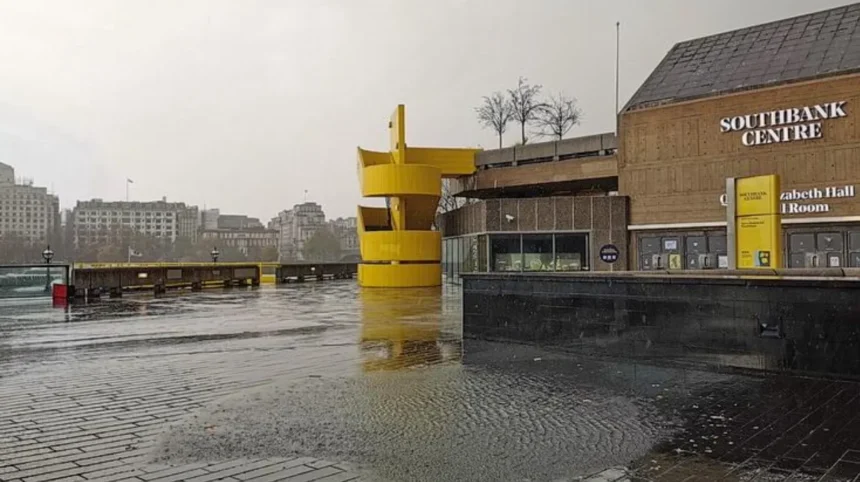
The Southbank Centre provides several indoor cultural experiences, including Royal Festival Hall concerts, Queen Elizabeth Hall performances, Purcell Room events and Hayward Gallery exhibitions, giving visitors options for music, theatre, talks, literature and contemporary art.
The Southbank Centre is one of Lambeth’s most important cultural complexes. Its venues have operated from the South Bank since the Festival of Britain period, with the organisation describing its site as being established there in 1951.
Royal Festival Hall is the largest and oldest building within the Southbank Centre complex. It is a major venue for classical music and other performances.
Queen Elizabeth Hall hosts talks, gigs, dance, performance and classical music. Purcell Room provides a smaller setting for literature, poetry, performance, classical music, jazz and electronic music.
These venues are valuable during rain because visitors can build an itinerary around scheduled performances rather than relying on outdoor sightseeing.
The Southbank Centre also contains Hayward Gallery, one of London’s major contemporary art venues. The gallery is recognised for its Brutalist architecture and its programme of large-scale contemporary exhibitions.
Hayward Gallery’s programme changes regularly. Its exhibitions have included artists such as Anish Kapoor, Tracey Emin, Andy Warhol, Diane Arbus, Bridget Riley and Antony Gormley.
The gallery also provides accessibility facilities, step-free public transport connections and exhibition support. Its published opening hours are Tuesday to Friday from 10am to 6pm, Saturday from 10am to 8pm and Sunday from 10am to 6pm.
Visitors should check the current exhibition programme before travelling because ticket requirements and exhibition dates change.
Why is BFI Southbank one of the best indoor activities in Lambeth?
BFI Southbank is a strong rainy-day choice for film enthusiasts because it operates four cinema screens seven days a week and combines screenings with a free film library, archive access, cafés, dining and riverside cultural facilities.
BFI Southbank is located on Belvedere Road beside the Thames. The British Film Institute operates four screens at the venue, providing a broad programme of films and events throughout the week.
Its programme includes classic cinema, contemporary releases, specialist screenings, festivals and film-related events. This gives visitors an indoor alternative when outdoor sightseeing is unsuitable.
The BFI Reuben Library is another useful feature. The library is free and contains books, journals and digitised resources relating to film, television and the moving image.
The BFI Mediatheque provides access to a substantial archive of British film and television material. This adds an educational component to the cinema experience.
BFI Southbank also has the BFI Riverfront, BFI Bar and BFI Café. These spaces allow visitors to extend their stay without immediately returning outdoors.
The venue operates as part of the British Film Institute, the UK’s lead organisation for film and the moving image.
For younger visitors, BFI Southbank also offers discounted cinema tickets. The current BFI information lists £4 cinema tickets for people aged 16 to 25.
This makes BFI Southbank particularly suitable for students, younger travellers and film-focused visitors seeking a relatively flexible indoor activity.
Which theatre experiences work best on a rainy day in Lambeth?
The National Theatre is Lambeth’s leading indoor theatre destination, offering performances across multiple stages alongside public spaces, dining, bookshop facilities, architecture-focused experiences and behind-the-scenes tours connected with professional theatre production.
The National Theatre occupies a prominent position on Upper Ground on London’s South Bank. Its Brutalist building was designed by architect Denys Lasdun and forms one of the most recognisable cultural landmarks along the Thames.
The venue presents theatre productions across its stages. A theatre performance creates a fully indoor evening activity that removes dependence on weather conditions.
The National Theatre also offers tours that explain how productions are developed. These experiences can explore sets, props, costumes and the practical processes behind professional theatre-making.
The venue’s public facilities also make it suitable for visitors arriving early. The National Theatre Bookshop carries playtexts and specialist performing arts publications.
For visitors without performance tickets, the building itself provides an architectural experience. Its public spaces, bars and riverside position create additional reasons to visit.
The National Theatre’s current published opening information lists Monday to Saturday opening from 10am until 10.30pm, although individual performance and facility times vary.
A rainy-day itinerary can therefore combine an afternoon gallery visit with an evening performance.
Visitors should check the current theatre programme before travelling. Performance schedules, ticket availability and running times change according to the production calendar.
Is SEA LIFE London Aquarium suitable for families on a rainy day?
SEA LIFE London Aquarium is one of Lambeth’s strongest family-focused indoor attractions, with more than 500 species across 14 themed zones, including sharks, penguins, jellyfish, rays, tropical fish and coral reef displays.
SEA LIFE London Aquarium is located within County Hall on the South Bank, next to the London Eye. Its indoor setting makes it particularly suitable when heavy rain affects outdoor sightseeing.
The aquarium presents more than 500 species across 14 themed zones. Its displays include marine animals from different habitats and geographical regions.
Themed areas include Polar Adventure, Ocean Invaders, Coral Kingdom and Rockpool. These zones provide different environmental contexts and introduce visitors to marine biodiversity.
The aquarium also promotes marine conservation and animal welfare. Its educational approach makes it more than a simple entertainment attraction.
SEA LIFE London opened in March 1997 in the historic County Hall building. The attraction has therefore become a long-established component of South Bank’s visitor economy.
The aquarium states that visitors typically spend around 1.5 to 2 hours exploring the attraction, although visit duration varies according to pace and crowd levels.
Ticket prices depend on booking date and demand. Advance online tickets are generally cheaper than walk-up admission, according to the attraction’s current ticket information.
The nearest Underground stations are Westminster and Waterloo. From Waterloo, the aquarium is approximately a five-minute walk.
For families, SEA LIFE works especially well as the main daytime attraction before a nearby meal, cinema visit or evening performance.
Can you visit Lambeth Palace when it rains?
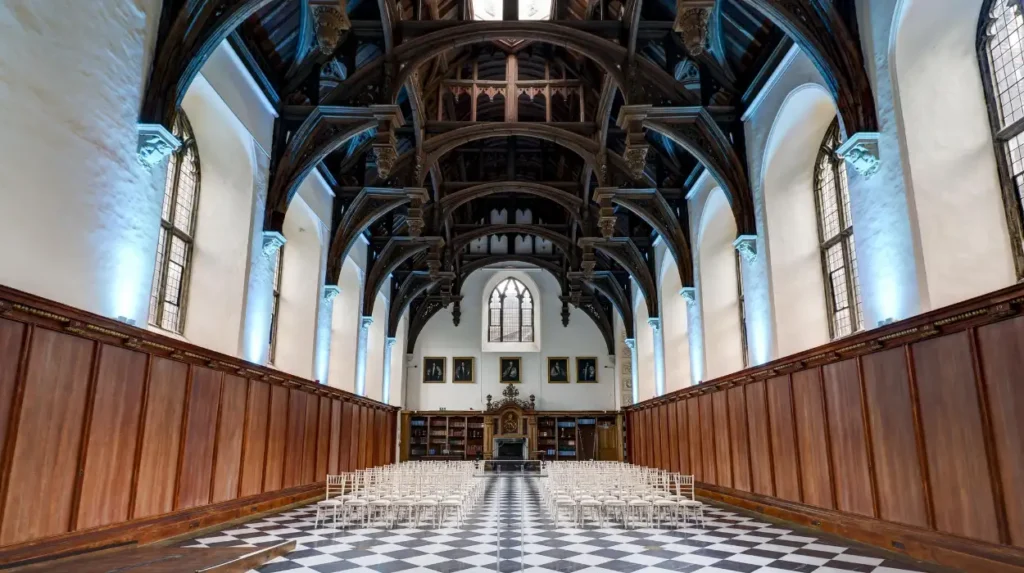
Lambeth Palace provides a distinctive heritage experience through selected tours and open days, allowing visitors to explore historic rooms, the Great Hall, Chapel and Guard Room while learning about more than eight centuries of religious and political history.
Lambeth Palace is the London residence of the Archbishop of Canterbury. The site has served this role for more than 800 years and remains a working centre of worship, ministry, hospitality and community activity.
The palace stands beside the River Thames between Westminster Bridge and Lambeth Bridge. Its position places it close to several other South Bank attractions.
The oldest parts of the site date from the medieval period. Historic England records that the archbishops of Canterbury first occupied the site in 1197.
Morton’s Tower, the Tudor gatehouse, dates from around 1490. The palace also contains historic architectural elements connected with different periods of British history.
Selected tours and open days allow visitors to enter historic parts of the palace. These can include the Great Hall, Chapel, Guard Room and other rooms.
The palace has also undergone major refurbishment. A project beginning in 2022 addressed infrastructure, accessibility, sustainability and conservation. Archaeological work associated with the refurbishment recorded more than 240 historic wall segments dating from the 11th to 19th centuries.
Because Lambeth Palace does not operate as a conventional daily museum, visitors need to check tour and open-day availability before making it the centrepiece of a rainy-day itinerary.
As you explore the modern site, you are crossing land with a deep heritage. Read about the full [Insert Anchor Text for History Article Here] to understand its origins.
What historical indoor activities can you combine with Lambeth’s modern attractions?
Lambeth’s modern attractions sit within a historic landscape shaped by medieval religious institutions, Victorian hospitals, twentieth-century cultural development and post-war regeneration, allowing visitors to combine museums, heritage buildings, galleries and theatres within one historically layered itinerary.
Lambeth’s cultural geography reflects several stages of London’s development. The medieval presence of Lambeth Palace established a major religious institution beside the Thames.
The palace conservation area also includes historic development around St Mary’s Church, St Thomas’ Hospital and Lambeth Road. Lambeth Council identifies the Lambeth Palace Conservation Area as an important historic environment containing medieval, Victorian and later development.
The area around St Thomas’ Hospital provides another important historical connection. The Florence Nightingale Museum links the modern healthcare system with the nineteenth-century development of professional nursing.
The South Bank represents a different stage of development. The Southbank Centre traces its presence on the site to 1951, the year of the Festival of Britain.
The post-war cultural development of the South Bank created a concentration of performance, music and visual arts venues. These institutions remain central to London’s cultural infrastructure.
The Imperial War Museum provides another historical dimension. Its collections document warfare and its consequences from the First World War onwards.
This mixture means that a rainy-day visit does not need to focus on one category. Visitors can move from medieval heritage to Victorian social history and then to twentieth-century art, film or performance.
For SEO and travel planning, this distinction is important. “Indoor attractions in Lambeth” is broader than “Lambeth museums”. The borough provides interconnected experiences covering heritage, art, performance, science, film and family entertainment.
What is the best rainy-day itinerary for visitors to Lambeth?
A practical Lambeth rainy-day itinerary combines nearby indoor venues to minimise exposure to weather: start with a museum or aquarium, continue to Southbank Centre or BFI Southbank, then finish with theatre, cinema or another evening cultural event.
A flexible morning can begin at the Imperial War Museum London. Its free general admission makes it useful for visitors managing a lower-cost itinerary. The museum provides enough indoor content for a substantial morning visit.
Visitors interested in nursing and Victorian history can instead begin at the Florence Nightingale Museum. Its compact location near the London Eye makes it easy to combine with other South Bank attractions.
Families can start at SEA LIFE London Aquarium. Its themed zones and marine displays provide a concentrated indoor experience lasting roughly 1.5 to 2 hours for many visitors.
After lunch, the Southbank Centre provides several options. Hayward Gallery suits contemporary art visitors. Royal Festival Hall suits classical music audiences. Queen Elizabeth Hall and Purcell Room provide further performance and cultural programming.
BFI Southbank provides a strong afternoon alternative. Its four screens operate seven days a week, and the venue also contains the BFI Reuben Library and Mediatheque.
An evening theatre performance at the National Theatre provides a natural final activity. The venue’s South Bank location keeps the journey within the same cultural district.
Visitors interested in heritage can replace one of the contemporary venues with a Lambeth Palace tour when a suitable open day is available.
The best approach is to organise the itinerary around fixed-time activities first. Theatre performances, special exhibitions and selected palace tours operate according to scheduled times. Free museums and flexible cultural spaces can then fill gaps around those bookings.
Which Lambeth rainy-day activities are best for different types of visitors?
Families benefit from SEA LIFE London Aquarium and interactive museum experiences; art enthusiasts suit Tate Britain and Hayward Gallery; film fans suit BFI Southbank; history visitors suit IWM London and Lambeth Palace; theatre audiences suit the National Theatre.
Families need attractions with predictable indoor durations and facilities. SEA LIFE London Aquarium provides a controlled indoor environment with marine exhibits, themed zones and educational content.
History enthusiasts have strong options at IWM London, the Florence Nightingale Museum and Lambeth Palace. Each institution addresses a different historical subject.
Art visitors can focus on Tate Britain and Hayward Gallery. Tate Britain provides a broad chronological survey of British art, while Hayward Gallery focuses on major contemporary exhibitions.
Film enthusiasts have a specialist destination at BFI Southbank. Its cinema programme, film library and archive resources create several ways to engage with film culture.
Theatre audiences can use the National Theatre and Southbank Centre programme. These venues provide performances across drama, music, dance, talks and other cultural forms.
Digital nomads and business travellers can also use the South Bank cultural district strategically. BFI Southbank includes cafés, a library and dining facilities, while the wider Southbank Centre provides food and drink spaces alongside cultural venues.
Visitors seeking lower-cost activities should prioritise free general admission venues. IWM London offers free admission, while Tate Britain’s main collection is free. Hayward Gallery also includes free project-space programming, although its major exhibitions generally require tickets.
This range allows visitors to adjust spending without abandoning the itinerary.
How should you plan a rainy-day visit to Lambeth?
The most effective rainy-day planning strategy is to check opening hours, ticket requirements, performance schedules and transport connections before leaving, then group attractions by location so that walking outdoors remains short and predictable.
Start by identifying one fixed activity. This is usually a timed exhibition, theatre performance, cinema screening or special event.
Next, select a flexible attraction nearby. Museums and galleries provide useful options because visitors control the length of their stay more easily than they do with scheduled performances.
Transport planning is equally important. Waterloo provides major Underground and National Rail connections to the South Bank. Lambeth North provides access to the Imperial War Museum area. Westminster connects directly to the riverside attractions around County Hall.
Visitors should also check accessibility information. Hayward Gallery states that its performance and exhibition spaces, cafés, bars and restaurants are accessible, with step-free public transport connections.
Lambeth Palace also provides step-free access to most areas and assistance for specific requirements, although visitors should check the details for their particular tour.
Ticket conditions vary considerably. IWM London provides free general admission. SEA LIFE London uses timed tickets and variable pricing. Major exhibitions at galleries can require separate tickets. Theatre and cinema performances operate according to individual schedules.
Weather planning should therefore focus on reducing outdoor transitions rather than avoiding the area completely.
South Bank is particularly effective because several attractions occupy the same broad riverside district. A visitor can spend much of the day indoors and use short outdoor connections between venues.
Explore More Area Guide
48 Hours in Lambeth: Best Attractions and Itinerary | South London 2026
Historic Places and Heritage Attractions in Lambeth South London 2026
Why are Lambeth’s indoor attractions important for year-round tourism?
Lambeth’s indoor cultural infrastructure supports year-round tourism by reducing dependence on weather, extending visitor activity beyond outdoor sightseeing and connecting heritage, arts, entertainment, education and family attractions within one of London’s most accessible central boroughs.
Weather-independent attractions strengthen the reliability of urban tourism. Visitors often plan London trips months in advance, making indoor cultural venues an important part of itinerary resilience.
Lambeth benefits from a particularly strong concentration of cultural institutions. South Bank combines national performing arts organisations, cinemas, galleries and family attractions. Other parts of the borough add museums, heritage sites and historic institutions.
The cultural mix also supports different lengths of visit. A short visit can involve one museum. A full day can combine several venues. A multi-day London trip can return to the area for theatre, music or exhibitions.
This diversity supports different visitor motivations. Cultural tourists seek galleries and museums. Families seek educational entertainment. Film audiences seek specialist cinema. Theatre audiences seek live performance. Heritage visitors seek historic buildings.
The concentration also supports sustainable urban sightseeing by allowing visitors to rely heavily on public transport and walking between closely positioned destinations.
Lambeth’s cultural venues therefore remain relevant beyond rainy weather. Rain simply increases the practical importance of the borough’s indoor infrastructure.
For visitors searching specifically for “rainy-day activities in Lambeth”, the strongest options are the Imperial War Museum London, Florence Nightingale Museum, SEA LIFE London Aquarium, Hayward Gallery, BFI Southbank, National Theatre and selected Lambeth Palace tours.
Together, these attractions provide a broad indoor programme covering history, art, film, performance, marine life, architecture and cultural heritage.
What are the best rainy-day activities in Lambeth overall?
The best overall rainy-day activities in Lambeth are IWM London for history, SEA LIFE for families, Hayward Gallery for contemporary art, BFI Southbank for cinema, the National Theatre for performance and Lambeth Palace for scheduled heritage tours.
Lambeth provides one of South London’s most comprehensive selections of indoor cultural experiences. Its strongest advantage is concentration.
Visitors can choose between free museums, specialist museums, ticketed attractions, galleries, cinemas, theatres and historic venues. This makes it possible to create an itinerary around budget, interests, age and available time.
IWM London is particularly strong for free historical exploration. SEA LIFE London provides a family-oriented marine experience. Hayward Gallery delivers contemporary art. BFI Southbank provides specialist cinema and film resources. The National Theatre delivers live performance.
Lambeth Palace adds a heritage dimension that connects modern tourism with more than eight centuries of institutional history.
The result is a destination where poor weather does not remove the main visitor experience. It simply shifts the focus from parks, riverside walks and outdoor landmarks towards museums, galleries, theatres, cinemas and indoor attractions.
For tourists, the best strategy is to select one major timed attraction, add one flexible museum or gallery, and finish with an evening cultural experience. This approach keeps travel practical while exposing visitors to several distinct aspects of Lambeth.
Lambeth is therefore a strong choice for a rainy London day because its cultural attractions are diverse, accessible and geographically concentrated. The borough provides enough indoor experiences for a full itinerary without relying on a single attraction.
What are the best rainy-day activities in Lambeth?
The best options include the Imperial War Museum London, SEA LIFE London Aquarium, BFI Southbank, Hayward Gallery, National Theatre, Florence Nightingale Museum and selected Lambeth Palace tours.