Lambeth, a borough in South London, offers visitors a way to explore London’s history through public monuments, statues, memorials and commemorative landmarks. These features record the lives of notable people, military service, political change, cultural achievements and the development of the capital’s riverside communities.
- Why Is Lambeth an Important Place to Explore London’s Public Monuments?
- Which Public Monuments Should Visitors See on the South Bank?
- What Can Visitors Learn from the Imperial War Museum’s Memorial Collections?
- How Does Lambeth Palace Connect Visitors with London’s Religious History?
- Where Can Visitors Find Memorials Celebrating African and Caribbean History in Lambeth?
- What Can Visitors Discover at Stockwell Memorial Gardens?
- How Do Lambeth’s War Memorials Explain Local Experiences of Conflict?
- How Does Lambeth Address the History Behind Its Statues and Street Names?
- Which Other Historic Monuments and Memorial Sites Are Worth Exploring in Lambeth?
- How Can Visitors Plan a Walking Route Around Lambeth’s Public Monuments?
- What Should Visitors Know Before Photographing and Visiting Lambeth’s Monuments?
- Why Do Lambeth’s Public Monuments Matter to Modern Visitors?
The best starting point is the South Bank, where public art and memorials sit close to major cultural attractions. Visitors can continue towards Lambeth Bridge, the historic surroundings of Lambeth Palace and the streets around Kennington. Each area reveals a different aspect of the borough’s identity.
Public monuments are physical structures or artworks that commemorate people, events, achievements or shared experiences. They include statues, plaques, obelisks, war memorials and purpose-built commemorative installations. In Lambeth, these features form part of the wider public landscape, connecting historic places with everyday streets, parks and cultural destinations.
Exploring these landmarks on foot gives visitors a practical way to combine sightseeing with historical learning. It also provides opportunities to discover lesser-known places beyond London’s most heavily visited attractions.
Why Is Lambeth an Important Place to Explore London’s Public Monuments?
Lambeth is an important place to explore London’s public monuments because its riverside landmarks, historic institutions, civic memorials and cultural spaces document centuries of social change. Its location opposite Westminster also connects local history with the development of Britain’s political and cultural capital.
Lambeth occupies the south bank of the River Thames, opposite parts of Westminster. Its location has shaped its religious, political, industrial and cultural development. Bridges, former industrial sites, public buildings and riverside institutions provide context for understanding the monuments found throughout the borough.
The area includes Waterloo, the South Bank, Vauxhall, Kennington, Brixton and Streatham. Each neighbourhood has a distinct history. Waterloo developed around transport links and cultural venues, while Kennington retains connections with historic residential streets and civic life. Brixton reflects important histories of migration, music and community activism.
Public monuments help visitors interpret these changes. A statue identifies a person considered significant to public life. A memorial records collective remembrance. A commemorative plaque marks a building or location associated with an important event or individual.
Lambeth’s position beside the Thames makes its riverside particularly useful for historical exploration. Visitors encounter modern cultural institutions alongside older religious buildings and memorial sites. This combination shows how public spaces accommodate both historical preservation and contemporary urban activity.
Which Public Monuments Should Visitors See on the South Bank?
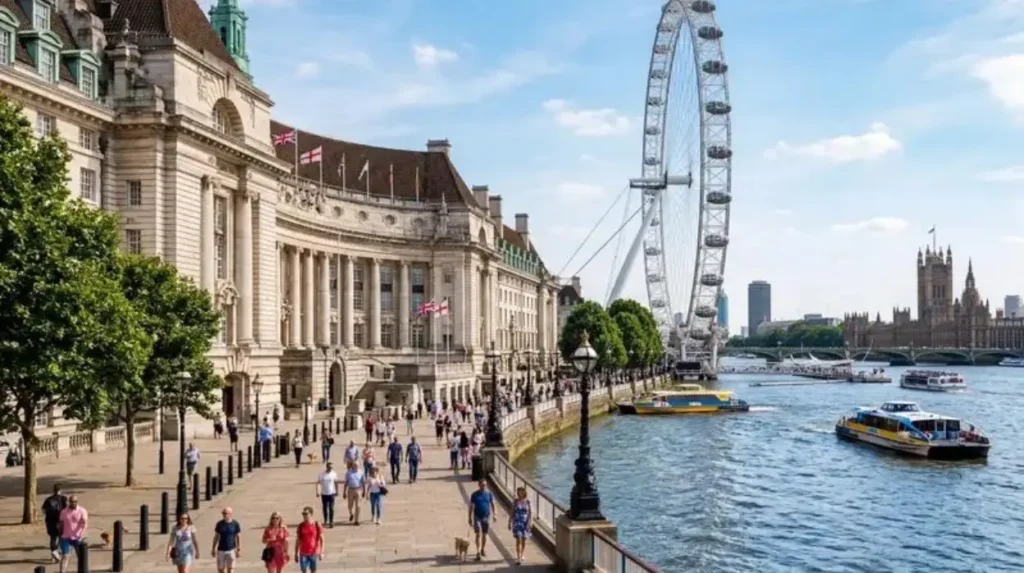
The South Bank offers visitors a practical starting point for exploring public monuments in Lambeth. Its riverside paths, cultural institutions, commemorative artworks and nearby historic landmarks create a walkable route through London’s artistic, civic and architectural history.
The South Bank is the stretch of London’s southern riverside associated with major arts venues, public spaces and pedestrian routes. It attracts visitors interested in architecture, performance, public art and views across the Thames.
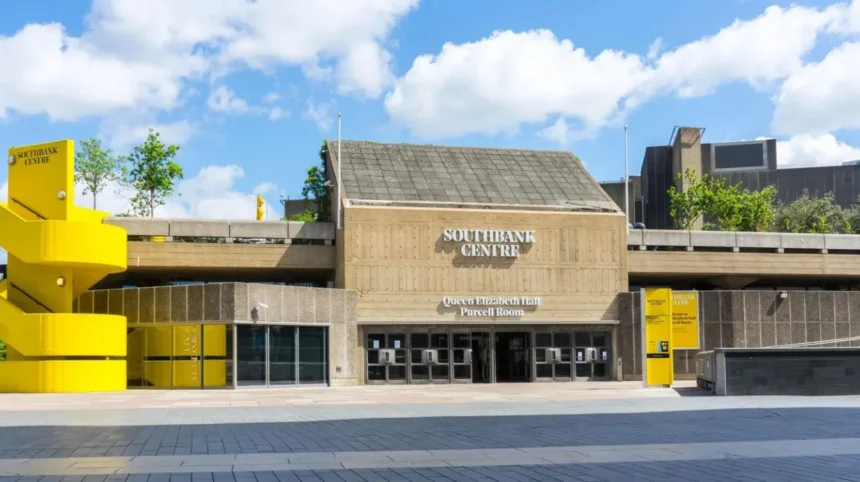
The Southbank Centre is one of the area’s principal cultural landmarks. Its buildings include the Royal Festival Hall, Queen Elizabeth Hall and Hayward Gallery. The complex developed from London’s post-war cultural ambitions, particularly the Festival of Britain in 1951, which celebrated national recovery, design and innovation after the Second World War.
Although these buildings are not all monuments in the conventional sense, they form part of the area’s commemorative and architectural landscape. Their post-war design provides evidence of changing ideas about public culture and urban regeneration.
Jubilee Gardens, beside the London Eye, offers another useful stopping point. The landscaped public space was established in connection with the Silver Jubilee of Queen Elizabeth II in 1977 and later redeveloped. Its setting provides an accessible place to appreciate the relationship between public space, commemorative occasions and the modern riverside.
Visitors should distinguish between permanent monuments, temporary public artworks and buildings with historical significance. These categories serve different purposes, but together they help explain how the South Bank developed into a major destination for public culture.
A useful walking approach is to follow the riverside promenade, identify permanent artworks and commemorative features, and then explore the cultural buildings nearby. This route keeps the journey manageable while providing several perspectives on London’s development.
What Can Visitors Learn from the Imperial War Museum’s Memorial Collections?
The Imperial War Museum in Lambeth documents the experiences and consequences of modern conflict through exhibitions, historical objects, personal testimony and commemorative displays. Its collections help visitors understand military history, civilian experiences and the continuing significance of remembrance in Britain.
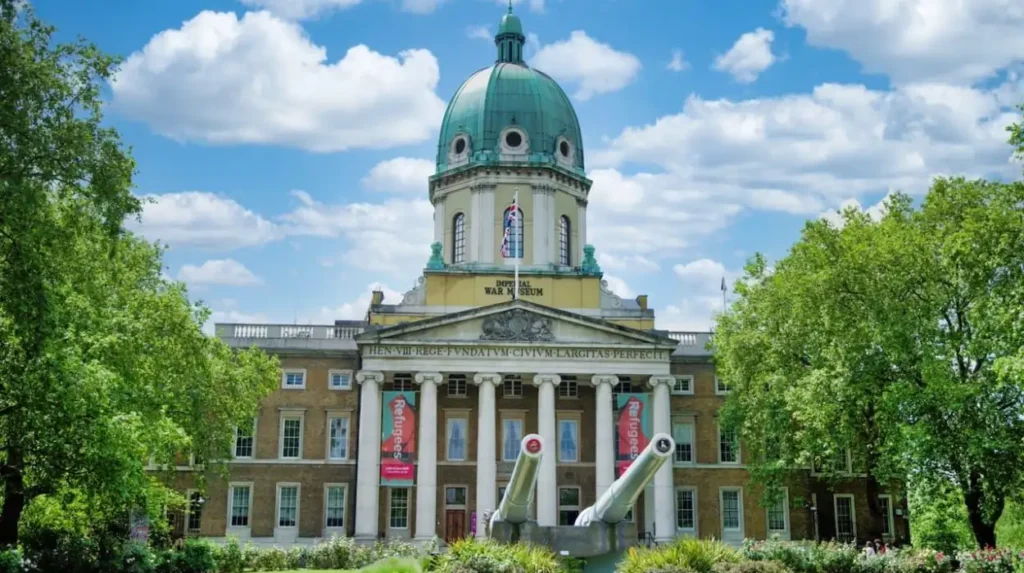
The Imperial War Museum London stands in the former Bethlem Royal Hospital building at Lambeth Road. The museum was established during the First World War and opened in 1917. Its purpose was to record Britain’s wartime efforts and the experiences of people affected by conflict.
The institution has expanded its remit to cover conflicts involving Britain and the Commonwealth from the First World War onwards. Its exhibitions explore military operations, civilian life, persecution, displacement and the long-term consequences of warfare.
The museum is not simply a collection of outdoor monuments. It is an important destination for understanding the historical background behind war memorials across Lambeth and the rest of London. Visitors can examine the evidence, personal accounts and historical context that give commemorative structures their meaning.
The building itself also contributes to the experience. Its monumental exterior and prominent position distinguish it within the surrounding streetscape. Inside, the museum presents historical material through displays that connect individual experiences with larger political and social developments.
Visitors interested in public remembrance should consider how memorials differ from museums. A memorial typically offers a fixed place for commemoration, reflection or ceremonies. A museum provides a broader interpretation of historical events through curated evidence and educational displays.
Combining a visit to the Imperial War Museum with nearby historic streets creates a stronger understanding of how London remembers conflict. Check the museum’s official visitor information for current opening times, exhibitions and access arrangements before travelling.
How Does Lambeth Palace Connect Visitors with London’s Religious History?
Lambeth Palace connects visitors with London’s religious and political history through its role as the historic London residence of the Archbishop of Canterbury. Its buildings, grounds and architectural features illustrate the longstanding relationship between the Church of England and national public life.
Lambeth Palace stands beside the River Thames, close to Lambeth Bridge. It has served as the London residence of the Archbishop of Canterbury for centuries. The archbishop is the senior bishop of the Church of England and a leading figure in the worldwide Anglican Communion.
The palace’s origins reach back to the medieval period. Its historic buildings reflect successive phases of construction, adaptation and restoration. The complex includes architectural features associated with different periods, making it relevant to visitors interested in religious heritage and historic buildings.
The Mortlake Tapestries, historic collections and palace library are among the elements associated with its heritage. Access to the interior is not equivalent to visiting an ordinary public monument, however. The palace remains a working residence and institutional site, so access depends on tours and other arrangements.
Its position opposite Westminster creates an important geographical connection. Visitors can examine how religious institutions developed alongside royal, parliamentary and civic centres on the Thames. The relationship between these locations reflects the role of the river in London’s political and institutional history.
Lambeth Palace also illustrates the difference between a historic landmark and a commemorative monument. A palace is a building with an ongoing function and accumulated historical importance. Its significance comes from the people, events and institutions associated with it rather than from a single memorial purpose.
As you explore the modern riverside, you are crossing a landscape shaped by centuries of religious and civic development. Read the full [history of Lambeth and its historic landmarks] to understand how the borough evolved around the Thames.
Visitors should check official palace information before planning an interior visit. Even when access is unavailable, the surrounding riverside provides a useful setting for understanding the palace’s location and historical role.
Where Can Visitors Find Memorials Celebrating African and Caribbean History in Lambeth?
Windrush Square in Brixton is a key destination for exploring African and Caribbean heritage through public monuments. Its African and Caribbean War Memorial, Cherry Groce Memorial Pavilion and proximity to Black Cultural Archives connect commemoration with migration, military service, equality and community history.
Windrush Square lies beside Brixton’s principal cultural and civic spaces. It is open to the public throughout the day and provides a useful starting point for understanding how Lambeth’s public landscape reflects the experiences of Black communities in Britain.
The African and Caribbean War Memorial commemorates African and Caribbean service personnel who fought in the First and Second World Wars. It recognises contributions that are not always fully represented in conventional accounts of British military history.
The Cherry Groce Memorial Pavilion commemorates Cherry Groce, who was shot by police during a raid on her Brixton home in 1985. Her death became a significant event in the history of policing, racial justice and community relations in Britain. The pavilion was installed in 2021 and designed by architect Sir David Adjaye.
The nearby Black Cultural Archives preserves and shares the histories of African and Caribbean people in Britain. Its presence strengthens the historical context of Windrush Square, allowing visitors to connect a physical memorial with wider documentary, cultural and community records.
These landmarks demonstrate that public commemoration extends beyond military and royal figures. It also recognises individuals and communities whose experiences have shaped public debates about equality, identity and justice.
Visitors should take time to read the memorial information and consider the historical circumstances behind each dedication. The square is especially suitable for visitors exploring Black British history, migration and the development of Brixton’s cultural identity.
What Can Visitors Discover at Stockwell Memorial Gardens?
Stockwell Memorial Gardens brings together a First World War memorial, a mural commemorating Violette Szabó and other local wartime casualties, and the Bronze Woman sculpture. The small public garden provides a concentrated introduction to military remembrance and Black Caribbean women’s contributions.
Stockwell Memorial Gardens is situated beside Stockwell Underground Station on South Lambeth Road. The garden was originally laid out in 1920, and its central white-stone memorial commemorates local people who died during the First World War of 1914–1918.
The garden’s combination of memorials and public art allows visitors to explore different forms of remembrance within a compact space.
One important feature is the mural dedicated to Violette Szabó, a British wartime agent who served with the Special Operations Executive during the Second World War. Szabó undertook dangerous missions in occupied France and was captured by German forces. She was executed at Ravensbrück concentration camp in 1945 and received the George Cross posthumously.
The mural, unveiled in 2001, commemorates Szabó alongside other Stockwell residents who died during the Second World War. Its setting connects an internationally recognised wartime figure with the experiences of the local community.
Another significant feature is the Bronze Woman statue, created by sculptor Aleix Barbat and inspired by Cecile Nobrega’s poem Bronze Woman. Unveiled on 8 October 2008, the sculpture pays tribute to Black Caribbean women. It adds a distinct cultural dimension to a site traditionally associated with military commemoration.
The garden illustrates how public monuments can serve several purposes at once. The war memorial records loss, the mural preserves wartime history, and the sculpture recognises cultural identity and women’s experiences.
Stockwell Memorial Gardens is particularly convenient for visitors who want to explore local heritage without spending several hours at a museum. Lambeth Council lists the garden as open to the public 24 hours a day, although visitors should remain considerate of people using the space for quiet reflection.
How Do Lambeth’s War Memorials Explain Local Experiences of Conflict?
Lambeth’s war memorials connect national conflicts with the experiences of individual neighbourhoods. Stockwell Memorial Gardens, Streatham Memorial Gardens and the civilian memorial at Lambeth Cemetery record military sacrifice and civilian deaths, showing how war affected communities across the borough.
War memorials are structures or designated places that commemorate people who died or served during armed conflicts. In Britain, many local memorials were established following the First World War, when communities sought permanent ways to record the names of those who had died.
Lambeth contains memorials that reflect different aspects of this tradition.
Streatham Memorial Gardens, near Streatham Common, contains a First World War memorial designed by Alfred Toft. The monument features a square white-stone column topped by a life-sized bronze soldier. The gardens also contain a civilian memorial unveiled in 2006, dedicated to people from or living in Streatham affected by war and conflict.
The Lambeth Civilian War Memorial is located in Lambeth Cemetery on Blackshaw Road. Erected in 1952 and listed at Grade II, it commemorates Lambeth civilians who died during the aerial bombardment of London in the Second World War and were buried at the site. Historic England records its architectural and historical significance, including its Portland-stone construction and memorial wall.
These memorials differ in their focus. Military memorials typically recognise service personnel, while civilian memorials document the effects of conflict on people outside the armed forces. Examining both categories helps visitors understand the broader consequences of war.
The locations also show how remembrance operates at neighbourhood level. A memorial in a local garden serves residents who encounter it during everyday activities, while a cemetery memorial preserves the connection between remembrance, burial and community history.
Visitors should look for inscriptions, dates, names and the materials used in construction. These details help identify when a memorial was created, whom it commemorates and how its designers intended people to engage with it.
How Does Lambeth Address the History Behind Its Statues and Street Names?
Lambeth addresses contested public history through research and community engagement examining monuments, memorials, street names and buildings associated with slavery and colonialism. The Lambeth United review provides historical context for understanding why some commemorations remain subjects of public discussion.
Public monuments are not neutral records of the past. Their subjects, inscriptions and locations reflect decisions about which people and events deserve public recognition. Later generations can reassess these decisions when new historical evidence or changing social values alter how a figure is understood.
In 2020, Lambeth Council initiated a review of locations with direct or indirect historical links to the transatlantic slave trade and colonialism. The work was supported by Lambeth Archives and developed in response to renewed public debate following the Black Lives Matter protests.
The review identified street names, statues, tombs and memorials connected to individuals who participated in the slave trade, profited from it or had relevant family and commercial connections. Its findings demonstrate the importance of examining the economic and political relationships behind historic public figures.
This approach does not mean that every historic monument has the same relationship with slavery or colonialism. Each site requires specific evidence. A responsible visitor should distinguish between documented historical involvement, indirect connections and later interpretations.
The council’s work also reflects a wider heritage-management approach often described as retaining and explaining. Under this approach, interpretation provides context about a monument’s subject, historical circumstances and contested legacy rather than relying solely on the original dedication.
For visitors, this makes Lambeth’s monuments useful for understanding how historical knowledge changes. A statue can provide evidence about the period in which it was erected, the individual it commemorates and the values promoted by its sponsors. Research into its subject can then reveal parts of the past omitted from the original inscription.
Lambeth Archives and the council’s published review are valuable starting points for further research. Visitors interested in this subject should consult original historical records and institutional explanations rather than drawing conclusions from a monument’s appearance alone.
Which Other Historic Monuments and Memorial Sites Are Worth Exploring in Lambeth?
Visitors exploring beyond the South Bank and Brixton can discover historic monuments in church gardens, local memorial spaces and older neighbourhoods. St Matthew’s Church Gardens in Brixton and the historic tombs around Lambeth’s religious sites provide additional opportunities to explore local history.
St Matthew’s Church Gardens, on Brixton Hill, surrounds a historic church opened in June 1824. The church was one of four Waterloo churches in Lambeth dedicated to the Evangelists. The surrounding grounds originally formed part of Rush Common, an area of open land associated with the historic Manor of Lambeth.
The churchyard closed to burials in 1853 and was subsequently developed as a public garden. It contains an ornamental fountain, mature trees, seating and a stone monument erected in 1825 in memory of Richard Budd, who lived from 1748 to 1824. The site connects religious architecture, burial history and public green space.
This type of location offers a different experience from a large commemorative square. Church gardens preserve evidence of local history within spaces that continue to serve the public. Their monuments also reveal how memorial practices developed before the large wave of First World War commemoration.
Visitors interested in older burial monuments should also investigate historical records for St Mary’s Churchyard and other religious sites. Lambeth Council’s research identifies the tomb of Captain William Bligh at St Mary’s Churchyard on Lambeth Road among the sites with historical connections to the transatlantic slave trade and colonial history. The associated records provide context for researching his life and legacy.
When visiting churchyards, check access arrangements and respect active places of worship. Some historic burial grounds are freely accessible, while others have restricted opening times or limited public access.
How Can Visitors Plan a Walking Route Around Lambeth’s Public Monuments?
Visitors can explore Lambeth’s public monuments by grouping nearby landmarks into neighbourhood walks. A South Bank route suits riverside sightseeing, a Brixton route focuses on African and Caribbean heritage, and a Stockwell route combines wartime remembrance with public sculpture.
Planning a route by neighbourhood reduces unnecessary travel and provides more time to examine individual monuments. Lambeth’s attractions are spread across a large borough, so attempting to visit every site on foot in one outing is impractical.
Three routes provide a useful framework.
South Bank and Lambeth riverside: Start near the Southbank Centre and follow the riverside towards Lambeth Bridge. Continue towards Lambeth Palace, checking access arrangements if you plan to visit the historic interiors. This route combines cultural architecture, riverside history and religious heritage.
Brixton heritage walk: Begin at Windrush Square, examine the African and Caribbean War Memorial and Cherry Groce Memorial Pavilion, and visit the nearby Black Cultural Archives. Allow time to read the memorial information and explore the area’s wider cultural history.
Stockwell and local remembrance: Start at Stockwell Memorial Gardens beside Stockwell Underground Station. Examine the First World War memorial, the Violette Szabó mural and the Bronze Woman sculpture. Extend the journey towards Brixton if you want to explore further examples of public commemoration.
Streatham offers another option for visitors interested in local war memorials. Streatham Memorial Gardens provides a separate destination focused on military and civilian remembrance.
Travel between these neighbourhoods using the London Underground, buses or National Rail where appropriate. Check Transport for London’s journey planner before travelling, particularly if your route involves several borough locations or planned station closures.
A useful visit plan also distinguishes between outdoor monuments and attractions with interior access requirements. Public gardens such as Windrush Square and Stockwell Memorial Gardens offer straightforward outdoor visits. Museums and historic institutions operate according to their own opening times and visitor policies.
Explore More Area Guide
Lambeth Postwar Reconstruction: Key Sites and History
Lambeth Public Services: Landmarks, History and Visitor Guide
What Should Visitors Know Before Photographing and Visiting Lambeth’s Monuments?
Visitors should check access arrangements, opening times and photography rules before exploring Lambeth’s monuments. Most outdoor memorial spaces are accessible for ordinary sightseeing, but historic buildings, museums and active religious sites have separate visitor arrangements and expectations.
Outdoor monuments provide opportunities for photography, historical observation and quiet reflection. Visitors should avoid climbing on memorial structures, obstructing inscriptions or disturbing people using memorial gardens for remembrance.
Photography is generally straightforward in public outdoor spaces, but restrictions apply at some institutions and during certain events. Check the rules displayed at the site before photographing indoor collections or private premises.
Accessibility also differs between locations. Pavements, crossings and riverside paths provide much of the walking infrastructure, but uneven historic surfaces, steps and busy junctions affect individual journeys. Visitors with mobility requirements should review access information for each destination before setting out.
Allow enough time to read inscriptions and interpretive panels. Dates, names and dedication texts often provide the most direct evidence about the purpose of a monument. Combining these details with reliable historical sources produces a more accurate understanding than relying on visual appearance alone.
For research, prioritise Lambeth Council, Lambeth Archives, Historic England, the Imperial War Museum and the official information provided by historic institutions. These organisations offer documentation about heritage sites, commemorative structures and the historical figures associated with them.
Why Do Lambeth’s Public Monuments Matter to Modern Visitors?
Lambeth’s public monuments matter because they preserve evidence of military sacrifice, religious institutions, cultural identity and contested historical legacies. They also show how communities interpret their past through public spaces, making monuments valuable destinations for education, heritage tourism and local discovery.
The borough’s commemorative landscape reflects several interconnected histories. War memorials record the impact of international conflicts on local residents. Windrush Square celebrates African and Caribbean contributions while commemorating experiences of injustice. Lambeth Palace preserves the history of a major religious institution, while historic church gardens retain evidence of earlier burial and community practices.
These sites also demonstrate that public history is continually interpreted. The Lambeth United review shows how residents, historians and public authorities examine the relationship between historic commemoration and the legacies of slavery and colonialism. Such discussions influence how future generations understand monuments and the people they represent.
For tourists, the value of exploring Lambeth lies in connecting individual landmarks with the wider urban landscape. A monument becomes more informative when visitors understand its location, historical purpose and relationship with surrounding buildings or communities.
Residents can use the same approach to discover overlooked heritage close to home. Business travellers with limited free time can focus on the South Bank or a single neighbourhood, while longer-stay visitors can explore Brixton, Stockwell and Streatham separately.
Lambeth’s monuments therefore provide more than a sightseeing checklist. They offer a practical way to examine London’s changing social, cultural, religious and political history through the public spaces where that history remains visible.
What are the most important public monuments in Lambeth?
Important landmarks include the African and Caribbean War Memorial at Windrush Square, the Cherry Groce Memorial Pavilion, Stockwell Memorial Gardens’ war memorial, the Bronze Woman sculpture and Lambeth’s historic religious landmarks.