Key Points
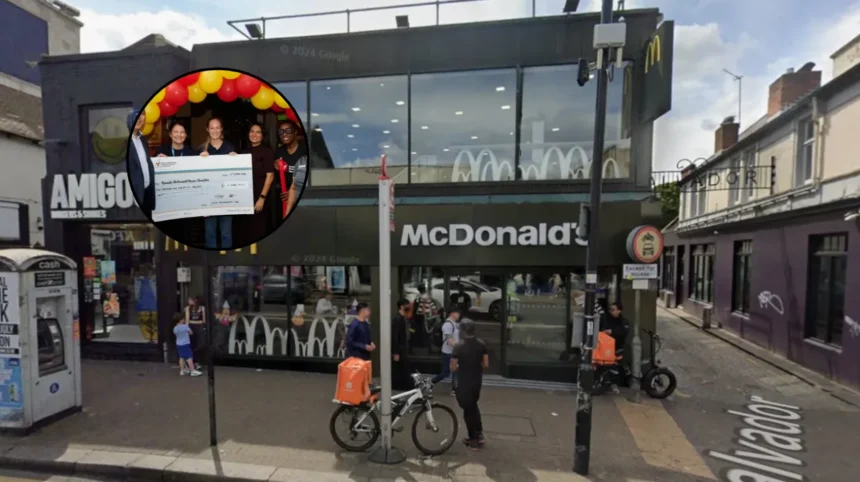
- The McDonald’s branch located at 42-44 Mitcham Road in Tooting, South London, has officially reopened following an extensive interior and operational redesign.
- The local restaurant is owned and operated by franchisee Surjit Manger.
- As part of the reopening celebrations, franchisee Surjit Manger made a personal donation of £2,026 to Ronald McDonald House UK.
- Key structural modifications include the complete removal of the traditional front counter and the creation of dedicated ordering areas.
- The redesign introduces separate facilities for dine-in customers and delivery couriers to streamline traffic and improve efficiency.
- Digital sales integration has been enhanced through dedicated ordering points and full synchronization with the McDonald’s App.
- The crew room dedicated to staff has been overhauled to provide a more comfortable environment for employee breaks.
- Ground floor seating remains limited while the upstairs dining section undergoes final works, with a full reopening scheduled for 23 October.
Tooting (South London News) October 17, 2026 — The landmark McDonald’s restaurant in Tooting, South London, has officially reopened its doors to the public following the completion of a major interior refurbishment and structural redesign. Situated at 42-44 Mitcham Road, the heavily frequented establishment has been overhauled to modernize customer service operations, integrate digital ordering systems, and optimize space for both dine-in patrons and third-party delivery couriers. In conjunction with the branch reopening, local franchise owner Surjit Manger marked the occasion by pledging a personal financial contribution of £2,026 to Ronald McDonald House UK, a national charity providing free accommodation and emotional support to families with children receiving hospital treatment.
- Key Points
- What Specific Structural Changes and Technological Features Were Introduced in the Layout?
- How Does the Restaurant Refurbishment Impact Customer Access and Seating Arrangements?
- What Role Does the £2,026 Franchisee Donation Play for Ronald McDonald House UK?
- Background of the Development
- Prediction: How This Development Can Affect Local Consumers, Restaurant Staff, and Delivery Couriers
As reported by Ezekiel Bertrand of London Now, the physical architecture of the restaurant has undergone a comprehensive transformation as part of the fast-food chain’s broader modernizing initiative across the United Kingdom. The most prominent structural change inside the premise involves the complete removal of the traditional long front counter. In its place, dedicated ordering stations and streamlined collection zones have been integrated to facilitate a smoother, more organized flow of foot traffic. According to reporting by London Now, the company stated that these layout modifications were engineered to make significantly better use of the building’s internal square footage while maximizing the space allocated for customer dining.
What Specific Structural Changes and Technological Features Were Introduced in the Layout?
The redesigned restaurant floor reflects an industry shift toward multi-channel order processing, accommodating walk-in diners, mobile app users, and third-party delivery services simultaneously. Under the new floor plan, distinct zones have been mapped out to prevent congestion in high-traffic sections of the establishment. The traditional walk-in option remains fully operational for customers who prefer face-to-face ordering or cash transactions, but the operational focus heavily incorporates digital self-service kiosks and direct ordering via the official McDonald’s App.
A major feature of the refurbishment is the clear separation of customer spaces from delivery operations. Dedicated facilities have been built specifically for delivery couriers collecting orders for delivery platforms. By routing courier collections away from the main dining floor, the architectural changes aim to reduce queuing bottlenecks, lower ambient noise, and preserve a comfortable dining environment for sit-in visitors.
Beyond the public-facing areas, the site refurbishment extended to employee facilities. The internal crew room underwent a full redesign aimed at improving working conditions for on-site staff during break periods.
In a public statement regarding the re-opening, franchisee Surjit Manger stated:
“I’m proud to reinvest in our Tooting restaurant! The dining area is more contemporary, and we now have separate facilities for our dine-in customers and our couriers, leading to a better experience for everyone. It’s exciting to see the fresh new look and feel of our Tooting restaurant, and I’m confident the changes will not only benefit our customers but also our restaurant team, as these will help make their jobs a little easier.”
How Does the Restaurant Refurbishment Impact Customer Access and Seating Arrangements?
While the restaurant is actively trading, the physical rollout of the premises is being completed in phased stages. As reported by local news outlet Tooting Newsie, the ground floor is currently open to handle takeaway and limited eat-in service, operating under operating hours of 5:30 am to 2:00 am Sunday through Thursday, and extending from 5:30 am to 3:00 am on Fridays and Saturdays.
However, full seating capacity has not yet been restored. The restaurant’s primary upstairs dining area remains closed while contractor teams finalize interior adjustments. According to details published by London Now and confirmed by Tooting Newsie, the upstairs seating floor is scheduled to fully reopen to the public on Friday, 23 October. Until that date, ground floor seating remains limited, though full takeaway, delivery, and digital mobile orders are active.
What Role Does the £2,026 Franchisee Donation Play for Ronald McDonald House UK?
The charitable donation made by Surjit Manger directly links the Tooting franchise’s commercial refresh with local community support initiatives. Ronald McDonald House UK operates as an independent charity providing free “home away from home” accommodation to families with sick children staying in nearby hospitals across the country.
As noted in reporting by London Now, the charity explained that its housing provisions help families avoid substantial hotel accommodations and long-distance travel costs during prolonged pediatric medical treatments, allowing parents to remain close to their hospitalized children. In 2025 alone, the charity supported 8,488 families across its UK locations. The financial contribution of £2,026 directly supports the maintenance and operational running costs of these accommodation houses.
Background of the Development
The reopening of the Tooting branch represents a single site deployment of McDonald’s nationwide capital expenditure strategy, known globally as the “Convenience of the Future” upgrade program. Launched across the United Kingdom and Ireland, this multi-million-pound initiative was designed in response to dramatic shifts in consumer dining habits over the past decade—specifically the rapid growth of mobile ordering, self-service digital kiosks, and third-party delivery apps such as Just Eat, Uber Eats, and Deliveroo.
Historically, traditional McDonald’s layouts were constructed around a centralized front counter where all customer interactions—ordering, payment, assembly, and collection—occurred in a single line. As delivery orders surged alongside in-branch digital kiosks, the traditional counter model frequently experienced operational friction, leading to crowded waiting areas where dine-in guests, takeaway buyers, and delivery couriers competed for floor space.
To resolve these physical constraints, McDonald’s initiated a systematic rollout to refit hundreds of high-street and drive-thru branches across Britain. The design framework prioritizes functional division: removing central counters, installing specialized kitchen assembly lines geared toward instant digital order routing, creating separate pick-up windows for couriers, and building modern customer dining areas. Franchisees across the UK, who operate over 80 per cent of the brand’s national footprint, personally co-invest in these store upgrades to ensure high-street sites adapt to modern retail logistics.
Prediction: How This Development Can Affect Local Consumers, Restaurant Staff, and Delivery Couriers
Impact on Local Consumers and High-Street Diners
For local residents and visitors in Tooting, the operational changes will alter the physical ordering routine. Diners who sit down inside the restaurant will experience a less congested environment due to the removal of courier queues from the main seating zones. Order accuracy and service speed are anticipated to increase as kitchen logistics are streamlined by digital routing systems. However, during peak hours, visitors accustomed to traditional face-to-face service may experience a adjustment period as the branch leans heavily into self-service screens and app-based interactions. The temporary restriction of upstairs seating until 23 October will briefly limit total indoor capacity, but long-term capacity will expand once full access is restored.
Impact on Restaurant Employees and Kitchen Staff
For the store workforce managed by Surjit Manger, the ergonomic layout changes are designed to reduce operational stress and physical friction. The introduction of distinct assembly zones allows crew members to focus on dedicated channels (such as delivery packing versus dine-in service) without intersecting unexpectedly behind the counter. Additionally, the upgraded staff crew room provides enhanced rest space, which can positively influence workforce retention, employee morale, and shift comfort in a high-volume quick-service environment.
Impact on Third-Party Delivery Couriers and Local Gig Logistics
Delivery drivers operating across South London will experience dedicated facilities built to handle order handoffs. Separate courier entrances and pickup counters reduce time spent waiting inside crowded dining areas, enabling faster order turnarounds and higher delivery turnover per shift. This infrastructural isolation also reduces potential conflicts between couriers and dine-in patrons during high-demand meal hours, creating a more professional workspace for gig economy workers operating in the Tooting area.