Key Points
- Lewisham councillor and Disabled People’s Champion, Maria McKenna, was forced to push herself home in her electronic wheelchair for over an hour in temperatures exceeding 30°C following a service breakdown in the Taxicard scheme.
- The incident took place on July 29 after Cllr McKenna attended a council meeting, turning what should have been an 11-minute taxi ride into a severe ordeal.
- After waiting one hour and 40 minutes, an Addison Lee vehicle arrived that was entirely unsuitable for her wheelchair mobility needs, while attempts to secure an Uber Access vehicle also proved unsuccessful.
- A spokesperson for London Councils attributed the incident to an administrative error on Cllr McKenna’s account following an investigation by scheme provider ComCab London.
- Mayor of Lewisham, Liam Shrivastava, voiced deep concern over the event and questioned whether there are sufficient wheelchair-accessible vehicles operating across the capital.
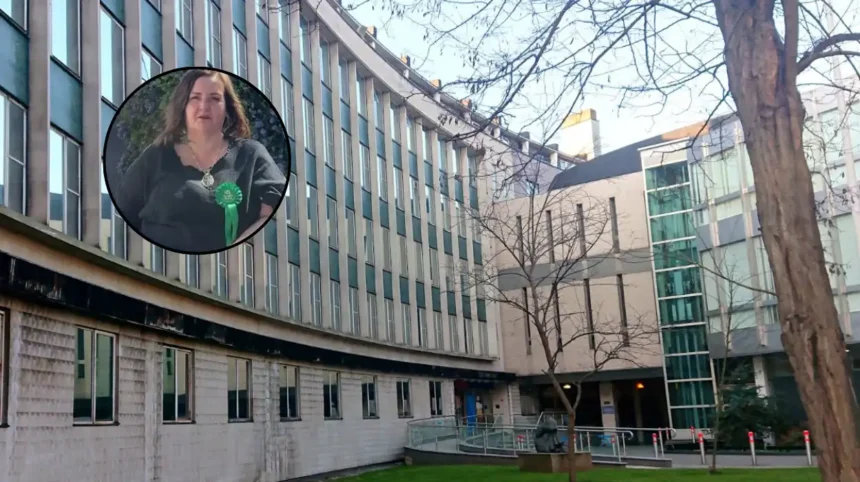
Lewisham (South London News) August 11, 2026 — A disabled local representative was left stranded in tears and forced to self-propel her electronic wheelchair home in temperatures topping 30°C after London’s subsidised transport scheme failed to provide an accessible vehicle. As reported by Ruby Gregory of MyLondon (via the Local Democracy Reporting Service), Lewisham councillor and Disabled People’s Champion, Maria McKenna, endured a gruelling hour-long journey on July 29 following official council business. The journey would ordinarily have taken 11 minutes by car.
- Key Points
- What Led to Councillor Maria McKenna Being Stranded?
- How Have London Councils and Scheme Operators Responded?
- What Are Local Leaders Saying About Transport Accessibility?
- Background of Transport Accessibility Schemes in London
- Prediction: How This Development Will Affect Disabled Travelers and Transport Operators
What Led to Councillor Maria McKenna Being Stranded?
According to reporting by Ruby Gregory of MyLondon, Cllr McKenna had arranged transport via the Taxicard scheme—a initiative managed by London Councils to offer subsidised door-to-door road travel for mobility-impaired residents.
Although her user profile explicitly stated her requirement for a wheelchair-accessible black cab, she was left waiting in the heat for an hour and 40 minutes. During the wait, she received repeated automated phone calls asking whether she still required the booking.
When transport finally arrived, it was an Addison Lee vehicle that could not accommodate her wheelchair. Subsequent attempts to source alternative transport through the Uber Access app failed due to a total lack of available accessible vehicles in the vicinity.
As reported by Ruby Gregory of MyLondon, Cllr McKenna stated:
“If it’s happened to me, how many other thousands of people has this happened to? How many people have got even less of a voice than what I had? There’s a lot of elderly, there’s a lot of people who are a lot more vulnerable than me.”
Feeling unwell from extended exposure to the heat and facing customer service difficulties, Cllr McKenna decided her only remaining option was to propel herself home.
How Have London Councils and Scheme Operators Responded?
As detailed by Ruby Gregory of MyLondon, a spokesperson for London Councils acknowledged concern regarding the incident within the Taxicard network, which processes over 10,000 trips every week.
According to the spokesperson for London Councils,
“Following a prompt investigation by ComCab London, the vehicle provider for the Taxicard scheme, it was established that the incorrect vehicle booking resulted from an administrative error affecting Cllr McKenna’s Taxicard account.”
The representative added:
“ComCab London has apologised and since worked with Cllr McKenna to resolve the issue. We have been assured that she received a high standard of customer service throughout.”
However, Cllr McKenna indicated that this was not an isolated occurrence, noting previous encounters with lengthy wait times, last-minute cancellations, customer service shortcomings, and general system barriers across the wider transport network.
As quoted by Ruby Gregory of MyLondon, Cllr McKenna stated:
“It’s not just Taxicard, it’s accessibility for the whole of London, I’ve had it with trains, buses and the Underground when it says it’s accessible but it’s clearly not. Now I’m a Disabled People’s Champion, I need to use my voice for the people of London.”
What Are Local Leaders Saying About Transport Accessibility?
As reported by Ruby Gregory of MyLondon, Mayor of Lewisham, Liam Shrivastava, highlighted systemic concerns raised by the incident.
Mayor Shrivastava stated:
“Disabled Londoners should be able to rely on a transport service that is safe, accessible and respectful. What happened to Cllr McKenna is deeply concerning, but my concern extends beyond one individual case.”
He further added:
“Cllr McKenna had clearly recorded accessibility requirements, yet still found herself unable to secure suitable transport home after carrying out public duties. That raises important questions about how the scheme is operating and whether enough wheelchair-accessible vehicles are available to meet demand.”
Explore More Lewisham News
Lewisham Gateway Regeneration Advances with New Council Planning Submission, Lewisham 2026
Lewisham AI Tool Maps 3,000 Sites for Housing in Lewisham 2026
Background of Transport Accessibility Schemes in London
The Taxicard scheme is funded jointly by London boroughs and Transport for London (TfL), and administered centrally by London Councils.
It provides door-to-door taxi and private hire journeys at reduced rates for Londoners who have severe mobility impairments or blindness that prevent them from using public bus or rail networks. Transport providers such as ComCab London hold operational contracts to dispatch black cabs and private hire vehicles to scheme members.
Despite municipal commitments to transport equality, London’s accessible transit infrastructure has faced ongoing pressure due to vehicle availability shortages, fleet transition costs, and technical dispatch errors.
While all traditional London black cabs are wheelchair accessible, private hire fleets (PHVs) vary significantly in accessibility features, leaving disabled passengers vulnerable when black cab supply falls short of real-time demand.
Prediction: How This Development Will Affect Disabled Travelers and Transport Operators
This high-profile breakdown in service involving an elected official is expected to trigger increased oversight and procedural scrutiny across London’s accessible transport infrastructure.
- For Disabled Travelers: The exposure of this incident is likely to push London Councils and TfL to conduct audit reviews of Taxicard account configurations, reducing dispatch errors. However, until systemic shortages of accessible vehicles during peak demand or extreme weather are solved, users may continue to encounter scheduling friction.
- For Transport Operators and Councils: ComCab London, Addison Lee, and ride-hailing services face heightened compliance pressure to ensure dispatch algorithms strictly honour accessibility tags. Local authorities are likely to demand clearer performance metrics, stricter penalties for dispatch failures, and binding guarantees regarding vehicle availability during high-temperature heat warnings.