Lambeth is one of South London’s richest areas for exploring layered history. Its heritage spans medieval ecclesiastical power, royal connections, industrial development, Victorian expansion, wartime experience, transport history, public parks and modern cultural institutions. The borough sits directly opposite Westminster across the River Thames, placing it within a landscape shaped by London’s political, religious, commercial and social development.
- What makes Lambeth historically important?
- Which medieval sites can history lovers explore in Lambeth?
- What can visitors discover at the Garden Museum?
- How does Imperial War Museum London reveal Lambeth’s modern history?
- What remains of Vauxhall Pleasure Gardens?
- Which historic neighbourhoods and buildings can visitors explore on foot?
- What can history lovers discover at Brixton Windmill?
- How should visitors plan a Lambeth history itinerary?
- Why does Lambeth’s heritage matter for the future?
- What are the key historic places to prioritise in Lambeth?
For history lovers, Lambeth is not defined by one monument. Its significance comes from the concentration of historic sites, streets, gardens, churches, museums, bridges, conservation areas and surviving architectural details. Visitors can move from a medieval palace and church to a former psychiatric hospital, an eighteenth-century pleasure garden site and a nineteenth-century windmill within the same borough.
What makes Lambeth historically important?
Lambeth is historically important because its heritage records more than 800 years of religious leadership, urban growth, transport, entertainment, industry and social change beside the River Thames. Its surviving buildings and landscapes connect medieval London with the modern South London cityscape visitors see today.
Lambeth’s location explains much of its historical importance. The River Thames provided a major transport corridor, while proximity to Westminster connected the area with national government and the monarchy. The Archbishop of Canterbury established a permanent presence at Lambeth in 1197, creating one of the borough’s most important medieval institutions. Historic England records the early development of the site and its gardens, including the construction of a Great Hall before 1234.
The borough subsequently developed through several distinct periods. Medieval Lambeth contained ecclesiastical estates and riverside settlements. Early modern Lambeth included commercial activity and entertainment. The eighteenth and nineteenth centuries brought major population growth, new roads, bridges, housing, industrial activity and public institutions.
The modern borough preserves this historical layering through its built environment. Lambeth Council currently identifies 62 conservation areas, covering approximately 30% of the borough. Conservation areas are designated because their architectural or historic interest warrants preservation or enhancement.
This protection is important for visitors because historic Lambeth is not limited to formally recognised attractions. Streets, terraces, villas, public spaces and building groups also provide evidence of earlier phases of London’s development.
The borough’s statutory listed buildings include houses, churches, monuments, offices, warehouses, railings and other structures. Listed buildings are graded according to their architectural and historic importance, with Grade I representing exceptional interest, Grade II* representing particularly important buildings and Grade II representing buildings of special interest.
For a history-focused visit, Lambeth therefore works best as a connected heritage landscape rather than a collection of unrelated attractions.
Which medieval sites can history lovers explore in Lambeth?
Lambeth Palace and the former St Mary-at-Lambeth Church provide the strongest medieval heritage experience in Lambeth, with origins reaching back to the eleventh and twelfth centuries. Their surviving towers, gardens, monuments and archaeological remains document centuries of religious and political history.
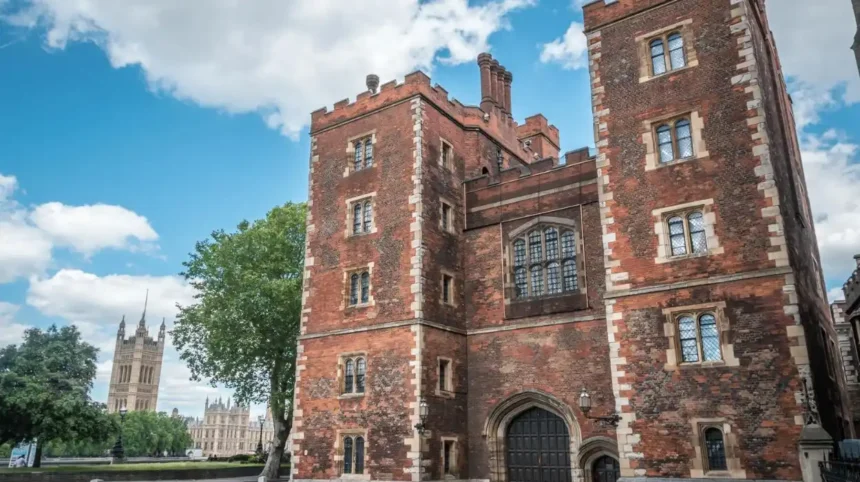
Lambeth Palace is the borough’s defining medieval heritage site. The Archbishop of Canterbury first occupied the site in 1197. Historic England records the development of the medieval palace, including an early church project, accommodation and the first Great Hall before 1234.
Today, Lambeth Palace remains the official London residence of the Archbishop of Canterbury. The Archbishop of Canterbury describes it as a working place of worship, welcome and community beside the Thames and identifies more than eight centuries of continuous heritage.
One of its most recognisable structures is Morton’s Tower, a red-brick Tudor gatehouse constructed around 1490 by Cardinal John Morton. The tower contains an audience chamber and a small former prison cell.
Another important feature is Lollards’ Tower, constructed during the fifteenth century. Its name is associated with Lollards, followers of religious reformer John Wycliffe. The tower contains a small cell and historic timberwork. The palace was also badly affected by bombing during the Second World War.
The palace grounds add another historical dimension. Historic England records the gardens as a registered historic landscape on the site of medieval gardens. Their earlier functions included food cultivation and rabbit breeding, demonstrating the practical role of medieval palace gardens.
Recent archaeological investigation has strengthened understanding of the site. During the palace refurbishment, archaeologists working with the Museum of London Archaeology identified more than 240 historic wall segments dating from the eleventh to nineteenth centuries, alongside medieval decorative fragments and remnants of medieval palace walls.
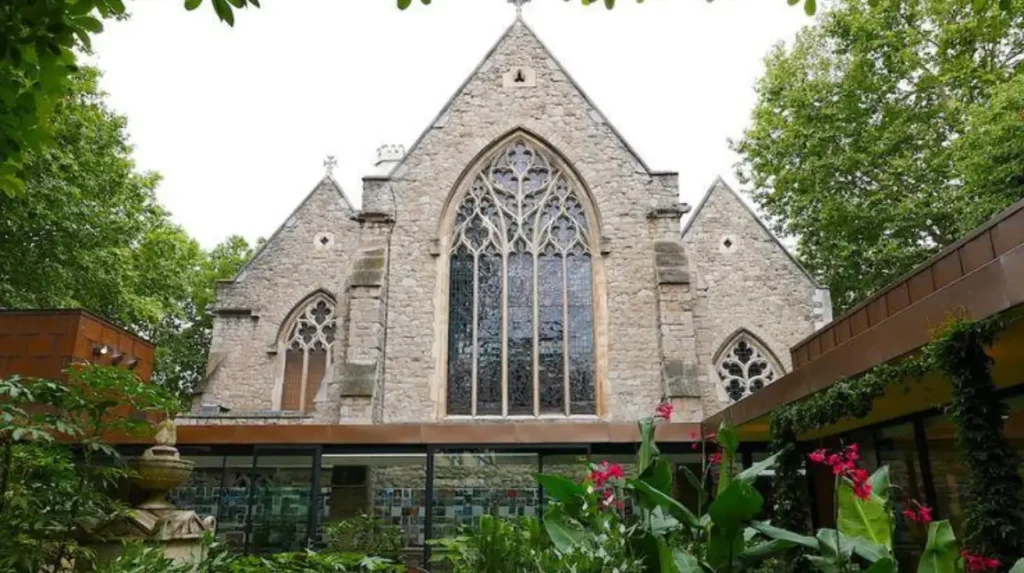
Adjacent to the palace is the former St Mary-at-Lambeth Church, now home to the Garden Museum. The Garden Museum’s historical record states that a wooden church existed on the site by 1062, while the church is mentioned in the 1086 Domesday Survey.
The church was rebuilt in stone during the medieval period. Its surviving medieval tower dates from 1377, making it the oldest surviving structure in the borough of Lambeth according to the Garden Museum. The tower was repaired in 1834–35 while retaining its medieval core.
The churchyard contains the tomb of John Tradescant the Elder, an important seventeenth-century gardener and plant collector. His burial connects Lambeth’s ecclesiastical history with the development of British horticulture and collecting.
The site also preserves monuments from the sixteenth century. The Garden Museum identifies the tombs of Hugh Peyntwyn, who died in 1504, and John Mompesson, who died in 1524, as significant examples of historic wall-monument design.
As you explore the modern Lambeth landscape, you are crossing land shaped by centuries of religious and civic development. Read about the full to understand its origins.
What can visitors discover at the Garden Museum?
The Garden Museum combines a medieval church, historic monuments, gardening collections and archival material. Its building preserves the former St Mary-at-Lambeth Church, while its exhibitions explain British garden history through objects, people, architecture, horticulture and landscape design.
The Garden Museum is one of Lambeth’s most distinctive heritage institutions. It occupies the former St Mary-at-Lambeth Church beside Lambeth Palace and describes itself as Britain’s only museum dedicated to the art, history and design of gardens.
Its historical significance extends beyond gardening. The building itself is a major heritage object. Visitors encounter medieval architecture, later alterations, historic monuments and the churchyard associated with the Tradescant family.
The museum was established in 1977 after Rosemary and John Nicholson campaigned to save the abandoned church from demolition. Their conservation campaign became an important example of historic-building preservation in London.
The museum’s collection covers British gardening history from the sixteenth century to the present. Its archive preserves working records associated with leading British garden designers from the twentieth and twenty-first centuries.
The medieval tower provides another important feature. The tower was built in 1377 and contains 131 steps leading towards the upper levels. The Garden Museum states that the tower is currently closed for maintenance and is expected to welcome visitors again later in 2026.
The building also connects Lambeth to historical views of London. Artist Wenceslaus Hollar is believed to have stood on the tower in 1647 to create his panoramic Prospect of London and Westminster.
This makes the Garden Museum particularly useful for understanding how the Thames landscape appeared before modern development transformed the surrounding skyline.
The museum also offers guided tours focused on the building’s history. Its current programme describes tours examining the transformation of the site from a place of worship into a museum, while also explaining the people and objects connected with the building.
Visitors planning a heritage itinerary should check opening arrangements before travelling. The museum publishes current opening information and access details, including routes from Lambeth North, Vauxhall and Waterloo stations.
How does Imperial War Museum London reveal Lambeth’s modern history?
Imperial War Museum London connects Lambeth with the history of modern warfare, civilian life and national memory. Its building was formerly part of Bethlem Royal Hospital, while its collections document experiences of conflict from the First World War through later twentieth-century wars.
Imperial War Museum London, commonly known as IWM London, stands on Lambeth Road within a building with a complex history of its own.
The museum was founded on 5 March 1917, while the First World War was still underway. The War Cabinet approved the creation of a national war museum to record the conflict and the experiences of people affected by it. The museum was formally established by an Act of Parliament in 1920.
The museum first opened at Crystal Palace on 9 June 1920. It subsequently moved to South Kensington before relocating to Lambeth Road in 1936. The current building was formerly the central portion of Bethlem Royal Hospital, historically known as Bedlam.
This connection gives IWM London two historical narratives. The first concerns warfare and its impact on society. The second concerns the history of mental healthcare and Bethlem Hospital.
Bethlem is recognised by IWM as the world’s oldest psychiatric hospital. Current academic research involving IWM and the University of Liverpool examines the experiences of Bethlem patients and staff during the First World War.
The building itself also experienced wartime damage. During the Second World War, IWM’s collections faced evacuation and bombing risks. A German bomb destroyed a Short seaplane in the Naval Gallery on 31 January 1941, while the building received more than 40 incendiary hits during the war.
The museum’s collections provide a broad historical record. They include objects, photographs, films, sound recordings, artworks, personal letters and other evidence documenting individual and collective experiences of conflict.
The museum therefore offers history lovers a way to examine Lambeth through the twentieth century. Its location demonstrates how existing historic buildings were adapted to serve new national purposes.
The surrounding Geraldine Mary Harmsworth Park also forms part of this historical setting. The park was created after the former Bethlem site was redeveloped, with the surviving central building becoming IWM London.
For visitors interested in social history, military history, architecture and museum development, IWM London provides one of Lambeth’s most substantial historical experiences.
What remains of Vauxhall Pleasure Gardens?
Vauxhall Pleasure Gardens preserves the location and memory of one of London’s most influential historic entertainment venues. Established in the seventeenth century, the gardens became a major centre for music, dining, visual entertainment and social activity before closing permanently in 1859.
The present Vauxhall Pleasure Gardens occupies part of the site of the original entertainment venue. Lambeth Council records that the original gardens were first laid out in 1661 and reached their greatest popularity during the early nineteenth century.
The historic gardens were commercially significant. They offered dining, visual arts and live music and attracted visitors from different social backgrounds. Historical records associate the gardens with figures including George Frideric Handel, Giacomo Casanova, Samuel Pepys and Gioachino Rossini.
The gardens developed substantially under Jonathan Tyers, who became involved in their management in the eighteenth century. Lambeth Council’s historical study records the development of the site as a centre for mass entertainment, arts and commercial activity from 1729.
Entertainment included concerts, fireworks, tightrope performances and hot-air-balloon ascents. The site also contained elaborate structures, including the famous Rotunda and Turkish Tent.
The gardens were renamed Vauxhall Gardens in 1785, when admission charges became part of the commercial model. The venue subsequently experienced changes in fashion, competition and visitor behaviour before finally closing in 1859.
The original site later underwent major changes. Housing occupied parts of the area before redevelopment after the Second World War created a public open space. The current park was subsequently restored and renamed Vauxhall Pleasure Gardens to reflect the historical identity of the location.
The entrance on Kennington Lane incorporates monumental columns and figures dressed in seventeenth-century clothing. These features deliberately reference the historic entertainment venue.
For history lovers, Vauxhall demonstrates how London’s leisure culture developed before modern theatres, cinemas and large commercial entertainment complexes became dominant.
The site also illustrates the importance of preserving historical memory where the original buildings no longer survive. The modern park does not reproduce the eighteenth-century gardens, but its location, interpretation and landscape features identify the historical significance of the land.
Which historic neighbourhoods and buildings can visitors explore on foot?
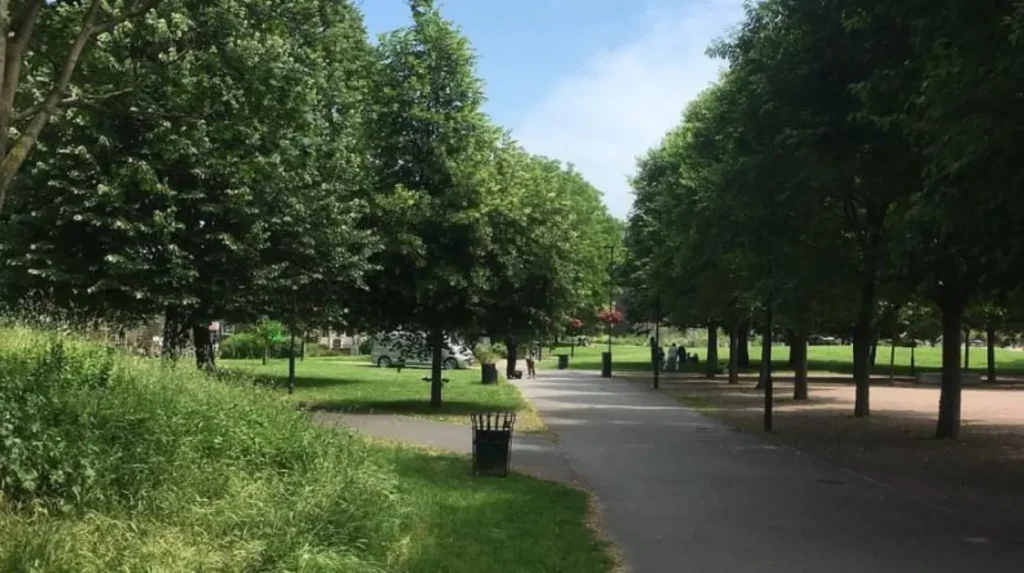
Lambeth’s historic neighbourhoods provide evidence of Victorian, Edwardian, Georgian and early twentieth-century development through terraces, villas, churches, roads, parks and civic buildings. Clapham, Kennington, Lambeth Walk, Vauxhall, Stockwell and Brixton each preserve distinctive architectural character.
Lambeth’s conservation areas are particularly useful for self-guided heritage walks. The council identifies 62 conservation areas, including Lambeth Palace, Lambeth Walk and China Walk, Kennington, Clapham, Stockwell Park, Vauxhall, Vauxhall Gardens, Brixton and Waterloo.
Clapham Conservation Area is centred on Clapham Common. It was first designated in 1968, with subsequent extensions and boundary changes. The council identifies numerous historic buildings from the eighteenth and nineteenth centuries around the common and its surrounding streets.
Clapham Common is therefore useful for understanding the relationship between historic open space and residential expansion. The surrounding streets contain evidence of nineteenth-century suburban development, while the common retains its role as a major landscape feature.
Stockwell Park Conservation Area provides a different architectural experience. The area is characterised by early nineteenth-century villas with Neo-Classical detailing. These buildings include detached, semi-detached and short terraced forms set within mature gardens.
Lambeth Walk and China Walk Conservation Area combines two contrasting historic environments. Lambeth Walk contains surviving Victorian and Edwardian terraced buildings, while China Walk contains a 1920s Neo-Georgian London County Council estate. The area was first designated in 1998.
This combination allows visitors to observe the changing approaches to urban housing across different periods. Victorian terraces reflect nineteenth-century urban growth, while the China Walk estate represents interwar municipal housing.
South Lambeth Road Conservation Area provides another historical route. It was designated in 1982 and includes South Lambeth Road and Clapham Road. Most buildings date from the nineteenth century, with notable exceptions including Stockwell Terrace, Beulah House and a war memorial.
Rectory Grove Conservation Area in Clapham contains predominantly nineteenth-century buildings, including residential properties, shops and two significant churches. The area combines the leafy character of Rectory Grove and Larkhall Rise with the more formal street pattern of Clapham Manor Street.
These areas demonstrate why Lambeth’s heritage cannot be reduced to major tourist attractions. Ordinary streets contain important evidence of housing, architecture, transport, planning and social change.
Visitors should respect residential areas when walking through conservation districts. Historic architecture remains part of the living neighbourhood rather than a museum environment.
What can history lovers discover at Brixton Windmill?
Brixton Windmill is a Grade II listed monument that preserves evidence of Lambeth’s rural and industrial past. Built in 1816 for grinding grain, it later lost operational efficiency as surrounding farmland became housing and finally ceased commercial operation in the 1930s.*
Brixton Windmill stands in Windmill Gardens on Brixton Hill. Lambeth Council identifies it as a Grade II* listed monument and records its original use for grinding corn and other cereals into flour.
The windmill was constructed in 1816, when the surrounding area contained substantial open farmland. Its original position demonstrates how different Brixton was before nineteenth-century urban expansion.
The landscape changed rapidly. By the mid-nineteenth century, surrounding cornfields had been replaced by housing. The loss of open land reduced the wind available to operate the mill efficiently.
Alternative power systems were introduced. A steam engine was installed as part of the mill’s later operational history, demonstrating the transition from traditional wind-powered production towards mechanical industrial power. The milling business finally ceased in 1934.
The site was purchased by the London County Council in 1957, when 2.5 acres containing the windmill and associated structures were acquired. The land was subsequently developed as Windmill Gardens.
Several associated buildings disappeared during the twentieth century. By the early 1960s, the bakery, outbuildings, Mill House and Mill Cottage had been demolished to create public gardens.
The windmill therefore provides a particularly clear example of landscape transformation. A building originally surrounded by farmland now stands within a densely developed part of South London.
Restoration has helped preserve the structure. Lambeth Council records restoration work involving specialist architects and contractors, while local heritage groups have supported efforts to reopen and interpret the windmill.
For visitors, Brixton Windmill connects agricultural history, milling technology, suburban growth and conservation. It also demonstrates the importance of surviving industrial structures within a modern urban environment.
How should visitors plan a Lambeth history itinerary?
A strong Lambeth history itinerary should combine major institutions with outdoor heritage sites and conservation areas. A practical sequence links Lambeth Palace and the Garden Museum with Vauxhall, IWM London, historic neighbourhoods and Brixton Windmill.
Lambeth’s heritage is spread across the borough, so visitors benefit from grouping sites geographically rather than attempting to cover every location in one continuous walk.
A central heritage route begins around Lambeth Palace Road. Lambeth Palace and the Garden Museum sit beside the Thames, creating a concentrated medieval and early modern heritage area. The Garden Museum is approximately a ten-minute walk from Lambeth North, Vauxhall and Waterloo stations according to its visitor information.
The next section can focus on Vauxhall, where the modern Vauxhall Pleasure Gardens occupy the historic entertainment-site landscape. The area also contains Vauxhall Park, which opened on 7 July 1890 after being formally opened by the Prince of Wales, later King Edward VII.
Vauxhall Park retains historic features including original path arrangements, gates and boundary features. The park therefore adds late Victorian public-park history to the older history of Vauxhall Pleasure Gardens.
A separate route can focus on Lambeth Road and IWM London. This provides a concentrated experience of twentieth-century history, museum development, Bethlem Hospital history and wartime heritage.
Visitors interested in architecture can then explore nearby conservation areas. Clapham, Stockwell and Lambeth Walk provide contrasting examples of historic residential development.
A southern route towards Brixton Windmill adds an industrial and agricultural dimension. The windmill’s 1816 construction date places it within the period when Brixton was transitioning from rural land towards suburban development.
Digital nomads and business travellers with limited free time can prioritise one compact district. Lambeth Palace, the Garden Museum and the riverside provide a concentrated heritage experience. Longer visits can add IWM London and Vauxhall.
Opening arrangements require checking before travel. Museums and historic buildings can have seasonal schedules, maintenance closures, ticket requirements or special-event restrictions. The Garden Museum, for example, publishes current access and opening information online.
Public transport is particularly practical because Lambeth is served by Underground, railway and bus connections. Walking remains valuable because many heritage features are located within ordinary streets and conservation areas.
Explore More Area Guide
Best Relaxing Parks in Lambeth South London 2026
Best Food Experiences in Lambeth: Markets & Cuisine Lambeth 2026
Why does Lambeth’s heritage matter for the future?
Lambeth’s heritage matters because historic buildings, archaeological remains, landscapes and conservation areas provide measurable evidence of London’s development. Their protection preserves architectural character, supports historical research and allows future visitors to understand how South London changed across centuries.
Heritage preservation in Lambeth is supported through several mechanisms. Statutory listing protects buildings and structures of special architectural or historic interest. Conservation-area designation protects the character and appearance of wider areas. Local listing recognises assets with local or greater architectural and historic interest.
The distinction matters because historical significance exists at different scales. Lambeth Palace represents national religious and political history. Brixton Windmill represents industrial and agricultural change. Victorian terraces document urban expansion. Former Bethlem buildings connect the borough with medical and social history.
Archaeology also continues to change knowledge of Lambeth. The discovery of more than 240 historic wall segments during Lambeth Palace refurbishment demonstrates that important evidence remains below and within the existing built environment.
Historic buildings also demonstrate adaptive reuse. St Mary-at-Lambeth became the Garden Museum after a twentieth-century conservation campaign. The former Bethlem Royal Hospital building became IWM London. These examples show how historic structures can receive new functions while retaining identifiable elements of their earlier history.
The borough’s conservation programme also protects ordinary residential environments. With conservation areas covering approximately 30% of Lambeth, heritage protection extends well beyond the best-known tourist attractions.
For history lovers, this creates a major advantage. A visit does not depend entirely on museum admission. The streets, parks, riverfront and architectural details provide historical evidence throughout the borough.
Lambeth therefore offers a chronological journey from medieval ecclesiastical power through Tudor architecture, seventeenth-century collecting, eighteenth-century entertainment, nineteenth-century industrialisation and suburban expansion, twentieth-century war and municipal development, and contemporary heritage conservation.
Its greatest historical value lies in this continuity. The borough retains physical evidence from multiple periods while remaining an active part of modern London.
What are the key historic places to prioritise in Lambeth?
History lovers should prioritise Lambeth Palace, the Garden Museum and St Mary-at-Lambeth, IWM London, Vauxhall Pleasure Gardens, Brixton Windmill and Lambeth’s conservation areas. Together, these locations cover religious, architectural, military, industrial, social, cultural and landscape history across several centuries.
Lambeth Palace provides the essential medieval starting point, with origins from 1197 and surviving structures including Morton’s Tower and Lollards’ Tower.
The Garden Museum adds medieval church architecture, the Tradescant legacy and the history of British gardens. Its medieval tower dates from 1377, while the museum itself was established in 1977 after a successful conservation campaign.
IWM London provides a different chronological focus. Its institutional history begins in 1917, while its Lambeth Road building became its permanent home in 1936. The site’s earlier association with Bethlem Royal Hospital gives it an additional medical and social-history dimension.
Vauxhall Pleasure Gardens represents the history of commercial leisure. Its origins reach back to 1661, with major development during the eighteenth century and peak popularity during the nineteenth century before closure in 1859.
Brixton Windmill provides evidence of Lambeth’s rural landscape and industrial transition. Built in 1816, it ceased milling operations in 1934 after urban development changed its operating environment.
Finally, Lambeth’s conservation areas provide the wider context. They show how housing, roads, parks and civic development transformed the borough over the eighteenth, nineteenth and twentieth centuries. The council currently recognises 62 conservation areas across Lambeth.
Together, these sites create a coherent history of South London rather than a simple list of attractions. They demonstrate how Lambeth developed through religion, government, leisure, industry, transport, housing, warfare, public institutions and conservation.
For tourists, this makes Lambeth particularly suitable for heritage-focused walking and museum visits. For residents, the same sites provide a deeper understanding of the neighbourhoods they encounter every day. For business travellers and digital nomads, compact heritage clusters provide accessible historical experiences during limited downtime.
Lambeth’s historic environment remains active rather than frozen. Palaces continue to function, museums reinterpret collections, parks remain public spaces and conservation areas protect living neighbourhoods. This combination of preserved evidence and continuing use is what makes Lambeth one of the most historically diverse destinations in South London.
What is the most historic place to visit in Lambeth?
Lambeth Palace is one of the most historically significant places in Lambeth. The site has been associated with the Archbishops of Canterbury since 1197 and contains medieval and Tudor structures, including Morton’s Tower and Lollards’ Tower.