Key Points
- Southeastern rail services have resumed operations at London Charing Cross and Waterloo East stations following a 22-day engineering closure.
- Maintenance teams replaced nearly two kilometres of 36-year-old railway track and renewed switches and crossings south of Hungerford Bridge.
- Critical structural repairs were carried out on Hungerford Bridge, including repainting steelwork and replacing wheel timbers.
- Extensive work was undertaken across all six platforms at Charing Cross, involving the removal of 540 tonnes of concrete and the installation of over 2,000 square metres of glass-reinforced plastic.
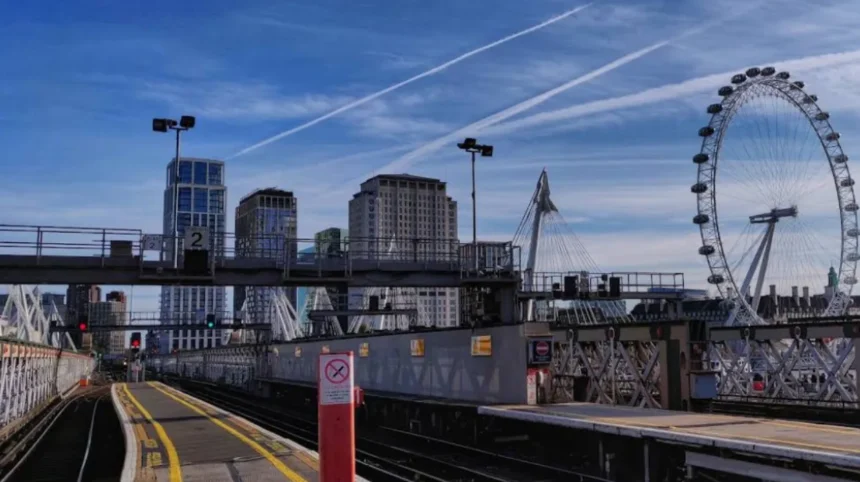
Waterloo (South London News) August 17, 2026 – Major rail hubs in central London have reopened to passenger services following the successful completion of a comprehensive 22-day engineering project. Network Rail confirmed that Southeastern rail services resumed normal schedules at London Charing Cross and Waterloo East after engineers finished overhaul works on tracks, bridges, and platform infrastructure.
Why were London Charing Cross and Waterloo East stations closed?
The temporary line closures, which commenced on Sunday 26 July, were required to allow engineering teams uninterrupted access to critical rail infrastructure leading into central London. The primary focus of the work involved replacing nearly two kilometres of 36-year-old track that had reached the end of its operational lifespan. In addition to line replacement, engineering teams replaced essential switches and crossings positioned south of Hungerford Bridge to enhance operational reliability and safety.
What structural improvements were made to Hungerford Bridge and platform infrastructure?
During the 22-day window, maintenance crews carried out specialized structural work along Hungerford Bridge. Engineers replaced the bridge’s wheel timbers—which perform the structural role of sleepers across bridge spans—and completed structural repairs before repainting targeted sections of the bridge’s steelwork. Simultaneously, major platform rebuilds were undertaken at Charing Cross station. Workers demolished sections across all six platforms, removing 540 tonnes of concrete, installing new steel support structures, and laying down more than 2,000 square metres of durable glass-reinforced plastic surfaces.
Background of the Engineering Upgrades
The infrastructure leading into London Charing Cross via Hungerford Bridge represents one of the busiest rail corridors in the South East passenger network. The 36-year-old track and associated switching systems had been subjected to decades of continuous heavy usage, requiring increased routine maintenance to prevent operational faults. Replacing aging timber supports and track assemblies over a river crossing presents unique engineering constraints, necessitating extended, continuous access that cannot be achieved during standard overnight maintenance windows. The platform reconstruction using glass-reinforced plastic reflects broader modern network standards designed to reduce future wear and minimize surface degradation.
Potential Impact on Commuters and Passenger Services
The completion of these upgrades directly benefits daily commuters and regional rail passengers traveling on the Southeastern network into central London. By replacing worn switching components and aging track, the likelihood of signal failures, track faults, and unscheduled speed restrictions south of Hungerford Bridge is expected to decrease significantly. Furthermore, the updated platform surfaces at Charing Cross provide improved safety and durability for heavy daily foot traffic, ensuring long-term operational stability across one of the capital’s essential terminus locations.