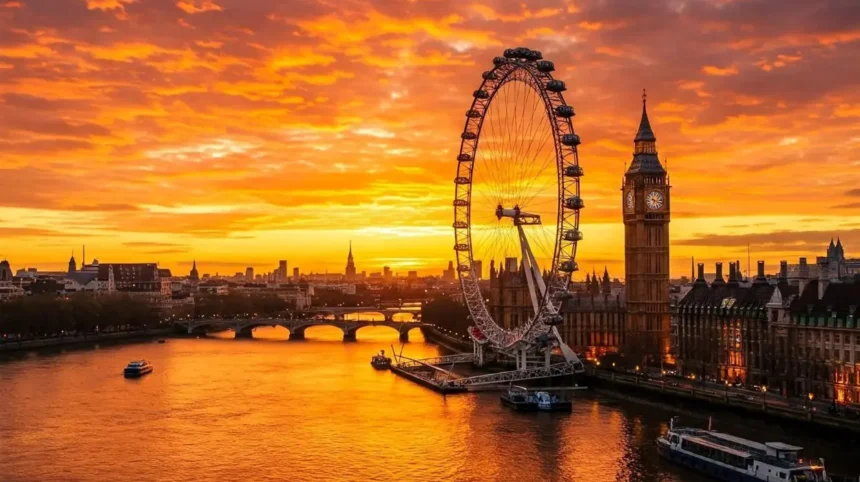
The South Bank stretch within Lambeth runs eastward from Lambeth Bridge to the boundary near Blackfriars Road. Photographers frequently utilise this zone to capture the Palace of Westminster, the Elizabeth Tower housing Big Ben, and the London Eye cantilevered observation wheel. The geographical layout places the photographer on the south side of the River Thames, ensuring optimal southern and western exposure during afternoon golden hour and blue hour sessions.
Urban planning along this corridor integrates brutalist structures, such as the Southbank Centre and the National Theatre, with historic edifices. This juxtaposition allows creators to frame modern concrete textures against Victorian gothic stonework. Furthermore, pedestrian foot traffic peaks during midday, requiring tripod setups during early morning hours between 05:00 and 08:00 GMT for clean architectural compositions. As you explore the modern site, you are crossing land with a deep heritage. Read about the full [Insert Anchor Text for History Article Here] to understand its origins.
How can photographers capture Lambeth Palace effectively?
Lambeth Palace offers historical architectural photography opportunities featuring 13th-century early English Gothic lancet windows, red-brick Tudor gatehouses, and secure courtyard settings situated directly across the river from Parliament.
Lambeth Palace serves as the official London residence of the Archbishop of Canterbury, an office established in the late 6th century. Exterior photography is accessible from Lambeth Palace Road and the alignment of Lambeth Bridge. The primary visual subject is Morton’s Tower, constructed in 1495 using imported Flemish red bricks arranged in a diaper pattern. This structure provides a rare surviving example of pre-reformation Tudor architecture in central London.
Shooting conditions require careful focal length selection. Prime lenses between 35mm and 50mm reproduce architectural proportions accurately without barrel distortion. Because the palace grounds remain private property, public access is restricted to pre-arranged tours or specific open days. Photographers must shoot from the public pavement, positioning themselves near the junction of Lambeth Road to incorporate the stone boundary walls and passing red Transport for London double-decker buses for scale.
What are the visual highlights of Brockwell Park for landscape photographers?
Brockwell Park spans 50.84 hectares of sloping south London terrain, delivering panoramic elevated vistas of the central London financial district skyline, an 18th-century Grade II listed hall, and formal walled gardens.
Brockwell Park, opened to the public in 1892, features a topographical gradient rising from 20 metres to over 60 metres above sea level. This elevation variation positions the crest near Brockwell Hall as a premier location for long-lens skyline photography. Photographers utilise telephoto focal lengths of 200mm to 600mm to compress distant corporate towers, including The Shard and the Walkie Talkie building, against foreground foliage.
The park contains 3 distinct horticultural zones: the 19th-century walled garden, ornamental ponds populated by waterfowl, and expansive meadow grass sections. Autumn and spring seasons offer distinct color palettes, with mature London plane trees and cherry blossoms framing the natural landscape. Environmental conditions, such as morning mist rising off the lido water basin, provide atmospheric diffusion ideal for landscape and wildlife photography.
Explore More Area Guide
Discover Top Outdoor Activities and Parks in Lambeth, London
Best Independent Shops and Markets in Lambeth 2026
Why is Brixton Market considered a premier street photography destination?
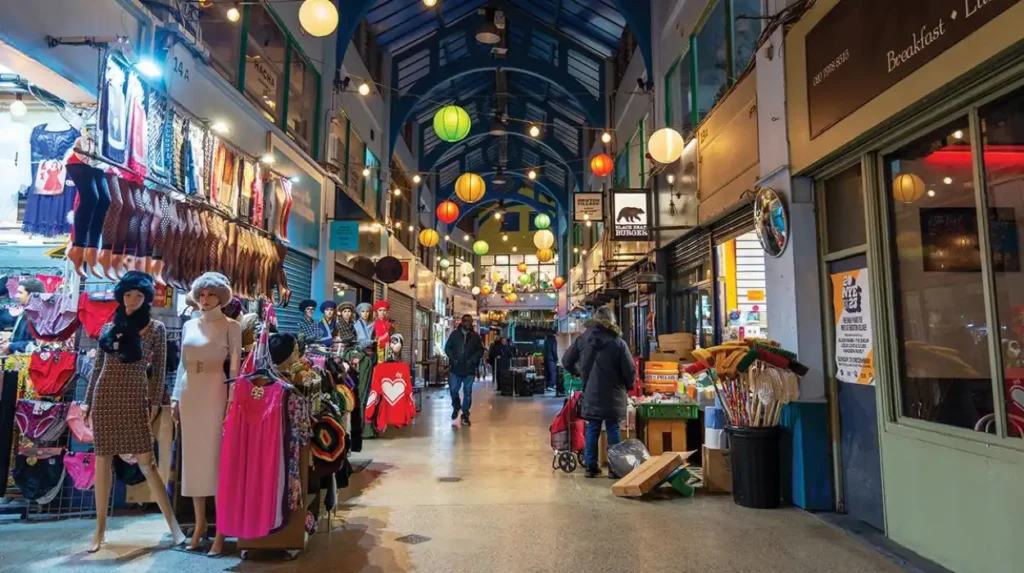
Brixton Market encompasses multi-ethnic retail arcades, vibrant outdoor street murals, and dense crowds that create an authentic documentary photography environment reflecting south London’s multicultural heritage.
Brixton Market comprises Electric Avenue, Granville Arcade, and Market Row. Electric Avenue holds historical significance as one of the first market streets in London powered by electricity, installed in 1888. Street photographers capture the dynamic interplay of neon signage, fresh tropical produce displays, and independent storefronts operated by Caribbean, African, and European traders.
The surrounding neighborhood features extensive street art documentation projects, most notably the permanent Brixton mural tribute to musician David Bowie located opposite Brixton underground station. Ethical street photography standards require respect for local vendors and patrons, with candid style framing benefiting from compact mirrorless camera bodies and fast prime lenses operating at wide apertures of f/1.8 or f/2.8 to isolate subjects from complex backgrounds.
What photographic compositions are available from Waterloo Bridge?
Waterloo Bridge spans the River Thames at a high elevation, providing symmetrical, balanced sightlines downriver toward the City of London and upriver toward the West End and Westminster.
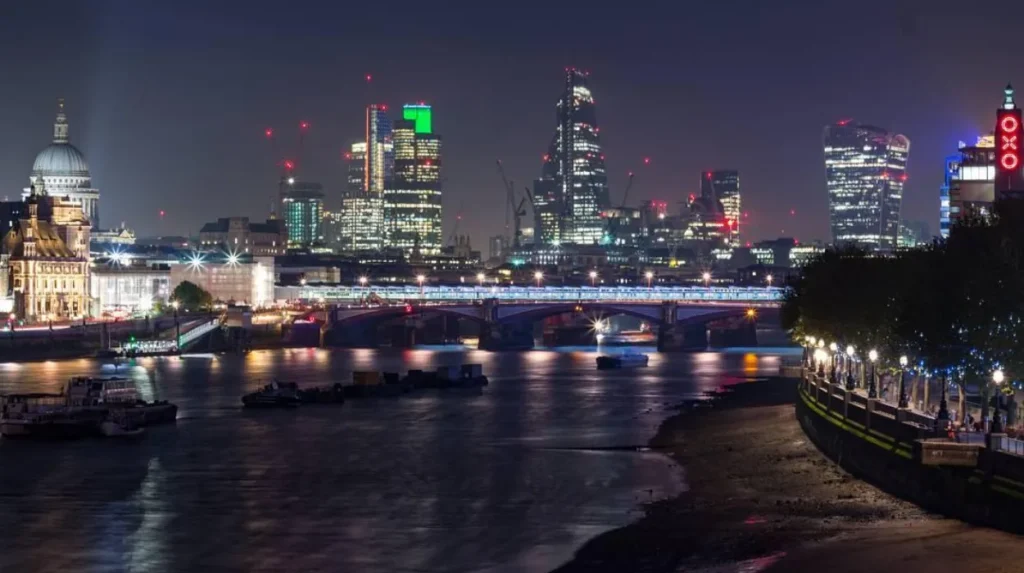
Waterloo Bridge was designed by architect Sir Giles Gilbert Scott and opened in 1945. Constructed from Portland stone and reinforced concrete, the bridge structure exhibits clean modernist lines that serve as leading lines for composition. The geographic orientation of the bridge deck provides direct alignment with the dome of St Paul’s Cathedral to the east and the London Eye to the west.
Night photography from this vantage point yields superior results due to reflections from office lighting off the tidal river surface. Long-exposure techniques utilizing neutral density filters ranging from 3 to 10 stops smooth the movement of river currents and passing Thames Clippers vessels. Photographers anchor their tripods securely against the stone parapets to counteract wind turbulence generated by open river airflow.
What are the best photography locations in Lambeth?
The best photography locations in Lambeth include South Bank, Lambeth Palace, Brockwell Park, Brixton Market, and Waterloo Bridge, offering river views, historic architecture, landscapes, street scenes, and skyline compositions.