Key Points
- Dramatic Temperature Difference: A four-bedroom, 1960s home in South London registered indoor temperatures approximately 10°C lower than the external 35°C peak without using air conditioning units.
- Decade-Long Upgrade: Architect Marion Baeli transformed the property over ten years by applying German Passivhaus thermal performance principles.
- Structural Improvements: Upgrades included insulating walls, floors, and roofs, replacing cavity walls with super-insulated timber frames, fitting triple-glazed windows, and introducing mechanical ventilation.
- Significant Financial and Energy Savings: Energy demand dropped by 88%, resulting in annual cost reductions of around £750 and allowing a single radiator to heat the entire house during winter months.
- High Retrofit Expenses: The total investment reached approximately £80,000, including £30,000 for triple glazing and £5,000 for structural airtightness.
- Operational Limits: Insulation retains temperature but cannot generate cold air; consecutive tropical nights (outdoor temperatures staying at 27°C) cause internal temperatures to equalize gradually.
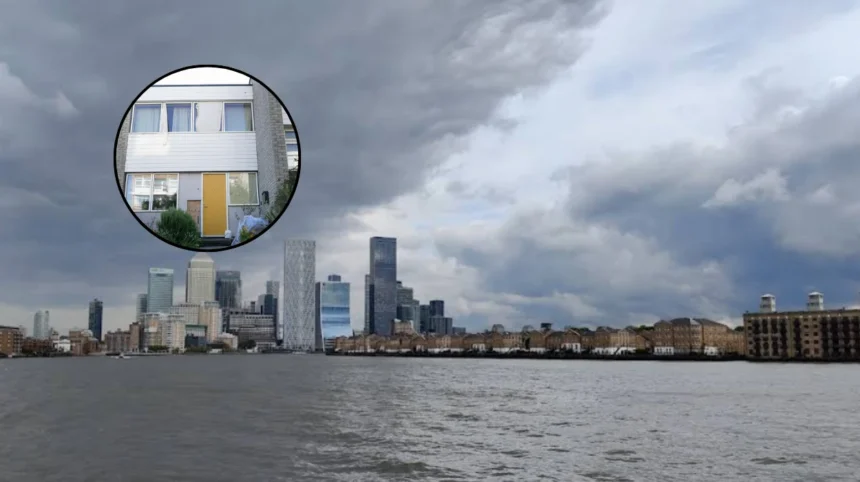
South London (South London News) August 22, 2026 – As reported by environmental reporters at the BBC, a four-bedroom, 1960s property in South London successfully maintained indoor temperatures roughly 10°C lower than the external environment during a summer heatwave reaching 35°C, operating without any mechanical air conditioning. The property, owned and adapted by professional architect Marion Baeli, operates on thermal insulation principles comparable to a vacuum flask, effectively barring external heat from penetrating the living space.
- Key Points
- How Was the 1960s South London House Adapted to Stop Extreme Heat?
- What Are the Cost and Energy Savings of a Passivhaus Retrofit?
- What Are the Operational Limits of Passive Cooling During Prolonged Heatwaves?
- Background of the Particular Development
- Prediction: How This Development Can Affect Homeowners and the UK Housing Sector
As detailed in the BBC reporting, Ms Baeli spent over ten years systematically retrofitting the ex-council property to adapt it for extreme seasonal temperature fluctuations. When her family originally took ownership, the property suffered from minimal insulation and inefficient double glazing, causing severe overheating in summer and rapid thermal loss during winter.
How Was the 1960s South London House Adapted to Stop Extreme Heat?
As reported by journalists at the BBC, Ms Baeli executed the structural transformation in gradual phases to manage costs. Initial works focused on eliminating thermal bridges—areas where heat transfers rapidly between interior and exterior surfaces—by insulating the roof, floors, and shared walls. Subsequently, sections of original cavity brick walling were removed and replaced with high-performance, super-insulated timber-framed structures.
According to the BBC coverage, the installation of advanced triple-glazed windows was critical to controlling thermal radiation, accounting for £30,000 of the total upgrade expenditure. To complement the structural envelope, the building was made thoroughly airtight at a cost of roughly £5,000, supported by a continuous mechanical ventilation system to ensure fresh air circulating without admitting external heat.
As noted by the BBC report, the property adheres closely to the Passivhaus standard—a rigorous energy-efficiency construction framework developed in Germany that prioritizes extreme insulation, airtight construction, and heat-recovery ventilation.
What Are the Cost and Energy Savings of a Passivhaus Retrofit?
As reported by the BBC, Ms Baeli stated that the comprehensive retrofitting reduced her home’s overall energy demand by 88%. This reduction yields ongoing financial savings of approximately £750 per year on utility bills.
As outlined by the BBC source, the thermal retaining qualities function equally well during colder periods. Ms Baeli noted that during winter months, a single operational radiator is sufficient to maintain comfortable temperatures across all three floors of the four-bedroom house.
However, the capital outlay required remains a significant barrier to widespread adoption. As reported by the BBC, the total retrofit expenditure amounted to approximately £80,000, excluding professional architectural design fees. Ms Baeli acknowledged that the steep cost necessitated spreading the work across a ten-year timeline.
| Retrofit Component | Estimated Financial Outlay |
| Triple-Glazed Window Units | £30,000 |
| Airtight Seals & Engineering | £5,000 |
| Insulation, Framing & Ventilation | ~£45,000 |
| Total Outlay (Excl. Architect Fees) | £80,000 |
What Are the Operational Limits of Passive Cooling During Prolonged Heatwaves?
As reported in the BBC coverage, passive insulation systems do not actively generate cold air; they merely delay thermal transfer. Occupants must maintain daily habits, such as shutting windows and lowering blinds or exterior shading during daylight hours to prevent direct sunlight from creating a greenhouse effect indoors. Windows are subsequently opened overnight only when ambient external temperatures drop sufficiently.
As stated by Ms Baeli in the BBC report, during extended heatwaves where nighttime temperatures fail to cool down—such as a recorded overnight low of 27°C—the internal temperature of the property eventually equalizes to 27°C. Ms Baeli indicated that if elevated nighttime temperatures become frequent, brief runs of air conditioning may become necessary to pull the initial temperature down, after which the home’s insulation will preserve the cooler state.
For households unable to undertake extensive structural renovations, Ms Baeli advised that external or internal window shading represents the single most cost-effective measure to reduce solar heat gain.
Background of the Particular Development
The push to adapt existing residential housing in the United Kingdom stems from the fact that an estimated 80% of the building stock expected to be in use by the year 2050 has already been constructed. Much of Britain’s domestic architecture—particularly properties constructed during the mid-to-late 20th century—was engineered primarily to retain heat during cold winters rather than mitigate high summer temperatures.
As global climatic patterns produce more frequent and severe summer heatwaves across Northern Europe, uninsulated or poorly ventilated urban housing stock faces severe risks of overheating. While constructing new properties to modern eco-standards like Passivhaus adds only a modest 2% to 5% premium to baseline construction costs, deep retrofitting older, existing structures remains significantly more labor-intensive and expensive. Government regulatory updates, such as the UK’s Future Homes Standard, aim to address these efficiency gaps in new builds, but addressing legacy housing relies heavily on private retrofitting initiatives.
Explore More Local South London News
Asbestos and Sinkhole Force Long Closure of Shortlands Library, Bromley 2026
16-Year-Old Girl Found Dead in Danson Park, Bexleyheath 2026
Prediction: How This Development Can Affect Homeowners and the UK Housing Sector
This development highlights both the potential and the financial hurdles facing UK homeowners, property developers, and energy policymakers as climate adaptation becomes urgent.
- For Private Homeowners: The demonstrated success of a 10°C indoor cooling margin without air conditioning will likely drive interest in piecemeal thermal retrofitting. While the full £80,000 deep retrofit cost remains prohibitive for the average household, homeowners are likely to adopt high-impact, lower-cost measures—such as external window shading, draft sealing, and localized insulation—to protect against rising energy tariffs and summer heat.
- For the Real Estate and Mortgage Market: Residential properties featuring certified energy-efficiency retrofits or Passivhaus standards are expected to command higher market valuations and stronger buyer demand. As summer overheating risk becomes a recognized factor in structural survey reports, un-adapted 1960s and 1970s homes may face devaluations or higher running costs compared to climate-adapted housing.
- For Energy Infrastructure and Government Policy: Widespread implementation of passive cooling techniques could significantly lessen prospective loads on the national electricity grid by curbing the mass adoption of energy-intensive portable air conditioning units during extreme heat events. Consequently, pressure will likely mount on government bodies to provide targeted grants or subsidies to make deep retrofits financially viable for low- and middle-income households.