Lambeth is worth visiting for a South London day trip because it combines major London attractions, riverside scenery, historic landmarks, museums, parks, markets and neighbourhood culture within a highly connected inner-London borough. A single day can cover the South Bank, Lambeth Palace area, Vauxhall, Kennington or Brixton.
- Why is Lambeth a strong choice for a South London day trip?
- What makes Lambeth different from other South London destinations?
- Which historic places should you visit in Lambeth?
- What can you do around the South Bank in Lambeth?
- Is Lambeth suitable for visitors interested in museums and culture?
- Which parks and green spaces are worth visiting in Lambeth?
- Is Brixton worth adding to a Lambeth day trip?
- How easy is it to travel around Lambeth during one day?
- What would a practical one-day Lambeth itinerary look like?
- Is Lambeth suitable for a low-cost day trip?
- Is Lambeth suitable for families and mixed-age groups?
- Is Lambeth suitable for digital nomads and business travellers?
- What are the main limitations of a Lambeth day trip?
- Is Lambeth worth visiting for a dedicated South London day trip?
Lambeth is one of London’s most varied boroughs. It stretches from the River Thames and South Bank through Waterloo, Vauxhall and Kennington towards Brixton, Herne Hill, Streatham and West Norwood. Its attractions range from globally recognised landmarks to local parks, markets and heritage sites.
The borough had approximately 317,600 residents in the 2021 Census. Lambeth Council identifies it as one of the most densely populated areas in England and Wales, ranking fourth among local authority areas by population density in the 2021 Census.
This density creates an important advantage for visitors. Lambeth contains a large concentration of attractions, transport connections, food destinations and public spaces. Visitors can move between major sites without treating every attraction as a separate excursion.
Why is Lambeth a strong choice for a South London day trip?
Lambeth is a strong day-trip destination because it offers concentrated attractions, excellent public transport, riverside walking, historic landmarks, museums, parks and neighbourhood culture. Its geographical variety allows visitors to experience central London attractions and distinctive South London communities during one dedicated day.
Lambeth works particularly well for visitors who want variety rather than a single attraction. The northern part of the borough borders the River Thames and contains the South Bank cultural district. Waterloo provides major rail and Underground connections. Further south, Kennington, Vauxhall and Brixton provide different architectural, cultural and recreational experiences.
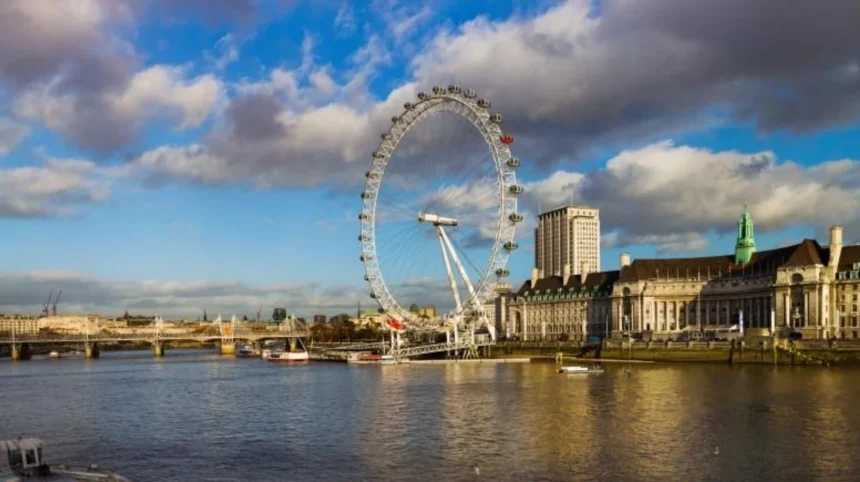
The South Bank is especially efficient for first-time visitors. The London Eye stands beside the Thames opposite the Houses of Parliament and Big Ben. Waterloo station is approximately a five-minute walk from the attraction, while Embankment, Charing Cross and Westminster are also within walking distance.
Lambeth also provides alternatives to major-ticket attractions. The Southbank Centre includes the Royal Festival Hall, Queen Elizabeth Hall, Purcell Room and Hayward Gallery. Its Royal Festival Hall opened as part of the 1951 Festival of Britain and remains a major cultural venue.
This combination makes Lambeth suitable for different visitor profiles. Sightseers can prioritise landmarks. Culture-focused visitors can concentrate on galleries and performance venues. Families can use parks and open spaces. Food-focused visitors can explore Brixton. Visitors seeking quieter experiences can choose Kennington Park, Vauxhall Pleasure Gardens or Brockwell Park.
What makes Lambeth different from other South London destinations?
Lambeth combines a central Thames waterfront with historic villages, Victorian parks, cultural institutions, markets and major transport hubs. This creates a destination with several distinct identities rather than one single visitor district, making Lambeth suitable for varied day-trip itineraries.
Lambeth’s geography explains much of its appeal. North Lambeth is closely connected to central London. The South Bank sits directly opposite Westminster and provides immediate access to major national landmarks. Waterloo connects the area with regional rail services and multiple Underground lines.
Further south, the character changes. Kennington contains Victorian parkland and historic streets. Vauxhall combines riverside development, transport infrastructure, parks and remnants of historic entertainment culture. Brixton has a strong market tradition and a distinctive cultural identity shaped by migration, music, food and community activity.
The borough therefore provides a useful contrast between London’s internationally recognised visitor economy and its established residential neighbourhoods.
Brixton illustrates this difference particularly clearly. Lambeth Council describes Brixton as a 19th-century town-centre conservation area containing civic, commercial, residential and retail buildings, alongside its well-known covered markets. The conservation area was first designated in 1980.
Brixton Village also traces the area’s market history to the 19th century. Its historical account records the growth of Brixton as a South London shopping centre from the 1860s and identifies the development of Electric Avenue and Market Row as important parts of the area’s commercial history.
Visitors therefore encounter different forms of London within the same borough. The South Bank represents major cultural tourism. Brixton represents neighbourhood commerce and multicultural urban culture. Kennington and Vauxhall provide historic parks and architectural character.
Which historic places should you visit in Lambeth?
Lambeth has substantial historic depth, including Lambeth Palace, St Mary-at-Lambeth, Vauxhall Pleasure Gardens, Kennington Park and Victorian heritage landscapes. These sites connect medieval religious history, royal and political history, public entertainment, social reform and the development of modern London.
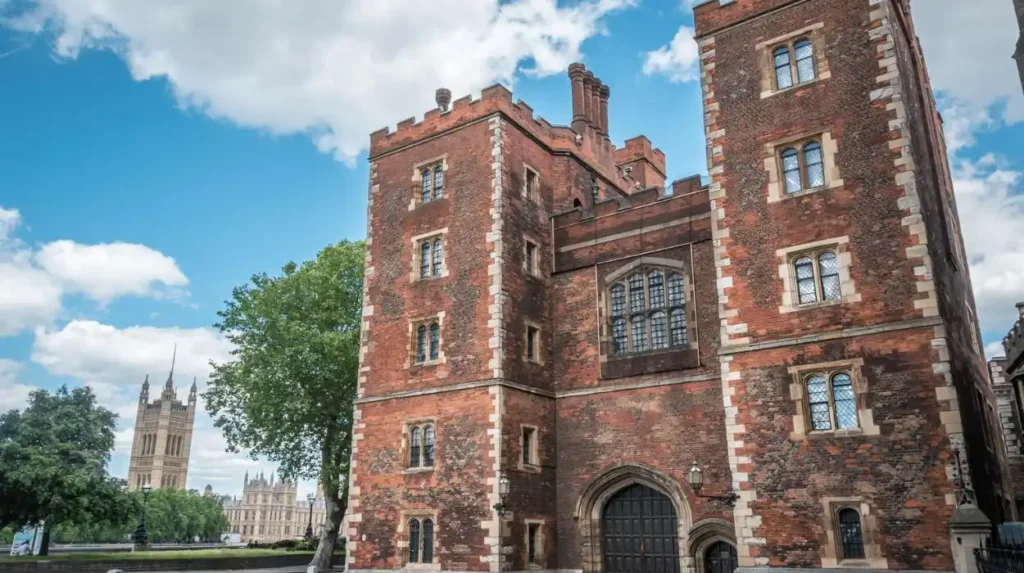
Lambeth Palace is one of the borough’s most significant historic sites. The palace has occupied its current riverside site since approximately 1200, when the land was acquired by the Diocese. Its surviving historic buildings include the 13th-century chapel, Lollards’ Tower from the 15th century and Morton’s Tower, completed in 1495.
Next to Lambeth Palace stands the former St Mary-at-Lambeth Church, now home to the Garden Museum. The site has medieval origins. The Garden Museum records a wooden church on the site from 1062 and identifies its surviving medieval tower, rebuilt in 1377, as the oldest surviving structure in the borough.
The church also has an important connection with John Tradescant, the 17th-century gardener and plant collector. His tomb remains within the historic churchyard. The Garden Museum was founded in 1977 after campaigners Rosemary and John Nicholson worked to save the abandoned church from demolition.
Vauxhall provides another historic layer. Vauxhall Pleasure Gardens began as a private entertainment venue in the 17th century and became particularly prominent under Jonathan Tyers from the 1720s. The gardens hosted dining, music, visual entertainment and public events before closing permanently in 1859.
As you explore the modern sites, you are crossing land with a deep heritage. Read the to understand Lambeth’s historical development in greater depth.
Kennington Park provides another important historical setting. Kennington Common hosted a major Chartist gathering in April 1848, when more than 25,000 supporters assembled during a campaign for political reform. The common was subsequently enclosed and converted into a public park in the 1850s.
These sites demonstrate why Lambeth works well for heritage-focused visitors. History is not concentrated inside one museum. It is embedded in churches, gardens, parks, streets, conservation areas and surviving buildings.
What can you do around the South Bank in Lambeth?
The South Bank provides Lambeth’s highest concentration of major visitor attractions, including the London Eye, Royal Festival Hall, Hayward Gallery, riverside walking routes and cultural spaces. Waterloo station provides a convenient transport base for exploring this area during a dedicated day trip.
The South Bank is the most efficient starting point for visitors with limited time. The London Eye provides a major landmark experience beside the Thames. Its 32 glass capsules provide elevated views across central London, while its position opposite the Houses of Parliament makes the attraction easy to combine with a riverside walk.
The Southbank Centre provides another major cultural cluster. Its venues include Royal Festival Hall, Queen Elizabeth Hall, Purcell Room and Hayward Gallery. The Royal Festival Hall has a 2,700-capacity auditorium and has been a major London cultural venue since the Festival of Britain in 1951.
The Royal Festival Hall also has public foyer areas, the National Poetry Library, food and drink venues and riverside spaces. The National Poetry Library is described by the Southbank Centre as the world’s largest public collection of modern poetry.
The riverside itself provides a straightforward walking route. Visitors can move between Waterloo, the London Eye, Royal Festival Hall and the wider South Bank without needing additional transport for every stop.
This area also connects easily with Westminster and the City of London. Walking across bridges changes the geographical perspective without requiring a separate transport journey.
For a dedicated day trip, the South Bank works best as the northern anchor of the itinerary. Visitors can begin with the Thames, continue through the cultural venues, then travel south towards Kennington, Vauxhall or Brixton.
Is Lambeth suitable for visitors interested in museums and culture?
Lambeth is highly suitable for museum and culture-focused visitors because it contains major arts venues, specialist museums, historic buildings, performance spaces and public cultural programmes. The borough supports both nationally recognised institutions and smaller cultural experiences across several neighbourhoods.
The cultural offer extends beyond the South Bank. The Garden Museum provides a specialist collection dedicated to the art, history and design of gardens. It occupies the historic former St Mary-at-Lambeth Church beside Lambeth Palace.
The museum’s collections connect horticulture with architecture, art, design, plant science and social history. Its location also makes it practical to combine with Lambeth Palace and a riverside walk.
The Imperial War Museum London is another major cultural institution in Lambeth. Located on Lambeth Road, the museum tells the stories of people’s experiences of war from the First World War to conflicts today.
The Southbank Centre provides a different cultural model. It combines performance, visual art, literature, music, exhibitions and public spaces. Its Royal Festival Hall, Queen Elizabeth Hall, Purcell Room and Hayward Gallery create a substantial cultural destination within a compact riverside area.
Visitors should distinguish between permanent attractions and temporary programmes. Museums and galleries maintain established collections, while exhibitions, performances and installations change throughout the year. Checking official venue information before travelling is therefore important for current opening arrangements and ticketed events.
This makes Lambeth useful for repeat visitors. A first visit can focus on permanent attractions. Later visits can focus on exhibitions, performances, festivals or specialist programmes.
Which parks and green spaces are worth visiting in Lambeth?
Lambeth has significant public green space, including Kennington Park, Brockwell Park, Vauxhall Pleasure Gardens and Vauxhall Park. These spaces provide walking routes, gardens, sports facilities, wildlife habitats and historic landscapes within an otherwise densely populated inner-London borough.
Kennington Park is one of the strongest choices for a short green-space stop. Lambeth Council describes it as a Victorian-era public park with mature trees, winding paths, formal gardens, sports facilities, a café and children’s facilities. It is also a designated Site of Importance for Nature Conservation.
The park’s historical importance strengthens its visitor value. Its origins as Kennington Common connect the modern landscape with political demonstrations, cricket, public gatherings and the Chartist movement.
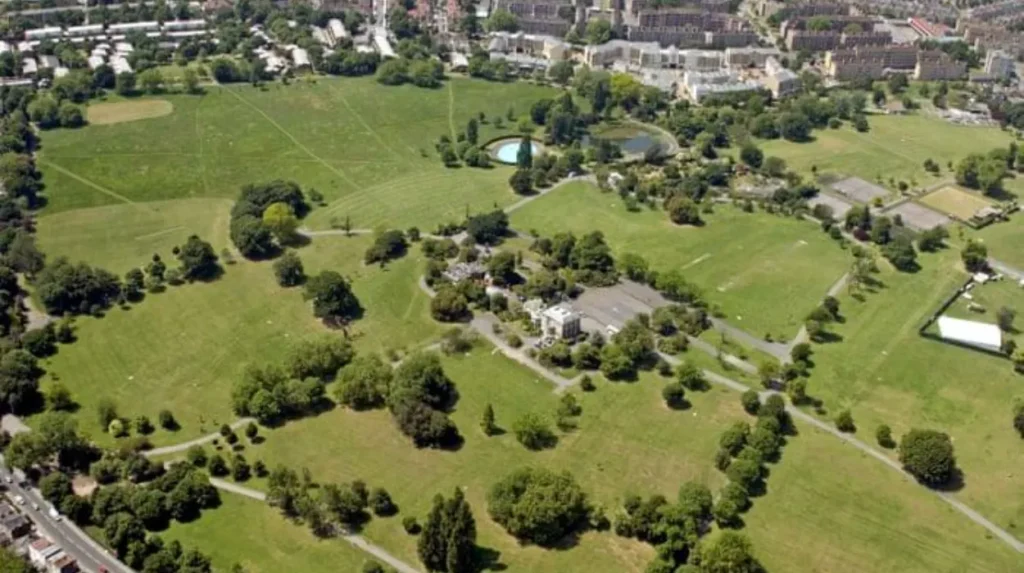
Brockwell Park provides a larger landscape further south. It contains open meadows, ponds, ancient oaks, a walled flower garden, Brockwell Hall and Brockwell Lido. The park was formally opened to the public in 1892 after acquisition by the Metropolitan Board of Works.
Brockwell Park is particularly useful for visitors who want more open space during a longer Lambeth itinerary. Its large landscape creates a different experience from the compact riverside spaces around Waterloo.
Vauxhall Pleasure Gardens provides another accessible green stop. It occupies the site of the former pleasure gardens and contains paths, meadow areas, trees, biodiversity features and a multi-use games area. Vauxhall City Farm also uses part of the site for outdoor animal paddocks.
Vauxhall Park sits between Vauxhall and Stockwell. It opened in 1890 after a local campaign involving Millicent Fawcett, Octavia Hill and other supporters. The park contains a playground, sports facilities, a café, an orchard and a lavender garden.
Lambeth’s parks therefore provide more than recreational space. They reveal how public parks developed alongside population growth, social reform, public health initiatives and urban planning.
Is Brixton worth adding to a Lambeth day trip?
Brixton is worth adding when food, markets, music, architecture and local culture are priorities. Its historic markets, conservation area, independent businesses and strong Afro-Caribbean cultural heritage create a distinctive South London experience that complements the major attractions around Waterloo and the Thames.
Brixton provides a strong southern counterpart to the South Bank. The area has a long commercial history, with street markets developing during the 19th century as Brixton expanded as a Victorian suburb.
Lambeth Council’s conservation documentation records the beginning of Brixton’s street market on Atlantic Road in the 1870s. Railway and tram connections helped attract shoppers from surrounding areas, while the market expanded into adjoining streets and commercial spaces.
Brixton Village provides a practical focal point for food and market exploration. Its historical development includes the 1937 opening of Granville Arcade, which later became known as Brixton Village. The market’s development reflects the wider evolution of Brixton’s commercial and cultural identity.
The area’s cultural history is also significant. Post-war migration, particularly from the Caribbean, shaped Brixton’s food, music, business and community life. Brixton subsequently became associated with sound-system culture, political activism and influential Black British cultural movements.
For a one-day itinerary, Brixton should not be treated as an obligatory addition to a South Bank-focused visit. It works best when the visitor specifically wants neighbourhood culture and food rather than a concentrated run of major central-London landmarks.
How easy is it to travel around Lambeth during one day?
Lambeth is easy to navigate during a day trip because Waterloo, Vauxhall, Brixton and other neighbourhoods have strong public transport connections. The South Bank is particularly walkable, while Underground, rail and bus services make longer movements across the borough straightforward.
Waterloo is the most useful transport base for many first-time visitors. The London Eye identifies Waterloo as its closest Underground and rail station, approximately five minutes from the attraction.
The Southbank Centre is also close to Waterloo and Embankment. Its official visitor information states that more than 20 London bus routes pass within 500 metres of its venues.
Vauxhall provides another important interchange, combining rail and Underground services. Its position makes the area practical for connecting the Thames corridor with Kennington, Stockwell and southern parts of Lambeth.
Brixton has its own Underground and rail connections, making it practical to visit as a separate southern section of the itinerary.
The most efficient approach is to group attractions geographically. Walking works best for South Bank attractions. Public transport becomes more useful when travelling between Waterloo and Brixton or between the riverside and southern parks.
Visitors should also consider accessibility. The Southbank Centre provides step-free access information and accessible facilities across its venues, although individual routes and temporary lift arrangements should be checked before travelling.
What would a practical one-day Lambeth itinerary look like?
A practical Lambeth day trip should begin around Waterloo and the Thames, continue through South Bank culture and heritage, then move towards Kennington or Vauxhall before finishing in Brixton or another southern neighbourhood. This sequence reduces unnecessary travel between attractions.
A morning start around Waterloo provides immediate access to the South Bank. Visitors can begin with the riverside, the London Eye area and the surrounding public spaces.
The next stage can focus on culture. The Royal Festival Hall, Hayward Gallery and other Southbank Centre spaces provide options for exhibitions, architecture, performances and public cultural activity. The exact programme depends on the date.
The Garden Museum and Lambeth Palace area provide a logical heritage section. The Garden Museum is particularly convenient because it sits beside Lambeth Palace and occupies the historic St Mary-at-Lambeth Church.
After lunch, visitors can choose between different southern routes.
A heritage-focused route can continue towards Kennington Park. The park provides both green space and a strong political history connected to the 1848 Chartist gathering.
A Vauxhall-focused route can combine Vauxhall Pleasure Gardens with Vauxhall City Farm and the surrounding neighbourhood.
A food-focused route can continue to Brixton Village and the wider market district.
A longer park-focused itinerary can travel further south towards Brockwell Park. The park’s large landscape, ponds, gardens, sports facilities and historic buildings provide enough space for a substantial walking section.
The best itinerary depends on the purpose of the day. Trying to cover every major attraction creates unnecessary travel and reduces time at each site.
Is Lambeth suitable for a low-cost day trip?
Lambeth supports low-cost day trips because several major experiences involve public spaces, walking routes, parks and free-entry cultural areas. Visitors can control expenditure by choosing paid attractions selectively and using public transport rather than building the itinerary around expensive activities.
The Thames riverside provides a free sightseeing environment. Walking between Waterloo and the wider South Bank does not require an attraction ticket.
The Royal Festival Hall also provides public access to its foyer spaces, while the Southbank Centre hosts free cultural activities alongside ticketed events.
Lambeth’s parks provide additional free outdoor experiences. Kennington Park, Vauxhall Pleasure Gardens, Vauxhall Park and Brockwell Park all provide public green space.
Visitors can therefore create a low-cost itinerary around walking, architecture, parks and public cultural spaces, then select one paid museum, exhibition or landmark experience.
Food costs provide the main variable. South Bank contains a wide range of cafés, restaurants and food outlets, while Brixton provides a broad market-based food environment.
The practical lesson is simple. Lambeth does not require a high attraction budget to produce a full day. The borough’s geography itself provides much of the experience.
Is Lambeth suitable for families and mixed-age groups?
Lambeth suits mixed-age groups because its attractions include parks, museums, riverside spaces, cultural venues, markets and family-oriented facilities. Visitors can combine structured attractions with outdoor areas, allowing different age groups to participate without following the same activity throughout the day.
Families can use Kennington Park for outdoor recreation. The park contains a children’s playground, sports facilities, a café and open areas.
Brockwell Park also contains a large children’s playground, wet-play facilities, sports courts, football pitches, a miniature railway and BMX facilities.
The South Bank provides a different family environment. The riverside offers open walking space, while the London Eye provides a major paid attraction. The Southbank Centre provides cultural activities and public spaces, although event access varies according to the programme.
The Garden Museum provides an educational option for visitors interested in plants, design, art and environmental subjects. Its learning programme includes hands-on and multi-sensory experiences.
Families should structure the day around activity changes. A long sequence of indoor attractions creates fatigue, while a mixture of walking, green space, food and cultural visits provides more variation.
Is Lambeth suitable for digital nomads and business travellers?
Lambeth is suitable for digital nomads and business travellers because Waterloo and the South Bank provide strong transport links, cafés, cultural venues and public spaces. The area also supports short breaks between meetings, making it practical for visitors combining business commitments with limited leisure time.
Waterloo is particularly useful for business travellers because it connects rail, Underground and bus services with central London. The South Bank is also compact enough for short walking journeys between transport, cultural venues and riverside spaces.
The Southbank Centre provides cafés, restaurants and public foyer environments alongside cultural venues. Its Royal Festival Hall includes food and drink facilities, while the wider South Bank contains numerous places suitable for breaks between activities.
Digital nomads should distinguish between casual laptop use and dedicated workspace. Public cultural venues provide places to pause, but they do not automatically function as formal coworking offices. Working requirements such as reliable Wi-Fi, power sockets, privacy and meeting facilities should therefore be checked with the individual venue or business.
For short downtime, the South Bank is particularly efficient. A visitor can leave Waterloo, walk along the Thames, stop at a cultural venue or café and return to the transport network without crossing a large part of London.
Explore More Area Guide
Why Is Lambeth One of London’s Most Diverse Boroughs?
Quiet Escapes and Peaceful Parks in Lambeth 2026
What are the main limitations of a Lambeth day trip?
Lambeth’s main limitation is its scale. The borough contains enough attractions for several days, so attempting to cover the entire area in one visit creates unnecessary travel. A successful day trip requires geographic grouping and clear priorities rather than trying to visit every major site.
Lambeth is not a single compact tourist district. South Bank, Vauxhall, Kennington, Brixton, Herne Hill, Streatham and West Norwood have different identities and different visitor experiences.
The northern section is particularly convenient for first-time London visitors because it sits close to Westminster and central London. Southern Lambeth requires additional travel but provides stronger neighbourhood, market and park experiences.
Opening hours also differ between attractions. The Royal Festival Hall currently operates Tuesday to Sunday, while individual exhibitions and performances have their own schedules.
The Garden Museum currently operates Tuesday to Sunday, 10am to 4pm, according to its official visitor information.
These differences make advance planning important. Visitors should check current opening times, ticket requirements, temporary closures and event schedules before travelling.
Another limitation is visitor density around major attractions. The South Bank is one of London’s established tourist areas. Visitors seeking quieter experiences should allocate time for Kennington Park, Vauxhall Park, Vauxhall Pleasure Gardens or Brockwell Park.
Is Lambeth worth visiting for a dedicated South London day trip?
Lambeth is worth visiting for a dedicated South London day trip because it combines major landmarks, historic sites, museums, cultural venues, markets, parks and strong transport connections. Its variety supports both first-time sightseeing and deeper exploration of South London’s neighbourhoods.
The strongest reason to choose Lambeth is variety. A visitor can experience the Thames, a major London landmark, a world-class cultural venue, a medieval heritage site, a Victorian park and a historic market within the same borough.
The borough also has strong historical depth. Lambeth Palace has occupied its current site since approximately 1200. St Mary-at-Lambeth has medieval origins. Vauxhall Pleasure Gardens connected Londoners with public entertainment for almost two centuries. Kennington Common hosted major political gatherings before becoming a public park.
Its modern cultural infrastructure is equally substantial. The Southbank Centre remains a major arts complex, while the Imperial War Museum and Garden Museum provide specialist museum experiences.
Lambeth also provides green space within one of London’s most densely populated areas. Kennington Park, Brockwell Park, Vauxhall Park and Vauxhall Pleasure Gardens give visitors alternatives to the busy central attractions. Lambeth Council identifies eight landscapes in the borough on the national register of historic parks and gardens, including Brockwell Park, Kennington Park, Lambeth Palace and West Norwood Cemetery.
The best day trip therefore depends on selecting a coherent route.
For first-time visitors, Waterloo and South Bank provide the strongest introduction. For history enthusiasts, Lambeth Palace, the Garden Museum and Kennington provide greater depth. For food and neighbourhood culture, Brixton is the stronger choice. For outdoor recreation, Brockwell Park and Kennington Park provide substantial green-space experiences.
Lambeth is consequently more than a stop between central London and South London. It is a destination with its own historic identity, cultural infrastructure, public spaces and neighbourhood character.
For travellers evaluating whether Lambeth deserves a full day, the answer is clear: yes, provided the itinerary focuses on one geographical section or a carefully connected sequence of attractions. The borough has enough cultural, historical, recreational and culinary depth to justify dedicated exploration without relying solely on its proximity to central London.
Is Lambeth worth visiting for a day trip?
Yes. Lambeth is worth visiting for a day trip because it combines the South Bank, River Thames, London Eye, cultural venues, historic sites, parks, markets and neighbourhoods such as Brixton. Its transport connections also make a one-day itinerary practical.