Lambeth is widely associated with the South Bank, Waterloo, Brixton, Vauxhall and busy riverside attractions. The borough also contains a substantial network of parks, gardens, churchyards, nature sites and riverside green spaces. These locations provide practical options for visitors seeking quieter periods outdoors without leaving central or inner South London.
- Which Lambeth parks are best for a peaceful visit?
- Where can visitors find smaller and quieter gardens in Lambeth?
- Which Lambeth locations offer the best riverside escape?
- Can visitors find a peaceful garden near Lambeth Palace?
- What makes Lambeth’s small green spaces valuable for quiet breaks?
- How can visitors choose the quietest Lambeth escape?
- Are Lambeth’s quiet green spaces accessible by public transport?
- What should visitors know about opening times and practical access?
- How do Lambeth’s quiet escapes support nature and biodiversity?
- Which quiet escape is best for different types of visitors?
- Why are Lambeth’s quiet escapes becoming more important?
Lambeth Council currently records more than 78 parks, commons and other public open spaces across the borough. Its parks directory includes facilities specifically designed for quieter use, including quiet sitting areas, wildlife areas, nature conservation areas, flower gardens, ponds and community gardens.
The borough’s green-space network also has recognised environmental value. In 2026, Lambeth has 30 Green Flag Award sites, including Brockwell Park, Kennington Park, Archbishop’s Park, Vauxhall Pleasure Gardens, Ruskin Park, Streatham Common and several smaller green spaces.
Quietness varies by location, time and events. A large park can provide secluded corners even when its main paths are active. A small garden can feel peaceful because it has mature planting, seating and limited recreational infrastructure. Riverside spaces offer another form of escape, combining open views with walking routes.
For visitors, the most useful approach is therefore to match the type of peaceful experience with the right location. Formal gardens suit slow walks and quiet observation. Larger parks provide lawns, trees and internal paths. Small gardens work well for short breaks. Thames-side spaces suit walking, sitting and views.
Which Lambeth parks are best for a peaceful visit?
Lambeth’s strongest peaceful park options include Brockwell Park, Kennington Park, Archbishop’s Park, Vauxhall Pleasure Gardens and Ruskin Park. Each combines established planting, open space, mature trees or quieter internal areas with convenient access from surrounding neighbourhoods.
Brockwell Park
Brockwell Park is one of the most useful choices for visitors who want substantial green space. It covers a large, hilly landscape containing ponds, mature trees, ancient oaks, open meadows and a historic walled Old English flower garden. Lambeth Council states that the park formally opened to the public in 1892.
The park contains a mixture of active and quieter landscapes. Visitors seeking tranquillity can move away from sports facilities and event areas towards the tree-lined paths, ponds and Walled Garden. The elevated sections of the park also provide broad views across South London.
Brockwell Park is a Borough Site of Importance for Nature Conservation. It also holds Green Flag and Green Heritage recognition. The park’s conservation status reflects its importance for both biodiversity and public access to nature.
The park’s history adds another layer to a quiet visit. It began as private landscaped grounds associated with Brockwell House before becoming a public park. Lambeth Council designated the wider Brockwell Park conservation area in 1983, with its boundary extended in 1999.
Kennington Park
Kennington Park provides a historic Victorian park setting close to central London. Its mature trees, winding paths, flower garden and open areas create several places for slower-paced visits. The park also contains the Kennington Park Extension, which provides additional grass sports space.
The restored Old English Flower Garden is one of the park’s key landscape features. Mature and historic trees provide additional shaded areas, while wildlife and biodiversity management support nature within the urban setting.
Kennington Park also has an important political history. Before becoming a public park in 1852, the area was known as Kennington Common. In April 1848, more than 25,000 supporters of the Chartist movement gathered there during a major campaign for electoral reform.
The park therefore combines quiet green space with a clear historical setting. Visitors interested in heritage can explore the landscape while using its paths and gardens as a quieter break from nearby roads.
Archbishop’s Park
Archbishop’s Park is particularly useful for visitors staying around Waterloo and Lambeth Palace. It contains mature trees, herbaceous borders, wildlife habitats and a community garden. The park opened as a public park in 1901 after land associated with Lambeth Palace was made available for public recreation.
The park has sports facilities and a large children’s playground, so it is not uniformly quiet. The quieter experience comes from its landscaped areas, mature trees and community garden rather than from the whole site.
Its position is important. A visitor can combine a visit to Lambeth Palace, the Thames and central London attractions with time in a substantial green space without travelling far from Waterloo.
Vauxhall Pleasure Gardens
Vauxhall Pleasure Gardens offers a compact green escape in one of Lambeth’s busiest districts. The modern park contains paths, grass areas, tree planting, meadow planting and biodiversity improvements. Lambeth Council identifies the site as a Local Site of Importance for Nature Conservation.
The site’s historical significance is substantial. The original Vauxhall Pleasure Gardens opened as a private entertainment venue in 1661 and became one of London’s best-known leisure destinations before closing in 1859. The modern public park occupies the historic site.
The park’s biodiversity improvements include pollinator-friendly planting and wildlife habitats. These features create a more nature-focused environment within Vauxhall.
Visitors interested in the site’s heritage should also understand the transformation from commercial pleasure garden to modern public open space. The monumental entrance columns reference the historic character of the original gardens.
Ruskin Park
Ruskin Park provides another green option in the Camberwell and Denmark Hill area. It is included among Lambeth’s Green Flag Award sites for 2026, confirming its position within the borough’s recognised network of maintained public green spaces.
Ruskin Park is suitable for visitors who want to move beyond the heavily visited South Bank and central Lambeth areas. Its location makes it particularly practical for people exploring Denmark Hill, Camberwell and nearby residential neighbourhoods.
Where can visitors find smaller and quieter gardens in Lambeth?
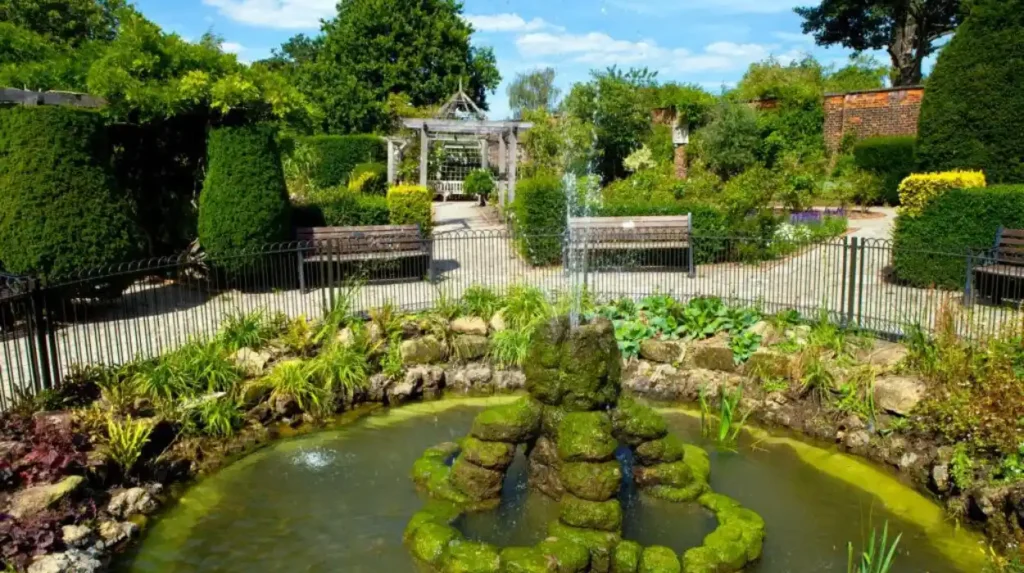
Smaller gardens such as Old Paradise Gardens, St John’s Church Gardens, Vauxhall Park and Waterloo Millennium Green provide shorter, calmer outdoor breaks. Their compact layouts, planting, seating and community features suit visitors who want quiet time rather than a full park-day experience.
Old Paradise Gardens
Old Paradise Gardens is one of the most relevant locations for visitors specifically searching for a quiet garden. Lambeth Council describes it as a small but important green space near Lambeth Palace with wildlife features and quiet sitting areas.
Its historical background is unusual. The site began as a burial ground provided to the local parish by the Archbishop of Canterbury in 1703. It was extended in 1816, closed to new burials in 1853 and converted into a public garden in 1884.
A major restoration programme improved the entrance gates, boundary walls and landscape. The site was renamed Old Paradise Gardens in 2013. Its combination of history, wildlife features and quiet seating makes it especially suitable for a short reflective break.
St John’s Church Gardens
St John’s Church Gardens is another compact green space close to Waterloo. The gardens include a dry garden, wildlife garden and memorial garden. The site is a Green Flag Award-winning space and also holds a Churchyard of the Year award from London in Bloom.
The garden works particularly well as a short stop between visits to Waterloo attractions. Its churchyard setting separates it from larger recreational parks, creating a different type of urban green experience.
Visitors should treat church gardens as quiet public spaces. Respectful behaviour is important because memorial areas and active religious sites form part of the environment.
Vauxhall Park
Vauxhall Park is another useful choice around Vauxhall. It forms part of Lambeth’s wider network of public green spaces and is among the borough’s 2026 Green Flag Award sites.
Its location allows visitors to create a green-space route through Vauxhall rather than relying on one destination. Vauxhall Pleasure Gardens, Vauxhall Park and nearby riverside areas provide different types of outdoor space within the same broader district.
Which Lambeth locations offer the best riverside escape?
The strongest riverside options are Albert Embankment Gardens and the Thames walkway around Lambeth and Vauxhall. These spaces combine benches, trees, landscaped areas and open river views, providing a quieter alternative to the busiest central London sightseeing locations.
Albert Embankment Gardens
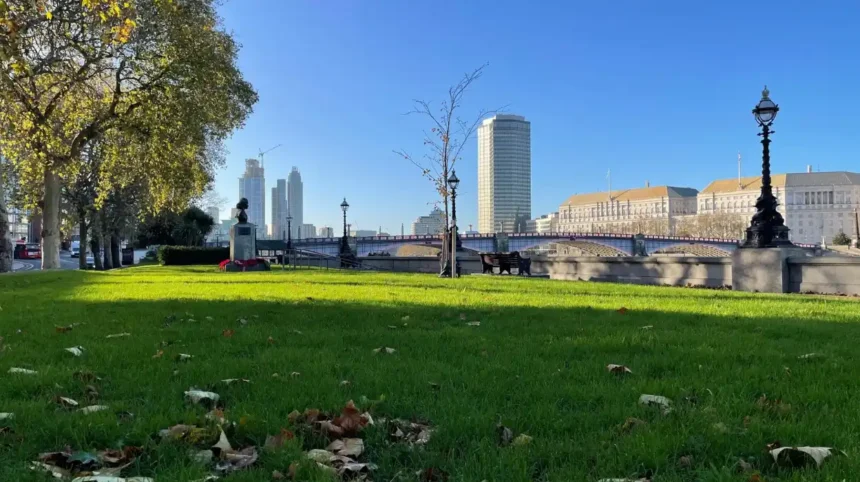
Albert Embankment Gardens is a chain of small open spaces running between Vauxhall and Waterloo along the River Thames. Lambeth Council identifies the gardens as part of the borough’s riverside public-space network.
The surrounding Albert Embankment conservation area stretches along Lambeth’s Thames frontage from the Wandsworth boundary to Westminster Bridge. It includes the embankment walk, retaining walls, open spaces and major historic developments.
The gardens provide a different experience from a large inland park. The river creates an open visual corridor, while mature trees and landscaped areas provide softer spaces beside the walkway.
Historic Lambeth architecture and views towards Westminster add further interest. Visitors can combine a riverside walk with short stops in the gardens.
The Albert Embankment itself was constructed in the 1860s. Work began in September 1865 and the embankment opened in May 1868 under the direction of engineer John Grant for the Metropolitan Board of Works.
The Thames between Lambeth Bridge and Vauxhall
The Thames frontage provides a continuous walking environment rather than a single enclosed park. Visitors can use the river as a route between green spaces, historic landmarks and public seating areas.
The Albert Embankment conservation area is particularly valuable for views towards the Westminster World Heritage Site. Lambeth Council describes the embankment as one of the best public vantage points for appreciating the Westminster area.
For a quieter experience, visitors should use the riverside as a walking route and stop at landscaped spaces rather than remaining around the busiest landmark viewpoints.
Can visitors find a peaceful garden near Lambeth Palace?
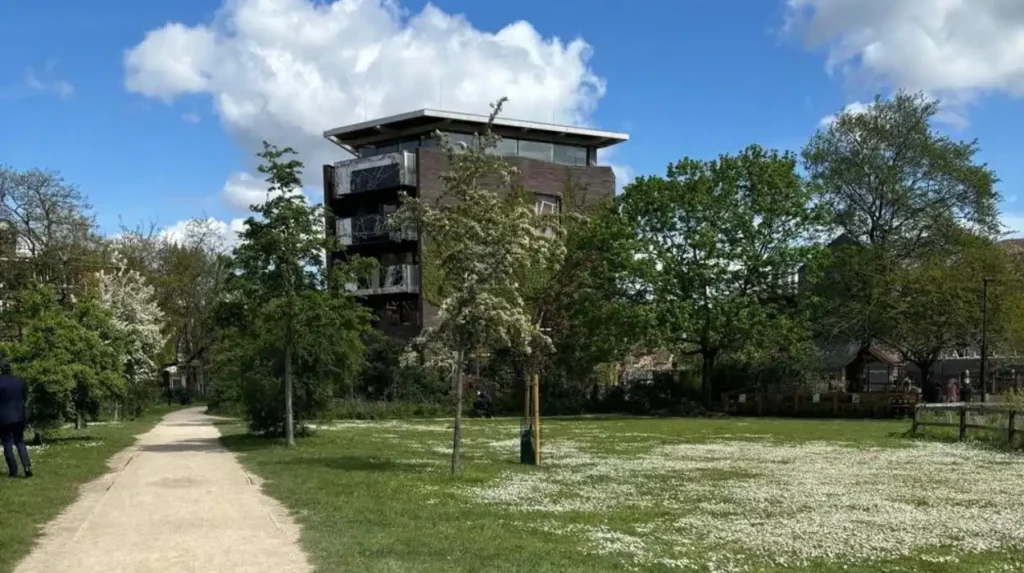
Lambeth Palace Garden is one of the borough’s most historically significant quiet gardens, covering just over 10 acres beside the Thames. It is privately managed, so public access depends on scheduled openings and special events rather than daily unrestricted entry.
Lambeth Palace has been the London home of the Archbishops of Canterbury for more than 800 years. Its garden covers just over 10 acres and is recognised as one of England’s oldest gardens.
The garden contains native English plants alongside species from Europe, the Americas, Africa, Asia and Australasia. Its central London microclimate supports diverse planting. Garden management is organic and avoids chemical pesticides and herbicides, supporting insects, birds and other wildlife.
Historic England records the garden’s medieval origins and describes its development through successive centuries. The site was originally used for practical purposes, including food production and animal keeping. Later changes introduced formal gardens, pleasure grounds, lawns, paths and planting schemes.
As you explore the modern site and surrounding green spaces, you are crossing land with a deep heritage. Read about the full to understand its origins.
Public access requires careful planning. The Archbishop of Canterbury’s official information states that the garden is opened on selected occasions rather than functioning as an ordinary public park. Visitors should check the current opening programme before making a dedicated journey.
What makes Lambeth’s small green spaces valuable for quiet breaks?
Small green spaces provide practical restorative breaks because visitors do not need to dedicate several hours to them. Old Paradise Gardens, St John’s Church Gardens and Albert Embankment Gardens place greenery, seating and nature within walking distance of major transport and tourist destinations.
Lambeth’s smaller sites are important because they fit into short urban itineraries. A visitor staying near Waterloo can spend part of an afternoon in a garden without making a separate journey across London.
The council’s parks directory identifies facilities such as quiet sitting areas, wildlife areas, formal gardens, ponds, nature conservation areas and community gardens across its network.
These features support different forms of low-intensity recreation. Quiet seating supports reading or resting. Wildlife gardens support observation. Formal gardens provide structured planting. Ponds introduce wetland habitats and reflective water surfaces.
The smaller spaces also contribute to ecological connectivity. Lambeth’s 2026 Pollinator Action Plan identifies numerous parks and open spaces within London B-Lines, including Archbishop’s Park, Brockwell Park, Kennington Park, Lambeth Palace Gardens, Ruskin Park, Vauxhall Park, Vauxhall Pleasure Gardens and Waterloo Millennium Green.
This means a quiet garden is not simply decorative. It can form part of a wider urban biodiversity network.
How can visitors choose the quietest Lambeth escape?
Visitors should choose the location according to the type of quiet they need. Large parks suit longer walks, small gardens suit short rests, riverside spaces suit open views, and historic gardens suit contemplative visits when scheduled public access is available.
Timing is important. Lambeth’s major parks host sports, community activities and events. A location that feels quiet during a weekday morning has a different atmosphere during a weekend event.
Brockwell Park demonstrates this difference particularly clearly. It contains sports facilities, a BMX track, miniature railway, playground, commercial events and community activities alongside quieter ponds, meadows and gardens.
Visitors seeking maximum calm should therefore move towards less programmed sections of a park. Tree-lined paths, gardens and peripheral lawns provide different conditions from sports pitches and event areas.
Small gardens offer greater predictability because their layouts are more compact. Old Paradise Gardens specifically includes quiet sitting areas, making it one of the most directly relevant choices for this search intent.
Riverside routes provide another strategy. Walking beside the Thames reduces dependence on a single seating area. Visitors can continue moving until they find a comfortable viewpoint.
Are Lambeth’s quiet green spaces accessible by public transport?
Lambeth’s major parks and gardens are connected to Waterloo, Vauxhall, Kennington, Brixton, Herne Hill, Camberwell and other transport hubs. This allows visitors to combine peaceful outdoor stops with sightseeing without requiring a car or lengthy cross-city journey.
Waterloo provides convenient access to Archbishop’s Park and St John’s Church Gardens. Vauxhall connects visitors with Vauxhall Pleasure Gardens, Vauxhall Park and Albert Embankment. Herne Hill and nearby rail connections provide access to Brockwell Park.
Jubilee Gardens on the South Bank is also highly accessible from Waterloo and the surrounding central London transport network. The Jubilee Gardens Trust states that Waterloo is the closest major rail and Underground station, with Embankment, Westminster, Lambeth North, Waterloo East and Southwark within walking distance.
Jubilee Gardens is not always the best choice for solitude. The Trust reports that the gardens receive more than 5.5 million visitors each year and contain more than 90 mature trees, lawns and an enclosed children’s adventure playground.
Its value is therefore as a landscaped riverside retreat rather than a guaranteed secluded garden. Visitors looking for quieter conditions should consider less crowded periods or choose smaller Lambeth green spaces.
What should visitors know about opening times and practical access?
Most Lambeth parks follow seasonal opening arrangements, with many sites normally closing around 15 minutes before dusk. Visitors should check individual park information before travelling because opening hours, facilities, events and temporary closures differ between locations.
Lambeth Council states that the borough’s parks and open spaces are generally closed at night throughout the year. Normal closing time is 15 minutes before dusk, so the exact closing time changes seasonally.
Brockwell Park and Archbishop’s Park both normally operate from 7.30am until 15 minutes before sunset. Vauxhall Pleasure Gardens is listed by Lambeth Council as open 24 hours a day, although visitors should still follow posted local restrictions and event arrangements.
Visitors should also distinguish between a public park and a privately managed garden. Lambeth Palace Garden has restricted public access and operates through scheduled openings.
Weather also affects the experience. Wet paths, muddy lawns and seasonal planting change how comfortable a garden visit is. Sensible footwear is appropriate for longer park walks, particularly in winter.
How do Lambeth’s quiet escapes support nature and biodiversity?
Lambeth’s green spaces provide more than recreational value. Parks, gardens, ponds, meadows, mature trees and wildlife areas form part of the borough’s biodiversity network, supporting pollinators, birds, amphibians and plant communities within densely developed South London.
Several major locations have formal ecological recognition. Brockwell Park, Kennington Park, Archbishop’s Park and Vauxhall Pleasure Gardens are identified by Lambeth Council as Sites of Importance for Nature Conservation.
Lambeth’s Pollinator Action Plan also connects numerous parks and open spaces to B-Lines, a network designed to support pollinating insects through connected habitat. The listed sites include both large parks and smaller urban gardens.
Vauxhall Pleasure Gardens provides a clear example of biodiversity-focused improvement. Its Small Pleasure Garden project introduced wildlife habitats and pollinator-friendly planting, alongside natural seating and landscape improvements.
Lambeth Palace Garden uses organic management and habitat creation. Longer grass and decaying-log habitats support wildlife, while natural predators help regulate garden pests.
For visitors, these measures make quiet green spaces valuable places for observing seasonal changes. Spring bulbs, flowering plants, mature trees, birds and insects all contribute to the environmental character of the borough.
Explore More Area Guide
What Can Art Lovers Experience in Lambeth? South London 2026
Lambeth Architectural Landmarks Shaping the Skyline | London 2026
Which quiet escape is best for different types of visitors?
Brockwell Park suits longer nature walks, Old Paradise Gardens suits short peaceful breaks, Albert Embankment suits riverside views, Archbishop’s Park suits Waterloo visitors, and Lambeth Palace Garden suits heritage-focused visitors when its scheduled openings provide public access.
For first-time visitors, Archbishop’s Park offers a strong balance between accessibility, history and greenery. It sits close to Waterloo and Lambeth Palace and contains mature trees, wildlife habitats and a community garden.
For longer outdoor walks, Brockwell Park is the stronger option because its large landscape contains ponds, meadows, trees, gardens and extensive paths.
For history-focused visitors, Kennington Park and Old Paradise Gardens provide particularly strong connections between landscape and London’s social history. Kennington Common became the setting for major Chartist activity before becoming a public park, while Old Paradise Gardens originated as an eighteenth-century burial ground.
For riverside downtime, Albert Embankment Gardens provide landscaped spaces directly beside the Thames. Their location also supports views towards Westminster.
For short breaks between meetings or sightseeing, smaller gardens around Waterloo, Vauxhall and Lambeth are more practical than large parks because they require less travel time.
For digital nomads and business travellers, these locations are better considered as outdoor downtime spaces than guaranteed workspaces. Public parks do not provide consistent Wi-Fi, power sockets or quiet working conditions. They are more suitable for walking, reading, taking a break or resetting between appointments.
Why are Lambeth’s quiet escapes becoming more important?
Lambeth’s green spaces provide essential access to nature within a densely developed London borough. Their combination of biodiversity, heritage, recreation and public access gives visitors practical opportunities to experience quieter environments alongside major cultural and riverside attractions.
The importance of these spaces is reflected in the scale of Lambeth’s green-space network. The council records more than 78 parks, commons and other public open spaces, while 30 sites hold Green Flag Awards in 2026.
The network also demonstrates that peaceful experiences do not depend on one famous destination. Visitors can choose from large historic parks, compact gardens, churchyards, nature reserves and riverside landscapes.
This distribution is particularly valuable in South London because green spaces sit close to major transport routes and tourist districts. Visitors can move from busy attractions to a quieter landscape without leaving Lambeth.
The future relevance is also environmental. Pollinator corridors, habitat creation, organic gardening and nature-conservation design strengthen the ecological role of urban parks. Lambeth’s 2026 Pollinator Action Plan shows that these spaces are increasingly treated as connected habitats rather than isolated ornamental sites.
For visitors searching for quiet escapes, the most effective strategy is simple: choose the right type of green space, visit outside peak activity periods, check opening information and explore beyond the most crowded attractions.
Lambeth’s peaceful side is therefore not hidden because it is inaccessible. It is distributed throughout the borough. Brockwell Park provides expansive landscapes, Kennington Park combines history with mature planting, Old Paradise Gardens provides compact tranquillity, Albert Embankment connects greenery with the Thames, and Archbishop’s Park offers a historic green setting close to Waterloo.
Together, these locations make Lambeth a practical destination for visitors who want nature, heritage and quieter outdoor experiences within South London.
Where can visitors find quiet places in Lambeth?
Visitors can find peaceful places in Brockwell Park, Kennington Park, Archbishop’s Park, Old Paradise Gardens, St John’s Church Gardens, Vauxhall Park and Albert Embankment Gardens. These locations provide greenery, mature trees, gardens, seating and riverside views.