Lambeth, in South London, offers visitors access to public libraries, historic literary landmarks, independent bookshops and cultural venues connected with London’s reading and writing traditions. The borough combines community library services with significant literary heritage, particularly around Brixton, Clapham, Stockwell, Kennington and Waterloo.
- Which public libraries can visitors explore in Lambeth?
- What makes Brixton Library an important literary landmark?
- Where can visitors find historic libraries and literary architecture in Lambeth?
- Where can visitors explore Lambeth’s literary archives and historical records?
- How is Lambeth connected to William Blake and British literary history?
- Why is Lambeth Palace Library significant for literary and historical research?
- Where can book lovers browse second-hand books near Lambeth?
- Which literary events and reading groups can visitors attend in Lambeth?
- Which Lambeth libraries are suitable for study, reading and remote work?
- How can visitors plan a literary walk around Lambeth?
- What should visitors know before exploring Lambeth’s literary spaces?
- Why should Lambeth’s libraries and literary spaces be part of a South London visit?
For tourists, Lambeth’s literary spaces provide opportunities to explore local history, discover writers associated with South London, use public reading facilities and find quieter places during a busy London itinerary. Visitors also encounter the borough’s wider cultural identity through its theatres, archives, community programmes and links to Britain’s literary past.
Public libraries serve a practical role in this landscape. They provide access to books, digital resources, study facilities and community activities. Literary landmarks offer a different experience by connecting streets, buildings and cultural institutions with writers, publishing, social history and the development of reading.
The best approach is to combine a visit to a public library with a walk through a nearby neighbourhood or a visit to a cultural landmark. This creates a more complete understanding of Lambeth’s literary identity, from everyday reading facilities to the historical influences that shaped South London’s cultural life.
Which public libraries can visitors explore in Lambeth?
Lambeth’s public library network includes neighbourhood libraries serving areas such as Brixton, Clapham, Streatham and Waterloo. These facilities provide access to books, reading spaces, computers and community activities, subject to each branch’s opening hours, visitor arrangements and available services.
Public libraries are among the most accessible cultural facilities in Lambeth. They serve residents while also providing useful facilities for visitors who want to read, research local history or take a break between sightseeing destinations.
Lambeth’s library service operates through a network of branches distributed across the borough. Each location serves a different neighbourhood, making it practical to include a library visit in a walking itinerary or a day exploring South London.
Which Lambeth libraries are useful starting points?
Brixton Library
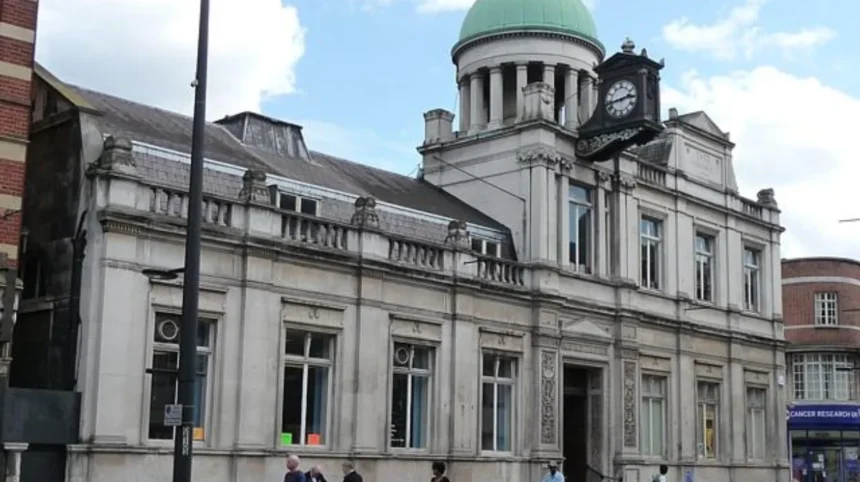
Located on Brixton Road, Brixton Library is a prominent local cultural building near Brixton’s shopping streets and transport connections. Its historic architecture and central position make it a useful starting point for exploring the area’s cultural identity.
Clapham Library
Clapham’s library facilities serve a neighbourhood known for Clapham Common, independent businesses and community venues. Visitors should check the current library listing to confirm the relevant building, available facilities and opening times before travelling.
Streatham Library
Streatham Library offers a starting point for exploring a busy South London high street with shops, cafés and public transport connections. It suits visitors interested in combining a local library visit with a wider neighbourhood walk.
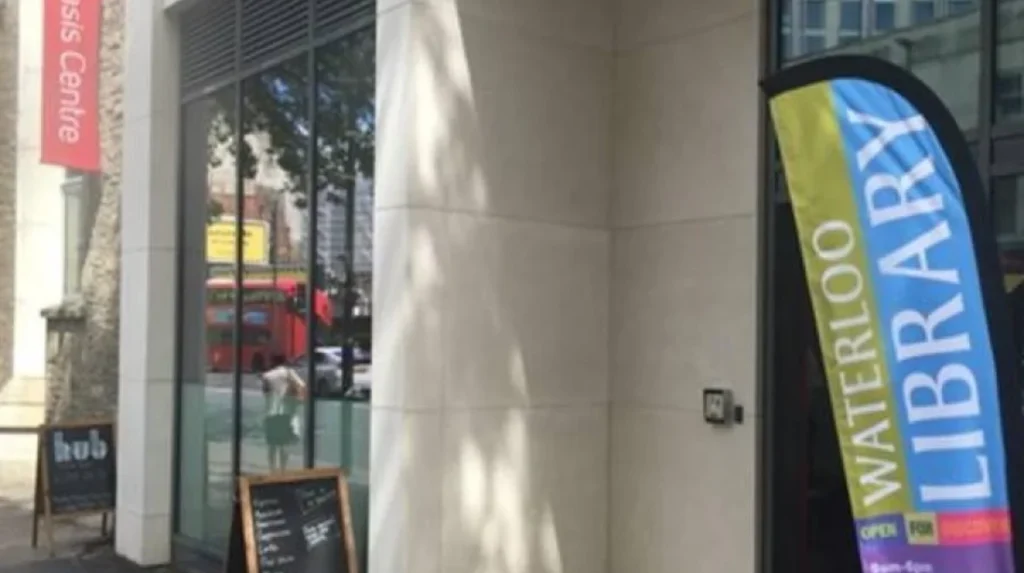
Waterloo Library
Waterloo’s library provision is relevant to visitors exploring the station area, Lower Marsh and nearby cultural attractions. Check the official Lambeth library directory for the current branch location and visitor facilities before planning a visit.
Library locations, services and opening schedules change. The official Lambeth Council website provides the most reliable starting point for confirming current branch details, borrowing arrangements, computer access and event listings.
A library visit does not automatically require a visitor to hold a local borrowing card. However, borrowing privileges, computer bookings and access to some services follow separate eligibility rules. Visitors should check the conditions for the particular facility they intend to use.
What makes Brixton Library an important literary landmark?
Brixton Library is a notable public building in South London, recognised for its historic architecture and position within Brixton’s civic and cultural landscape. Its location provides a useful starting point for understanding the relationship between public reading facilities, community life and urban history.
Brixton Library stands on Brixton Road, close to the commercial centre of Brixton. The building reflects the development of public library provision during a period when municipal authorities invested in accessible education, reading and public knowledge.
The library is associated with the Carnegie tradition of public library funding. Andrew Carnegie, a Scottish-born industrialist and philanthropist, funded libraries across Britain and other countries during the late nineteenth and early twentieth centuries. These institutions expanded opportunities for people to access books and educational resources outside formal schooling.
Brixton itself has a distinct cultural history shaped by migration, music, political activism, commerce and community organisation. A visit to the library places visitors within this wider setting rather than treating the building as an isolated attraction.
The surrounding area includes Brixton Market, independent businesses and cultural venues. Visitors can combine time in the library with a walk through central Brixton to examine how the neighbourhood’s public spaces and commercial streets developed together.
Library architecture also communicates changing ideas about civic access. Historic public libraries were designed to provide structured spaces for reading, learning and information. Modern library services extend this role through digital access, community events and facilities for different age groups.
Before visiting, check Lambeth Council’s current listing for opening hours and any restrictions on photography, study areas or public computer use. This ensures that the visit reflects the building’s present-day services as well as its historic significance.
Where can visitors find historic libraries and literary architecture in Lambeth?
Carnegie Library in Herne Hill, Durning Library in Kennington and Streatham Library are important examples of Lambeth’s historic public library buildings. Their architecture reflects different stages of municipal development, philanthropy and the expansion of public education across South London.
Carnegie Library, Herne Hill
Carnegie Library is a Grade II listed building funded by philanthropist Andrew Carnegie and built in 1906. Its location beside Ruskin Park makes it suitable for a combined architecture and neighbourhood walk.
Durning Library, Kennington
Durning Library serves the Kennington area and sits within reach of Kennington Underground station. Its historic setting makes it relevant to visitors exploring the borough’s civic buildings and nineteenth-century urban development.
Streatham Library
Streatham Library is another Grade II listed building. Its location on Streatham High Road connects a library visit with the area’s shops, public transport and everyday commercial life.
A listed building is a structure recognised for its special architectural or historic interest and included on the National Heritage List for England. Grade II listing identifies buildings of special interest that warrant every effort to preserve them.
These libraries illustrate how public reading facilities became part of the built environment. Their historical importance lies in both their architecture and their civic purpose: providing organised access to knowledge, books and learning.
Visitors interested in the origins of these neighbourhoods should also explore Lambeth’s wider historical record. As you explore the modern library network, you are entering places shaped by centuries of social and urban change. Read the full [Lambeth’s historical development and literary heritage] to understand the origins of the borough’s cultural landscape.
Where can visitors explore Lambeth’s literary archives and historical records?
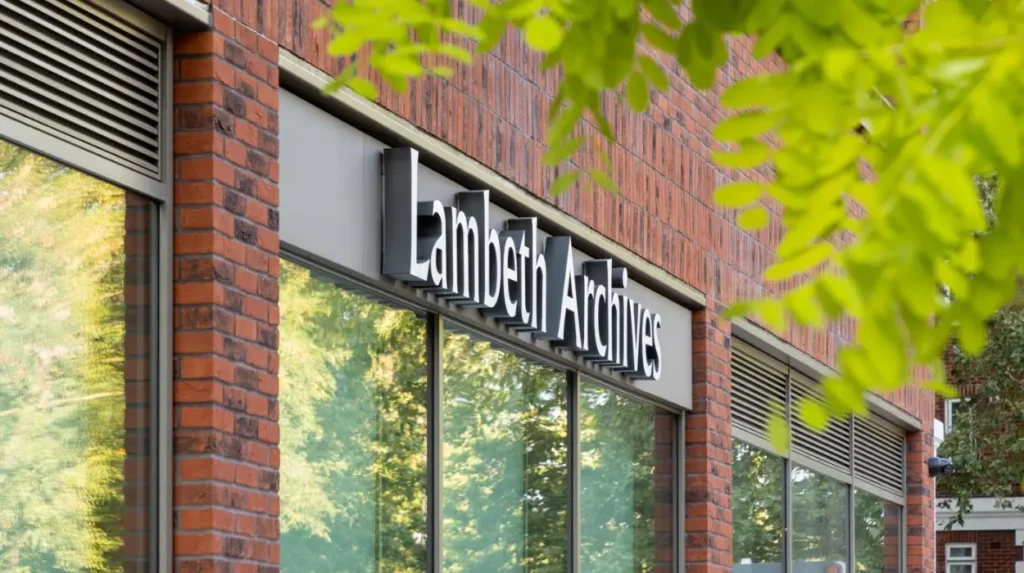
Lambeth Archives is the borough’s principal local-history archive, based at 16 Brixton Hill, London SW2 1ET. It preserves documentary evidence of Lambeth’s past and provides a searchroom and exhibition facilities for people researching local buildings, communities, organisations and historical events.
Lambeth Archives differs from an ordinary lending library. A public library primarily supports reading, borrowing, study and community learning. An archive preserves original records and historical materials for research and long-term reference.
The collection provides a starting point for investigating how Lambeth developed. Historical records help researchers examine changes in housing, transport, public services, employment, education and community life. They also support family-history research and studies of individual streets or buildings.
What can visitors research at Lambeth Archives?
Visitors researching the borough’s history can begin with a specific question, such as the former use of a building, the development of a neighbourhood or the history of a local organisation. Archive catalogues and staff guidance help researchers identify relevant records.
Useful research themes include:
- Local buildings and streets: records that help establish how neighbourhoods changed over time.
- Community and social history: evidence relating to organisations, public services and local life.
- Family and personal history: historical documents that help trace individuals and households, depending on the available collections and access conditions.
- Photographs and printed material: visual and documentary evidence of Lambeth’s changing landscape.
These are research themes rather than a guarantee that every record is held or available online. Some archive materials require advance identification, supervised consultation or a specific request.
Visitors should check the official Lambeth Archives information before travelling. Opening hours, collection access and appointment arrangements differ from those of ordinary library branches.
An archive visit works particularly well for travellers who want more than a general sightseeing experience. It offers a way to investigate the people, streets and institutions behind the borough’s visible landmarks.
How is Lambeth connected to William Blake and British literary history?
William Blake, the English poet, artist and printmaker, has a documented historical connection with Lambeth. His former residence in the area is commemorated through the William Blake Estate, providing a starting point for exploring his work and the borough’s place in British literary history.
William Blake lived from 1757 to 1827 and is recognised for combining poetry, painting and printmaking. His work includes Songs of Innocence and of Experience and the illustrated prophetic books that established his distinctive artistic and literary reputation.
Blake lived in Lambeth during the late eighteenth century. The present-day William Blake Estate in the South Bank area takes its name from the poet and painter. The City of London Corporation records that Blake House was named after him because he lived on the site in the eighteenth century.
This connection gives visitors a way to understand literary history through place. Rather than treating a poem as an isolated text, visitors can consider the historical surroundings in which its author lived and worked.
Blake’s writing addressed innocence, experience, imagination, social conditions and religious ideas. His poetry and visual art remain important subjects in British literary and art history. His Lambeth connection adds a local dimension to those wider subjects.
The estate is a residential area, not a conventional literary museum. Visitors should respect residents’ privacy and use public routes. The historical association is best approached as part of a wider walk around Lambeth and the South Bank.
Blake’s presence also demonstrates that literary history does not exist only in museums, bookshops or designated heritage centres. It also survives through place names, historical records and the continued recognition of writers associated with particular streets and neighbourhoods.
For visitors planning a literary itinerary, William Blake provides a clear connection between Lambeth’s physical landscape and its contribution to British cultural history.
Why is Lambeth Palace Library significant for literary and historical research?
Lambeth Palace Library is the historic library and archive of the Archbishops of Canterbury, founded in 1610. Its collections include manuscripts, printed books and institutional records spanning centuries, making it a major destination for visitors interested in religious history, documentary research and rare books.
Situated on Lambeth Palace Road beside the River Thames, Lambeth Palace Library preserves records associated with the Church of England and the history of its archbishops. The Church of England identifies it as the principal repository for its documentary history.
The library was founded through the will of Archbishop Richard Bancroft in 1610. Its collection has expanded through donations, institutional records and historical documents. The modern library building, completed in 2020, provides specialised facilities for conserving and consulting these materials.
The collections include medieval manuscripts, historical books, ecclesiastical records and documents relating to religious institutions. Researchers use them to investigate theology, church administration, social history and the development of British institutions.
Can ordinary visitors enter Lambeth Palace Library?
The library provides public access to exhibitions and research facilities, but access to reading rooms and original documents follows specific procedures. Visitors planning detailed research should check reader registration, identification requirements, document-request procedures and appointment availability in advance.
Public exhibitions offer an accessible introduction to selected collection items without requiring visitors to conduct archival research. Researchers seeking particular manuscripts should consult the library catalogue and contact the institution before travelling.
Lambeth Palace itself is a separate attraction. It has served as the London residence of the Archbishop of Canterbury for more than 800 years, but palace tours operate according to a separate schedule. The palace’s official visitor information should be checked before making plans.
This distinction matters for literary visitors because a historic library, a working religious institution and a public exhibition venue do not necessarily share the same entry arrangements.
Where can book lovers browse second-hand books near Lambeth?
The South Bank Book Market, beneath Waterloo Bridge on Queen’s Walk, is a long-established destination for browsing second-hand books near Lambeth’s Waterloo and South Bank areas. Its stalls offer fiction, children’s books, older editions, maps and prints in a riverside setting.
The South Bank Book Market opened on 2 July 1983. It began as an initiative to bring activity to the space beneath Waterloo Bridge and became part of the Southbank Centre in 2001. The market has operated for more than four decades.
Its stalls sell different kinds of printed material, including contemporary novels, classic literature, children’s books, antiquarian editions, maps and postcards. This range makes the market useful for readers looking for inexpensive books, unusual editions or printed souvenirs of London.
The market also complements a visit to Waterloo Library. The public library provides structured reading and study facilities, while the market focuses on browsing and purchasing books.
Opening conditions depend on the individual traders, weather and activity on the South Bank. The Southbank Centre lists the market as a daily attraction, but not every stall operates every day. Weekend visits often provide a wider selection.
Visitors should also distinguish the book market from nearby bookshops. Foyles at the Royal Festival Hall, within the Southbank Centre, sells new books across fiction, poetry, history, travel, science and other subjects. It also supports literary events and author appearances.
These destinations are particularly useful for visitors who want to combine a literary activity with a broader South Bank walk. The area also provides access to riverside paths, arts venues and public spaces, allowing readers to explore several cultural attractions in one trip.
Which literary events and reading groups can visitors attend in Lambeth?
Lambeth Libraries organise literary and community activities, including reading groups, author discussions, children’s storytelling and cultural events. The programme varies by branch and date, so visitors should check the official events calendar for current activities, booking requirements and eligibility.
Libraries function as community cultural venues as well as places to borrow books. Their events connect readers with authors, local history, poetry and discussions about contemporary society.
Lambeth Libraries has published recordings and listings relating to writers and literary discussions, including events featuring Nadifa Mohamed, Lola Olufemi and Benjamin Zephaniah. These examples demonstrate the range of writing and cultural subjects represented in its programming.
Activities vary across branches. Clapham Library, for example, lists adult reading groups, author evenings and storytelling for children among its regular activities.
Visitors should check the current programme rather than rely on an old event announcement. Some activities require advance booking, while others accept walk-in attendance. A library membership is not automatically required for every public event, but individual activities have their own conditions.
Literary events also help visitors understand Lambeth’s contemporary cultural identity. Discussions about migration, identity, history and creative writing reflect the diverse communities that shape South London.
For travellers with limited time, a scheduled reading or author event offers a focused way to engage with local culture. For longer stays, recurring reading groups provide opportunities to explore literature beyond the main tourist attractions.
Which Lambeth libraries are suitable for study, reading and remote work?
Several Lambeth libraries provide facilities relevant to quiet reading and study, including desks, reference resources, computers and Wi-Fi under applicable access conditions. Brixton and Clapham are useful starting points, but visitors should verify current facilities, computer-booking rules and workspace availability.
Public libraries offer an alternative to cafés for visitors who need time to read, organise travel plans or carry out research. Their main purpose is public access to information and learning, rather than providing dedicated coworking offices.
Lambeth Council lists services such as free computer use, Wi-Fi, study desks and digital library resources. Free computer access is available for up to two hours a day with a Lambeth library card, according to the council’s current service information.
This requirement matters for tourists and business travellers. Access to a physical building does not guarantee access to every digital service. Visitors without a Lambeth library card should ask staff about available alternatives.
Brixton Library includes quiet study and reference facilities, while Clapham Library provides meeting rooms and a central performance space in the Mary Seacole Centre.
For remote work, visitors should consider the nature of the task. Quiet reading, document review and individual research fit the library environment. Frequent video calls, confidential business discussions and extended meetings are better suited to a properly equipped workspace.
Opening hours and available desks vary. Check the relevant branch’s official listing before planning a long working session.
How can visitors plan a literary walk around Lambeth?
A Lambeth literary walk works best when it connects a library, a historic site and a book-related destination within the same area. Visitors can explore Brixton’s library and archives, investigate Lambeth’s historic collections near the Thames or combine Waterloo Library with the South Bank Book Market.
Three practical itineraries cover different interests.
Brixton and local history
Start at Brixton Library on Brixton Oval, then continue to Lambeth Archives on Brixton Hill. This route combines a historic public library with a specialist archive. Check archive access requirements before visiting, especially if you want to consult original records.
Carnegie Library in Herne Hill offers another historic library building to consider as a separate stop. Its position near Ruskin Park makes it suitable for a longer neighbourhood outing.
Waterloo and the South Bank
Begin with Waterloo Library, then head towards Queen’s Walk beneath Waterloo Bridge to browse the South Bank Book Market. Continue along the riverside to explore the Southbank Centre and Foyles at the Royal Festival Hall.
This itinerary combines public reading facilities, second-hand book stalls and a major cultural complex. It is particularly convenient for visitors staying around Waterloo or travelling through central London.
Lambeth Palace and specialist collections
Plan a visit to Lambeth Palace Library for its exhibitions or research facilities. Confirm opening arrangements and any reader-registration requirements before travelling. Combine the visit with a walk along the nearby Thames riverside.
This route is most appropriate for visitors interested in medieval manuscripts, church history and rare books. Access to the library should not be confused with admission to Lambeth Palace itself.
Explore More Area Guide
Explore Lambeth Architecture Through the Ages | South London
Which Lambeth Sites Shaped London’s Theatre History?
What should visitors know before exploring Lambeth’s literary spaces?
Visitors should check official opening hours, event listings, access arrangements and transport connections before setting out. Public libraries, archives, specialist collections and book markets operate under different conditions, so advance planning helps avoid closed doors and ensures access to the intended facilities.
The official Lambeth Council library directory provides branch addresses, service details and opening information. The separate Lambeth Libraries events calendar lists activities and booking details.
Visitors should also distinguish between public access and borrowing rights. A person can visit a library without necessarily qualifying for a local membership, while borrowing books and using some digital facilities require registration.
Archive research needs additional preparation. Identify the subject you want to investigate, check catalogue records and confirm whether documents require advance requests. This is especially important for rare books and fragile historical material.
Accessibility also deserves attention. Some buildings are historic, while others are modern facilities with different layouts. Check lift access, step-free routes, accessible toilets and other requirements with the venue before travelling.
Literary attractions often fit well into walking itineraries, but distances between Brixton, Herne Hill, Kennington and Waterloo make it more practical to group nearby sites rather than attempt every destination in a single short visit.
Finally, check event dates and seasonal schedules. Author appearances, reading groups, exhibitions and guided visits do not necessarily run every day.
Why should Lambeth’s libraries and literary spaces be part of a South London visit?
Lambeth’s literary attractions connect public reading, historic architecture, archival research and contemporary cultural activity. Visitors can explore community libraries, discover William Blake’s local association, consult specialist collections and browse second-hand books while gaining a deeper understanding of South London’s heritage.
The borough offers several ways to explore literature without limiting a visit to a conventional museum. Brixton Library and Carnegie Library illustrate the history of public education, while Lambeth Archives provides resources for researching local communities and buildings.
Lambeth Palace Library adds a national historical dimension through its manuscripts and Church of England records. William Blake’s connection with the area demonstrates how literary heritage remains embedded in the geography of the borough.
The South Bank Book Market and Foyles provide a contemporary counterpart, connecting readers with second-hand editions, new publications and cultural events. Together, these destinations serve tourists, students, local-history researchers and residents interested in reading.
Visitors planning a trip should use official library listings to confirm opening times and services. Advance preparation is particularly important for archival research, specialist reading rooms and scheduled events.
Exploring these places provides a practical introduction to Lambeth’s literary identity, linking the borough’s historic buildings and collections with its continuing role as a centre for public learning and cultural exchange.
Which public libraries can visitors explore in Lambeth?
Visitors can explore Brixton Library, Carnegie Library in Herne Hill, Durning Library in Kennington and Streatham Library. Check Lambeth Council’s official library directory for current opening hours and visitor facilities.