Clapham is one of South London’s most varied leisure districts, combining a large historic common, Georgian and Victorian architecture, independent cultural venues, restaurants, cafés, pubs and strong transport connections. The area sits within the London Borough of Lambeth and extends naturally towards Battersea, Balham, Brixton, Stockwell and Vauxhall.
- What is Clapham best known for?
- What can you do on Clapham Common?
- Which historic places should you visit around Clapham?
- Is Clapham Old Town worth visiting?
- Where can you experience theatre and culture in Clapham?
- What are the best things to do in Clapham for food and cafés?
- Is Clapham suitable for families and outdoor activities?
- How can you explore Clapham as a walking destination?
- How easy is it to reach Clapham from central London?
- What makes Clapham historically important today?
- What is the best way to plan a day around Clapham?
- Why should Clapham be included in a South London itinerary?
For visitors, Clapham works particularly well as a walking destination. Clapham Common provides extensive open space, while Clapham Old Town supplies heritage buildings and a compact village-style centre. Clapham High Street adds shops, food venues and nightlife. Cultural attractions such as Omnibus Theatre and Studio Voltaire provide additional options beyond traditional sightseeing.
The area also has substantial historical importance. Lambeth Council identifies Clapham as a district centre with late-18th-century residential buildings, 19th-century commercial buildings and a concentration of heritage assets around Clapham Old Town. Much of the neighbourhood sits within designated conservation areas.
For a first visit, the strongest itinerary combines Clapham Common, Clapham Old Town, local heritage, arts venues and the surrounding food and café scene. The result is a full South London experience without requiring long journeys between attractions.
What is Clapham best known for?
Clapham is best known for Clapham Common, historic streets, Georgian and Victorian architecture, cultural venues, independent businesses and its connection with the Clapham Sect. The neighbourhood combines substantial green space with an active town centre and convenient transport into central London.
Clapham Common is the area’s defining geographical feature. The open space covers more than 85 hectares and sits between Clapham, Battersea and Balham. Lambeth Council describes it as one of London’s largest and oldest public open spaces.
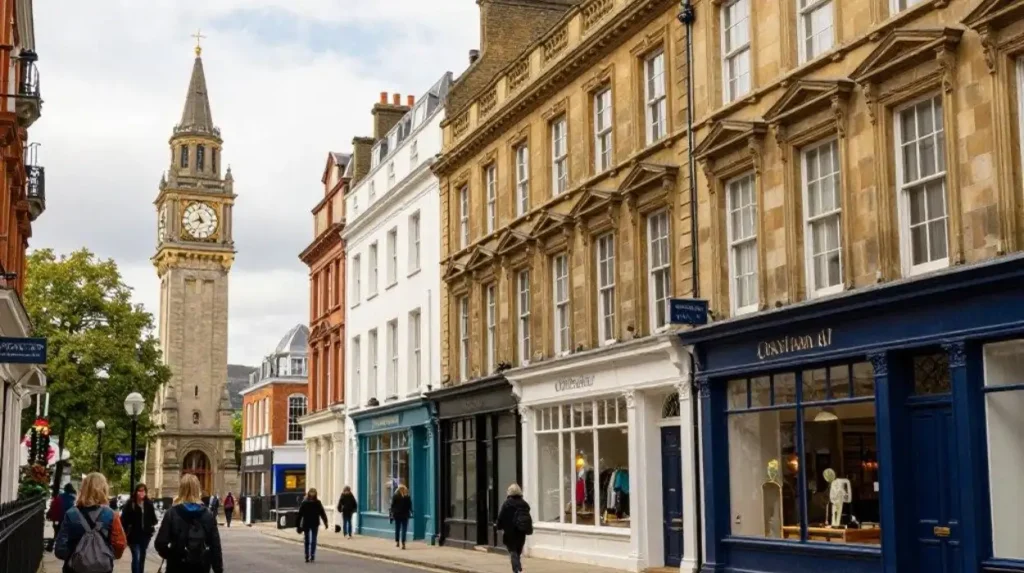
The Common contains three ponds, a Victorian bandstand, sports facilities, paths, mature trees and extensive grassland. It is open 24 hours a day, although individual facilities operate their own schedules.
Clapham also has an important architectural identity. The conservation area around the Common contains historic buildings dating from the 18th and 19th centuries. Clapham Old Town retains a concentration of heritage assets and forms an important part of the district’s historic character.
The neighbourhood’s cultural reputation also comes from theatres, galleries, live music and community events. This makes Clapham suitable for visitors seeking outdoor activities during the day and cultural or social activities in the evening.
What can you do on Clapham Common?
Visitors can walk across Clapham Common, explore its ponds, see the Victorian bandstand, use sports facilities, relax on its open grassland and attend organised events. Its large size makes it suitable for walking, recreation, photography, picnics and outdoor leisure.
Clapham Common is the best starting point for exploring the neighbourhood. Its 220-acre area provides enough space for a substantial walk without leaving the district. Lambeth Council records the Common at approximately 220 acres, equivalent to about 89 hectares.
The three ponds create distinct areas for walking and wildlife observation. The Victorian bandstand provides one of the Common’s most recognisable landmarks and serves as a useful meeting point for walks and community activities.
Visitors interested in exercise have access to sports facilities. The Common supports activities including tennis and other recreational uses, with some facilities requiring advance booking. Fishing is also subject to a permit system.
The Common is also an established events location. Lambeth’s events programme includes activities such as music performances, community festivals, running events and seasonal activities. For example, the 2026 programme includes a classical music event, Bandstand Beds Feast and organised 5K and 10K runs.
The open landscape also creates strong photography opportunities. The bandstand, ponds, mature trees, surrounding architecture and long views across the grassland provide varied subjects throughout the day.
A visit does not require a formal itinerary. Walking from the northern side towards the southern side gives visitors a practical overview of the Common while connecting naturally with Clapham Old Town and the surrounding streets.
Which historic places should you visit around Clapham?
Clapham’s strongest historic attractions include Holy Trinity Clapham, Clapham Old Town, historic buildings around the Common and the Grade II-listed Windmill. These sites reveal the area’s transformation from rural common land into an important Georgian and Victorian London suburb.
Holy Trinity Clapham is one of the area’s most significant historic buildings. The church opened for worship in 1776 and stands on the north side of Clapham Common. It is a Grade II* listed building.
The church has a strong association with William Wilberforce and the group known as the Clapham Sect. The group consisted of evangelical reformers who lived around Clapham Common and campaigned against the slave trade alongside wider religious and social reforms.
William Wilberforce moved to Battersea Rise in 1792. Other figures associated with the Clapham group included Zachary Macaulay, James Stephen and John Venn. The group flourished locally during the late 18th and early 19th centuries.
Clapham Old Town provides another important heritage area. Its streets contain historic buildings and architectural details that demonstrate the transition from a village environment to a metropolitan suburb.
Visitors interested in deeper context can explore the area’s heritage before walking the Common. As you explore the modern site, you are crossing land with a deep heritage. Read about the full to understand its origins.
The Windmill is another notable landmark on Clapham Common South Side. The building dates back at least to the early 19th century in its surviving form and historically operated as a coaching inn. It is Grade II listed.
Clapham Common itself has much older origins. Lambeth Council records references to the Common as far back as the Domesday Book of 1086. It originally served as common land associated with the manors of Battersea and Clapham.
Is Clapham Old Town worth visiting?
Clapham Old Town is worth visiting for its historic streets, architecture, cafés, restaurants, local businesses and proximity to Clapham Common. It provides a compact area for exploring Clapham’s built heritage while remaining close to the neighbourhood’s main leisure attractions.
Clapham Old Town sits beside the Common and provides an easy transition between open space and the urban neighbourhood.
Its importance comes from its concentration of historic buildings. Lambeth’s planning documentation identifies Clapham Old Town as the focus of the area’s historic significance, with a notable concentration of heritage assets.
The streets around the Old Town are particularly suitable for visitors who prefer walking rather than visiting formal attractions. Historic façades, terraces and streetscapes provide opportunities to understand how Clapham developed as London’s expansion reached South London.
The area also works well as a food and refreshment stop. Visitors can combine a walk across the Common with time in the Old Town before continuing towards Clapham High Street.
The compact geography makes this particularly practical for short visits. A traveller staying elsewhere in London can arrive at Clapham Common station, walk through the Old Town and Common, and continue towards Clapham High Street without needing extensive public transport.
Where can you experience theatre and culture in Clapham?
Omnibus Theatre and Studio Voltaire are key cultural destinations around Clapham. They provide theatre, new writing, exhibitions, music, comedy and contemporary visual arts, giving visitors alternatives to traditional London attractions while supporting the area’s independent creative sector.
Omnibus Theatre is located at 1 Clapham Common Northside. The independent theatre occupies a former library building and operates a main theatre, studio, café/bar and performance and rehearsal spaces.
Its programme includes new writing, reworked classics, modern revivals, theatre, comedy and music. Omnibus also runs community and development programmes, including opportunities for emerging theatre-makers.
The venue’s main theatre has a maximum capacity of 110 seats, while its upstairs studio accommodates up to 75 people. The intimate scale creates a distinct alternative to London’s major West End theatres.
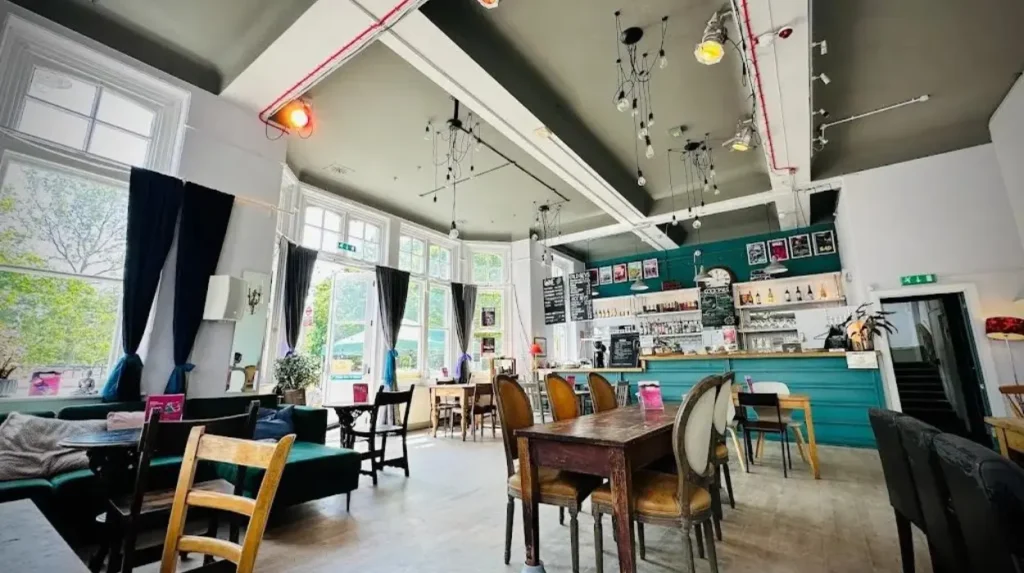
The venue also operates a café and bar from 9am until close, providing specialty coffee, tea, snacks and drinks. This makes the building useful beyond evening performances.
Accessibility is also an important consideration. Omnibus states that its performance spaces and facilities are fully accessible, with a lift serving the Upstairs Studio.
Studio Voltaire provides another cultural option. The contemporary arts organisation is located on Nelsons Row and presents exhibitions and creative programmes.
Studio Voltaire is approximately 500 metres from Clapham Common Underground station and around 600 metres from Clapham High Street Overground station. Its published opening hours are Wednesday to Sunday, 11am to 6pm.
Together, these venues make Clapham particularly useful for travellers looking for cultural activities outside London’s central tourist districts.
What are the best things to do in Clapham for food and cafés?
Clapham offers a strong combination of cafés, restaurants, pubs and independent food businesses around Clapham High Street, Clapham Old Town and the Common. These areas work well for breakfast, coffee, lunch, pre-theatre meals and evening dining.
Food and drink are central to Clapham’s visitor experience because the neighbourhood combines a substantial residential population with an active commercial centre.
Clapham High Street forms the main district centre. Lambeth Council identifies the High Street as the principal commercial spine and describes Clapham as one of the borough’s district centres.
Visitors can use the High Street as the practical link between Clapham Common Underground station, Clapham High Street Overground station and the surrounding residential streets.
The area supports different types of leisure dining. Cafés suit visitors beginning a walking itinerary, while restaurants provide convenient stops after exploring the Common. Pubs around the Common add another historic and social dimension.
The Windmill on Clapham Common is particularly notable because its hospitality function is linked to its history as a coaching inn. The Grade II-listed building also operates as a pub and hotel.
For visitors working remotely during a business trip, cafés and venue cafés also provide places to take a short break between meetings. Omnibus Theatre’s café/bar is one example, with coffee, tea, snacks and a regular opening schedule.
The best approach is to combine food with another activity rather than treating dining as a separate attraction. A common itinerary is breakfast near the High Street, a walk across the Common, an afternoon cultural visit and dinner before an evening performance.
Is Clapham suitable for families and outdoor activities?
Clapham is suitable for families and outdoor leisure because Clapham Common provides extensive open space, ponds, paths and recreational facilities. Families can combine walking, informal recreation, seasonal events and nearby cafés without travelling far between activities.
The Common’s scale is its biggest advantage for family visits. More than 85 hectares of public space provide room for walking and informal outdoor activities.
The ponds add visual interest and create opportunities for nature observation. The surrounding trees and grassland provide a contrast with the dense urban environment outside the Common.
Families can also check Lambeth’s events calendar for organised activities. The Common regularly hosts community events, sporting activities and seasonal programmes.
The Common’s accessibility is another practical advantage. Lambeth identifies it as wheelchair friendly, although specific facilities, paths and temporary event arrangements should be checked before travelling.
The nearby cafés, restaurants and shops make it easier to structure a longer family visit. Visitors can spend time outdoors, stop for food and continue exploring without requiring another journey across London.
For families with older children, cultural venues such as Omnibus Theatre provide an additional activity. Its programme changes throughout the year, so visitors should check the specific production’s age guidance before booking.
How can you explore Clapham as a walking destination?
The most efficient Clapham walking route connects Clapham Common Underground station, Clapham Old Town, Clapham Common, Holy Trinity Clapham, Clapham High Street and nearby cultural venues. This route combines green space, heritage, architecture, food and entertainment in one local itinerary.
Start at Clapham Common Underground station on the Northern line. From there, the Common and Old Town are within easy walking distance.
Walk towards Clapham Old Town before entering the Common. This provides immediate exposure to the area’s historic architecture and commercial streets.
Continue towards Holy Trinity Clapham on the Common’s north side. The church provides an important historical reference point because of its 1776 construction and connection with the Clapham Sect.
Continue across the Common towards the ponds and bandstand. This section provides the strongest outdoor element of the itinerary.
After exploring the open space, return towards Clapham High Street for food, shopping or coffee. Visitors interested in contemporary art can continue towards Studio Voltaire, while theatre-goers can finish at Omnibus Theatre.
The route can therefore be adapted according to available time. A short visit can focus on the Common and Old Town. A longer visit can include heritage, food and culture.
Transport connections make this approach particularly practical. Clapham Common and Clapham South Underground stations serve the Common, while Clapham High Street provides an Overground connection. Clapham Junction is also within walking distance of the Common and provides extensive rail connections.
How easy is it to reach Clapham from central London?
Clapham is easy to reach from central London through the Northern line, London Overground, National Rail and bus services. Clapham Common Underground station provides direct access to the Common, while Clapham High Street and Clapham Junction expand connections across South London.
The Northern line is the most straightforward option for visitors heading directly to the Common. Clapham Common Underground station is positioned close to the area’s main attractions.
Clapham South is another Northern line station serving the southern section of the Common. Lambeth lists both Clapham Common and Clapham South as Underground access points.
Clapham High Street Overground station provides another option. From there, visitors can walk towards the Common and Old Town.
Clapham Junction is an important National Rail interchange nearby. Omnibus Theatre describes Clapham Junction as a National Rail option and provides onward bus connections to its venue.
Bus services add further flexibility. Routes serving the Common and surrounding streets include services such as the 35, 37, 50, 88, 137, 155, 249, 322, 345 and 417, although routes and timetables should be checked before travelling.
For tourists, public transport is generally the most practical way to reach Clapham. The neighbourhood’s attractions are concentrated enough that visitors can then explore on foot.
What makes Clapham historically important today?
Clapham’s modern identity reflects centuries of development from common land and a rural settlement into a Victorian suburb and busy South London district. Its surviving architecture, churches, public spaces and cultural institutions preserve evidence of these different stages.
Clapham’s historical development is closely connected to the expansion of London. The Common originally supported local commoners, who used the land for grazing livestock, collecting firewood and accessing natural resources.
During the 18th century, wealthy residents increasingly built substantial houses around the Common. This changed Clapham’s social and architectural character.
The late 18th century brought another major development through Holy Trinity and the community associated with the Clapham Sect. The group’s activities connected the local neighbourhood with national debates around slavery, religion and social reform.
The 19th century brought further urbanisation. Railways and expanding public transport strengthened Clapham’s connection with the wider London metropolis. St Mary’s Clapham records the impact of horse-drawn public transport and railway expansion on the area’s development.
Clapham Junction opened in 1853, demonstrating the growing importance of railway infrastructure in South London.
The Common itself was protected from development through the Metropolitan Commons process. Lambeth Council records its acquisition by the Metropolitan Board of Works in 1877 and its subsequent designation as a Metropolitan Common.
This history remains visible today. The Common, conservation areas, listed buildings, churches and historic streets collectively provide a physical record of Clapham’s development.
Explore More Area Guide
Best Things to Do Around Vauxhall in Lambeth
Where to Spend a Quiet Afternoon in Lambeth, South London 2026
What is the best way to plan a day around Clapham?
A full day in Clapham works best when it combines the Common, Old Town, heritage sites, food and culture. Start outdoors, explore historic streets around midday, use cafés or restaurants for breaks, then finish with theatre, music or another evening activity.
A practical morning begins at Clapham Common Underground station. Walk through Clapham Old Town before spending time on the Common.
The middle of the day works well for heritage exploration. Visit the area around Holy Trinity and examine the historic buildings surrounding the Common. The conservation area contains substantial Georgian and Victorian architecture.
Lunch can take place around Clapham High Street or the Old Town. The commercial centre provides convenient access to food and drink before an afternoon activity.
An afternoon cultural programme can focus on Studio Voltaire or Omnibus Theatre. Both provide alternatives to the major central London cultural institutions. Studio Voltaire focuses on contemporary art, while Omnibus presents theatre and other live performance.
An evening itinerary can include dinner followed by a performance. Omnibus Theatre operates a café/bar and presents changing programmes of theatre, comedy, music and new writing.
For visitors with limited time, prioritise Clapham Common and Clapham Old Town. For a longer stay, add Holy Trinity, a cultural venue and an evening meal.
Clapham’s strongest advantage is the concentration of different leisure experiences within a relatively compact South London district. Visitors can move from green space to heritage, dining and culture without depending on long cross-London journeys.
Why should Clapham be included in a South London itinerary?
Clapham deserves a place on a South London itinerary because it combines one of London’s major public commons with heritage architecture, cultural venues, food businesses and excellent transport links. It offers outdoor recreation, history and entertainment within a compact, walkable neighbourhood.
Clapham provides a different experience from central London’s major tourist zones. Its principal attractions are integrated into an active residential and commercial district rather than isolated visitor sites.
The Common provides the geographical centre. Its 220 acres, three ponds and Victorian bandstand establish the outdoor component.
Clapham Old Town and the conservation area provide the historical component. Holy Trinity provides a direct connection with 18th-century architecture and the Clapham Sect.
Clapham High Street provides the commercial component, while Omnibus Theatre and Studio Voltaire provide cultural experiences.
This combination also makes Clapham suitable for different visitor types. Tourists can explore heritage and open space. Residents can use the Common and cultural programme for regular leisure. Digital workers can combine café time with walking breaks. Business travellers can use the neighbourhood for dining and evening entertainment after meetings.
The area also remains relevant because its public spaces and cultural institutions continue to host organised activities. Lambeth’s events programme demonstrates the Common’s continuing role as a venue for community, sporting and cultural events.
Clapham therefore works as both a destination and a base for exploring wider South London. Its location places visitors within easy reach of Battersea, Brixton, Balham, Stockwell and Vauxhall.
For anyone asking what to do around Clapham in Lambeth, the strongest answer is to combine the area’s green heart with its historic streets, cultural venues and local food scene. That combination captures the defining characteristics of Clapham while leaving enough flexibility for different travel schedules.
What are the best things to do around Clapham in Lambeth?
The best things to do around Clapham include exploring Clapham Common, visiting Clapham Old Town, seeing Holy Trinity Clapham, visiting Omnibus Theatre and Studio Voltaire, enjoying local cafés and restaurants, and walking through the area’s historic streets.