Key Points
- Preferred Buyer Identified: The Buy Back Brixton initiative has made an agreement with the existing market owners, TPG AG Real Estate and Hondo Enterprises, for being declared the preferred buyer for Brixton Village and Market Row.
- Fund Required: The alliance of grassroots needs £50 million in order to make this deal happen and save the historic commercial site from getting into the hands of private equity developers.
- Present Financial Position: The alliance has accumulated £6.5 million in formal financial commitments as well as about £579,000 via crowdsourced funds.
- Time Limitations: Buy Back Brixton is allowed eight weeks to conduct due diligence and conclude legally binding contracts, after which four months are needed to raise the money to finalize the purchase.
- Approval from the Seller: TPG AG Real Estate and Hondo Enterprises representatives have welcomed the proposal, describing it as a “compelling, mission-driven proposal for the market’s future.”
- Future Plans: The alliance will make the historic indoor markets become a community-run, democratic enterprise that will value the independence of locals above business speculations.
South London, Brixton Village (South London News) September 9, 2026 – Community campaigners and local shop owners face a high-stakes race against the clock to assemble £50 million in capital after being named the preferred buyer for South London’s historic Brixton Village and Market Row. As reported by BBC News, the collective campaign operating under the banner Buy Back Brixton confirmed that an agreement was struck with the site’s existing commercial landlords to execute the sale within a strictly enforced timeframe, fending off interest from rival commercial property developers.
- Key Points
- What is the strategy behind the Buy Back Brixton community campaign?
- How did the current owners come to sell the property?
- What financial mechanisms will be used to complete the purchase?
- Background of the particular development
- How this development can affect the community and local market traders
The alliance behind the bid combines the operational forces of the Brixton Traders and Community Association (BTCA) alongside youth activist group The Advocacy Academy. Financial figures released by the campaigners demonstrate that the group has already amassed £6.5 million in strategic pledges, supplemented by more than £579,000 generated through direct public crowdfunding efforts.
In an official public statement released on behalf of the current owners, corporate joint-venture partners TPG AG Real Estate and Hondo Enterprises, a spokesperson confirmed that the joint owners were “delighted” to select the community group as the preferred purchaser. The representative stated that Buy Back Brixton presented a “compelling, mission-driven proposal for the market’s future.”
Under the precise terms of the arrangement, Buy Back Brixton was granted an initial eight-week window to undertake full corporate due diligence and formally exchange legal contracts. Once contracts are successfully exchanged, the campaign will have up to a further four months to raise the multi-million-pound balance necessary to complete the asset transfer. The coalition stated that alongside these aggressive fundraising drives, it intends to establish a permanent democratic governing structure to safeguard the markets for future generations.
What is the strategy behind the Buy Back Brixton community campaign?
The ambition to secure £50 million represents a landmark effort by local residents and independent shopkeepers to halt decades of commercial gentrification across Lambeth. As reported by social affairs correspondent Jessica Murray of The Guardian, the Buy Back Brixton campaign emerged directly from local fears that a private equity buyer would acquire the properties and subsequently price out traditional vendors through escalating rents and service charges.
As reported by Jessica Murray of The Guardian, Meera Ghanshamdas, co-chair of the Brixton Traders Community Association (BTCA) and co-director of Roundtable Books, stated:
“We want to make this people over profit. This is much more than a commercial space for us.”
She added:
“Brixton has a huge cultural legacy, but it also has a resistance history. And people are coming out for that.”
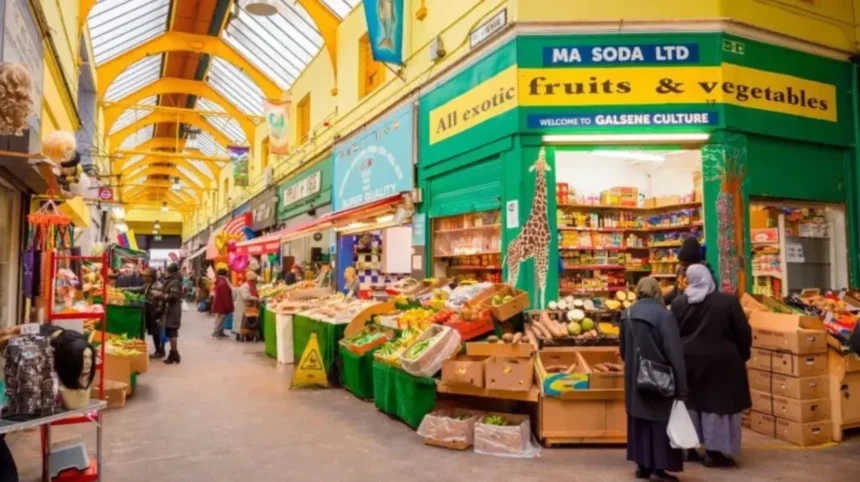
The commercial complex consists of two famous covered arcades—Brixton Village and Market Row—housing more than 140 independent small businesses, including long-standing grocery stalls, eateries, and cultural retail shops representing vendors from over 50 countries.
As reported by Tom Midlane of Novara Media, a joint statement issued by the Brixton Traders Community Association and The Advocacy Academy highlighted the economic contribution of local vendors, asserting:
“Local traders actively create the wealth that is then taken out of the community by private interests, and yet are told time and time again that their needs don’t matter and that they are replaceable by other businesses/chains who can compete with rising rents, despite being the ones to build this space into what it is.”
Explore More Brixton News
Brixton House Hosts Youth Employment Symposium in Lambeth 2026
South London Film Festival Returns with Star Lineup Brixton 2026
How did the current owners come to sell the property?
The real estate portfolio comprising Brixton Village and Market Row was acquired in 2018 through a joint venture involving American private equity investment firm TPG Angelo Gordon and local property entity Hondo Enterprises, which is run by Texan businessman and DJ Taylor McWilliams.
As reported by Jessica Murray of The Guardian, Taylor McWilliams had previously sought to build a 20-storey office tower adjacent to the market structure; however, that controversial planning application was formally withdrawn in 2023 following intense local opposition and activist campaigns.
Following the withdrawal of development plans, the property portfolio was initially marketed for sale at £80 million, but failed to find a commercial buyer at that price tag. By mid-2026, the asking figure was revised downward to £50 million, prompting a competitive bidding process.
As reported by Megan Howe of The Standard, Lambeth Council intervened by officially designating Brixton Village and Market Row as Assets of Community Value (ACV). As reported by Megan Howe of The Standard, Councillor Martin Abrams, leader of Lambeth Council, praised the designation as a crucial protective step, stating:
“This is a once in a generation opportunity for community action to ensure this cherished local asset is held in local hands. I’m thrilled that, by approving this application, our administration has given the community this opportunity.”
The Asset of Community Value designation provided legal leverage and breathing space for local groups, forcing a moratorium on immediate commercial sales and allowing the Stour Trust and Buy Back Brixton to submit a formal counter-bid against commercial asset management funds.
What financial mechanisms will be used to complete the purchase?
To bridge the gap between the £7 million currently secured in pledges and public donations and the £50 million valuation, the Buy Back Brixton coalition is preparing a complex financing structure.
As reported by Shado Magazine, organizers including Saba Shafi, Dan Taylor, and Liv Francis-Cornibert from The Advocacy Academy spearheaded public rallies and digital outreach campaigns, successfully driving initial public micro-donations over £250,000 within four days before climbing past half a million pounds.
Beyond grassroots crowdfunding, the coalition plans to leverage capital from social impact investors, philanthropic foundations, ethical lending institutions, and public municipal support. The group intends to issue community shares and secure institutional debt that can be serviced through future market rental income, ensuring the financial debt is underwritten by the market’s ongoing operations without requiring excessive rent increases on existing tenants.
As reported by Jessica Murray of The Guardian, Carole Mourier, owner of Full Moon Designs in the market, reflected on the unprecedented nature of the undertaking, stating:
“We’re the first people to do this, and it would be amazing to succeed. Not just for us, but to also show other places, other markets, that community is really important. People want the community.”
Background of the particular development
The struggle over Brixton Village and Market Row is deeply tied to the social and cultural history of South London. Built in the 1920s and 1930s, the covered arcades became the commercial hub for Caribbean immigrants who arrived in the UK on the HMT Empire Windrush in 1948 and settled in Lambeth. Over the subsequent decades, the markets grew into an essential socio-economic sanctuary where Windrush-generation families could buy regional food produce, traditional textiles, and cultural goods unavailable elsewhere in Britain.
However, over the past fifteen years, the area became a focal point for intense corporate gentrification. In 2018, when TPG Angelo Gordon and Hondo Enterprises acquired the markets, commercial strategy shifted toward nightlife, dining, and boutique retail, leading to rising rents and service charges. Tensions culminated in public protests over the displacement of long-standing Afro-Caribbean traders and controversial redevelopment proposals, such as the proposed 20-storey tower block. The decision by the owners to put the market up for sale in 2025 opened a pathway for traders to pursue full community ownership under UK asset management legislation, culminating in the current preferred buyer agreement.
How this development can affect the community and local market traders
If the Buy Back Brixton campaign successfully completes the £50 million purchase within the six-month deadline, the development will fundamentally transform the economic trajectory for the 140-plus independent traders operating across the sites.
Under a democratic community ownership model, stallholders and local vendors will no longer be exposed to speculative rent hikes driven by private equity profit margins. Rent structures will instead be calibrated to ensure long-term business viability, directly preserving Afro-Caribbean cultural heritage, traditional food vendors, and independent shops. Furthermore, profits generated by the market will remain within the local Lambeth economy rather than being siphoned off by offshore investment funds, funding local youth programmes, public amenities, and infrastructure repairs.
Conversely, if the group fails to raise the remaining £43.5 million required within the four-month post-contract window, the preferred buyer status will lapse, returning the site to the open commercial market. Under that outcome, a private equity purchaser would likely move to maximize yields, leading to substantial rent increases, tenant turnover, and the potential displacement of heritage vendors in favour of national retail chains, fundamentally altering the cultural landscape of South London.