Key Points
- Southwark Council and waste management contractor Veolia have issued an urgent warning to residents to stop disposing of batteries and electrical items in household bins.
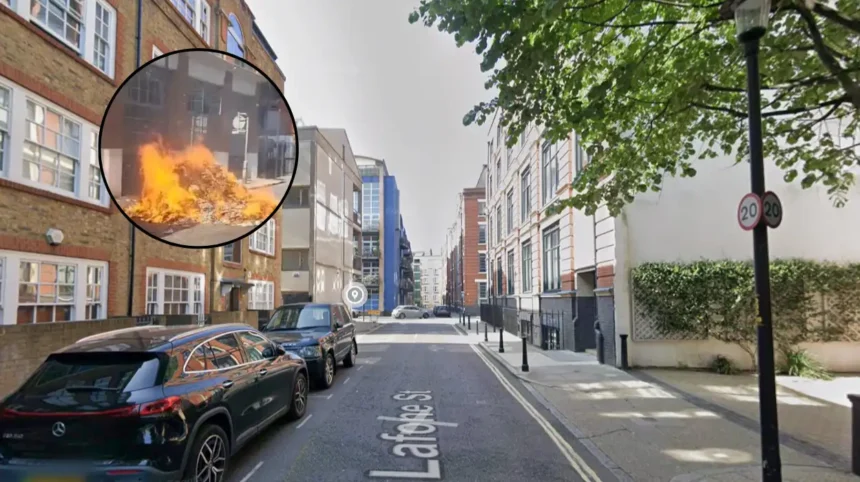
- A refuse vehicle caught fire on Lafone Street, just off Tower Bridge Road, on Monday, 3rd August, shortly after 2:00 pm during a routine collection round.
- The incident marks the third waste-related fire in the London Borough of Southwark within a single seven-day period.
- Collection crews were forced to eject the burning recycled material directly onto the street to manage the blaze, causing temporary local road closures.
- While the specific cause of the Lafone Street incident remains under investigation, industry leaders highlight lithium-ion batteries, discarded electronics, and gas canisters as primary triggers when compacted inside collection vehicles.
- Authorities are appealing directly to the public to use dedicated recycling facilities and collection points to prevent future high-risk fires.
Southwark (South London News) September 16, 2026 – Southwark Council and waste contractor Veolia have issued an urgent appeal to residents asking them not to place batteries, gas canisters, or small electrical appliances inside standard household rubbish or recycling bins following a serious vehicle fire off Tower Bridge Road. The emergency occurred at approximately 2:00 pm on Monday, 3rd August, on Lafone Street when a refuse collection vehicle carrying recyclable materials caught fire mid-route. The blaze forced the collection crew to execute emergency procedures by dumping the flaming contents onto the roadway to isolate the threat, leading to immediate road closures and localized traffic disruption while emergency services secured the scene.
- Key Points
- Why did a refuse vehicle catch fire on Lafone Street?
- What risks do lithium-ion batteries pose during waste collection?
- What are the rules for disposing of batteries and electrical items in Southwark?
- Background of waste vehicle fires and battery disposal hazards
- Predictions: How will this development affect Southwark residents and service delivery?
This event marks the third waste-related blaze within the London Borough of Southwark in a span of just seven days, underscoring a growing operational hazard faced by frontline municipal service crews. Although investigation teams have not yet confirmed the precise ignition source for the Lafone Street incident, operational specialists from Veolia indicated that fires inside collection vehicles are predominantly triggered by discarded lithium-ion batteries, wireless electronics, or pressurized containers. When the hydraulic compaction mechanisms inside waste trucks crush these items, volatile chemical elements can breach, spark, and violently ignite surrounding dry, recyclable paper and card.
To mitigate further risks, Southwark Council and Veolia are urging the public to utilize safe disposal methods for all consumer electronics, batteries, and hazardous materials. Free collection points, designated drop-off locations at supermarkets, and municipal household waste recycling centers are available across the borough to handle lithium-ion items safely without exposing collection personnel, equipment, or nearby infrastructure to fire hazards.
Why did a refuse vehicle catch fire on Lafone Street?
The fire on Lafone Street broke out while a Veolia collection crew was carrying out routine municipal recycling pickups. As the crew operated their vehicle, smoke and flames were detected coming from the main loading hopper where loose recyclable paper, cardboard, and plastic packaging were being held.
To prevent the entire collection vehicle from being fully consumed by fire, the operators activated emergency protocols. This process requires the driver to immediately halt the vehicle, identify a safe clearance space away from immediate residential structures, and eject the ignited waste contents directly onto the pavement or street. Once the burning material was discharged onto Lafone Street, local emergency responders were able to suppress the flames directly. The street was temporarily cordoned off to vehicle and pedestrian traffic until the debris could be fully extinguished, cooled, and safely reloaded for transport.
What risks do lithium-ion batteries pose during waste collection?
Lithium-ion batteries—commonly found in mobile phones, laptops, electric toothbrushes, vaping devices, and wireless headphones—pose a distinct safety challenge for waste management logistics. Unlike conventional alkaline batteries, lithium-ion units store a high density of energy within lightweight, fragile casings.
When residents toss discarded electronics into household refuse or dry recycling bins, those items are transferred into the rear of collection trucks equipped with heavy hydraulic rams. As these rams compact the collected waste to maximize vehicle capacity, the physical pressure can easily puncture or puncture thin battery cells. A punctured lithium-ion battery can undergo rapid thermal runaway, releasing intense heat, toxic gas, and sparks. When surrounded by dry paper, cardboard, or plastic packaging inside an enclosed vehicle bay, ignition can occur within seconds, rapidly evolving into a severe blaze.
What are the rules for disposing of batteries and electrical items in Southwark?
Southwark Council regulations strictly prohibit placing any batteries, electrical equipment, or gas canisters into standard green household refuse bins or blue recycling bins. Instead, residents are required to separate these materials from everyday domestic waste stream outputs.
For small electrical appliances and loose batteries, residents are encouraged to use specific recycling channels:
- Dedicated kerbside bag collection: Placing batteries inside clear, separate bags left on top of bin lids (where offered by local collection services).
- Retail drop-off points: Utilizing designated collection bins located at major supermarkets, appliance retailers, and hardware stores across the borough.
- Community waste hubs: Dropping off old electronics and batteries at designated council recycling banks or local community infrastructure sites.
- Household Reuse and Recycling Centre: Bringing larger electronic equipment, power tools, and pressurized containers directly to official civic amenity facilities.
Background of waste vehicle fires and battery disposal hazards
The issue of “zombie batteries”—discarded power cells that reignite unexpectedly after being thrown into conventional rubbish streams—has emerged as a major hazard for local authorities and waste contractors across the United Kingdom. According to national fire safety data published by Environmental Services Association (ESA) trade bodies, waste fires caused by improperly discarded batteries cost the UK economy hundreds of millions of pounds annually in structural damage, operational downtime, and emergency service deployments.
Modern consumer habits have dramatically increased the volume of battery-powered technology entering urban households. The rapid rise of single-use disposable e-cigarettes, wireless audio devices, personal grooming tools, and rechargeable toys means that volatile lithium-ion cells are more ubiquitous than ever. Because these batteries are frequently integrated deep inside plastic casings, consumers often fail to recognize them as hazardous waste, leading to improper disposal in domestic bins.
Over recent years, waste management firms including Veolia have invested heavily in public safety awareness campaigns aimed at diverting small electronics away from standard compaction vehicles. Despite these efforts, municipal crews regularly face mid-route emergencies. When a compaction fire occurs, drivers must quickly decide whether to risk total vehicle loss and structural fire spread or dump burning material onto public roadways. The incident on Lafone Street highlights the immediate operational disruption caused when these safety protocols must be deployed in high-density urban environments.
Predictions: How will this development affect Southwark residents and service delivery?
The occurrence of three waste fires within a seven-day window in Southwark is likely to trigger immediate municipal policy adjustments and operational changes across the borough’s refuse collection ecosystem.
For local residents, this development will likely lead to heightened scrutiny of household waste containers. Southwark Council and Veolia may instruct collection crews to perform visual spot-checks on recycling bins prior to tipping. Bins found to contain discarded electronics, power banks, or loose batteries could be left uncollected with warning tags attached, requiring residents to sort their waste before the next scheduled pickup. In the longer term, the council may introduce mandatory kerbside sorting protocols or roll out dedicated battery collection attachments on all standard municipal trucks.
From a service and financial perspective, repeated fire incidents put additional pressure on municipal budgets and emergency services. Every instance requiring vehicle ejection or fire brigade intervention results in temporary road closures, route delays, cleanup costs, and potential damage to expensive municipal fleet vehicles. If vehicle fires continue at this frequency, local taxpayers could ultimately absorb higher operational costs tied to insurance premiums, fleet repairs, and emergency waste remediation. Public messaging and enforcement are expected to intensify in the coming weeks to prevent similar disruptions along busy London thoroughfares.