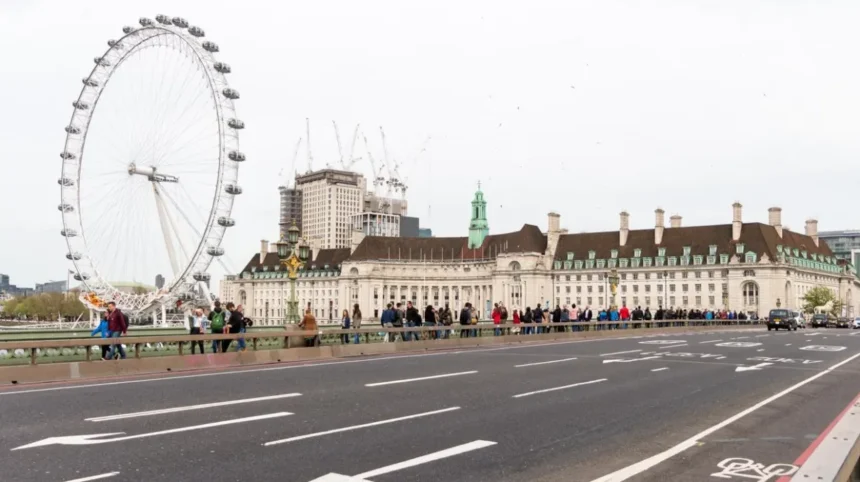
Lambeth is a large inner-London borough stretching along the south bank of the River Thames and extending south through districts such as Waterloo, Vauxhall, Kennington, Brixton, Clapham and Streatham. For a first visit, the most practical starting area is the Thames-side section around Waterloo, South Bank, Lambeth Palace and Westminster Bridge because it concentrates major attractions, historic landmarks, riverside walking routes and public transport connections within a compact area.
- What is the best area to start exploring Lambeth?
- Why is the Thames riverside a useful first stop in Lambeth?
- Should first-time visitors begin at Westminster Bridge or Waterloo?
- What should visitors see around the London Eye first?
- Why should visitors include Lambeth Palace in their first Lambeth itinerary?
- What makes the Garden Museum an important starting attraction?
- Which South Bank attractions should first-time visitors combine?
- Is Vauxhall a good second area to explore after South Bank?
- Should first-time visitors explore Kennington after the riverside?
- Is Brixton a good place for a first Lambeth visit?
- Which Lambeth parks are useful for first-time visitors?
- How should visitors plan a first Lambeth sightseeing route?
- What should digital nomads and business travellers know about starting in Lambeth?
- What is the most efficient first-time visitor strategy for Lambeth?
The borough combines major London landmarks with historic neighbourhoods, public parks, museums, theatres, markets and community spaces. A visitor who starts beside the Thames can understand Lambeth’s geography before moving inland towards Vauxhall, Kennington or Brixton.
Lambeth also has an important historical relationship with Westminster across the river. Lambeth Palace has been the London home of the Archbishop of Canterbury for more than 800 years, while the former St Mary-at-Lambeth church now houses the Garden Museum.
For visitors planning a first sightseeing day, the key is to choose a starting point that connects several attractions rather than treating every Lambeth district as a separate destination.
What is the best area to start exploring Lambeth?
The best practical starting area for first-time visitors is South Bank around Westminster Bridge, the London Eye and the Queen’s Walk, because it provides immediate access to major attractions, Thames views, pedestrian routes, transport links and nearby historic sites.
South Bank is the most straightforward introduction to northern Lambeth. The riverside district sits on the south side of the Thames opposite Westminster and central London. Visit London describes South Bank as stretching between Lambeth Bridge and Blackfriars Bridge, giving visitors a long pedestrian-friendly riverside corridor.
The area includes the London Eye, Southbank Centre, National Theatre, BFI Southbank, Hayward Gallery, SEA LIFE London Aquarium and London Dungeon. These attractions create a concentrated sightseeing zone suitable for short visits and full-day itineraries.
Westminster Bridge is particularly useful as an orientation point. From here, visitors can see the Houses of Parliament across the river, walk towards the London Eye, continue along Queen’s Walk and then reach Lambeth Palace and the Garden Museum.
This starting point also works well for visitors arriving by rail. Waterloo station provides connections across southern and south-western England, while Waterloo Underground station serves the Bakerloo, Jubilee, Northern and Waterloo & City lines. Southwark Underground station provides another nearby Jubilee line connection.
For a first visit, South Bank therefore works as a geographical, cultural and transport gateway into Lambeth.
Why is the Thames riverside a useful first stop in Lambeth?
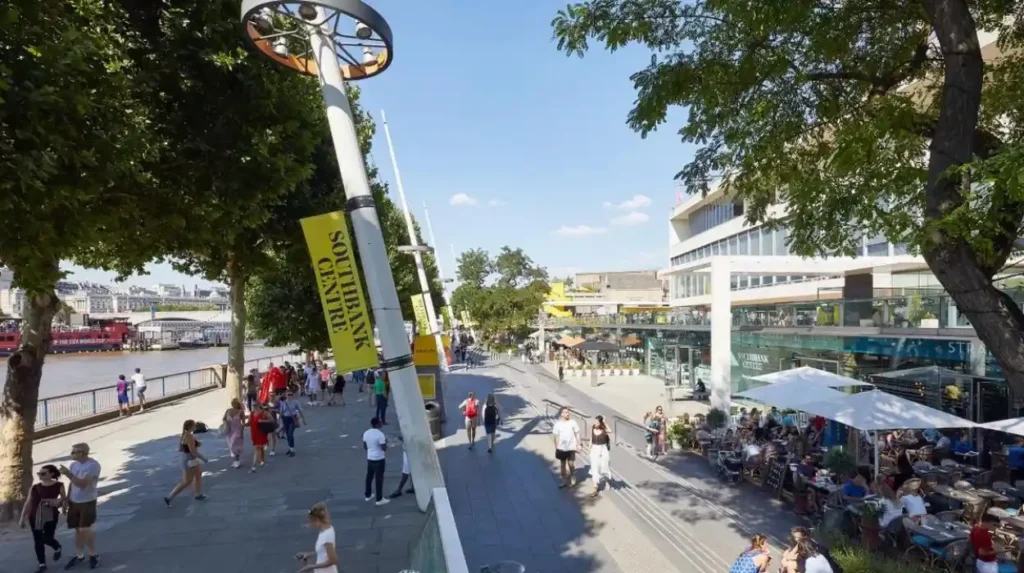
The Thames riverside gives first-time visitors a clear introduction to Lambeth because the pedestrian route connects Westminster Bridge, the London Eye, Southbank Centre, National Theatre, Lambeth Palace and the Garden Museum within one central sightseeing corridor.
The riverside is important because it explains Lambeth’s relationship with central London. The borough occupies the southern bank of the Thames, directly opposite major Westminster landmarks.
The Queen’s Walk forms an important pedestrian route along South Bank. It provides access to attractions, restaurants, cultural venues and viewpoints without requiring visitors to repeatedly use public transport. Visit London identifies the riverside promenade as extending between Lambeth Bridge and Tower Bridge, although different sections pass through different London boroughs.
The section closest to Lambeth contains several major landmarks. The London Eye stands beside County Hall and Westminster Bridge. The official London Eye information identifies its location as the South Bank opposite the Houses of Parliament.
Further east, visitors reach Southbank Centre and the National Theatre. These institutions make the riverside particularly useful for travellers interested in performing arts, contemporary culture and architecture.
The riverside also provides convenient access to food and refreshments. Restaurants, cafés, food markets and riverside venues operate throughout South Bank and Waterloo. Visit London also identifies Lower Marsh, Gabriel’s Wharf, Leake Street Arches and the Southbank Centre Food Market as food and shopping areas.
Starting beside the Thames therefore allows visitors to combine sightseeing, walking, dining and cultural attractions without complicated travel between locations.
Should first-time visitors begin at Westminster Bridge or Waterloo?
Westminster Bridge is the stronger sightseeing orientation point, while Waterloo is the stronger transport arrival point. Visitors arriving by train can start at Waterloo and walk towards the Thames, while visitors already in central London can begin at Westminster Bridge.
Waterloo is one of the most useful arrival points for visitors entering Lambeth from elsewhere in England. London Waterloo connects London with destinations including Bournemouth, Southampton, Exeter and Weymouth. Waterloo East provides services towards Kent and East Sussex.
The Underground station is also highly connected. The Bakerloo, Jubilee, Northern and Waterloo & City lines serve Waterloo Underground station. This makes it practical for visitors staying elsewhere in London.
From Waterloo, visitors can walk towards the South Bank attractions through the Waterloo district. Lower Marsh provides a local shopping and food route before reaching the riverside.
Westminster Bridge serves a different purpose. It immediately places the visitor beside one of London’s most recognisable views. The bridge connects the Palace of Westminster on the north bank with the Lambeth side of the Thames.
A visitor beginning at Westminster Bridge can walk south-east towards the London Eye and then continue along the river. Alternatively, the visitor can walk towards Lambeth Palace and the Garden Museum.
The choice therefore depends on arrival circumstances. Waterloo is the practical transport gateway; Westminster Bridge is the immediate sightseeing gateway.
What should visitors see around the London Eye first?
The London Eye is an effective first attraction because its riverside position provides elevated views across central London and places visitors beside County Hall, Westminster Bridge, Queen’s Walk and other major South Bank attractions.
The London Eye is a large observation wheel on the South Bank of the Thames. Its position opposite the Houses of Parliament gives visitors a strong geographical reference point.
The official London Eye information places the attraction at Riverside Building, County Hall, Westminster Bridge Road, London SE1 7PB.
A first-time visitor can use the London Eye area as the beginning of a wider walking route. County Hall is immediately adjacent, while Westminster Bridge provides access across the river.
The route towards Southbank Centre continues along the riverside. Visitors encounter Jubilee Gardens, cultural venues, restaurants and public spaces along the way. Visit London identifies the pedestrianised Queen’s Walk as one of the defining features of South Bank.
The London Eye is also useful for visitors who want an overview before exploring on foot. The elevated viewpoint provides a broad visual understanding of the Thames, Westminster and surrounding central London.
Visitors should check current opening times and ticket arrangements before travelling because attraction schedules and prices change.
Why should visitors include Lambeth Palace in their first Lambeth itinerary?
Lambeth Palace introduces visitors to more than 800 years of Lambeth history and remains the London home of the Archbishop of Canterbury. Its location beside the Thames makes it a natural heritage stop between Westminster Bridge, Lambeth Bridge and the Garden Museum.
Lambeth Palace is one of the borough’s most important historic landmarks. The Archbishop of Canterbury has occupied the site since 1197, and the palace has developed through medieval, Tudor, Victorian and modern periods.
The palace contains significant historic spaces. These include Morton’s Tower, the Chapel, Crypt Chapel, Guard Room, Great Hall and Lollards’ Tower. Morton’s Tower was built around 1490 by Cardinal John Morton, while the Great Hall has medieval origins and was reconstructed after the Commonwealth period.
The palace gardens cover just over 10 acres and form one of the oldest gardens in England.
However, Lambeth Palace is a working residence and is not open to the public every day. The official visitor information states that regular palace tours are currently not running, with future tour arrangements to be announced. Special open days provide opportunities for public access.
This distinction matters for first-time visitors. Lambeth Palace belongs in the itinerary as a major landmark, but visitors should confirm access before making it the central attraction of a particular day.
As you explore the modern riverside around the palace, you are crossing land with a deep heritage. Read about the full [Insert Anchor Text for Lambeth History Article Here] to understand its origins.
What makes the Garden Museum an important starting attraction?
The Garden Museum provides a distinctive introduction to Lambeth because it combines a medieval church, British gardening history, historic collections and gardens beside Lambeth Palace, creating a compact heritage attraction near the River Thames.
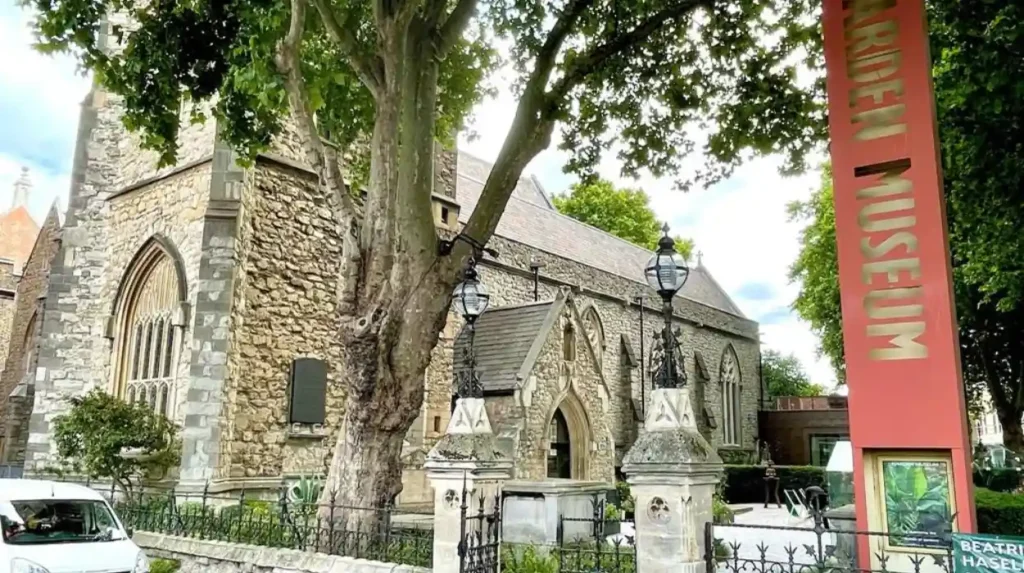
The Garden Museum occupies the former St Mary-at-Lambeth Church beside Lambeth Palace. The museum describes itself as Britain’s only museum dedicated to the art, history and design of gardens.
The site has medieval origins. A wooden church existed here by 1062, and the Domesday survey of 1086 recorded the church. The medieval tower dates from 1377 and is identified by the museum as the oldest surviving structure in the borough of Lambeth.
The church became the Garden Museum after a major conservation campaign. Rosemary and John Nicholson established the organisation in 1977 to save the abandoned church from demolition.
The museum also preserves the story of John Tradescant, a prominent gardener and plant collector who lived in Lambeth. His tomb stands in the museum’s courtyard garden.
The permanent collection covers British gardening from the 16th century to the present day. Displays include garden tools, design history and figures such as Gertrude Jekyll and Humphry Repton.
The Garden Museum is also within walking distance of Vauxhall, Westminster, Waterloo and Lambeth North stations.
For visitors interested in history, architecture, gardens or design, this is one of the strongest places to begin understanding Lambeth beyond its major tourist attractions.
Which South Bank attractions should first-time visitors combine?
First-time visitors can combine the London Eye, Queen’s Walk, Southbank Centre, National Theatre, BFI Southbank, Garden Museum and Lambeth Palace into a Thames-focused itinerary, selecting attractions according to available time, interests and opening schedules.
South Bank works particularly well because attractions are concentrated along a relatively compact riverside route.
The Southbank Centre is a major arts complex containing venues for music, theatre, dance, literature and visual arts. Its buildings include Royal Festival Hall, Queen Elizabeth Hall and the Hayward Gallery.
The National Theatre provides another major cultural landmark. It presents theatre productions throughout the year and sits directly beside the Thames.
The BFI Southbank focuses on cinema and film culture. The nearby BFI IMAX provides a separate large-screen cinema experience.
The Hayward Gallery is part of the Southbank Centre and presents contemporary art exhibitions.
The London Eye, SEA LIFE London Aquarium and London Dungeon provide more entertainment-focused options. These attractions are especially relevant to visitors travelling with children or seeking ticketed experiences.
Visitors do not need to enter every attraction. The riverside itself provides a sightseeing experience through architecture, public art, bridges, city views and pedestrian routes.
This makes South Bank useful for visitors with different time budgets. A short visit can focus on the river and landmarks, while a full day can include museums, theatre, food and ticketed attractions.
Is Vauxhall a good second area to explore after South Bank?
Vauxhall is a useful second stop because it extends a first Lambeth visit southwards from the Thames into an area containing Vauxhall Park, Vauxhall Pleasure Gardens, Vauxhall City Farm, transport connections and historic links to the former Vauxhall Pleasure Gardens.
Vauxhall sits south of the Thames and connects central Lambeth with Stockwell and surrounding neighbourhoods.
Vauxhall Park is a Victorian public park between Vauxhall and Stockwell. It contains a playground, tennis and basketball courts, café, orchard, landscaped areas and a lavender garden. The park opened in 1890.
The park also has a strong social history. Millicent Fawcett, a leading suffragist, supported the campaign to establish the park after the death of her husband Henry Fawcett.
Vauxhall Pleasure Gardens provides another historical connection. The original privately managed pleasure gardens were laid out in 1661 and became a major London entertainment venue during the 18th and early 19th centuries. They finally closed in 1859.
The modern public park occupies part of the historic site.
Vauxhall is therefore useful for visitors who have already experienced the central riverside and want to understand a different side of Lambeth. It combines green space, transport, local history and urban neighbourhood character.
Should first-time visitors explore Kennington after the riverside?
Kennington is a useful next destination for visitors interested in residential Lambeth, political history, public parks and local architecture. Its position between Waterloo, Vauxhall and Brixton makes it an effective transition from the central riverside to southern Lambeth.
Kennington sits inland from the Thames and provides a different visitor experience from South Bank. It has fewer concentrated international tourist attractions but offers a stronger neighbourhood perspective.
Kennington Park provides open space, while nearby streets contain historic residential architecture and connections to London’s political and social history.
The area also provides access to the Oval, the international cricket ground associated with Surrey County Cricket Club. The venue has hosted major cricket matches for generations and remains one of the most recognisable sporting landmarks in south London.
For first-time visitors, Kennington works better as a second-stage destination than as the initial orientation point. Starting along the Thames gives a clearer introduction to Lambeth’s central geography before moving south.
The area is also relevant for visitors interested in everyday London. Residential streets, local cafés, parks and community facilities demonstrate how Lambeth functions beyond the major visitor attractions.
Is Brixton a good place for a first Lambeth visit?
Brixton provides a strong introduction to Lambeth’s southern identity through markets, food, music, independent businesses, cultural venues and public spaces. It works particularly well as a second-day destination after visitors understand the borough’s Thames-side landmarks.
Brixton is one of Lambeth’s best-known neighbourhoods and has a distinct cultural identity.
Brixton Market and surrounding streets provide food, retail and independent businesses. The area has long-standing connections with Caribbean culture and London’s Black British history.
Brixton also has strong transport connections through Brixton Underground station and National Rail services. This makes it practical for visitors staying in central London.
Brixton Village provides restaurants, food businesses and independent retail within covered market spaces. The wider Brixton area also contains cultural venues and music-related sites.
The neighbourhood demonstrates why Lambeth should not be understood solely through its riverside attractions. The borough contains different urban environments, from the international visitor zone around the London Eye to the community-focused streets of Brixton.
For a first-time visitor with only a few hours, Brixton does not replace South Bank as the most efficient starting point. For a longer Lambeth itinerary, however, it adds important cultural and social context.
Which Lambeth parks are useful for first-time visitors?
Lambeth has a broad network of parks and open spaces, including Archbishop’s Park, Vauxhall Park, Brockwell Park and Clapham Common. These spaces give visitors opportunities to experience the borough beyond museums, landmarks, theatres and busy riverside attractions.
Archbishop’s Park sits close to Lambeth Palace and Waterloo. Its history is directly connected to the palace. Around nine acres of palace garden land were opened for public benefit during the 19th century, and Archbishop’s Park formally opened in 1901.
Vauxhall Park provides Victorian landscaping, sports facilities, a café, playground and orchard.
Brockwell Park is a large green space with ponds, trees, ancient oaks, open meadows and a walled flower garden.
Clapham Common covers more than 85 hectares and is one of London’s largest and oldest public open spaces.
These parks serve different visitor purposes. Archbishop’s Park fits naturally into a central heritage itinerary. Vauxhall Park works with a Vauxhall neighbourhood visit. Brockwell Park suits visitors exploring Brixton and Herne Hill. Clapham Common works well for visitors continuing towards Clapham.
How should visitors plan a first Lambeth sightseeing route?
A practical first-day route starts at Waterloo or Westminster Bridge, follows the Thames through the London Eye and South Bank, continues towards Lambeth Palace and the Garden Museum, then extends to Vauxhall or another southern neighbourhood if time allows.
A compact first-day route can begin at Waterloo station for visitors arriving by train or Underground. From Waterloo, walk towards the South Bank and the Thames.
The first riverside section can include Westminster Bridge, County Hall and the London Eye. Visitors can then continue along Queen’s Walk towards Southbank Centre and the National Theatre.
The route can then continue towards Lambeth Palace and the Garden Museum. The Garden Museum is particularly convenient because it sits next to the palace and remains accessible to visitors through its regular museum programme.
If time remains, Archbishop’s Park provides a green-space break close to the palace.
Visitors with a full day can continue towards Vauxhall. Those with a second day can travel farther south towards Kennington, Brixton, Brockwell Park or Clapham.
This approach prevents unnecessary backtracking. It also creates a logical progression from major London landmarks to Lambeth’s historic core and then into its neighbourhoods.
Explore More Area Guide
Best Places to Start a Lambeth Sightseeing Trip
Lambeth Beyond Landmarks: Hidden Local Experiences
What should digital nomads and business travellers know about starting in Lambeth?
South Bank and Waterloo provide the most practical central starting area for digital nomads and business travellers because they combine transport connections, cafés, restaurants, cultural venues, hotels, pedestrian routes and riverside public spaces within a compact central London district.
Waterloo provides extensive rail and Underground connections, while South Bank contains hotels, restaurants, cultural venues and riverside walking routes.
For a visitor with a few hours between meetings, the Thames provides a simple walking environment without requiring a long journey across London.
The South Bank area also contains cafés, restaurants and cultural venues suitable for breaks between appointments. Lower Marsh and the streets around Waterloo provide additional local food options.
Digital nomads should distinguish between working in a café and using a formal coworking facility. Seating, Wi-Fi availability, power sockets and time limits vary by venue, so current arrangements should be checked before settling in for extended work.
For business travellers, the main advantage is geographic efficiency. A short free period can accommodate a riverside walk, meal or cultural attraction without requiring travel to the outer parts of Lambeth.
What is the most efficient first-time visitor strategy for Lambeth?
The most efficient strategy is to begin with the Thames-side core, use South Bank and Westminster Bridge for orientation, visit nearby heritage sites such as Lambeth Palace and the Garden Museum, then explore Vauxhall, Kennington, Brixton or Clapham according to available time.
Lambeth is too large and varied to experience properly through a single landmark. The most effective approach is to understand its geography first.
The Thames-side core provides major London landmarks and easy pedestrian movement.
The Lambeth Palace and Garden Museum area adds medieval, religious, architectural and horticultural history.
Vauxhall adds parks and the history of the former pleasure gardens.
Kennington provides a more residential and sporting environment.
Brixton introduces food, markets, music and cultural history.
Brockwell Park and Clapham Common provide larger green spaces for visitors who want a slower pace.
The result is a layered understanding of Lambeth rather than a checklist of attractions.
For most first-time visitors, starting beside the Thames remains the most practical option because the area combines transport, landmarks, museums, cultural institutions, food and walking routes. South Bank also provides direct connections to wider central London, making it easy to continue sightseeing after exploring Lambeth.
Lambeth’s visitor experience is strongest when the borough is treated as a connected collection of riverside landmarks and neighbourhoods. Start centrally, establish the geography, then move south according to interests and available time.
Where should first-time visitors begin exploring Lambeth?
First-time visitors should begin around South Bank and Westminster Bridge. This area provides easy access to the London Eye, Queen’s Walk, Southbank Centre, National Theatre, Lambeth Palace and the Garden Museum.