Lambeth contains a substantial collection of Victorian buildings, streets, institutions, markets, churches, public houses and civic structures. The borough’s Victorian architectural heritage is particularly visible around Vauxhall, Kennington, Brixton, Waterloo, Stockwell, Clapham and South Lambeth.
- What makes Lambeth’s Victorian architecture important?
- Where can visitors see Victorian architecture in Vauxhall?
- Which Victorian buildings can visitors discover around Kennington?
- What Victorian architecture can visitors see in Brixton?
- Can visitors find Victorian architecture around Waterloo?
- Where can visitors explore Victorian streets and houses in South Lambeth?
- What Victorian architecture can visitors find near Lambeth’s historic parks?
- How can visitors recognise Victorian architecture in Lambeth?
- How do conservation areas protect Lambeth’s Victorian streetscape?
- What is the best way to explore Lambeth’s Victorian architecture?
- Why is Lambeth’s Victorian architecture still relevant today?
Victorian architecture refers broadly to buildings constructed during the reign of Queen Victoria from 1837 to 1901. In Lambeth, this period coincided with rapid urban growth, expanding transport networks, industrial development, new public institutions and large-scale residential construction.
The borough currently has more than 2,000 statutory listed buildings, covering structures ranging from major landmarks to smaller historic features. Lambeth also contains 62 conservation areas covering approximately 30% of the borough. These designations protect different aspects of its historic environment.
Visitors do not need to enter a museum to find Victorian architecture in Lambeth. Much of it remains part of the everyday streetscape. Terraced houses, schools, churches, theatres, markets, railway infrastructure and commercial buildings provide architectural evidence of the borough’s nineteenth-century expansion.
What makes Lambeth’s Victorian architecture important?
Lambeth’s Victorian architecture records the borough’s transformation during nineteenth-century urban expansion, when housing, transport, industry, commerce and public institutions developed rapidly. Surviving buildings show different Victorian architectural approaches, including Gothic Revival, classical, Italianate and utilitarian industrial design.
The nineteenth century transformed Lambeth from a mixture of villages, estates, industrial sites and riverside settlements into a densely developed part of metropolitan London.
Population growth created demand for houses, schools, churches, shops, entertainment venues and public infrastructure. Railway expansion also strengthened connections between Lambeth and other parts of London.
Victorian architecture therefore appears in many different forms across the borough. It is not restricted to monumental buildings.
Residential terraces demonstrate the expansion of planned neighbourhoods. Churches demonstrate the growth of religious institutions. Markets demonstrate commercial activity. Public buildings demonstrate expanding municipal and educational services.
The architectural variety also reflects different construction purposes. A church required different spatial arrangements from a railway station, while a public house required a different street presence from a school.
Lambeth Council identifies more than 2,000 statutory listed buildings within the borough. Statutory listing recognises buildings considered nationally important and gives them legal protection.
This makes Lambeth particularly useful for visitors interested in architectural heritage because historic buildings survive within active neighbourhoods rather than being concentrated in one heritage complex.
Where can visitors see Victorian architecture in Vauxhall?
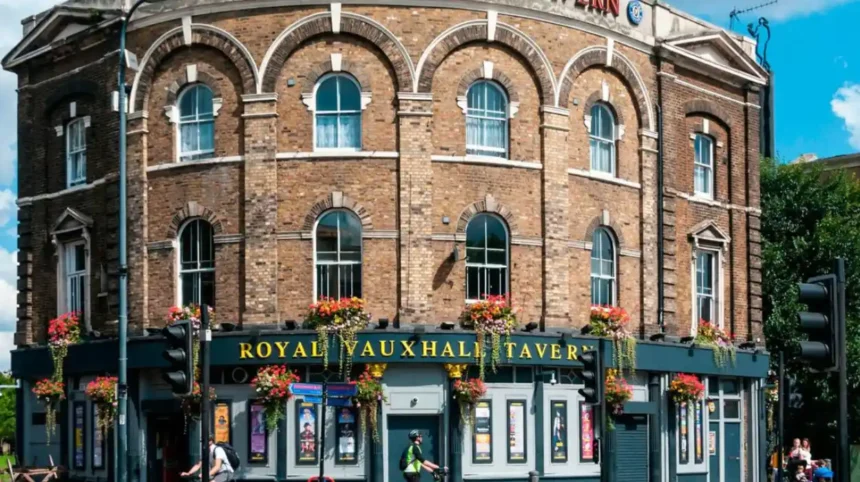
Vauxhall contains important Victorian architecture around Kennington Lane, Vauxhall Park and surrounding streets, including the Royal Vauxhall Tavern and nineteenth-century residential and commercial buildings. Its conservation area preserves an urban character created through eighteenth- and nineteenth-century development.
Vauxhall is one of the strongest areas for visitors looking for nineteenth-century architecture close to central London.
Lambeth Council describes Vauxhall Conservation Area as a substantial historic area extending from Kennington Lane through Harleyford Road towards Vauxhall Park. The conservation area contains numerous sub-areas with an eighteenth- and nineteenth-century mixed residential and commercial character.
The Royal Vauxhall Tavern is one of the clearest Victorian landmarks in the area.
Historic England records the building at 372 Kennington Lane as dating from 1860–1862. It was probably designed by architect James Edmeston the elder. The building was refitted in 1896 and again in the early 1980s. It is listed at Grade II.
The Royal Vauxhall Tavern demonstrates how Victorian buildings can retain cultural relevance long after their original construction. Its architectural history is connected with entertainment and performance, while its later history includes its role as an LGBTQ+ venue.
Visitors walking through the surrounding conservation area can also observe the relationship between Victorian commercial premises, residential terraces and later development.
The Vauxhall area continues to experience major regeneration. Lambeth Council identifies Vauxhall as a major regeneration area, with plans involving new homes, employment, transport connections, public spaces and improved pedestrian and cycling environments.
This creates an architectural contrast between nineteenth-century buildings and contemporary development.
Which Victorian buildings can visitors discover around Kennington?
Kennington contains several important nineteenth-century buildings, including the Royal Vauxhall Tavern, Herbert House and historic structures around Kennington Park. Its streets combine earlier Georgian development with Victorian institutional, residential and recreational architecture.
Kennington provides a particularly useful architectural walk because different historical periods appear close together.
The Kennington Conservation Area was first designated in 1968. Lambeth Council describes it as an area characterised by smart terraced housing that developed from the late eighteenth century onwards.
One major Victorian building is Herbert House at 312 Kennington Lane.
Historic England records Herbert House as a Grade II* listed building dating from 1860–1862. Architect J. L. Pearson designed it as St Peter’s Orphanage and Training College for the daughters of clergy and professionals.
The building uses stock brick with Bath stone bands and dressings. Historic England identifies its architectural style as High Victorian Gothic with French influences. Its features include tall brick chimneys, ornamental brickwork, a tiled roof and a turret with a conical cap.
Herbert House demonstrates the institutional side of Victorian architecture. Its original purpose was not domestic housing or commercial retail but education and accommodation connected with an orphanage and training college.
Another important building on Kennington Lane is Imperial Court at number 225.
Although Imperial Court predates Queen Victoria, it provides useful architectural context for understanding how Victorian Lambeth developed around earlier structures. Historic England records the building as dating from 1835–1836 and designed by H. and E. Rose as a school for the Licensed Victuallers’ Company.
This mixture of pre-Victorian and Victorian buildings is important when exploring Kennington because nineteenth-century Lambeth did not replace everything that came before it.
Kennington Park also provides architectural and landscape context. The park was established in 1854 and contains historic structures including the Prince Albert Lodges. Historic England records the park as a registered historic park and garden.
As you explore Kennington’s modern streets, you are crossing land shaped by centuries of development. Read the full [Insert Anchor Text for History Article Here] to understand its origins.
What Victorian architecture can visitors see in Brixton?
Brixton contains Victorian and nineteenth-century buildings around Brixton Road, Brixton Hill, Windrush Square and surrounding streets. Its historic environment combines residential architecture, commercial premises, public institutions, churches and market buildings within a designated conservation area.
Brixton is one of Lambeth’s most recognisable architectural districts.
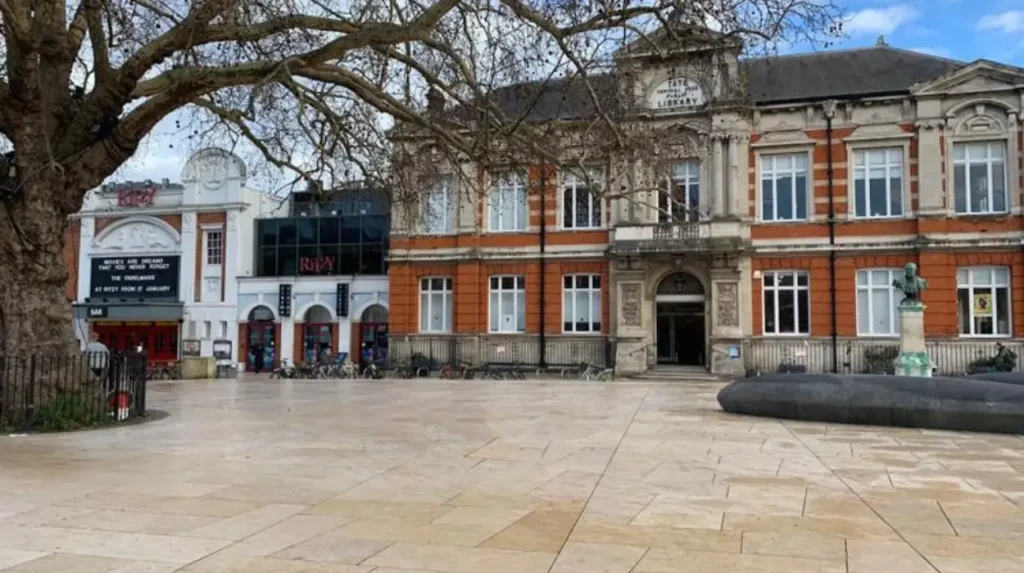
The Brixton Conservation Area was first designated in 1980. Lambeth Council describes it as a nineteenth-century town-centre conservation area containing commercial, civic, residential and retail buildings alongside Brixton Town Hall, Tate Library, the Ritzy Cinema, St Matthew’s Church and the covered markets.
Brixton Road is particularly useful for architectural observation.
Historic England lists 22–24 Brixton Road as a Grade II listed building. The building was first listed in 1981 and remains part of the historic streetscape of the area.
Windrush Square provides another important architectural setting.
The buildings at 1 Windrush Square and Raleigh Hall at Saltoun Road are Grade II listed. Historic England records the original buildings at 1 Windrush Square as a pair of substantial early nineteenth-century houses with classically influenced façades. The site later developed into a cultural and recreational centre associated with the Brixton Liberal Club and Raleigh Hall.
The square also contains a group of listed buildings, including the Tate Library and the Ritzy Cinema.
This makes Windrush Square an effective starting point for visitors interested in architectural layering.
The area also demonstrates why Victorian architecture should be viewed as part of a wider historic landscape. Buildings from different periods stand beside one another, allowing visitors to identify changes in architectural fashion, construction and urban use.
Can visitors find Victorian architecture around Waterloo?
Waterloo contains historic architecture connected with nineteenth-century urban expansion, railway development, commercial activity and residential growth. The Waterloo Conservation Area includes parts of Cornwall Road, Stamford Street and Waterloo Road, where historic terraces stand alongside larger commercial buildings.
Waterloo provides a different architectural experience from Brixton and Kennington because transport has played a particularly important role in shaping its built environment.
Lambeth Council designated the Waterloo Conservation Area in 1981. The council describes it as an area representing more than a century of development close to the south bank of the River Thames, with development spanning the late eighteenth, nineteenth and early twentieth centuries.
The conservation area includes sections of Cornwall Road, Stamford Street and Waterloo Road.
Visitors can therefore explore historic streets while also observing the large-scale development associated with London’s expanding commercial and transport networks.
Waterloo Station itself is associated with later architectural phases rather than the Victorian period in its best-known surviving form. The station’s Victory Arch, for example, was constructed between 1919 and 1922 and commemorates employees of the London and South Western Railway who died during the First World War.
For this reason, visitors should distinguish between Victorian architecture and later railway heritage when exploring the Waterloo area.
The wider district remains valuable because its streets demonstrate how nineteenth-century development created the urban framework later adapted by twentieth- and twenty-first-century London.
Where can visitors explore Victorian streets and houses in South Lambeth?
South Lambeth contains historic residential streets where Victorian urban growth can be read through terraces, brick façades, repeated window patterns, entrances and street layouts. The area also connects Vauxhall, Stockwell and Kennington through a network of historic neighbourhoods.
South Lambeth is particularly useful for visitors who want to see architecture at street level rather than focus exclusively on landmark buildings.
Victorian residential architecture commonly uses repeated terraces to create consistent street fronts. Brick façades, sash windows, decorative door surrounds, cornices and bay windows appear in many nineteenth-century London neighbourhoods.
South Lambeth’s historic environment also contains buildings that pre-date the Victorian period. Historic England records 57 and 59 South Lambeth Road as early nineteenth-century buildings featuring parapet fronts, gauged brick arches to sash windows and ornate doorways.
This distinction is useful for architectural visitors. Not every historic building in a Victorian-looking street is Victorian.
The surrounding neighbourhood provides an opportunity to examine how earlier buildings were incorporated into later urban development.
The relationship between individual houses and the street is also important. Victorian residential architecture often functioned as a coordinated development rather than a collection of isolated structures.
Visitors can therefore look for repeated building widths, consistent rooflines, aligned façades and similar decorative details.
What Victorian architecture can visitors find near Lambeth’s historic parks?
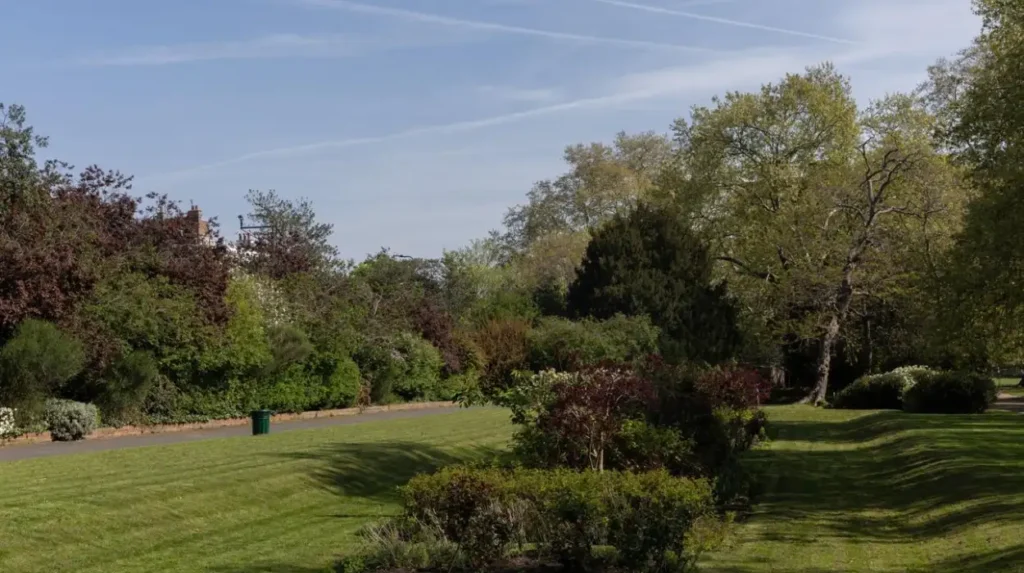
Lambeth’s historic parks provide architectural context through lodges, entrances, park buildings, surrounding terraces and designed landscapes. Kennington Park, Myatt’s Fields and other historic green spaces show how Victorian London combined dense housing with planned public recreation.
Public parks became an important part of nineteenth-century urban improvement.
Kennington Park was established in 1854. Historic England records its historic landscape and structures as part of a registered park and garden. The site covers approximately 15 hectares in its documented historic extent.
The Prince Albert Lodges at Kennington Park provide architectural details directly associated with the Victorian development of the park.
Myatt’s Fields also has a nineteenth-century history. Historic England records that William Minet donated the land to create a public park, which was managed by the London County Council from 1889. The park included facilities for community leisure, including a bandstand and gymnasia.
These parks are important because Victorian architecture was not limited to buildings.
The design of public landscapes formed part of the same urban improvement movement. Parks supplied open space, recreation and community facilities within increasingly dense neighbourhoods.
Visitors examining Victorian Lambeth should therefore look at the relationship between buildings and public spaces rather than treating architecture as isolated façades.
How can visitors recognise Victorian architecture in Lambeth?
Visitors can identify Victorian architecture through construction dates, materials, façade composition, decorative details, building purpose and architectural style. Common clues include brickwork, sash windows, bay windows, Gothic detailing, classical ornament, prominent entrances and repeated terrace layouts.
The safest way to identify a Victorian building is to check its documented construction date.
Architectural appearance alone is not sufficient because buildings often imitate earlier styles.
Gothic Revival was especially influential during the Victorian period. Herbert House demonstrates a High Victorian Gothic approach, using brick, stone dressings, ornamental brickwork and a turret.
Classical architecture also remained important. Victorian designers frequently used columns, pediments, symmetrical façades and formal entrances for civic and institutional buildings.
Residential buildings often provide subtler evidence.
Visitors can examine:
- stock brick façades
- sash windows
- bay windows
- decorative brick arches
- stone window surrounds
- recessed entrances
- patterned brickwork
- projecting cornices
- repeated terrace layouts
The presence of one feature does not automatically establish a Victorian construction date. A later building can reproduce Victorian architectural characteristics.
Historic England’s National Heritage List for England provides a more reliable method of verification for listed buildings.
How do conservation areas protect Lambeth’s Victorian streetscape?
Conservation areas protect the character and appearance of historically significant neighbourhoods rather than protecting only individual buildings. Lambeth has 62 conservation areas covering about 30% of the borough, including Brixton, Kennington, Vauxhall and Waterloo.
A conservation area is an area designated because of its special architectural or historic interest.
Lambeth Council currently identifies 62 conservation areas covering approximately 30% of the borough. Its published profiles include Brixton, Kennington, Vauxhall and Waterloo, among many other districts.
Conservation-area protection focuses on the wider character of a place.
This includes relationships between buildings, streets, open spaces, trees, views and historic layouts.
Listed-building protection works differently. A listed building is individually recognised for special architectural or historic interest and receives statutory protection.
Lambeth Council states that statutory listed buildings are considered nationally important and are protected by law.
The borough also maintains a Local Heritage List. This includes buildings, structures, archaeological priority areas and designed spaces that have local or greater significance. Local listing is separate from national statutory listing.
These different systems explain why visitors encounter historic streets where some individual buildings are nationally listed while the wider neighbourhood receives conservation-area protection.
Explore More Area Guide
Lambeth Thames Path: Routes, Landmarks and Walking Guide
Short Excursions in Lambeth: Best Places to Visit
What is the best way to explore Lambeth’s Victorian architecture?
The most effective approach is to explore Lambeth neighbourhood by neighbourhood, combining landmark buildings with conservation areas, residential streets, parks and commercial districts. Walking between nearby sites reveals how Victorian architecture functioned as part of complete urban communities.
A focused architectural walk can begin in Vauxhall and continue towards Kennington.
Vauxhall provides a strong introduction through Kennington Lane and the Royal Vauxhall Tavern. Visitors can then examine nearby residential streets before continuing towards Kennington Park.
Kennington offers a combination of Victorian institutional architecture, residential streets and nineteenth-century park development.
Another route can begin at Brixton and concentrate on Brixton Road, Windrush Square and the surrounding conservation area. The route provides commercial, civic and residential examples within a compact district.
Waterloo offers a separate architectural route focused on the historic streets around the Thames and the Waterloo Conservation Area.
Visitors interested in residential architecture should allow additional time for South Lambeth, Stockwell and surrounding streets rather than concentrating only on famous landmarks.
Historic England’s Lambeth Local Heritage Hub provides photographs, archive material and information about listed buildings across the borough.
This makes it possible to research a building before visiting and compare historic photographs with its current appearance.
Why is Lambeth’s Victorian architecture still relevant today?
Lambeth’s Victorian architecture remains relevant because historic buildings continue to accommodate homes, businesses, cultural venues, community uses and public spaces. Their survival connects contemporary neighbourhoods with nineteenth-century urban development while conservation policies guide their adaptation and reuse.
Victorian buildings remain functional parts of Lambeth rather than purely historical exhibits.
The Royal Vauxhall Tavern continues its role as a performance and cultural venue. Brixton’s historic buildings remain integrated into a busy town centre. Historic residential terraces continue to provide housing.
This continued use creates an important relationship between heritage and modern urban life.
Lambeth’s current regeneration programmes also demonstrate the need to integrate older buildings into changing neighbourhoods. Vauxhall is undergoing major regeneration involving new homes, jobs, public spaces and transport improvements.
Historic buildings therefore sit within an active planning environment.
Conservation does not mean that every building remains unchanged. Listed-building controls, conservation-area policies and local heritage policies provide frameworks for managing alterations and development.
For visitors, this means Lambeth’s Victorian architecture can be experienced as a living part of the borough.
The most significant examples are not confined to one street or landmark. They form a network stretching through Vauxhall, Kennington, Brixton, Waterloo, South Lambeth and neighbouring districts.
Lambeth’s Victorian heritage is therefore best understood through its urban structure: houses beside shops, schools beside churches, parks beside terraces, and entertainment venues beside transport routes.
Where can visitors see Victorian architecture in Lambeth?
Visitors can see Victorian architecture across Vauxhall, Kennington, Brixton, Waterloo and South Lambeth. These areas contain Victorian houses, churches, public buildings, markets, entertainment venues, schools, parks and commercial properties.